
Storing a kayak in your garage is a smart way to keep it safe and extend its life. But if you just lean it against the wall or leave it on the floor, your kayak can get damaged, warped, or even make your garage cluttered.
Hanging a kayak properly is the best solution—especially for beginners who want an easy, practical method. This guide will show you step by step how to hang a kayak in your garage, what tools you need, and what mistakes to avoid.
By the end, you’ll know how to keep your kayak in top shape and make the most of your garage space.
Why Hanging A Kayak Matters
Kayaks are tough, but they’re not indestructible. If you store a kayak the wrong way, you risk:
- Deformation: Kayaks can bend or get dents if weight sits unevenly for a long time.
- Scratches or cracks: Hard surfaces can damage the hull.
- Moisture damage: Storing on the ground can expose it to water, mold, or pests.
- Lost space: A kayak on the floor eats up a lot of room.
Hanging solves these problems. It keeps your kayak off the ground, evenly supported, and out of harm’s way. Plus, it gives you back garage space for other gear.
Choosing The Right Hanging System
There are several ways to hang a kayak in a garage. The most popular options are:
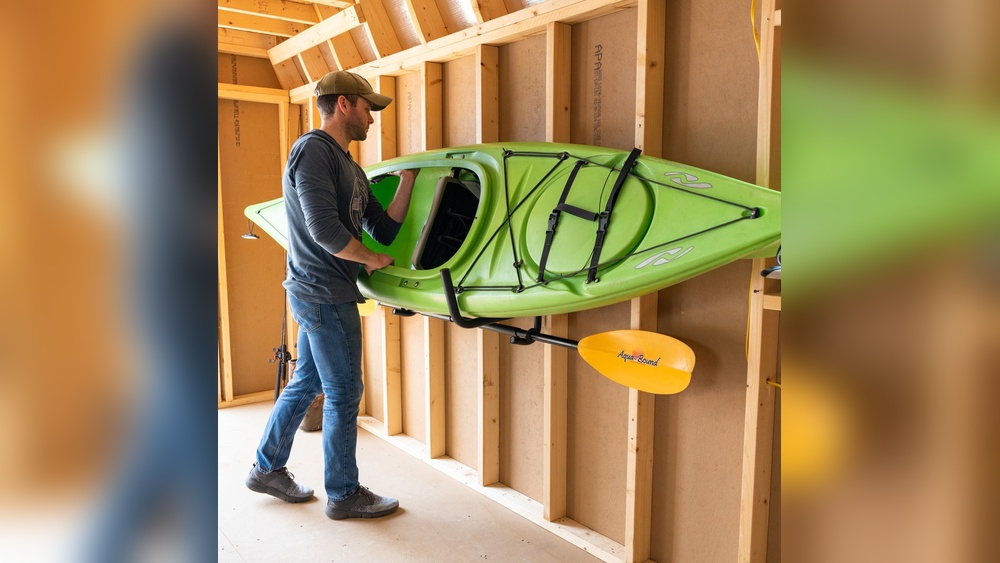
- Wall-mounted racks: Strong arms attached to the wall.
- Suspension straps/slings: Wide straps that cradle the kayak.
- Ceiling hoists: Pulleys to lift the kayak overhead.
Comparing Hanging Methods
Here’s how the three main systems stack up for beginners:
| System | Pros | Cons | Best For |
|---|---|---|---|
| Wall Racks | Easy install, stable, good for heavy kayaks | Takes wall space, kayak sticks out | Quick access, single kayak |
| Suspension Straps | Gentle on kayak, low cost | May need extra anchors, can sway | Plastic or composite kayaks |
| Ceiling Hoists | Saves floor/wall space, fits multiple kayaks | Harder install, needs ladder to access | Small garages, storing off-season |
Wall racks are the simplest for most beginners. If you want to keep your kayak out of the way, a ceiling hoist works best.

Credit: www.reddit.com
What You’ll Need
Before you start, gather these items:
- Stud finder: To find strong spots in your wall or ceiling
- Drill and bits: For making holes
- Screws/bolts: Heavy-duty, 2-3 inches long
- Level: To keep things straight
- Measuring tape
- Pencil/marker
- Wall rack, straps, or hoist kit
Optional:
- Step ladder: For high installs
- Socket wrench: For bolts
- Protective padding: Pool noodles or foam to protect the kayak’s hull
Measuring Your Garage Space
Every garage is different. Take a few minutes to measure:
- Kayak length: Most are 8–14 feet.
- Garage wall/ceiling: Find a spot at least 1–2 feet longer than your kayak.
- Height: Make sure you won’t hit the kayak with your car, bike, or tools.
Example:
If your kayak is 10 feet long, look for a 12-foot clear wall or ceiling area. The kayak should hang at least 18 inches above the floor (to prevent bumps) and 18 inches from the ceiling (for airflow).
Step-by-step: How To Hang A Kayak On A Wall
Hanging a kayak on the wall is the most beginner-friendly method. Here’s how to do it safely.
1. Find Wall Studs
- Use a stud finder to locate wooden studs. Kayaks are heavy—a wall anchor won’t hold.
- Mark two points about 6–8 feet apart (for a 10-foot kayak).
2. Mark And Measure
- Use a level to draw a straight line between the two marks.
- Measure from the floor to choose the right height (waist or chest level is easiest).
3. Install The Rack
- Drill pilot holes into the studs.
- Attach the rack arms or hangers with screws/bolts.
- Test each arm by pulling on it gently—it should not move.
4. Add Padding (optional)
- Wrap foam or old towels around the rack arms.
- This protects the kayak hull from pressure points.
5. Lift The Kayak
- With two people, lift the kayak and set it gently on the racks.
- Position it cockpit out (facing away from the wall) for easy access.
- Check that both ends are evenly supported.
Tip: Never hang your kayak by the handles—they are not designed for long-term weight.
Step-by-step: Hanging A Kayak With Straps
Suspension straps are gentle and distribute weight well. Here’s how to set them up:
1. Choose Anchor Points
- Find two studs in the wall or ceiling, at least 6 feet apart.
- Mark the spots with a pencil.
2. Attach Straps
- Drill holes and install heavy-duty eye bolts.
- Thread the nylon straps through the bolts to make loops.
3. Adjust And Hang
- Adjust the straps so they hang at the right height.
- Place the kayak hull-down in the slings.
- Make sure the straps are wide and flat—they should not dig into the kayak.
Non-obvious insight: Wide straps (2–3 inches) prevent pressure dents. Thin ropes can deform your kayak over time.

Credit: www.reddit.com
Step-by-step: Hanging A Kayak From The Ceiling
Ceiling hoists save space but take more work. Here’s a simple process:
1. Locate Ceiling Joists
- Use a stud finder to find joists 6–8 feet apart.
- Mark two points for the hoist pulleys.
2. Install The Hoist Kit
- Drill pilot holes and attach the hoist brackets to the joists.
- Follow the manufacturer’s instructions for threading the ropes.
3. Lift The Kayak
- Place straps under the kayak at balanced points (about 1/3 from each end).
- Use the pulleys to lift the kayak. Stop when it’s at least 2 feet above your head.
4. Secure And Test
- Double-check all knots and brakes.
- Shake the kayak gently to test stability.
Beginner tip: Always use a ladder and ask a friend for help. Dropping a kayak can cause injury or damage.
How High Should You Hang Your Kayak?
The ideal height depends on your garage and how often you use the kayak. Here’s a quick guide:
| Kayak Use | Recommended Height | Why |
|---|---|---|
| Frequent (weekly) | Waist to chest level | Easy to lift, grab, and go |
| Seasonal (monthly/rare) | Above head height or ceiling | Keeps kayak out of the way |
Pro tip: Leave at least 18 inches of clearance above and below the kayak to avoid bumps.

Credit: www.discountramps.com
Mistakes To Avoid When Hanging A Kayak
Even simple setups can go wrong. Watch out for these common mistakes:
- Using weak anchors: Drywall anchors or small screws can fail. Always use studs.
- Too much pressure: Thin rope or unpadded hooks can dent the hull.
- Wrong angle: Hanging at a steep tilt can warp the kayak.
- Hanging by handles: Handles are for carrying, not storage.
- Ignoring humidity: Garages can get damp. Allow airflow to prevent mold.
- Blocking access: Make sure you can walk or park under the kayak easily.
Non-obvious insight: Plastic kayaks are more likely to warp than fiberglass. If you live in a hot climate, check your kayak monthly.
Storing Multiple Kayaks
If you own more than one kayak, organize them safely:
- Stack on side: Install two sets of wall racks, one above the other.
- Ceiling rack: Some systems hold two or three kayaks horizontally.
- Staggered wall mounts: Place kayaks at different heights to save space.
Tip: Leave at least 18 inches between stacked kayaks for easy removal.
Extra Tips For Long-term Storage
- Clean your kayak: Rinse with fresh water and let it dry before storing.
- Remove accessories: Take off seats, paddles, and electronics to avoid damage.
- Check for pests: Keep cockpit covers on to block mice or insects.
- Inspect hardware: Tighten screws and check straps every few months.
- Rotate position: If storing for many months, shift the kayak’s position to avoid long-term pressure spots.
When To Avoid Hanging
Hanging works for most kayaks, but there are exceptions:
- Inflatable kayaks: Store these deflated and flat, not hanging.
- Wooden kayaks: If humidity is high, store flat to avoid warping.
- Very heavy fishing kayaks: May require commercial-grade racks.
If you’re unsure, check your kayak’s manufacturer guide or ask at your local paddle shop.
Safety Reminders
- Always use two people for lifting.
- Test all mounts and straps before each season.
- Keep the kayak secure in case of earthquakes or pets.
- Don’t overload your wall or ceiling—know your garage’s weight limits.
For more safety tips, check resources like the American Whitewater Safety page.
Frequently Asked Questions
How Much Weight Can A Wall Rack Hold?
Most wall racks are rated for 75–150 pounds. Check your rack’s instructions. Always mount into a solid stud, never just drywall.
Is It Safe To Hang A Kayak In A Humid Garage?
Yes, but allow airflow around the kayak. Use a cockpit cover and check for mold or mildew monthly. A small fan or dehumidifier can help in very damp garages.
Can I Hang My Kayak Upside Down?
Yes. For many kayaks, especially sit-on-top types, storing hull up (upside down) distributes weight well and prevents warping. Check your kayak’s manual for best practices.
How Do I Hang A Kayak Without Drilling Holes?
You can use freestanding racks—they hold the kayak without wall or ceiling mounts. Some people use padded sawhorses or shelves. Just make sure the kayak is evenly supported and won’t slide off.
What Is The Best Way To Store A Kayak For Winter?
- Clean and dry the kayak completely.
- Remove any soft parts (seats, pads).
- Store it indoors if possible, hung on padded racks or straps.
- If outside, use a weatherproof cover and check regularly for damage.
Hanging your kayak in the garage is a smart investment for your gear and your garage. With the right method, a bit of planning, and safe installation, you’ll protect your kayak and keep your space organized for years to come.