
Garage Sale Change: A Complete Beginner’s Guide
If you’ve ever hosted a garage sale, you know how important change is. Imagine a buyer hands you a $20 bill for a $2 item, and you have no smaller bills or coins. The sale stops. This simple detail can make or break your garage sale experience. Many beginners overlook the need for enough change, but it’s a crucial part of making your sale smooth and successful. This article will help you understand everything about garage sale change, from how much you need, what types to prepare, and how to avoid common mistakes. Whether you’re selling old clothes or unused gadgets, knowing about garage sale change will help you run a sale that’s easy for you and your buyers.
Why Garage Sale Change Matters
Change is more than coins and bills. It’s the key to faster sales and happy customers. Buyers often arrive with large bills or only cards. If you can’t provide change, you risk losing sales or slowing down your event.
- Quick transactions: With enough change, you avoid delays and keep lines moving.
- More sales: Buyers are more likely to buy when they know you can handle their payment easily.
- Professional impression: Having change shows you are organized and prepared.
Many garage sale hosts underestimate how much change they’ll need. At a typical sale, at least 60% of buyers pay with cash. Most bring $10 or $20 bills. Without change, sellers must turn away buyers or ask them to wait.
This can lead to lost sales and frustration.
How Much Change Do You Need?
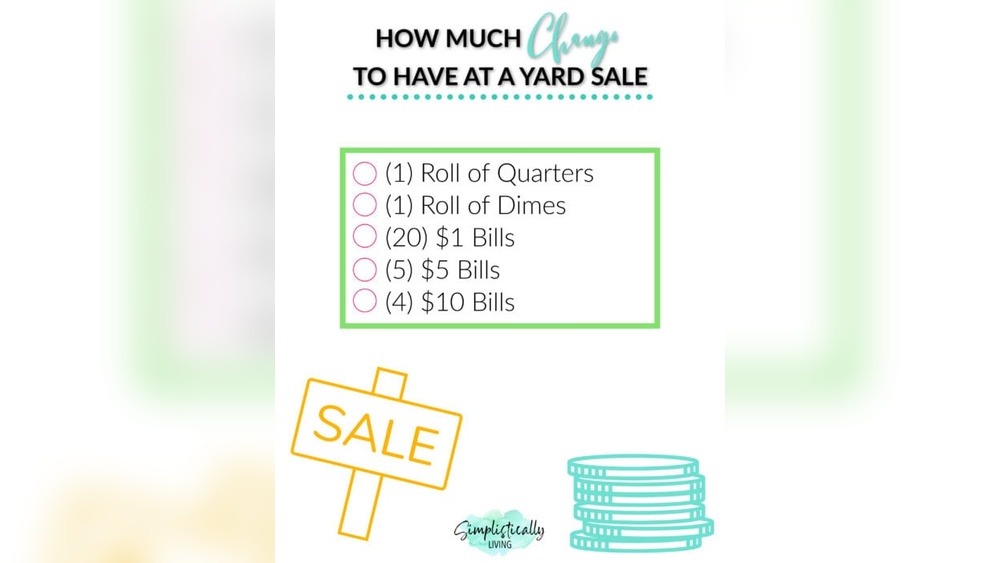
The right amount of change depends on your expected sales and item prices. For most garage sales, preparing $50–$100 in change is enough. Here’s a practical breakdown:
- $1 bills: $20–$30 worth
- $5 bills: $20–$30 worth
- $10 bills: $20 worth
- Quarters: $10 in coins
- Other coins (dimes, nickels, pennies): $5 in mixed coins
If you expect many small item sales, prioritize more $1 bills and quarters. For larger items, $5 and $10 bills are more useful.
Let’s compare two scenarios in a simple table:
| Sale Type | Recommended Change | Risk of Shortage |
|---|---|---|
| Small item sale ($1–$5) | $40 in $1 bills, $20 in quarters | Low |
| Mixed item sale ($1–$20) | $20 in $1 bills, $20 in $5 bills, $20 in $10 bills, $10 in quarters | Medium |
Most sellers find $50–$75 in change is a good starting point. If you run out, you risk losing buyers. If you have too much, you are still safe.
Types Of Change: What Should You Prepare?
Not all change is equal. Some bills and coins are more useful for garage sales:
- $1 bills: Essential for small purchases and making change for $5 or $10 bills.
- $5 bills: Useful for mid-priced items and breaking $10 or $20 bills.
- Quarters: Ideal for items priced under $5, especially if you price things at $0.25, $0.50, or $1.
- Dimes, nickels, pennies: Helpful, but less important unless you have items priced below $1.
You can skip larger bills ($50, $100) because buyers rarely use them at garage sales.
Here’s a comparison of which change type is most useful:
| Change Type | Usefulness | Typical Use |
|---|---|---|
| $1 bills | High | Small purchases |
| $5 bills | Medium | Mid-priced items |
| Quarters | High | Items under $1 |
| Dimes, nickels, pennies | Low | Very low-priced items |
Where To Get Garage Sale Change
Getting enough change is easy if you plan ahead. Here are the most common ways:
- Bank or credit union: The safest place. You can ask for specific bills and coins. Most banks allow you to withdraw exact change if you request it in advance.
- Local stores: If you buy something, ask for extra $1 bills and coins. Some stores will help, but only in small amounts.
- At home: Check your wallets, piggy banks, or old jars. Many families have coins and small bills saved up.
- ATM: ATMs give $20 bills, not small change. You’ll need to break these at a bank or store.
Banks are the best option for larger amounts. Call ahead if you need lots of coins. Some banks require advance notice for coin rolls.

Credit: www.simplisticallyliving.com
Pricing Items For Easy Change
Pricing your items correctly helps reduce the need for complicated change. Here are practical tips:
- Round prices: Use $1, $2, $5, or $10 to make change easier. Avoid prices like $1.73 or $2.49.
- Price in quarters: If you have many small items, price in $0.25 increments. This makes it easy to use quarters.
- Group items: Sell similar items together for a single price (e.g., 5 books for $5). This reduces the number of transactions.
A practical example: Instead of pricing mugs at $1.75, price them at $2. Buyers find it easier, and you don’t need to keep track of dimes and nickels.
Common Mistakes Beginners Make
Many first-time sellers make mistakes with garage sale change. Here are the top errors and how to avoid them:
- Not preparing enough change: Running out of $1 bills or quarters is the most common mistake.
- Pricing items in odd amounts: Prices like $1.37 or $2.68 make transactions difficult.
- Ignoring coins: Not having enough quarters or small coins can slow sales.
- Accepting large bills without checking: Always check for counterfeit bills, especially $20 or $50.
- Not securing your change: Keep your cash in a safe place, like a lockbox or money belt.
If you are unsure, start with more $1 bills and quarters than you think you need.
Handling Large Bills And Security
Buyers may pay with $20 or $50 bills. Here’s how to handle them:
- Check for fake bills: Hold the bill up to the light and look for security threads.
- Limit acceptance of $50 or $100 bills: If you do not have enough change, politely ask buyers for smaller bills.
- Keep cash secure: Use a lockbox or cash apron. Do not leave money unattended.
For extra security, have a trusted friend help you. One can focus on sales, while the other manages the cash.
Using Digital Payments
Today, many buyers prefer digital payments like Venmo, PayPal, or Cash App. This can reduce your need for change. However, not all buyers use these apps. For best results:
- Offer cash and digital options: Display signs with your payment info.
- Set up your account before the sale: Test it to make sure it works.
- Know the limits: Some apps charge fees or have transfer limits.
Digital payments can increase sales, but cash is still king at most garage sales.
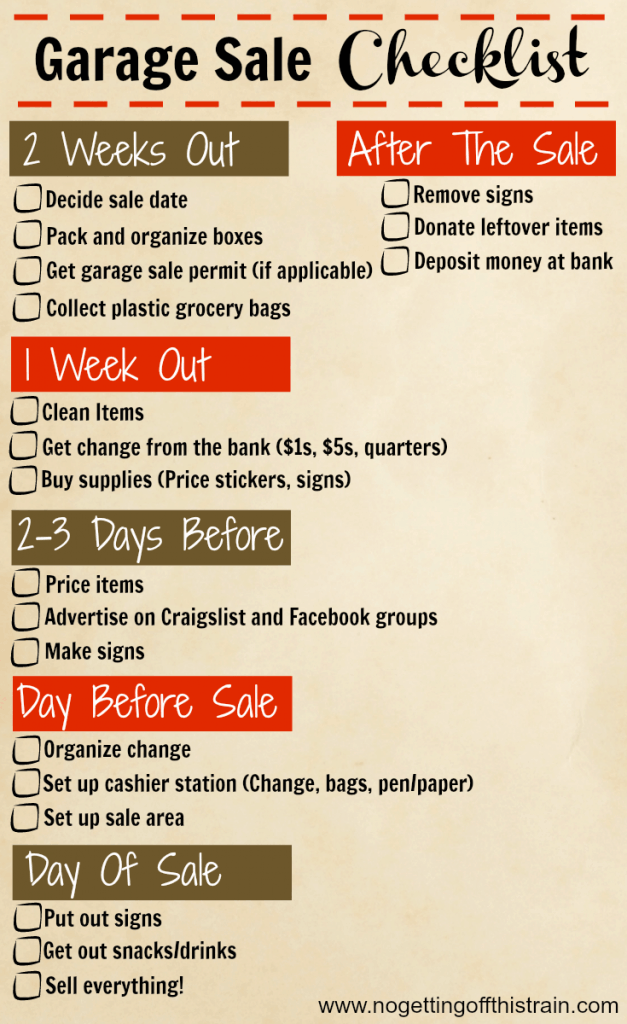
Credit: www.nogettingoffthistrain.com
Real-life Example: How Much Change Should You Bring?
Let’s look at a simple example. Jenny plans to host a garage sale. She expects to sell:
- 30 items priced at $1
- 20 items priced at $5
- 10 items priced at $10
She expects 40 buyers. Most will pay with $10 or $20 bills.
Jenny prepares:
- $30 in $1 bills
- $20 in $5 bills
- $20 in $10 bills
- $10 in quarters
During her sale, she uses most of her $1 bills for small purchases. When buyers pay with $20 bills, she uses $5 and $10 bills to make change. She never runs out of change, and her buyers are happy.
If Jenny had brought only $10 in $1 bills, she would have run out quickly. This shows why planning is essential.
Practical Tips For Managing Garage Sale Change
Here are expert tips to help you manage change during your garage sale:
- Start with more $1 bills than you think you need: You’ll use them fast.
- Use a lockbox or cash apron: Keep money safe and organized.
- Assign one person to handle cash: Avoid confusion.
- Keep track of your starting change: Know how much you started with to count your profits easily.
- Have extra coins ready: Quarters especially.
- Use signs to show accepted payment types: Cash, Venmo, PayPal, etc.
- Plan for peak hours: Most buyers come early. Have the most change ready then.
These tips will help you avoid stress and keep your sale running smoothly.

Credit: monroeny.org
Garage Sale Change Vs. Other Sales
Garage sales are different from flea markets or retail stores. At garage sales:
- Most buyers pay with cash.
- Sellers rarely have card readers.
- Transactions are quick and informal.
Here’s a simple table comparing payment types at different sales:
| Sale Type | Cash Used (%) | Digital Payments (%) | Card Payments (%) |
|---|---|---|---|
| Garage Sale | 80 | 15 | 5 |
| Flea Market | 60 | 20 | 20 |
| Retail Store | 20 | 30 | 50 |
Garage sales rely most on cash and change. This is why being prepared is so important.
Non-obvious Insights Beginners Miss
Many new sellers miss these important points:
- Peak change need is in the first hour: Most buyers come early and pay with large bills.
- Pricing in round numbers reduces mistakes: You make fewer errors with simple prices.
- Having visible signs for payment types increases sales: Buyers feel comfortable knowing what you accept.
Learning these insights can make your sale easier and more profitable.
Frequently Asked Questions
How Much Change Should I Bring For A Garage Sale?
Most sellers find $50–$100 in change is enough. Focus on $1 and $5 bills, plus quarters. If your items are mostly under $5, increase the number of $1 bills and quarters.
What Types Of Bills And Coins Are Best For Garage Sales?
Bring mostly $1 and $5 bills. Quarters are also useful, especially for items priced under $5. Avoid large bills like $50 or $100 unless you can give change.
Can I Use Digital Payments At Garage Sales?
Yes, apps like Venmo, PayPal, and Cash App are common. Set up your account before the sale and display signs showing your payment info. However, most buyers still use cash.
Where Can I Get Enough Change For My Garage Sale?
The best places are banks and credit unions. You can request specific bills and coins. Local stores may help in small amounts, but banks are more reliable.
What Should I Do If I Run Out Of Change During My Sale?
If you run out, ask buyers if they have exact change or can pay with smaller bills. You can also send someone to a nearby store or bank to get more change. Avoid turning buyers away if possible.
Garage sale change is simple but vital. Planning ahead, bringing the right mix of bills and coins, and pricing items smartly will help you run a successful sale. With these tips, you’ll be ready for any buyer, keep transactions quick, and make your garage sale a positive experience for everyone. For more tips on hosting garage sales, check out WikiHow’s garage sale guide.