
The best claw hammer for most home tool kits is the ESTWING E3-16C, with its smooth face.
A loose fence board, a bent nail, or a shelf that needs a small fix can make a poor hammer feel like the wrong tool fast. A good claw hammer should drive nails with control, pull them with ease, and feel secure in your hand. I favor a 16-ounce model for most home tasks, but heavier heads and straight claws have their place. Below, I compare seven options for home repair, carpentry, and rough work. My picks focus on the listed designs and their practical uses, not claims of hands-on testing or unverified buyer praise.
See the differences between my top picks at a glance.
| Product | Head weight | Face / claw | Build or grip | Best fit | Amazon |
|---|---|---|---|---|---|
| ESTWING E3-16S | 16 oz | Smooth / rip | Steel; Shock Reduction Grip | Light carpentry and repair | View on Amazon |
| IRWIN 1954889 | 16 oz | Claw; confirm face style | Fiberglass handle | General home tasks | View on Amazon |
| CRAFTSMAN CMHT51399 | 20 oz | Confirm selected face and claw | Fiberglass handle | Heavier general work | View on Amazon |
| Milwaukee 20 oz / 14-inch | 20 oz | Curved claw; confirm face | 14-inch listed length | Nail pulling and repair | View on Amazon |
| Spec Ops Framing Hammer | 22 oz | Milled / rip | Magnetic nail holder | Rough carpentry | View on Amazon |
| ESTWING E3-16C — top home pick | 16 oz | Smooth / curved | Steel; Shock Reduction Grip | Most home tool kits | View on Amazon |
| ESTWING 20 oz Framing Hammer | 20 oz | Confirm selected face and claw | Forged steel; Shock Reduction Grip | Heavier carpentry | View on Amazon |
I may earn a commission from qualifying purchases through these links. The ratings below are my editorial assessments of each listed design and its task fit, not Amazon star ratings or test results. Prices, stock, and listing options can change. I do not have verified current Amazon review text for these products, so I do not present buyer feedback as fact.
ESTWING E3-16S 16 oz Rip Claw Hammer
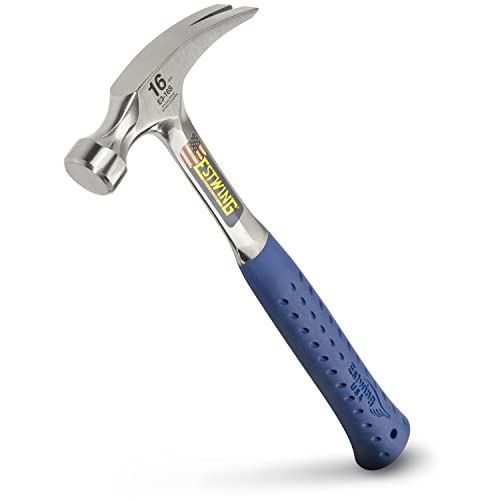
The ESTWING E3-16S pairs a 16-ounce head with a smooth face and a straight rip claw. I like this mix for small wood projects, fence fixes, and general carpentry. The head weight favors control over the force of a large framing hammer. Its steel construction also avoids the separate wood handle found on some traditional designs.
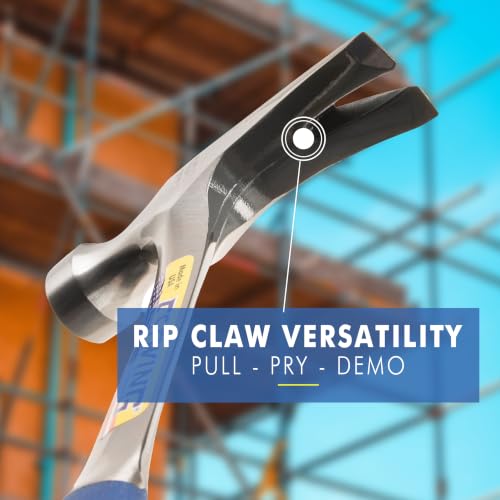
The rip claw is the key reason to choose this model over the curved-claw E3-16C. It suits direct nail pulling and light prying where access matters more than a deep rocking arc. The Shock Reduction Grip aims to soften the feel of each strike, though comfort still depends on your hand and swing. I would use a proper pry bar for hard tear-out work rather than force the hammer sideways.
Pros:
- The 16-ounce head suits a broad range of small repair tasks.
- The smooth face avoids the patterned marks a milled face can leave.
- The rip claw works well for direct access to nails in rough wood.
- The steel design removes a separate head-to-wood-handle joint.
- The Shock Reduction Grip adds a grip-focused comfort feature.
- Its design bridges home repair and light carpentry needs.
Cons:
- The lighter head is not my first choice for frequent large framing nails.
- The straight claw offers a different pulling motion than a curved claw.
- A smooth face has less texture to help grip a nail head.
What Amazon Buyers Are Saying
I cannot verify current Amazon review patterns for this exact model. Before buying, I would check recent E3-16S reviews for grip fit, face condition, and comfort during long tasks. I would also make sure each review refers to the 16-ounce rip-claw version, not another ESTWING model. Those are buying checks, not claims about what buyers have reported.
My Recommendation
I recommend the E3-16S if you want one hammer for light carpentry and common repairs. Its smooth face and modest head weight make sense for controlled work. Choose the E3-16C instead if curved-claw nail pulling matters most. My overall design-based rating is 4.6/5, with value depending on the price you find.
| Category | Editorial rating |
|---|---|
| Light carpentry fit | 4.7/5 |
| Control-focused design | 4.6/5 |
| Nail-pulling versatility | 4.4/5 |
| Grip features | 4.5/5 |
| Overall rating | 4.6/5 |
IRWIN 1954889 16 oz Fiberglass Claw Hammer

The IRWIN 1954889 takes a simple route: a 16-ounce head and a fiberglass handle for general use. I see it as a sensible option for a first home tool kit. That head weight suits short jobs where aim and ease matter more than raw force. It also gives you a clear contrast to the heavier 20- and 22-ounce models in this list.
A fiberglass handle is worth considering if you do not want a wood or all-steel design. It does not have the same grain concerns as wood, but the handle and head connection still need checks. The supplied product details do not confirm every face or claw feature, so I would inspect the selected listing before ordering. For occasional repairs, the right fit in your hand matters more than a long feature list.
Pros:
- The 16-ounce head fits many routine home repair jobs.
- The fiberglass handle offers an alternative to wood and steel.
- The general-purpose design suits buyers who need a basic tool.
- The claw adds nail removal to its nail-driving role.
- Its head weight is easier to manage than heavier options for many users.
- It is a useful model to price-check against other home hammers.
Cons:
- The supplied details do not establish the face texture or exact claw shape.
- The handle-to-head connection needs regular inspection.
- A 16-ounce head may not suit repeated large-nail work.
What Amazon Buyers Are Saying
I do not have verified current Amazon reviews for the IRWIN 1954889. I would look for model-specific comments on grip size, balance, and how securely the head stays attached. For a home hammer, reports from buyers who use it for shelves, fences, and small wood repairs would be most relevant. I would not use reviews of other IRWIN hammers to judge this one.
My Recommendation
I would consider this IRWIN for a basic home kit if its current price is lower than the steel alternatives. First, confirm the face and claw style, then check the handle fit. It is a practical shortlist choice, not a verified budget winner. My overall design-based rating is 4.2/5.
| Category | Editorial rating |
|---|---|
| Home repair fit | 4.5/5 |
| Head-weight suitability | 4.5/5 |
| Handle design | 4.1/5 |
| Confirmed feature set | 3.7/5 |
| Overall rating | 4.2/5 |
CRAFTSMAN CMHT51399 20 oz Fiberglass Hammer

The CRAFTSMAN CMHT51399 moves up to a 20-ounce head while keeping a fiberglass handle. I would consider it for fence repairs, rough wood work, and larger nails. At the same head speed, more head mass can add energy to a strike. The trade-off is that you must control that added weight on each swing.
This model makes more sense as a work-focused hammer than as a tool for tiny picture nails. A slower, well-aimed swing beats a hard blow that misses its mark. The supplied title confirms the head weight and handle material, but not every face or claw detail. I would check those details before using it near wood that must stay neat.
Pros:
- The 20-ounce head suits heavier tasks than a light home hammer.
- The fiberglass handle offers a non-wood option for regular use.
- The general-purpose format suits a range of repair jobs.
- The added head mass can help with larger nails when control stays good.
- It offers a useful alternative to a forged-steel 20-ounce model.
- Its clear model number makes exact-version shopping easier.
Cons:
- The heavier head can tire your arm sooner on long jobs.
- It is less suited to small nails and close, careful work.
- You should confirm face texture and claw shape before purchase.
What Amazon Buyers Are Saying
I cannot confirm current buyer feedback for the CMHT51399. I would read recent reviews for head security, grip wear, and control during repeated swings. I would give more weight to reports that name this exact 20-ounce model. A star average alone would not tell me whether it suits careful home repairs or rough outdoor work.
My Recommendation
I recommend shortlisting this CRAFTSMAN if a 16-ounce hammer feels too light for your usual jobs. It could be a good fit for users who prefer fiberglass and work with larger nails. I would not choose it just because the head weighs more. My overall design-based rating is 4.2/5.
| Category | Editorial rating |
|---|---|
| Heavier repair fit | 4.5/5 |
| Large-nail suitability | 4.4/5 |
| Handle design | 4.1/5 |
| Fine-task suitability | 3.8/5 |
| Overall rating | 4.2/5 |
Milwaukee 20 oz 14-Inch Curved Claw Hammer

This Milwaukee combines a 20-ounce head, a curved claw, and a listed 14-inch length. I like that layout for repair work that includes both driving and pulling nails. The curved claw lets you rock the head against a support surface as you lift a nail. The heavier head also makes it a more work-focused choice than a light household hammer.
The listed length is worth checking against the space where you work. A longer tool needs room to swing, and it can feel awkward inside a tight cabinet or near a wall. I would put a scrap wood block beneath the claw when pulling nails from a surface worth saving. The supplied details do not confirm handle material or face texture, so I would verify both on the selected listing.
Pros:
- The curved claw suits rocking nail removal.
- The 20-ounce head fits more demanding general repair tasks.
- The listed 14-inch length helps you assess storage and working space.
- It combines a heavier head with a curved-claw layout.
- The claw can handle routine nail pulling without a separate tool.
- It is a useful option for users who want more weight than 16 ounces.
Cons:
- The head weight may feel tiring during long or overhead work.
- The listed length may be awkward in tight spaces.
- Face texture and handle material need confirmation before ordering.
What Amazon Buyers Are Saying
I do not have verified current reviews for this exact Milwaukee listing. I would focus on comments about the actual length, grip fit, and control when pulling nails. I would also check buyer photos against the selected item, since similar product names can cause mix-ups. I cannot fairly claim a pattern of praise or complaints without that review evidence.
My Recommendation
I would choose this Milwaukee for heavier repairs where a curved claw is a clear priority. It has a useful role between a light home hammer and a rough-work framing tool. Confirm the listed version and face style before you buy. My overall design-based rating is 4.3/5.
| Category | Editorial rating |
|---|---|
| Curved-claw task fit | 4.7/5 |
| Heavier repair suitability | 4.5/5 |
| General-use versatility | 4.2/5 |
| Tight-space suitability | 3.7/5 |
| Overall rating | 4.3/5 |
Spec Ops 22 oz Milled-Face Framing Hammer
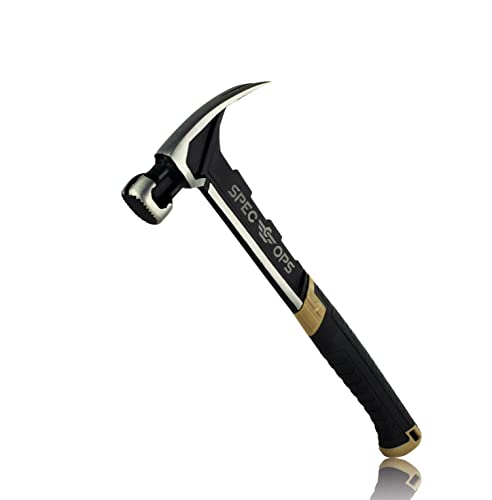
The Spec Ops framing hammer has the most task-specific feature set in this group. It pairs a 22-ounce head with a milled face, rip claw, and magnetic nail holder. I see it as a rough carpentry tool rather than a general home hammer. Its textured face can help resist slipping on a nail head, but a missed blow can leave a clear pattern in the wood.
The magnetic holder gives you a way to position a nail for an initial tap when that feature suits the task. It does not replace good aim or safe hand placement. The rip claw also fits rough-work needs, though a pry bar remains the better choice for hard tear-out. If you want the best claw hammer for small indoor repairs, this is more tool than you likely need.
Pros:
- The 22-ounce head suits demanding nail-driving tasks.
- The milled face adds texture at the striking surface.
- The magnetic nail holder can help with some nail-starting tasks.
- The rip claw fits rough carpentry and light prying.
- The feature set has a clear framing focus.
- It offers a distinct step up from basic 16-ounce home models.
Cons:
- The milled face can scar visible wood if you miss the nail.
- The 22-ounce head can cause more fatigue than lighter options.
- It is not an ideal one-hammer choice for small home fixes.
What Amazon Buyers Are Saying
I cannot verify current Amazon review trends for this Spec Ops model. I would look for reports on magnetic-holder fit, face wear, and comfort during long sessions. Comments from users doing framing or rough carpentry would matter more than reviews based on a few picture nails. I would also separate praise for the brand from evidence about this exact hammer.
My Recommendation
I recommend this model for buyers who know they need a heavy, milled-face rip-claw hammer. The nail holder gives it a useful extra feature, but the weight and face texture limit its home-use appeal. Buy it for the work it fits, not for the longest list of features. My overall task-specific rating is 4.4/5.
| Category | Editorial rating |
|---|---|
| Rough carpentry fit | 4.8/5 |
| Nail-starting features | 4.5/5 |
| Rip-claw task fit | 4.5/5 |
| General repair versatility | 3.6/5 |
| Overall rating | 4.4/5 |
ESTWING E3-16C 16 oz Curved Claw Hammer

The ESTWING E3-16C is my top pick for a general home tool kit. It combines a 16-ounce head, smooth face, curved claw, and Shock Reduction Grip. That mix fits the jobs many people do most: drive a few nails, pull a bent one, and make small repairs. It avoids the extra head weight and textured face of a dedicated framing hammer.
The curved claw is the main reason I favor this version for household use. It lets you rock the hammer to lift a nail, with a wood block beneath the head when needed. The smooth face also makes more sense near visible wood, though any misplaced strike can still leave a dent. For most buyers seeking the best claw hammer for home use, this design covers the basics well.
Pros:
- The 16-ounce head is a useful middle ground for home tasks.
- The smooth face avoids the pattern left by a milled face.
- The curved claw suits common nail-pulling jobs.
- The steel construction avoids a separate wooden handle joint.
- The Shock Reduction Grip adds a comfort-focused design feature.
- The simple feature mix works well as a single household hammer.
Cons:
- The 16-ounce head is not ideal for frequent large framing nails.
- The curved claw is less suited to some direct prying tasks than a rip claw.
- Grip comfort remains personal, so a good return option helps.
What Amazon Buyers Are Saying
I do not have verified current Amazon reviews for the E3-16C. I would check recent comments about grip feel, balance, and nail pulling during home repairs. I would also confirm that buyer photos show the curved-claw version rather than the E3-16S. Without verified review text, I cannot claim that buyers agree with my top-pick choice.
My Recommendation
I would buy the E3-16C first for a general home kit, assuming its current price fits the budget. Its appeal comes from a useful design, not from unusual extras. Choose a heavier model only when your regular jobs call for it. My overall design-based rating is 4.7/5, the highest in this home-use comparison.
| Category | Editorial rating |
|---|---|
| Home repair fit | 4.9/5 |
| Control-focused design | 4.7/5 |
| Curved-claw task fit | 4.8/5 |
| Grip features | 4.5/5 |
| Overall rating | 4.7/5 |
ESTWING 20 oz Forged Steel Framing Hammer

This ESTWING moves to a 20-ounce head and a forged-steel design. I would consider it for users who need more head mass than the 16-ounce models provide. The listed Shock Reduction Grip adds a comfort-focused feature for repeated strikes. Its framing label points toward heavier carpentry, but I would still confirm the exact face and claw on the selected listing.
The 20-ounce size sits between the light home picks and the 22-ounce Spec Ops model. That can make sense if you want more force without choosing the heaviest head here. The extra weight still demands good control, especially at the end of a long task. I would not assume it drives every nail faster just because it weighs more.
Pros:
- The 20-ounce head suits more demanding carpentry tasks.
- The forged-steel design offers an alternative to fiberglass models.
- The Shock Reduction Grip adds a grip-focused comfort feature.
- Its head weight falls between the 16- and 22-ounce options.
- It gives ESTWING buyers a heavier option within this shortlist.
- The design suits users who favor a steel hammer for regular work.
Cons:
- The heavier head may reduce control for new users.
- It can feel excessive for small nails and brief home fixes.
- The exact face and claw style should be checked before purchase.
What Amazon Buyers Are Saying
I cannot verify current customer-review patterns for this listing. I would check the reviews for the selected 20-ounce version and look for clear reports on grip fit and balance. Face texture matters too, so I would compare review photos with the item details. I would not treat feedback on another weight or face option as proof about this model.
My Recommendation
I recommend considering this ESTWING when a 16-ounce head no longer fits your regular work. It is a reasonable heavier option for carpentry, provided the selected face and claw meet your needs. For a first home hammer, I still favor the E3-16C. My overall design-based rating is 4.4/5.
| Category | Editorial rating |
|---|---|
| Heavier carpentry fit | 4.6/5 |
| Construction design | 4.6/5 |
| Grip features | 4.5/5 |
| Home-task versatility | 3.9/5 |
| Overall rating | 4.4/5 |
How to Choose the Best Claw Hammer
The best claw hammer is the one that matches your usual nails, work space, and strength. I would start with the jobs you do most, not the biggest head or the best-known brand. A few clear checks can help you avoid a tool that feels good on paper but awkward in your hand.
1. Match Head Weight and Length to Your Work
For most home repairs, I would start with a 16-ounce head. It gives you enough mass for many common nails without the burden of a heavy framing tool. It also suits users who need careful aim more than speed. Small repairs often reward control far more than force.
A 20-ounce hammer makes more sense when you often drive larger nails. A 22-ounce model has a stronger rough-work focus. Neither weight is a sure upgrade for every user. If the tool causes you to miss, slow down, or strain your wrist, the added mass does not help.
Head weight is not the same as total tool weight. The handle, grip, and overall shape also affect how the hammer feels. Two tools with the same head weight can have a different balance. When possible, hold the tool before you buy or choose a seller with a clear return policy.
Length matters as well. A longer handle needs more room to swing and can be hard to use in a tight corner. For cabinet work or repairs near a wall, a large framing hammer may be a poor fit. I would choose a size that lets me keep a straight wrist and a clear swing path.
2. Choose the Right Face and Claw Shape
A smooth face is my default choice for general repairs. It does not leave the patterned mark that a milled face can make. That matters near trim, furniture, or other visible wood. Still, a smooth hammer can dent wood, so it does not remove the need for care.
A milled face has a textured striking surface. That texture can help resist slipping on a nail head during rough work. The cost is a greater risk of leaving a pattern when the face hits the wood. I would save it for framing and other tasks where a neat surface is not the main goal.
Claw shape changes how the tool pulls nails. A curved claw lets you rock the head through a pulling arc. A rip claw has a straighter shape that suits direct access and some light prying tasks. Neither is best in every spot, so think about whether you remove nails more often than you pry boards.
Use a scrap block beneath the head when pulling nails from a surface you want to save. The block helps spread pressure and can give you a better pulling position. Stop if the hammer begins to twist or the pull needs too much force. A nail puller or pry bar may do the job with less risk.
3. Check Grip, Construction, and Real Purchase Value
The best claw hammer should stay secure in your hand without a hard squeeze. A grip that feels too thick can tire your fingers. One that feels too small can force you to hold it too tightly. Check the fit with the gloves you plan to wear, not just with a bare hand.
Steel, fiberglass, and wood each have points to consider. An all-steel design avoids a separate head-to-handle joint. A fiberglass tool still needs a secure connection at the head. A wood handle needs checks for cracks, splits, and loose wedges. No material removes the need to inspect the tool.
I would check the face, claw, handle, and grip before each job. Do not use a hammer with a loose head, damaged handle, or badly chipped striking surface. Wear eye protection, keep others clear of the swing, and use the tool for its intended task. These habits align with established hand-tool safety guidance.
For value, compare the exact model rather than the brand name alone. Check the price, shipping cost, seller, return terms, and selected size. Read recent reviews that match the model number and work you plan to do. A vague review of a mixed listing tells you less than a clear account of the exact tool.
For a purchase in 2026, fresh listing checks matter more than an old price claim. Stock, sellers, and bundle options can change. I would not pay extra for a nail holder or heavy head that I would rarely use. Good value means buying the right tool once, at a price that makes sense today.
Final Verdict: Which Should You Buy?
I choose the ESTWING E3-16C for most home tool kits. Its 16-ounce head, smooth face, and curved claw suit common repairs. Choose the E3-16S for a rip claw, or the Spec Ops 22-ounce model for rough carpentry.
The best claw hammer fits your work and feels easy to control. Check the exact listing, current price, and return terms before you buy.
FAQs Of best claw hammer
What is the best claw hammer for home use?
I recommend the ESTWING E3-16C for most home tool kits. Its 16-ounce head, smooth face, and curved claw suit common nail-driving and nail-pulling tasks.
Should I buy a 16-ounce or 20-ounce claw hammer?
Choose a 16-ounce hammer for general home repairs and easier control. Consider a 20-ounce hammer if you often drive larger nails and can manage the extra head weight.
What is the difference between a rip claw and a curved claw?
A rip claw has a straighter shape for direct nail pulling and light prying. A curved claw lets you rock the hammer against a support surface to pull a nail.
Is a smooth-face hammer better than a milled-face hammer?
A smooth face is usually better for general repairs and visible wood. A milled face can help grip nail heads during rough work, but it can leave patterned marks.
Can I use a claw hammer for demolition?
A claw hammer can handle light nail removal and limited prying. Use a proper pry bar or demolition tool for heavy tear-out, and avoid forcing the hammer sideways.