
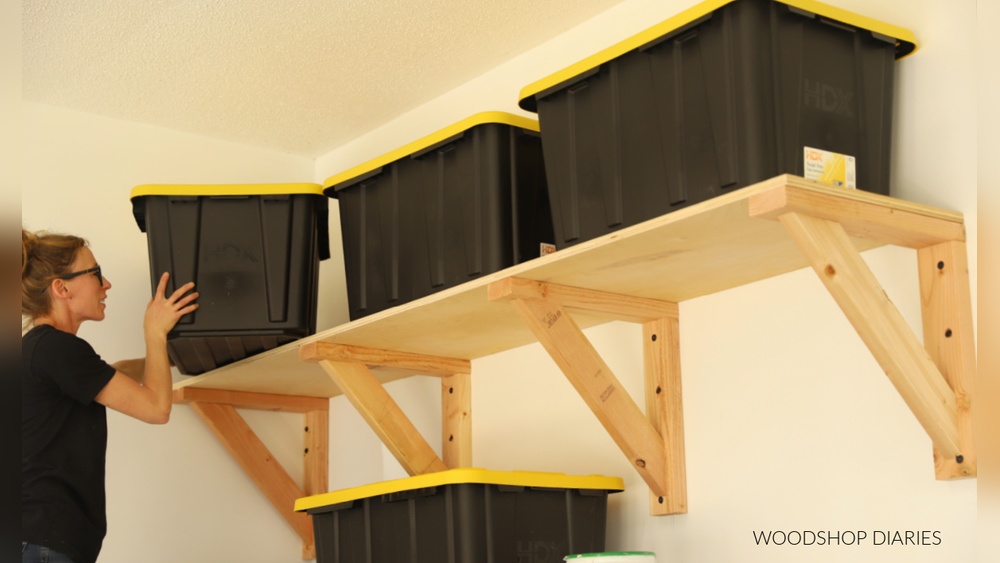
Building Wall Shelves In Your Garage: A Beginner’s Guide
A messy garage makes it hard to find your tools, sports gear, or holiday decorations. Many homeowners let things pile up on the floor because they think garage storage is expensive or difficult. The truth is, installing wall shelves in your garage is one of the simplest and most affordable ways to get organized. Even if you’ve never built anything before, you can create sturdy, custom shelves and transform wasted wall space.
This guide explains how to plan, buy materials, and build shelves step by step. You’ll see how the right shelves make your garage safer, easier to clean, and more useful for daily life.
Why Build Wall Shelves In Your Garage?
Wall shelves use space you already have. They clear floors, protect items from water or pests, and make everything easier to reach. Here are some specific reasons to install shelves:
- Maximize vertical space: Use walls, not just the floor.
- Prevent clutter: Keep tools, boxes, and supplies organized.
- Protect belongings: Store things off damp concrete.
- Increase safety: Reduce tripping hazards.
- Find items faster: See everything at a glance.
A garage with shelves is also more appealing if you sell your house. According to the National Association of Home Builders, 85% of buyers want garage storage space.
Planning Your Garage Wall Shelves
Planning before you buy materials saves money and time. Think about:
- What you want to store: Heavy bins? Paint cans? Sports gear?
- Shelf size: Measure your wall and the items you’ll store.
- Weight needs: How strong must your shelves be?
- Location: Avoid blocking doors, windows, or outlets.
Example: Planning For Storage Bins
Suppose you want to store 12 large plastic bins, each 16 inches tall and 24 inches wide. You have a 10-foot wall. You’d need:
- Shelf depth: 18–20 inches
- Shelf height: At least 18 inches between each level
- Number of shelves: 3–4, depending on wall height

Credit: www.youtube.com
Types Of Wall Shelves For Garages
You can build wooden shelves, install metal shelf kits, or use wire shelving. Here’s a comparison to help you choose:
| Type | Pros | Cons | Typical Cost (per 8 ft) |
|---|---|---|---|
| Wooden (DIY) | Custom size, strong, affordable | Requires tools and time | $35–$70 |
| Metal Shelf Kit | Quick to install, adjustable | More expensive, size limits | $80–$200 |
| Wire Shelving | Lightweight, good for small items | Not for heavy loads, small gaps | $50–$120 |
For most beginners, wooden shelves offer the best mix of strength, cost, and custom fit.
Tools And Materials Needed
To build strong, basic wooden shelves, you’ll need:
- Tools:
- Drill and drill bits
- Stud finder
- Level
- Tape measure
- Saw (circular or hand saw)
- Pencil
- Safety glasses
- Materials (for an 8-foot shelf with 3 levels):
- 2×4 lumber for support frames (about 6 pieces, 8 feet each)
- 3/4-inch plywood for shelf surfaces (2 sheets, cut to size)
- 3-inch wood screws
- Wall anchors (if studs are not spaced well)
- Paint or sealer (optional, for moisture protection)
Sample Material Costs
On average, building 3 shelves (8 feet long, 18 inches deep) costs about $60–$90 in wood and screws. Buying pre-made shelf kits for the same size can cost $150 or more.
Step-by-step Guide To Building Garage Wall Shelves
You don’t need to be a carpenter. Follow these clear steps, and you’ll have shelves in a weekend.
1. Mark The Wall And Find Studs
- Use a stud finder to locate wall studs (vertical wood behind drywall).
- Mark stud positions with a pencil.
- Decide the shelf height and spacing. Mark shelf lines on the wall.
Tip: Studs are usually 16 or 24 inches apart.
2. Cut The Wood
- Cut 2x4s for the horizontal supports (the full shelf length).
- Cut 2x4s for the brackets (shelf depth minus 1.5 inches).
- Cut plywood to the shelf width and length.
Example: For an 8-foot shelf, cut three 8-foot 2x4s and six 18-inch pieces for brackets.
3. Attach The Shelf Supports
- Drill pilot holes in the horizontal supports.
- Screw supports to wall studs along your marked lines.
- Use a level to keep everything straight.
4. Build And Attach Brackets
- Screw bracket pieces to the wall beneath the supports.
- Add a short diagonal brace for extra strength if needed.
5. Install The Shelf Surface
- Place plywood on top of the frames.
- Screw plywood to the supports (every 12–16 inches).
- Sand edges for safety.
6. Check Stability And Finish
- Test each shelf by pressing down firmly.
- Paint or seal for moisture resistance if desired.
Insight: Using 3-inch screws and hitting every stud makes shelves much stronger than using wall anchors or nails alone.
How Much Weight Can Garage Wall Shelves Hold?
Strength depends on:
- Support type (screwed to studs or just drywall)
- Wood thickness
- Bracket spacing
Typical DIY wooden shelves (2×4 frames, 3/4-inch plywood, attached to studs) can hold 150–300 pounds per 8-foot shelf. For heavy items, add more brackets or use thicker wood.
Safety Note
Never overload shelves. Distribute weight evenly and check supports regularly.
Common Mistakes Beginners Make
Avoid these issues for safe, long-lasting shelves:
- Missing the studs: Shelves in drywall only can pull out and fall.
- Too few brackets: Long shelves sag in the middle.
- Cheap wood: Low-quality wood bends or splits.
- Wrong screws: Use wood screws, not drywall screws, for strength.
- Ignoring load limits: Don’t stack heavy items on thin shelves.
Non-obvious tip: Label shelf heights on the wall before you build. This helps prevent installing the top shelf too high to reach.
Comparing Diy Vs. Store-bought Garage Shelves
Many people wonder if buying shelves is easier than building. Here’s a quick comparison:
| Feature | DIY Wooden Shelves | Store-Bought Shelves |
|---|---|---|
| Cost | Lower ($60–$90 for 3 shelves) | Higher ($150+ for similar size) |
| Customization | Any length, depth, spacing | Fixed sizes |
| Strength | High (if built well) | Medium–high |
| Time | 2–4 hours | 30–60 minutes |
| Skill Needed | Basic tools and measuring | Minimal |
Insight: If you need shelves for heavy tools or custom spaces, building your own is usually better. For quick storage of light items, store-bought is fine.
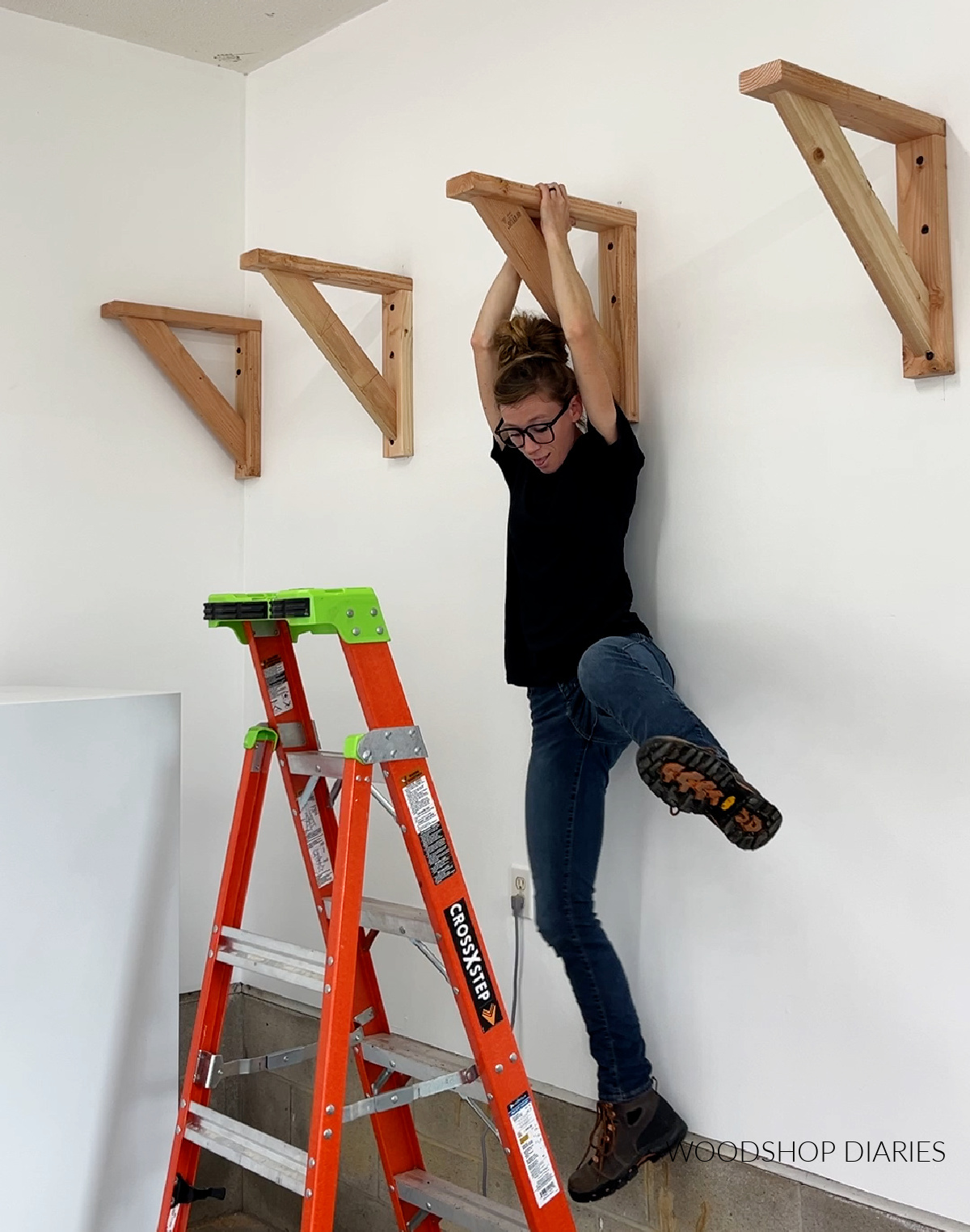
Credit: www.woodshopdiaries.com
Practical Tips For Success
- Seal wood: Paint or seal to prevent rot in humid garages.
- Leave space: Don’t build shelves right up to the garage door tracks or switches.
- Plan for future: Leave a few inches above each shelf for easy access.
- Use clear bins: Store items in labeled bins to see contents quickly.
- Add hooks: Screw hooks under shelves for hanging cords or tools.
Advanced tip: If you ever want to add cabinets or pegboards, design shelves so you can fit these upgrades later.
Maintenance And Safety
Well-built garage shelves need little maintenance, but check them twice a year.
- Look for loose screws or sagging boards.
- Clean dust and cobwebs for safety and appearance.
- If shelves get wet, dry them quickly to prevent mold.
Pro tip: Never climb or stand on garage shelves. Use a sturdy ladder for high items.
Credit: www.reddit.com
Real-world Example
Jim, a homeowner in Ohio, built three 8-foot shelves in his garage for $80. He stored:
- Paint cans on the top shelf (lighter weight)
- Power tools on the middle shelf
- Heavy storage bins on the bottom shelf
By attaching all supports to studs, Jim’s shelves held up for over 5 years with no repairs. He estimated he saved $200 compared to buying ready-made shelves.
Where To Learn More
For more detailed guides, videos, and material calculators, check resources like Family Handyman. They offer step-by-step photos and design tips for every skill level.
Frequently Asked Questions
How High Should Garage Wall Shelves Be?
Most shelves start 18–24 inches above the floor to allow space for big items below. The top shelf should be low enough to reach safely—usually no higher than 6 feet. Adjust shelf spacing based on what you plan to store.
What Is The Best Wood For Garage Shelves?
2×4 framing lumber and 3/4-inch plywood are strong and affordable. Choose kiln-dried wood to prevent warping, especially in humid areas. Avoid particleboard—it sags under heavy loads.
Can I Install Shelves On Concrete Or Brick Garage Walls?
Yes, but you’ll need masonry anchors and a hammer drill. Mark shelf locations, drill holes for anchors, and use heavy-duty screws or bolts. Always follow safety instructions for power tools.
How Much Weight Can A Wall Shelf In The Garage Hold?
A well-built shelf (2×4 frame, plywood, attached to studs) usually supports 150–300 pounds per 8 feet. For heavier loads, add more supports, use thicker wood, or shorten shelf spans.
Is It Cheaper To Build Or Buy Garage Shelves?
Building your own shelves is almost always cheaper, especially for large or custom sizes. DIY shelves cost about $60–$90 for three 8-foot shelves. Store-bought options cost $150 or more for similar strength and space.
Building wall shelves in your garage is a smart, affordable way to get organized and add value to your home. With basic tools and careful planning, even beginners can build shelves that last for years. Take your time, measure twice, and enjoy a cleaner, more useful garage.