
Storing gasoline in your garage can make life easier. You might need it for lawn mowers, generators, or emergencies. But gasoline is dangerous. It is flammable, releases harmful vapors, and can cause accidents if not handled properly. Many people do not realize how risky it is to keep gasoline at home.
If you store it incorrectly, you put your family, property, and health at risk. This article explains how to store gasoline safely in your garage. You will learn about safe containers, storage limits, regulations, and practical steps to reduce danger.
If you are new to gasoline storage, these tips will help you avoid common mistakes and stay safe.
Why Gasoline Storage Needs Special Care
Gasoline is not like water or motor oil. It is highly flammable and can ignite at temperatures as low as 45°F (7°C). Even small amounts of gasoline vapors can explode if there is a spark. According to the National Fire Protection Association (NFPA), gasoline is involved in over 1,500 home fires every year in the US.
Short facts about gasoline:
- Flash point: -45°F (-43°C)
- Vapor density: Gasoline vapors are heavier than air, so they settle near the ground
- Explosion risk: Vapors can ignite from static electricity, pilot lights, or electrical switches
Most people do not realize that gasoline can leak fumes even from closed containers. These fumes can build up and create a dangerous environment in your garage.
Choosing The Right Gasoline Storage Containers
Not all containers are suitable for gasoline. Using the wrong container is a common mistake that can lead to leaks or explosions.
Approved Gasoline Containers
Always use containers that are approved for gasoline storage. These are usually made of high-density polyethylene (HDPE) or metal. Look for containers with certification from:
- Underwriters Laboratories (UL)
- American Society for Testing and Materials (ASTM)
- Department of Transportation (DOT)
Features of safe containers:
- Leak-proof and sealed: Prevents vapors from escaping
- Color-coded red: Red containers are used for gasoline to avoid confusion
- Spill-proof spout: Reduces risk when pouring
Comparing Container Types
Here is a simple comparison of common gasoline container types:
| Container Type | Material | Capacity (gallons) | Certifications | Price Range |
|---|---|---|---|---|
| Plastic Gas Can | HDPE | 1-5 | UL, ASTM | $10–$25 |
| Metal Safety Can | Steel | 2-5 | UL, DOT | $25–$50 |
| Jerry Can | Steel/HDPE | 5 | DOT | $30–$60 |
Plastic cans are easy to carry and affordable, but metal cans last longer and resist damage better.
What Beginners Often Miss
- Never use milk jugs, soda bottles, or any improvised container. These break down and leak.
- Old gas cans can lose their seal over time. Inspect for cracks and replace if needed.
How Much Gasoline Can You Store In Your Garage?
Many people store too much gasoline, thinking it is okay. But US fire codes limit how much you can keep at home.
- Maximum allowed: 25 gallons in approved containers (according to NFPA)
- Local rules may be stricter. Some cities limit to 10 gallons.
Storing more than the allowed amount can result in fines or loss of insurance coverage. Always check your local regulations before buying extra gasoline.
Storage Amount Comparison
| Location | Allowed Amount (gallons) | Container Requirement |
|---|---|---|
| Residential Garage | 25 | Approved containers only |
| Apartment (no garage) | 0–5 | Strictly regulated |
| Outdoor Shed | Varies | May need locked cabinet |
For most homeowners, keeping 2–3 small gas cans (totaling 10–15 gallons) is enough for lawn tools and emergencies.
Safe Storage Location In The Garage
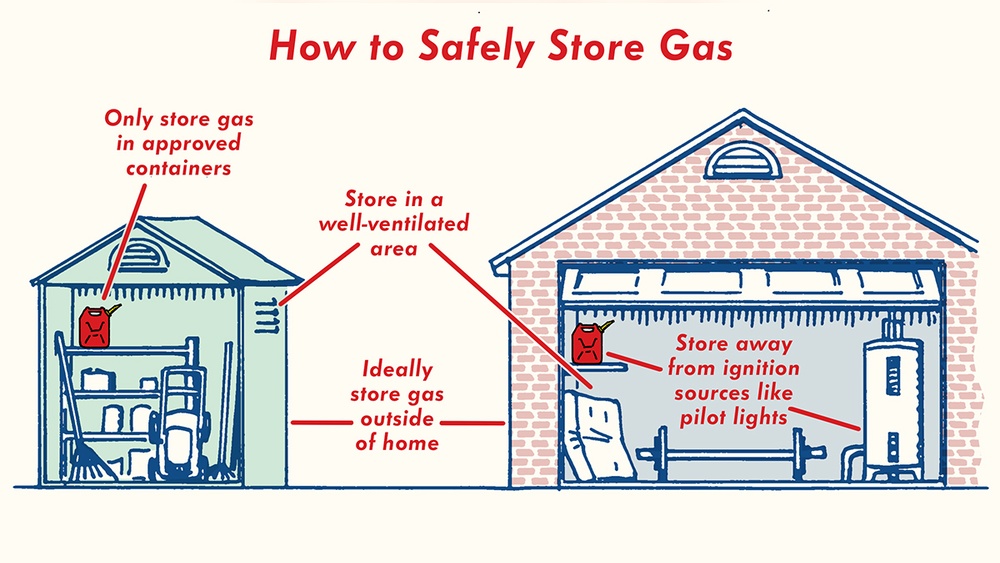
Where you place your gasoline matters. Gasoline should never be stored near heat sources, electrical equipment, or direct sunlight.
Tips for safe storage:
- Store gasoline on a low shelf or in a locked cabinet
- Keep containers at least 50 feet away from ignition sources (water heater, furnace, power tools)
- Avoid storing gasoline next to car batteries or outlets
- Make sure the area is well-ventilated to prevent vapor buildup
Never keep gasoline inside your home or basement. The risk of fire and toxic fumes is too high.
Example Storage Scenario
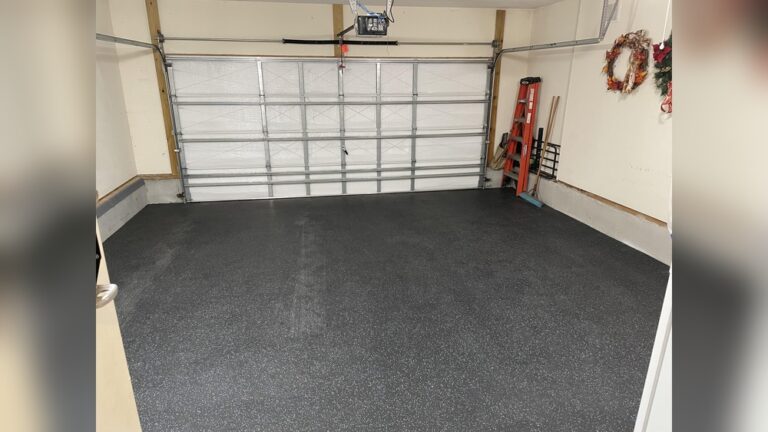
Imagine you have a two-car garage. The best spot for gasoline is:
- On the far wall, away from the door and electrical panel
- Inside a ventilated metal cabinet
- With a fire extinguisher nearby
This setup reduces fire risk and keeps gasoline out of reach of children and pets.
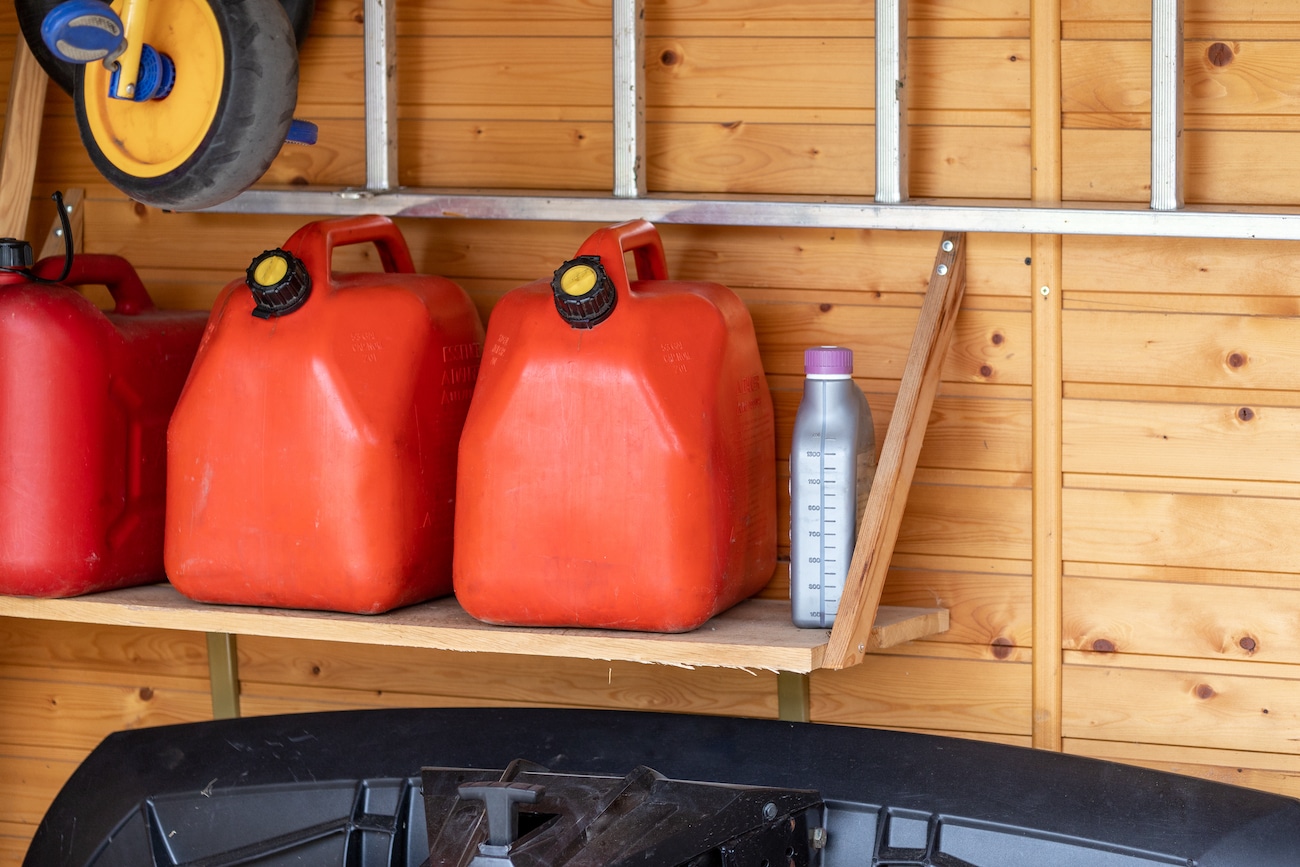
Credit: chenangosupplycompany.com
Handling Gasoline Safely
How you handle gasoline is just as important as storage. Spills, improper pouring, and careless actions can cause accidents.
Key Safety Steps
- Only fill containers outdoors, never inside the garage.
- Use a funnel or spill-proof spout to prevent drips.
- Wipe up spills immediately with absorbent material.
- Wash hands after handling gasoline.
- Never smoke or use open flames near gasoline.
Practical Example
Suppose you need to fill your lawn mower:
- Take the gas can outside
- Place it on the ground (not in your car)
- Use the proper spout to pour
- If you spill, clean up before starting the mower
Many beginners forget to clean up spills or pour gasoline inside the garage. These mistakes can cause fires or health problems.
Ventilation And Fire Safety Precautions
Proper ventilation is critical. Gasoline vapors can cause headaches, dizziness, or worse. In poorly ventilated garages, vapors may linger and explode.
- Open garage doors and windows when handling gasoline
- Install a carbon monoxide detector and smoke detector in your garage
- Keep a fire extinguisher rated for flammable liquids (Class B)
Fire Extinguisher Comparison
| Extinguisher Type | Suitable For | Price Range | Recommended Location |
|---|---|---|---|
| Class B | Flammable liquids | $20–$50 | Near gas cans |
| Class A | Wood, paper | $15–$40 | General area |
| Combination (ABC) | All fires | $30–$70 | Garage entry |
A Class B extinguisher is best for gasoline fires. Make sure everyone in your family knows how to use it.
Gasoline Shelf Life And Disposal
Gasoline does not last forever. Over time, it loses effectiveness and can damage engines. Most beginners store gasoline too long, thinking it is still good.
- Shelf life: 3–6 months for regular gasoline; up to 1 year with stabilizer
- Old gasoline can become gummy and separate into layers
If gasoline smells sour or looks cloudy, do not use it. Dispose of old gasoline at a hazardous waste facility. Never pour it down drains or onto the ground.
Disposal Tips
- Call your local waste management office for drop-off times
- Use approved containers when transporting old gasoline
- Mix old gasoline with fresh only if your engine can handle it (check manufacturer guidelines)
Many people do not realize that improper disposal is illegal and can contaminate soil and water.
Legal And Insurance Considerations
Storing gasoline at home is regulated by law. Breaking these rules can void your home insurance and result in legal trouble.
- Check your homeowner’s insurance policy for gasoline storage clauses
- Follow local fire codes and zoning laws
- Keep receipts and documentation for gas cans
If you have a fire caused by stored gasoline, insurance may not cover damages if you broke the rules.
For more details on safety codes, visit the NFPA official site.

Credit: www.aprestoration.com
Common Mistakes Beginners Make
- Using non-approved containers (like old paint cans)
- Storing gasoline near heat sources
- Keeping more than the legal limit
- Forgetting to ventilate the garage
- Using gasoline after its shelf life
These mistakes can cause fires, health risks, or legal problems. Always follow best practices to protect your family.
Frequently Asked Questions
How Long Can I Safely Store Gasoline In My Garage?
You can store gasoline for 3–6 months in approved containers. If you use a fuel stabilizer, storage can extend up to 1 year. Always check for signs of aging like a sour smell or cloudy appearance.
Can I Store Gasoline In My Basement Or Inside The House?
No, storing gasoline indoors is unsafe. Gasoline vapors can cause fires or poisoning. Always keep gasoline in your garage, shed, or outside in a ventilated, locked cabinet.
What Should I Do If I Spill Gasoline In My Garage?
Clean up spills immediately using absorbent material like cat litter or sand. Ventilate the area. Dispose of the cleanup material at a hazardous waste center. Never use water to wash away gasoline.
Are There Legal Limits For Storing Gasoline At Home?
Yes, most US fire codes limit you to 25 gallons in approved containers. Local rules may be stricter. Check your city regulations and insurance policy before storing gasoline.
What Type Of Fire Extinguisher Should I Keep Near Gasoline?
A Class B fire extinguisher is recommended for gasoline fires. It is designed to handle flammable liquids. Place it near your gasoline storage area and train your family to use it.
Storing gasoline in your garage can be safe if you follow the right steps. Use approved containers, store only the allowed amount, and keep gasoline away from heat and ignition sources. Make sure your garage is ventilated and have a Class B fire extinguisher ready.
Remember to check local regulations and insurance rules. With these precautions, you can avoid accidents and keep your family safe.

Credit: www.popsci.com