
When your garage door ages, breaks, or just doesn’t fit your home’s look anymore, replacing it can make a big difference. Many homeowners are surprised by how much a new garage door can improve both curb appeal and home value. But before you start shopping, it’s smart to understand the real costs involved in a garage door replacement. The price can range a lot, depending on your choices. In this guide, you’ll learn how much you might pay, what affects the cost, and how to make a smart decision for your budget and needs.
What Is The Average Garage Door Replacement Cost?
Most homeowners spend between $800 and $2,500 for a new garage door, including installation. Some basic models cost less, while high-end or custom doors can cost much more. Here’s a quick look at typical price ranges:
- Low-end: $500 – $900 (single, non-insulated, basic steel)
- Mid-range: $1,000 – $2,000 (insulated, better materials, some windows)
- High-end: $2,500 – $5,000+ (custom wood, smart features, luxury options)
For a standard two-car garage, expect to pay about $1,500 to $2,800. These numbers include both the door and professional installation.
Cost Breakdown Example
Here’s an example for a mid-range, insulated steel door for a two-car garage:
- Door itself: $1,200
- Hardware & tracks: $150
- Professional installation: $500
- Removal/disposal of old door: $100
Total: $1,950
This is just one scenario—your costs may vary.
Factors That Affect Garage Door Replacement Cost
The price of a new garage door depends on several key factors. Each choice you make can raise or lower the total bill.
1. Door Material
Different materials offer different looks, durability, and prices.
| Material | Price Range (Single Door) | Pros | Cons |
|---|---|---|---|
| Steel | $500 – $1,800 | Strong, low maintenance | Can dent, may rust |
| Aluminum | $700 – $2,000 | Lightweight, won’t rust | Less durable, dents easily |
| Wood | $1,200 – $4,000 | Classic look, customizable | Needs maintenance, heavy |
| Fiberglass | $1,000 – $2,100 | Resists salt, light | Can yellow, cracks in cold |
| Vinyl | $900 – $2,500 | Durable, low maintenance | Fewer style options |
2. Door Size And Style
- Single door (8×7 ft): Cheaper, uses less material.
- Double door (16×7 ft): About 50–80% more expensive.
- Custom sizes: Can add $500–$1,500 to your total.
Popular styles include sectional, roll-up, tilt-up, and carriage house. Carriage doors and custom designs usually cost more.
3. Insulation And Energy Efficiency
- Non-insulated: Cheapest, but less energy efficient.
- Insulated: Adds $200–$600, lowers energy bills, quieter operation.
- R-value: Higher R-value means better insulation.
If your garage is attached to your home or used as a workspace, insulation is a smart investment.
4. Windows And Decorative Features
Windows, decorative hardware, and custom finishes can add $200–$800 or more. These options improve appearance and natural light but increase costs.
5. Opener And Accessories
A new garage door opener is often installed at the same time. Expect to pay:
- Basic opener: $200 – $350
- Smart or WiFi-enabled: $350 – $600
Other options include keypads, battery backup, and smartphone control.
6. Labor And Installation
Professional installation usually costs $300 to $700. Complex doors, high ceilings, or removing old doors can add to the price.
7. Removal And Disposal Of Old Door
Most installers charge $75–$200 to haul away and dispose of your old garage door.
8. Location And Local Costs
Where you live matters. Labor costs are higher in big cities or remote areas. Permits or local building codes may also affect your final price.

Credit: www.reddit.com
Garage Door Replacement Cost By Door Type
Some types of garage doors are more expensive due to their design or materials.
| Door Type | Average Installed Cost | Features |
|---|---|---|
| Sectional | $800 – $2,500 | Most common, easy to use |
| Roll-up | $1,000 – $2,800 | Space-saving, commercial use |
| Tilt-up | $700 – $2,000 | Single panel, simple look |
| Carriage-house | $1,200 – $4,000 | Rustic style, often custom |
Sectional doors are the most common choice for US homes, balancing cost and reliability.
Additional Costs To Consider
When planning your garage door replacement, don’t forget about extra costs that may surprise you:
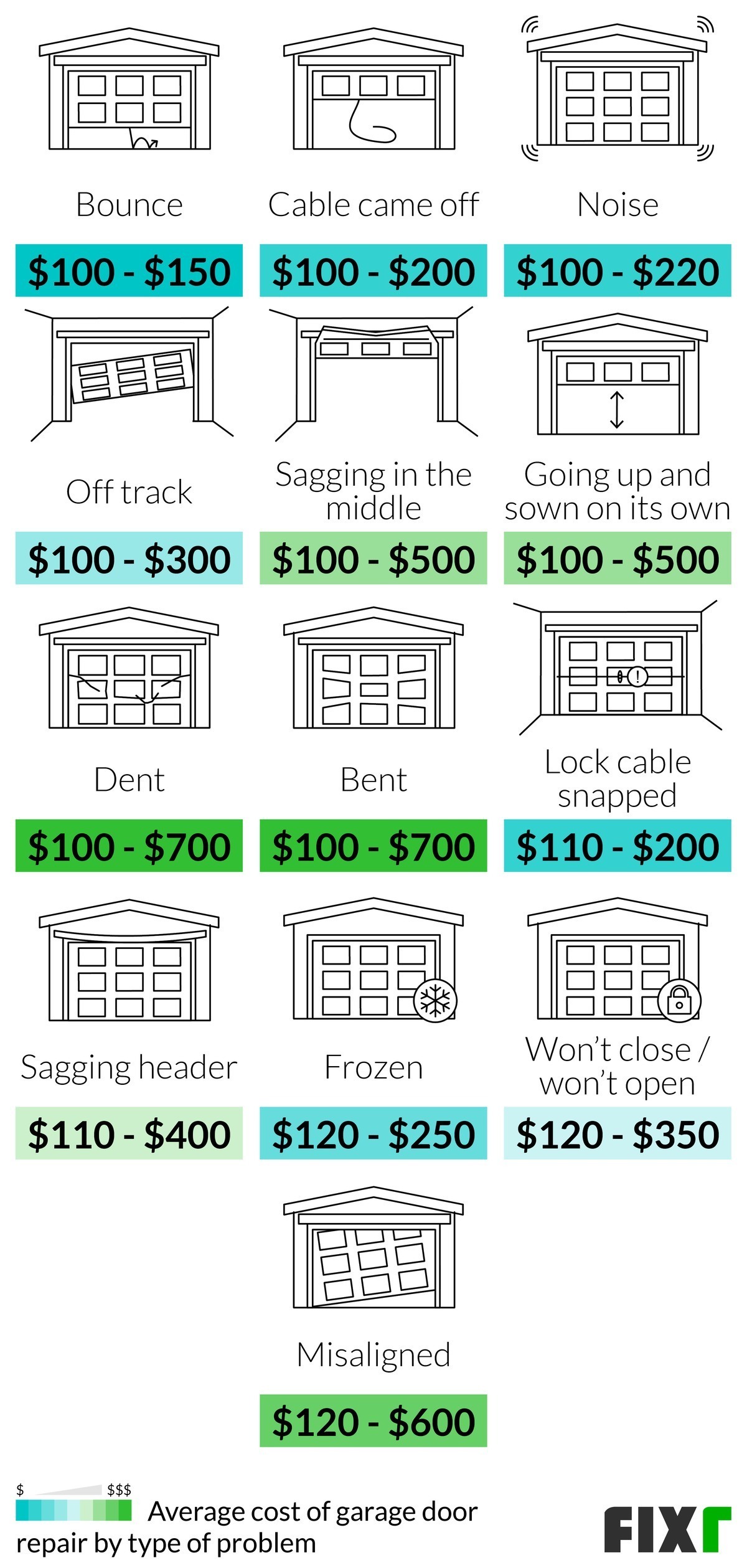
- Repairing or replacing tracks: $125–$400
- New springs or cables: $100–$350
- Painting or staining wood doors: $150–$500
- Structural repairs: If your frame is damaged, this can add $300–$1,000
Some companies offer warranties on parts and labor. Ask what’s included before you buy.
Diy Vs Professional Installation
Many homeowners wonder if they can save money by installing a garage door themselves. For most, hiring a professional is the safest and smartest choice.
Why Professional Installation Is Recommended
- Garage doors are heavy and under tension (springs can be dangerous)
- Professional installers have the right tools and experience
- Mistakes can void warranties or cause injury
DIY savings: You might save $300–$700 on labor, but risks are high.
Pro tip: If you have experience with heavy-duty DIY projects and proper tools, you might consider DIY for basic, non-insulated doors. For most people, professional installation is best.
How To Choose The Right Garage Door For Your Budget
Picking the right garage door means balancing cost, durability, style, and features. Here are some steps to help you make a smart choice:
- Set Your Budget
- Decide how much you can comfortably spend.
- Include installation, removal, and any upgrades.
- Pick the Right Material
- Steel or aluminum for low maintenance and budget-friendly.
- Wood for classic looks but higher cost and upkeep.
- Think About Insulation
- Choose insulated if your garage is attached or you use it often.
- Decide on Style and Extras
- Windows, colors, and decorative hardware can increase the price.
- Compare Quotes
- Get at least 2–3 estimates from local professionals.
- Ask for itemized breakdowns to see exactly what you’re paying for.
- Check Warranties and Reviews
- A good warranty protects your investment.
- Look up reviews to make sure the installer is reliable.
Real-world Examples: What Homeowners Pay
Let’s look at a few common scenarios to help you see what to expect.
Example 1: Budget-friendly Single Door
- Material: Non-insulated steel
- Size: 8×7 ft (single car)
- Style: Basic panel
- Installed price: $750 – $1,100
Example 2: Mid-range Double Door
- Material: Insulated steel
- Size: 16×7 ft (two car)
- Windows: Yes
- Installed price: $1,700 – $2,500
Example 3: High-end Custom Wood Door
- Material: Custom cedar wood
- Size: 16×8 ft (two car)
- Features: Decorative hardware, custom stain
- Installed price: $4,000 – $7,000
Beginner insight: Many people forget to include the cost of removing the old door and adding new openers or tracks. Always ask your installer what’s included.
Ways To Save Money On Garage Door Replacement
Replacing a garage door is a big investment, but there are smart ways to reduce costs:
- Choose standard sizes: Custom sizes cost more.
- Skip unnecessary extras: Windows and smart features can be added later.
- Shop off-season: Many installers offer discounts in winter.
- Ask about sales or rebates: Some manufacturers offer special deals.
- Bundle with opener installation: This can lower total labor costs.
Non-obvious tip: Some local energy programs offer rebates for insulated doors. Check with your utility company.
Credit: www.fixr.com
Return On Investment (roi) For Garage Door Replacement
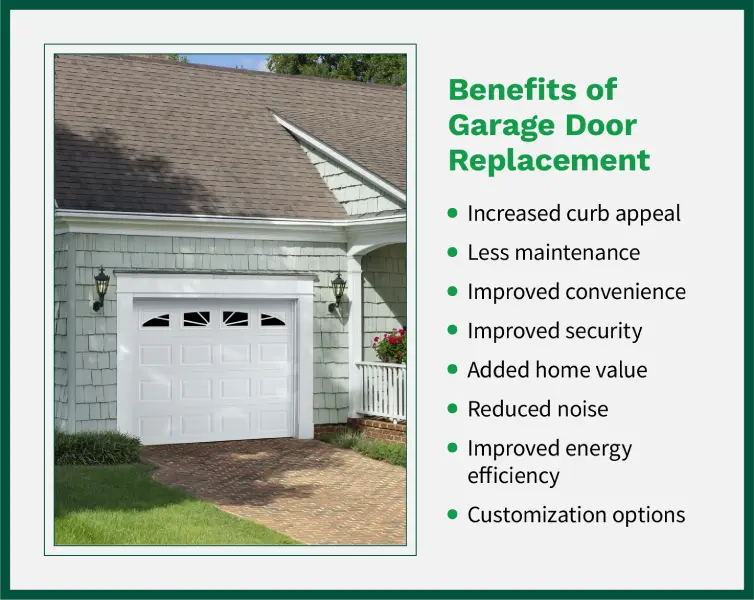
A new garage door is not just about looks or safety—it can also boost your home’s value. According to the 2023 Cost vs. Value Report, garage door replacement delivers an average ROI of 102.7%. That means you could recover more than your cost when you sell your home.
Why is ROI so high?
- Improves curb appeal instantly
- Increases energy efficiency
- Enhances security and convenience
When Should You Replace (not Repair) Your Garage Door?
Sometimes, simple repairs are enough. But replacement is better when:
- Your door is more than 15–20 years old
- Panels are cracked, warped, or rotted
- The door is unsafe or off-balance
- Multiple repairs are needed often
- You want better insulation or a modern look
If your garage door is only scratched or needs a new spring, repair may be enough. For major damage or frequent issues, replacement is usually smarter.
Credit: www.precisiondoor.net
What To Look For In A Garage Door Installer
Choosing the right pro is just as important as picking the right door. Here’s what to check:
- Experience: Look for companies with strong local reputations.
- License and insurance: Protects you in case of problems.
- Written estimate: Should be detailed and include all costs.
- Warranty: Good installers stand behind their work.
- References: Ask for recent customers you can contact.
Non-obvious insight: Some installers offer annual maintenance plans. These can help your new door last longer and spot problems early.
Frequently Asked Questions
How Long Does It Take To Replace A Garage Door?
Most standard garage door replacements take 4–6 hours. Custom doors or repairs to the frame may add time.
Can I Reuse My Old Garage Door Opener?
If your opener works and fits the new door, you can often keep it. Ask your installer if it’s compatible with the new door’s weight and features.
Does Replacing My Garage Door Increase Home Value?
Yes. A new garage door is one of the top home improvement projects for return on investment. It increases both curb appeal and energy efficiency. For more details, see the Cost vs. Value Report.
How Often Do Garage Doors Need To Be Replaced?
Most garage doors last 15–30 years, depending on material, climate, and maintenance. Wood doors may need replacement sooner if not maintained.
Are Permits Needed For Garage Door Replacement?
Some cities or homeowner associations require permits. Check with your local building department before starting your project to avoid fines or delays.
Replacing your garage door is a smart investment that brings both practical and financial benefits. By understanding what affects the cost, comparing your options, and choosing the right installer, you can enjoy a safe, stylish, and energy-efficient upgrade for years to come.