
Storing your kayak in the garage may seem simple, but doing it right can protect your investment and make your next paddling trip easier. Many beginners make mistakes that cause damage or waste space. With the right steps, your kayak stays safe, your garage stays organized, and you avoid costly problems.
This guide breaks down everything you need to know, from choosing a storage method to avoiding common beginner errors.
Why Garage Storage Matters For Kayaks
A kayak is more than just a boat—it’s often a big investment. Proper garage storage keeps your kayak:
- Safe from weather
- Protected from theft
- Free from warping, cracks, and mold
Garage storage also makes it easier to clean and maintain your kayak. You can prepare for your next trip without hunting for gear or dealing with repairs.
Real Risks Of Poor Storage
Leaving your kayak on the floor or outside can cause:
- UV damage: Sunlight fades colors and weakens plastic.
- Moisture problems: Mold, mildew, and rot.
- Physical stress: Warping or cracking from weight and pressure.
According to the National Marine Manufacturers Association, almost 40% of kayak owners report damage from improper storage in their first year.
Choosing The Right Storage Method
Your garage size, kayak type, and budget all affect the best storage solution. Here are the most popular methods:
Wall Mounts
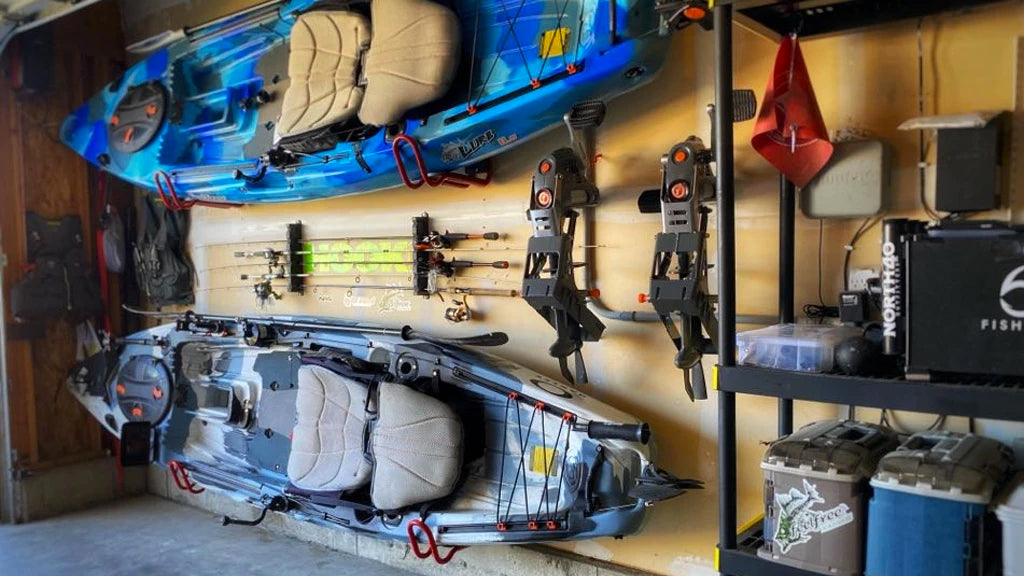
Wall mounts are ideal for saving floor space. They use sturdy brackets to hold the kayak off the ground.
- Suitable for plastic, fiberglass, and inflatable kayaks
- Keeps kayak visible and easy to access
- Requires secure wall anchors
Ceiling Hoists
Ceiling hoists lift your kayak overhead, freeing up space below.
- Best for garages with high ceilings
- Allows solo lifting with pulleys
- Keeps kayak away from pets and cars
Freestanding Racks
Freestanding racks don’t require wall installation. They are movable and good for renters.
- Can hold multiple kayaks
- Offers flexibility—move rack as needed
- Often made of metal or heavy-duty plastic
Floor Storage
Storing on the floor is not recommended, but some use padded blocks or foam. Only use this if you have no other option.
- Risk of damage from pressure points
- Must be kept dry and away from chemicals
Example: Wall Mount Vs Ceiling Hoist
Here’s a quick comparison for beginners:
| Storage Method | Space Needed | Difficulty | Best For |
|---|---|---|---|
| Wall Mount | 6 ft x 2 ft | Medium | Single kayak, easy access |
| Ceiling Hoist | Above car or workbench | Hard | Multiple kayaks, small garage |
| Freestanding Rack | 8 ft x 3 ft | Easy | Multiple kayaks, flexible storage |
Credit: feelfreeus.com
How To Prepare Your Kayak For Garage Storage
Before storing, always clean and inspect your kayak. This prevents hidden damage and keeps gear ready to use.
Cleaning Steps
- Rinse with fresh water to remove dirt and salt.
- Use mild soap for tough stains.
- Dry completely—water inside the hull can cause mold.
Inspect For Damage
- Look for cracks or deep scratches.
- Check hatches, seats, and fittings.
- Replace or repair broken parts before storage.
Remove Accessories
Take out paddles, life jackets, and fishing gear. Store these separately to avoid pressure points and prevent mildew.
Installing Your Kayak Storage System
Many beginners worry about damaging their kayak or their garage walls. Here’s how to install most systems:
Wall Mount Installation
- Locate studs in the wall for strong support.
- Use heavy-duty screws and brackets designed for kayak weight.
- Place mounts about 1/3 of the kayak length from each end for balanced support.
Ceiling Hoist Setup
- Secure pulleys directly to ceiling joists.
- Double-check weight limits—most hoists hold up to 100 pounds.
- Follow manufacturer instructions closely.
Freestanding Rack Assembly
- Assemble rack according to directions.
- Place foam padding or rubber at contact points.
- Keep rack away from doors or heavy traffic areas.
Example: Wall Mount Installation Steps
| Step | Action | Tip |
|---|---|---|
| 1 | Find wall studs | Use a stud finder for accuracy |
| 2 | Mark bracket locations | Measure twice for level placement |
| 3 | Drill pilot holes | Use drill bit slightly smaller than screw |
| 4 | Install brackets | Tighten screws but don’t overtighten |
| 5 | Lift kayak onto mounts | Ask for help if kayak is heavy |
Protecting Your Kayak From Garage Hazards
Your kayak faces risks even in the garage. Here’s how to prevent common problems:
Temperature And Humidity
- Garages can get hot or cold. Extreme temperatures warp plastic and crack fiberglass.
- Use a garage thermometer. Try to keep temperature between 40–90°F.
- Consider a dehumidifier if your garage is damp.
Uv Exposure
- Even garage windows let in UV rays. Cover your kayak with a UV-resistant tarp.
- Avoid transparent covers—they offer less UV protection.
Pests And Chemicals
- Keep kayak away from pest-prone corners. Rodents can chew straps or rubber.
- Don’t store near paint, gasoline, or cleaning agents.
Data: Garage Storage Risks
A survey by Outdoor Gear Lab found:
- 29% of kayaks stored in garages with windows showed signs of UV fading after one year.
- 16% suffered from rodent damage.
Maximizing Garage Space With Kayak Storage
A kayak can take up a lot of room. Smart storage keeps your garage usable for cars, bikes, and tools.
Vertical Storage
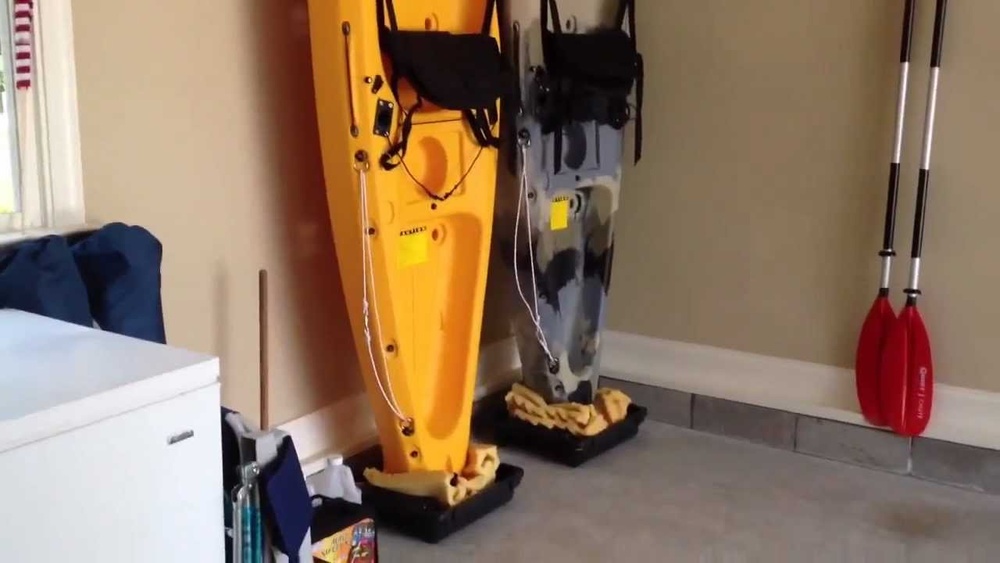
Standing a kayak on its end is possible for short kayaks (under 10 ft). Use padding and secure straps.
- Saves floor space
- Not ideal for long or heavy kayaks
Multi-kayak Solutions
If you own more than one kayak, use racks that stack kayaks safely.
- Separate by type (recreational, fishing, inflatable)
- Label each kayak for quick access
Example: Space-saving Layout
Here’s a sample layout for a single-car garage:
| Item | Position | Space Used |
|---|---|---|
| Kayak (wall mount) | Side wall, above tool bench | 6 ft x 2 ft |
| Bikes | Opposite wall, vertical racks | 4 ft x 1 ft |
| Car | Center | 8 ft x 16 ft |
| Tools | Under kayak, bench | 3 ft x 2 ft |
Common Mistakes Beginners Make
Even experienced paddlers can store kayaks incorrectly. Here are mistakes to avoid:
- Storing on bare concrete: The hull can flatten or crack.
- Ignoring regular inspections: Small cracks can become big problems.
- Overtightening straps: Can warp or dent kayak material.
- Placing near heat sources: Heaters, water heaters, or exposed pipes can cause damage.
- Stacking heavy items on kayak: Leads to deformation.
Non-obvious Insight
Many beginners forget that kayak hulls need to “breathe”. If you wrap your kayak tightly in plastic, moisture can build up and cause hidden mold. Use breathable covers or leave air gaps.
Another common mistake: forgetting to rotate the kayak every few months. This prevents pressure points from forming in the hull.
Maintenance Tips For Garage-stored Kayaks
Regular maintenance can extend the life of your kayak and keep it ready for adventure.
- Clean kayak at least twice a year, even if unused
- Lubricate moving parts (rudder, skeg, seat tracks)
- Check storage straps and racks for wear
- Air out kayak monthly to prevent odor buildup
Practical Example
If you store a kayak for six months, spend 10 minutes every month checking:
- The hull for dents
- The straps for fraying
- The accessories for mold
This simple routine can prevent major repairs.

Credit: www.discountramps.com
Diy Kayak Storage Solutions
You don’t need expensive racks. Here are budget-friendly ideas:
- Use PVC pipes for homemade wall mounts
- Repurpose old shelving with foam padding
- Hang kayak with strong rope and carabiners
Just make sure any DIY solution supports the kayak evenly and avoids sharp pressure points.
Safety Considerations
Safety matters for you and your kayak.
- Always secure kayak to prevent falling
- Keep walkways clear—tripping hazards cause injuries
- Use gloves when installing mounts or hoists
If you have kids or pets, store kayak at least 4 feet off the ground.
When To Upgrade Your Storage
If your kayak is damaged, hard to reach, or your garage feels cluttered, consider upgrading.
- Buy a purpose-built rack if you add more kayaks
- Switch to hoists if space is limited
- Improve padding to protect expensive kayaks
Check reviews and guides from trusted sources like REI before buying new gear.
Frequently Asked Questions
How Much Space Do I Need To Store A Kayak In My Garage?
Most kayaks are 8–14 feet long and 2–3 feet wide. Wall mounts or ceiling hoists use less floor space. Allow at least 6 feet x 2 feet for single kayak storage.
Can I Store My Kayak Outside If My Garage Is Full?
Outdoor storage is risky. UV rays, rain, and pests can damage your kayak. If you must store outside, use a UV-resistant cover and elevate kayak off the ground.
What’s The Best Way To Store An Inflatable Kayak?
Deflate and dry the kayak completely. Store it in a bag or box, away from sharp objects. Never stack heavy items on top of it.
Should I Store My Kayak Upside Down Or Right Side Up?
Store upside down on padded racks or mounts. This reduces pressure on the hull and prevents deformation. Avoid storing right side up unless manufacturer recommends.
How Often Should I Inspect My Garage-stored Kayak?
Check your kayak monthly for cracks, mold, and strap wear. Clean and maintain every 3–6 months, even if not used.
Storing your kayak in the garage keeps it safe, ready, and in good condition for years. With the right setup, you protect your investment and enjoy paddling without worry. Start with proper cleaning, choose a storage method that fits your space, and avoid common mistakes.
A little planning goes a long way—your kayak and your garage will thank you.

Credit: storeyourboard.com