
Opening a garage door manually can feel confusing, especially if you’ve never done it before. Power outages, motor failures, or remote control issues can leave you stuck on either side of your garage. Knowing how to open a garage door by hand is a valuable skill for any homeowner.
This guide explains each step in simple terms, with practical tips and real examples, so you can act quickly and safely when needed.
Why Manual Operation Matters
Most modern garage doors use an electric opener. But there are times when manual operation becomes necessary:
- Power failures: Storms or grid issues can cut electricity.
- Malfunctioning openers: Motors, remotes, or keypads may break.
- Emergency exits: Fires or accidents sometimes block the main door.
Being prepared lets you avoid frustration and helps ensure safety for your family.
Understanding How A Garage Door Works
Before trying to open your garage door manually, it’s important to know how the system functions. A typical garage door system includes:
- Door panels: The large moving sections.
- Tracks: Guide the door up and down.
- Springs: Counterbalance the door’s weight.
- Cables and pulleys: Assist with smooth movement.
- Opener: The electric motor that does the lifting.
- Manual release cord: Disconnects the door from the opener.
Knowing these parts will help you follow the manual opening process with confidence.
When Should You Open The Door Manually?
Not every garage door problem requires manual opening. Here’s when it’s the right choice:
- No power: The opener won’t work without electricity.
- Remote or keypad not responding: Batteries or signal problems.
- Opener malfunction: Strange noises, no movement, or motor failure.
- Safety emergencies: If you need to exit quickly.
But if the door feels unusually heavy or stuck, there may be a problem with the springs or cables. Forcing it could be dangerous. In these cases, call a professional.
Tools You May Need
Most manual openings require no tools. However, keep these handy:
- Flashlight: For dark garages.
- Step stool or ladder: To reach the release cord.
- Gloves: For better grip and safety.
- WD-40 or silicone spray: If the mechanism feels stuck.
Being prepared means less stress when you need to act quickly.
Step-by-step Guide: How To Open A Garage Door Manually
Follow these steps to open your garage door safely and efficiently.
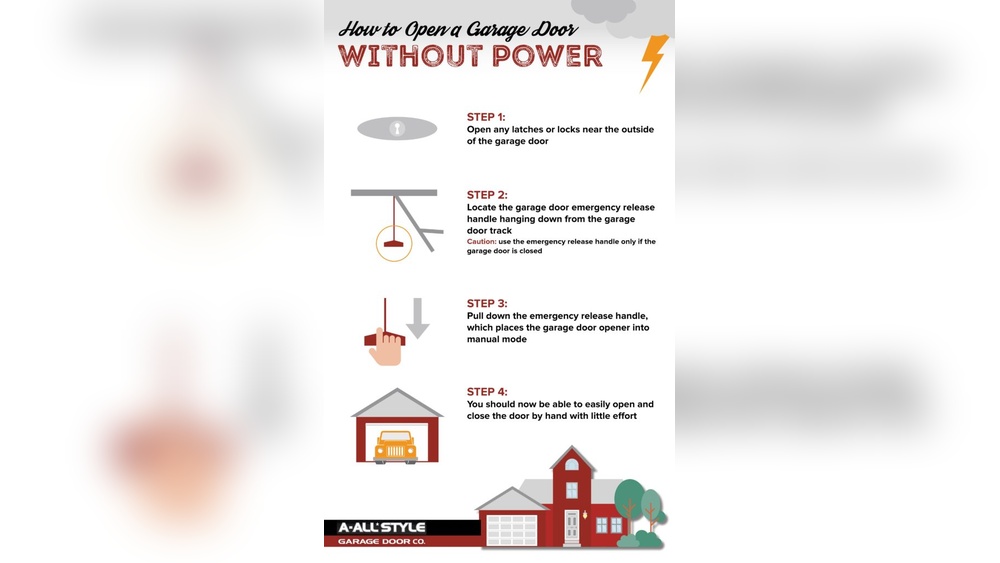
1. Make Sure The Door Is Fully Closed (if Possible)
- If your garage door is halfway open, it may suddenly drop when released.
- Always try to close it first using the wall switch or remote.
- If you can’t, be extra cautious—stand clear of the door’s path.
2. Unplug Or Turn Off The Opener
- Disconnect the opener from the power outlet.
- This prevents accidental activation while you work.
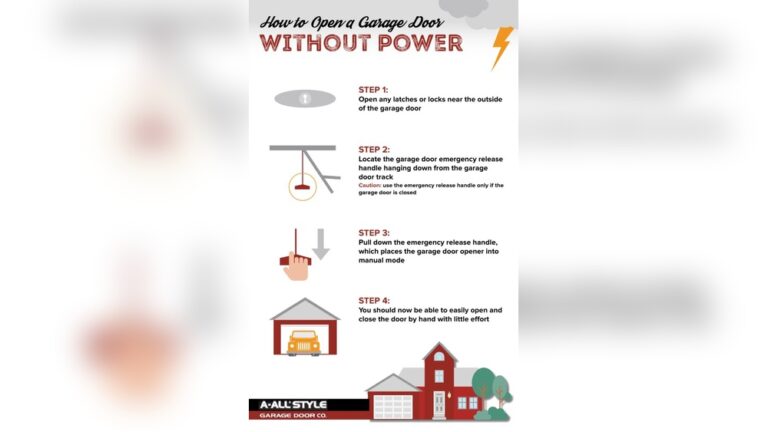
3. Locate The Emergency Release Cord
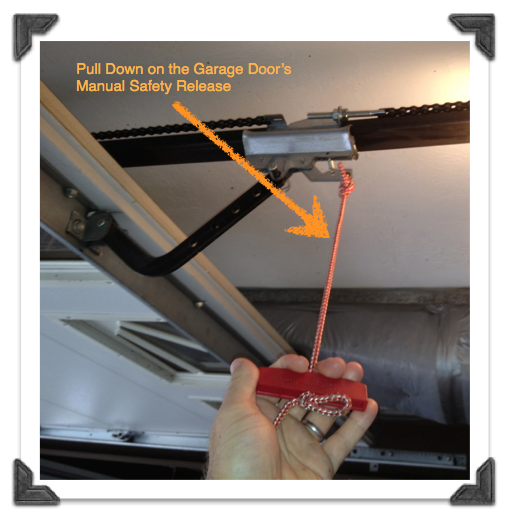
- Look for a red cord hanging from the opener’s rail, usually in the center.
- The cord should be easy to spot.
4. Pull The Emergency Release Cord Down And Back
- Grip the handle firmly.
- Pull straight down, then toward the garage door. You’ll hear a click.
- This action disengages the door from the opener trolley.
Tip: Don’t yank the cord too hard—it’s designed for smooth release.
5. Lift The Door Slowly And Evenly
- Stand with both hands on the door (not the handle).
- Lift the door slowly. It should move up with moderate effort.
- If it’s very heavy or jams, stop and check for obstructions.
6. Prop The Door Open (if Needed)
- For ventilation or access, you can keep the door open.
- Use a sturdy object (like a 2×4 or locking pliers on the track) to hold the door.
- Never leave the door unsupported—it can slam down suddenly.
7. To Close The Door
- Lower the door slowly, keeping both hands on it.
- Make sure the path is clear of people, pets, or objects.
8. Re-engage The Opener
- Once power returns or the issue is fixed, pull the release cord toward the opener.
- This re-connects the trolley.
- Plug the opener back in and test with the remote or wall switch.
Common Mistakes To Avoid
Beginners often make these errors when opening a garage door by hand:
- Forcing the door: If it’s stuck, don’t use excessive force. The springs may be broken.
- Ignoring safety: Not checking if the door is balanced can lead to injury.
- Not supporting the door: Letting go can cause the door to slam down.
- Forgetting to disconnect power: This can cause sudden movement if the opener activates.
If you’re unsure, call a professional.
Manual Vs Automatic: Key Differences
Here’s a simple comparison between manual and automatic garage door operation.
| Feature | Manual Operation | Automatic Operation |
|---|---|---|
| Effort Needed | Physical lifting required | Minimal (press a button) |
| Speed | Slower, depends on user | Consistent speed |
| Safety | Risk if springs fail | Safety sensors, auto-stop |
| In Emergencies | Works without power | Needs electricity |
Manual operation is reliable in a crisis but requires more caution and physical effort.
Safety Tips You Should Never Ignore
- Inspect the springs: If you see broken or loose springs, do not attempt to open the door.
- Keep children and pets away during manual operation.
- Avoid standing under the door as you release it.
- Use gloves for better grip and to avoid cuts.
- Check the tracks: Remove any debris before lifting.
Note: Garage doors are heavy (often 150–300 pounds). Proper balance makes lifting easier, but a broken spring can make the door dangerously heavy.
Credit: www.garagedoorspokane.com
What If The Door Is Locked?
Some garage doors have manual locks or slide bolts for extra security. If your door doesn’t lift:
- Check for side locks: Slide them open before lifting.
- Release any deadbolts: Use the correct key if needed.
- If you’re locked out from the outside, look for an emergency release kit—a small lock with a keyhole in the center panel.
If you don’t have this feature, you may need professional help to avoid damaging the door.
Special Cases: Opening From Outside
If you’re outside and have no power inside the garage:
- Some doors have a release kit on the exterior.
- Use the key to unlock, then pull the cable to disengage the opener.
- Lift the door manually.
Tip: If your door doesn’t have this kit and you’re locked out, it’s best to call a technician rather than try to force entry.

Credit: www.youtube.com
How To Check If Your Door Is Properly Balanced
A well-balanced door is safe and easier to open. Here’s a quick test:
- Close the garage door.
- Pull the emergency release cord.
- Lift the door halfway and let go (carefully).
- The door should stay in place or move slightly.
If it falls quickly or rises, the springs need adjustment. Only trained professionals should fix springs due to the risk of injury.
When To Call A Professional
Manual opening is usually safe if the door is balanced and there are no obvious problems. But call a pro if:
- The door feels extremely heavy.
- You hear loud bangs or see hanging springs.
- The door won’t move at all.
- Cables appear loose or broken.
Attempting repairs yourself can be dangerous. According to the US Consumer Product Safety Commission, garage door accidents cause thousands of injuries each year.
Real-world Example: Power Outage Scenario
Imagine a storm knocks out power at 8 p.m. You need to get your car out for an emergency. Here’s how the steps would look:
- Grab a flashlight and gloves.
- Unplug the opener for safety.
- Find and pull the release cord.
- Carefully lift the door, using both hands.
- Prop the door open with a wooden stick.
- Drive out, then close the door manually.
This process usually takes less than five minutes if you know what to do.
Maintenance Tips For Smooth Manual Operation
To avoid problems in the future:
- Test the manual release twice a year.
- Lubricate the tracks and moving parts every few months.
- Inspect springs and cables for wear.
- Clean the tracks: Remove dust, leaves, or dirt.
- Replace batteries in your remote regularly to avoid surprises.
Regular maintenance means your manual release will work when you need it most.
Cost Comparison: Diy Vs Professional Service
Opening the door manually is usually free. But repairs or spring replacement can cost more.
| Service | DIY Cost | Professional Cost |
|---|---|---|
| Manual Opening | $0 | $50–$100 (emergency visit) |
| Spring Replacement | $30–$100 (parts only) | $150–$400 (parts & labor) |
| Track Lubrication | $5–$10 | $50–$80 |
DIY is economical, but safety and expertise matter for repairs.
Non-obvious Tips Beginners Miss
- Mark the emergency release cord with bright tape, so you can find it in the dark.
- Practice the manual release when the opener works—so you’re ready in an emergency.
- Keep a backup key for the emergency release kit outside your garage.
These small actions make a big difference when time matters.

Credit: www.olympusgaragedoorrepairmd.com
Frequently Asked Questions
How Do I Reset My Garage Door Opener After Using The Manual Release?
After manually opening the door, close it fully. Pull the emergency release cord toward the opener to re-engage the trolley. Plug the opener back in and press the remote or wall button to test. The opener should pick up the door and move normally.
Is It Safe To Open A Garage Door Manually If The Spring Is Broken?
No. If the spring is broken, the door will be very heavy and dangerous to lift. Forcing it can cause injury or damage. Call a professional for repairs before trying to open the door.
Can I Open My Garage Door Manually From Outside?
Yes, if your door has an emergency release kit installed. You’ll need the special key to unlock the kit and pull the release cable. If not, you’ll need to contact a garage door technician for help.
Why Does My Garage Door Feel So Heavy When I Try To Lift It Manually?
A garage door should feel balanced. If it’s very heavy, the springs may be broken or disconnected. Do not force the door. This is a sign that you need professional repair.
How Often Should I Test The Manual Release Feature?
Test your emergency release cord at least twice a year. Regular checks ensure it works smoothly and you’ll be prepared in case of a power outage or emergency.
Opening your garage door manually doesn’t have to be stressful. With the right knowledge, tools, and a little practice, you can handle most situations confidently. Remember, safety always comes first. If you ever feel unsure, don’t hesitate to call a professional. For more details on garage door safety, visit the Wikipedia page on garage door openers. With these tips, you’ll never be locked in—or out—by a simple power failure again.