
How Much Does A Garage Door Weigh
Many homeowners don’t think about the weight of a garage door until there’s a problem. Maybe the opener struggles, the springs break, or you need to replace your door. Understanding garage door weight is important for safety, choosing the right opener, and making repairs. In this article, you’ll learn what affects garage door weight, see real examples, and get tips to handle heavy doors safely—even if you’re a beginner.
Why Garage Door Weight Matters
The weight of your garage door impacts more than you might think. Here’s why:
- Spring size and type: The wrong springs can snap or fail if they’re not matched to your door’s weight.
- Garage door opener strength: Heavier doors need more powerful openers.
- Safety: Handling a door that’s too heavy can cause injury.
- Repairs and replacements: Knowing the weight helps you buy the right parts and tools.
Even a small mistake can lead to expensive repairs or accidents. That’s why learning about garage door weight is important for every homeowner, especially if you plan to do any work yourself.
Main Factors That Affect Garage Door Weight
Not all garage doors are the same. The weight depends on several key factors:
1. Material
Different materials have different weights. Here are the most common:
- Steel: Most popular, strong, and heavy.
- Aluminum: Lighter, but less sturdy.
- Wood: Very heavy, especially solid wood doors.
- Fiberglass: Lightweight, but less common.
2. Size (width And Height)
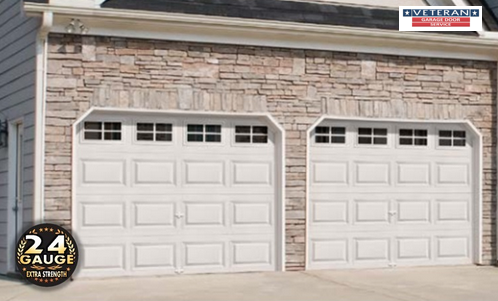
Larger doors weigh more. A single-car door is lighter than a double-car door.
- Single doors: Usually 8 to 9 feet wide, 7 to 8 feet tall.
- Double doors: Usually 16 feet wide, 7 to 8 feet tall.
3. Thickness
Thicker panels add weight. Insulated doors are heavier than non-insulated ones.
4. Insulation
Insulation adds extra layers of material, increasing the total weight.
5. Windows And Decorative Features
Glass windows, hardware, and extra trim can make the door heavier.
6. Age And Condition
Older doors can be heavier due to water damage, swelling, or outdated materials.
Credit: veterangaragedoor.com
Average Garage Door Weights By Material
To help you understand, here’s a quick comparison of average weights for common garage door types.
| Material | Single Door (8×7 ft) | Double Door (16×7 ft) |
|---|---|---|
| Steel (non-insulated) | 80–150 lbs | 150–250 lbs |
| Steel (insulated) | 110–180 lbs | 200–350 lbs |
| Aluminum | 60–100 lbs | 100–180 lbs |
| Wood | 150–250 lbs | 300–500 lbs |
| Fiberglass | 80–120 lbs | 150–225 lbs |
Key insight: Most standard garage doors weigh between 100 and 350 pounds. Custom wood doors and extra-large doors can weigh much more.
Real-life Examples
It helps to see real examples. Let’s look at some typical doors:
- 8×7 ft steel single door (insulated): Around 130 pounds
- 16×7 ft steel double door (non-insulated): Around 210 pounds
- 8×7 ft solid wood single door: Up to 200 pounds
- 16×8 ft wood double door: Can be 400 pounds or more
If you’re buying a new door, check the manufacturer’s specifications for exact weights.
Credit: ddmgaragedoors.com
How To Estimate Your Garage Door’s Weight
If you don’t have the specs, there are practical ways to estimate:
- Check for a label: Some doors have a sticker inside with weight, size, and model info.
- Contact the manufacturer: Give them your door’s serial number for details.
- Measure the panels: Multiply the area by the weight per square foot for your material.
For a quick estimate, use this formula:
- Steel: 10–12 lbs per panel (single car), 20–25 lbs per panel (double car)
- Wood: 20–25 lbs per panel (single car), 40–50 lbs per panel (double car)
- Aluminum: 8–10 lbs per panel (single car), 15–20 lbs per panel (double car)
Example:
A steel double door with four panels: 4 panels x 22 lbs = 88 lbs (for non-insulated). Add more for insulation.
Using A Bathroom Scale
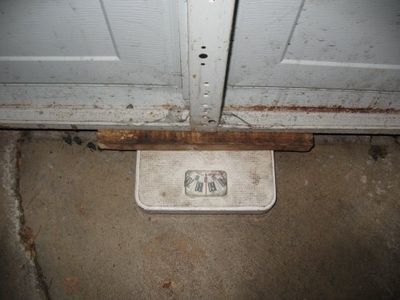
If you need a close estimate, you can carefully disconnect the door opener and place a bathroom scale under the door edge, then gently lower the door onto the scale. Always have help and be safe—garage doors are heavy and can be dangerous.
Why Insulation Matters
Insulated garage doors are popular for energy savings, but they’re heavier than non-insulated doors.
- Polystyrene insulation: Adds 10–20 pounds for a single door.
- Polyurethane insulation: Adds 15–30 pounds for a single door.
Tip: If you upgrade to an insulated door, check if your garage door opener and springs can handle the extra weight.
Common Garage Door Types And Their Weights
Here’s a breakdown of the most common door types with their typical weights.
| Door Type | Standard Size | Average Weight |
|---|---|---|
| Sectional Steel (non-insulated) | 8×7 ft | 80–110 lbs |
| Sectional Steel (insulated) | 16×7 ft | 200–300 lbs |
| Solid Wood Carriage | 8×7 ft | 180–250 lbs |
| Aluminum Roll-Up | 8×7 ft | 60–90 lbs |
| Fiberglass Panel | 16×7 ft | 140–220 lbs |
Insight for beginners: Lightweight doors are easier for openers and springs to handle, while heavy doors need stronger parts.
How Garage Door Weight Affects Springs And Openers
Springs and openers are designed for specific weight ranges. Using the wrong size can cause:
- Premature wear: Springs and motors break faster.
- Safety risks: A door could slam shut or fail to open.
- Noisy operation: Overloaded openers make grinding noises.
Types Of Springs
- Torsion springs: Mounted above the door; handle more weight.
- Extension springs: On the sides; best for lighter doors.
Example:
A 16×7 ft insulated steel door (250 lbs) needs stronger torsion springs than a lightweight aluminum door (100 lbs).
Opener Horsepower
- 1/3 HP: For lightweight single doors (up to 150 lbs)
- 1/2 HP: For most double doors (150–300 lbs)
- 3/4 HP or more: For heavy wood or oversized doors (300+ lbs)
Beginner mistake: Installing a weak opener for a heavy door leads to breakdowns.

Credit: veterangaragedoor.com
Practical Tips For Handling Heavy Garage Doors
If you plan to repair or replace your garage door, keep these safety tips in mind:
- Never remove springs without experience. Springs are under high tension and can cause injury.
- Use proper lifting tools if you must move the door.
- Get help. Don’t try to lift a heavy door alone.
- Upgrade hardware if you switch to a heavier door (springs, opener, tracks).
Non-obvious tip:
If your door feels heavier than usual, the springs may be wearing out—not just the door getting heavier.
Mistakes Beginners Often Make
- Guessing spring size: Always match springs to the exact door weight.
- Ignoring insulation weight: Upgrading panels adds pounds.
- Not checking opener power: The opener must fit the door’s weight.
- Skipping safety cables: Required for extension springs to prevent accidents.
- Trying to lift or repair alone: Heavy doors can cause back injuries.
When To Call A Professional
Some tasks are best left to experts:
- Spring replacement
- Major repairs
- Installing a new heavy door
Professionals have the right tools, parts, and experience to handle heavy doors safely.
How To Find Your Door’s Weight Information
Most garage doors have a manufacturer’s label inside. It may include:
- Model number
- Size
- Serial number
- Weight
If the label is missing:
- Check the owner’s manual.
- Search the model number online.
- Contact the manufacturer with photos or measurements.
For more technical details, you can also visit Wikipedia’s Garage Door page.
Comparing Garage Door Weights At A Glance
Here’s a quick side-by-side look for common garage door weights.
| Type | Single (8×7 ft) | Double (16×7 ft) |
|---|---|---|
| Non-insulated steel | 100 lbs | 200 lbs |
| Insulated steel | 140 lbs | 275 lbs |
| Solid wood | 200 lbs | 400 lbs |
| Aluminum | 80 lbs | 160 lbs |
| Fiberglass | 100 lbs | 180 lbs |
Tip: If you’re unsure, always overestimate. It’s safer to have slightly stronger parts than to risk failure.
Frequently Asked Questions
How Can I Tell How Much My Garage Door Weighs?
Look for a label inside the door or check the owner’s manual. If you can’t find it, measure the door’s size and material, then use average weights for your type. When in doubt, contact the manufacturer.
Does Insulation Make A Big Difference In Door Weight?
Yes. Adding insulation can increase a single door’s weight by 10–30 pounds or more, depending on material and thickness. Always check if your opener and springs can handle the extra weight.
What Happens If My Garage Door Springs Are Too Weak For The Door?
Weak springs can’t balance the door, making it hard or impossible to lift. This puts more strain on your opener and can lead to quick breakdowns or safety hazards.
Is It Safe To Lift A Heavy Garage Door By Hand?
No. Lifting a heavy door alone is risky. Always disconnect the opener and get help. If the springs are broken, do not try to lift the door—it can fall suddenly.
How Do I Know If My Garage Door Opener Is Strong Enough?
Check the opener’s horsepower rating and compare it with your door’s weight. For most single doors, 1/3 HP is enough; double or heavy wood doors need at least 1/2 to 3/4 HP. If the opener struggles or makes noise, it might be underpowered.
Understanding garage door weight helps you make safer choices and avoid costly mistakes. With the right knowledge, you can keep your garage door running smoothly for years. If you’re ever unsure, don’t take risks—call a professional and always put safety first.