
How To Price Garage Sale Items
Hosting a garage sale is a great way to declutter your home and earn some extra cash. But one of the biggest challenges for beginners is knowing how to price garage sale items. Price them too high, and they won’t sell. Price them too low, and you lose money. Getting it right takes a bit of research, some planning, and a practical approach. This guide will show you how to price your items for a successful garage sale—even if you’re new to the process.
Why Correct Pricing Matters
Setting the right price does more than help you make sales. It saves time, reduces negotiation stress, and helps clear out your unwanted items. Most buyers at garage sales are looking for bargains. They expect lower prices than thrift stores or online marketplaces. If your prices are too high, many visitors may walk away without buying anything.
Key insight: Garage sale shoppers decide quickly. The price tag is often the first thing they check, so clear, reasonable pricing can increase your chances of selling more items.
Factors To Consider When Pricing Garage Sale Items
Several factors affect how you should price each item. Keeping these in mind can help you get the best results.
1. Condition Of The Item
- New or like-new: Items in original packaging or barely used can be priced higher (around 30-50% of retail).
- Good used condition: Normal wear but still functional, price at 10-30% of retail.
- Worn or damaged: Mark these very low, or group them for bulk deals.
2. Original Retail Price
Knowing the original price helps set a fair garage sale price. If you don’t remember, look up similar items online. This gives you a sense of what people are willing to pay.
3. Demand And Brand
- Popular brands like LEGO, Nike, or KitchenAid can be priced slightly higher.
- Unique or in-demand items (like baby gear or tools) often sell quickly.
4. Season And Location
- Seasonal items (coats in winter, fans in summer) can fetch more during the right season.
- Neighborhoods with high foot traffic or community sales usually attract more buyers, allowing for slightly higher prices.
5. Local Competition
Check local garage sales, thrift shops, and online listings (e. g. , Facebook Marketplace, Craigslist) to see what similar items cost. Try to stay in the same range.
Non-obvious tip: Items that don’t sell in your area might be popular elsewhere. But for garage sales, always price for your local market.

Credit: www.brillianttransitions.com
General Pricing Guidelines
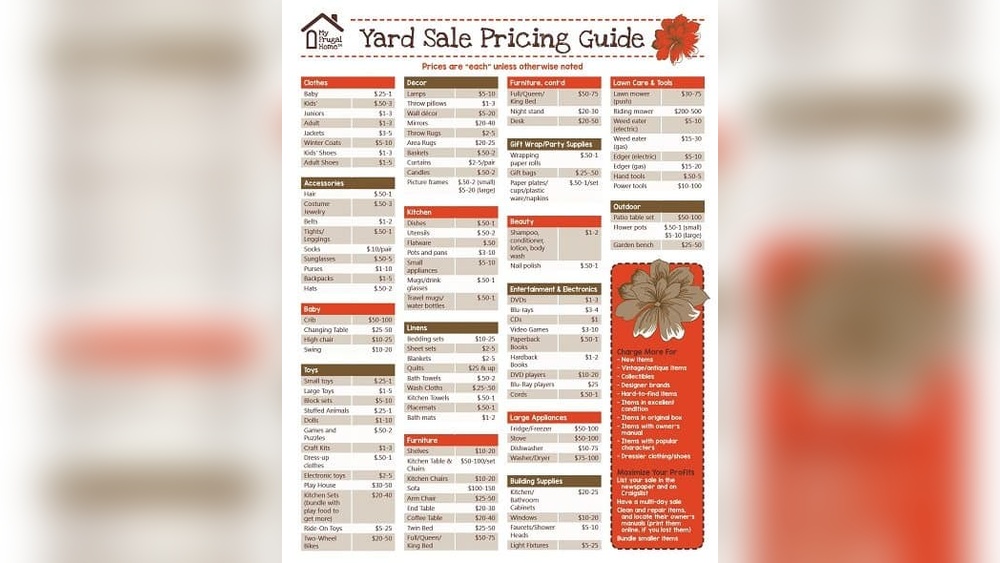
Here’s a helpful table with typical garage sale price ranges for common items. These are based on US averages.
| Item Type | Typical Garage Sale Price | % of Original Retail |
|---|---|---|
| Books | $0.25 – $2 each | 5-10% |
| Clothing (adult) | $1 – $5 each | 5-15% |
| Clothing (children’s) | $0.50 – $3 each | 10-20% |
| Small appliances | $3 – $15 | 10-20% |
| Furniture | $10 – $50 | 10-30% |
| Toys | $0.50 – $5 | 5-15% |
| Electronics | $5 – $50 | 10-20% |
| Kitchenware | $0.50 – $5 | 5-15% |
Remember: These are starting points. Always adjust for condition, demand, and your local market.
Step-by-step Guide To Pricing Garage Sale Items
Here’s a simple process to price your items confidently.
1. Sort Items By Category
Group similar items together:
- Clothes
- Books
- Toys
- Kitchenware
- Electronics
Sorting saves time and makes pricing easier.
2. Check The Condition
Inspect each item. Be honest—if something is worn, price it lower. Clean items sell better and can be priced higher.
3. Research Local Prices
- Visit nearby garage sales.
- Check thrift stores.
- Look at online listings for used items.
Practical example: If local thrift stores sell used jeans for $8, price yours around $2–$4. Garage sale prices should always be lower.
4. Set Your Price
Use sticky labels or painter’s tape to mark prices clearly. Write with bold, readable numbers.
Tip: Group low-value items (like kids’ books or DVDs) and price them as bundles, e.g., “5 for $2.”
5. Be Ready To Negotiate
Most buyers expect to bargain. Mark prices a little higher than your bottom line, but not so high that buyers walk away.
6. Adjust As The Sale Goes On
If some items aren’t selling by midday, lower the price. You can add a “half price after 2 PM” sign for last-hour deals.
Non-obvious insight: Some sellers use color-coded stickers to show price ranges. For example, red for $1, blue for $2, yellow for $5, and so on. This saves time and reduces confusion.

Credit: palomaalmeida.com
Pricing Strategies For Different Types Of Items
Not all items should be priced the same way. Here’s how to handle common categories.
Clothes
- Adult clothes: $1–$5 per piece for good brands, less for basics.
- Baby/children’s clothes: $0.50–$3 each or offer bulk deals (“Fill a bag for $5”).
- Designer labels: Mark slightly higher, but be willing to negotiate.
Pro tip: Hang clothes neatly. Folded piles look less valuable.
Books, Dvds, And Media
- Paperbacks: $0.25–$1
- Hardcovers: $1–$2
- DVDs: $0.50–$2
Bundle similar genres or series for a deal.
Electronics
- Test before the sale to show they work.
- Price old phones, cameras, and small gadgets at 10-20% of retail.
- For large items (TVs, speakers), offer a “best offer” option if unsure.
Important: Include cords and manuals if you have them. Buyers see more value.
Furniture
- Small tables, chairs: $5–$20
- Sofas, beds: $20–$50 (must be clean and in good condition)
- Heavily used or damaged: Price very low, or mark as “free.”
Toys And Games
- Individual toys: $0.50–$3
- Board games: $1–$5 (make sure all pieces are included)
- Large sets (like LEGO): $10–$20 or more, depending on size
Kitchenware And Decor
- Dishes, glasses: $0.25–$1 each
- Sets: $2–$5
- Decorations: $1–$5 depending on size and condition
Examples: Real Pricing Scenarios
Let’s look at a few real-world examples to make things clear.
Example 1: Used Blender
- Original price: $40
- Good working condition, some scratches
- Research shows local thrift store price: $10
Suggested garage sale price: $5–$8
Example 2: Kids’ Bike
- Original price: $80
- Slightly faded, tires in good shape
- Online used listings: $30–$40
Suggested garage sale price: $15–$20
Example 3: Set Of Mystery Novels
- Retail price: $8 each, 5 books in the set
- Good condition
Suggested garage sale price: $5 for the set (or $1.50 each)

Credit: www.hustleandslow.com
Common Pricing Mistakes To Avoid
Many first-time sellers make these errors. Avoid them for a smoother sale.
- Pricing with emotional value: Don’t let memories raise your prices. Buyers don’t know your history with the item.
- Overpricing common items: Most things lose value quickly. Used clothes, toys, and books should be priced to move.
- No labels: If items aren’t marked, buyers may skip them. Always label every item.
- Ignoring local prices: National averages are helpful, but local demand matters most.
- Refusing to negotiate: Expect to be asked for a better deal, and be ready to say yes.
How To Display Prices For Maximum Sales
Displaying your prices well can help items sell faster.
- Use bright, easy-to-read stickers.
- Group similar items with clear signs (“All books $1,” “Toys $2 each”).
- For bundles, write both bundle and single prices (“$1 each or 6 for $5”).
Pro tip: Place high-interest items (like electronics or tools) near the front to attract visitors.
Quick Reference: Popular Items And Prices
Here’s a quick comparison of prices for popular garage sale items.
| Item | Garage Sale Price | Notes |
|---|---|---|
| Men’s Jeans | $2–$4 | Brand matters—Levi’s can go higher |
| Board Games | $1–$5 | Complete sets sell best |
| Microwave | $8–$15 | Clean and tested preferred |
| Children’s Books | $0.50–$1 | Bundles move faster |
| Decorative Vases | $2–$5 | Unique shapes can ask more |
Tips For A Successful Garage Sale
- Start with fair prices, but expect to drop them as the day goes on.
- Use bundle deals to move small or slow-selling items.
- Keep plenty of change (especially $1 bills and coins).
- Have a calculator or use your phone for quick totals.
- Be friendly and open to offers—good attitude sells more than any price tag.
Extra insight: Set up your sale with clear pathways and organized tables. A tidy, welcoming garage sale attracts more buyers and encourages browsing.
Using Online Tools To Set Prices
Several websites can help you price your items:
- EBay “Sold” listings show what items actually sold for, not just the asking price.
- Facebook Marketplace gives local price trends.
- Craigslist lets you compare with other nearby sales.
Note: Online prices are usually higher than garage sale prices, but they give a helpful starting point. Always adjust down for garage sales.
For more detailed strategies, check guides on the New York Times Wirecutter.
Frequently Asked Questions
How Do I Price Items I Received As Gifts Or Can’t Find The Retail Price For?
Estimate based on similar items. Search for the brand and type on eBay or Amazon. If you’re unsure, price on the low side to ensure it sells.
Should I Price Everything, Or Leave Some Items Open For Offers?
Price every item. Shoppers are less likely to ask about unpriced items. For large or unusual things, you can write “best offer,” but give a starting price to guide buyers.
Is It Better To Price Items Individually Or Use Group Pricing?
Group pricing works well for small items (like books or toys). For higher-value things, individual prices are clearer. Use both methods to keep things simple and attract more buyers.
Can I Charge More For Items With Tags Or In Original Packaging?
Yes. Items that are new or unopened can be priced at 30–50% of their retail value. Just make sure to note “brand new” or “still in box” on the tag.
What Should I Do With Items That Don’t Sell?
Lower prices near the end of your sale or offer “everything half price” in the last hour. You can also donate leftovers to local charities or list them as free online.
A well-priced garage sale helps you clear clutter, meet your neighbors, and put cash in your pocket. By understanding the basics, researching locally, and using clear pricing, you’ll turn your unwanted items into treasures for someone else. Good luck with your sale!