
If you are planning to build a garage or replace your old garage door, knowing the standard garage door sizes is important. The right size will make sure your car fits comfortably, your garage looks good, and your door works properly. Picking the wrong size can create problems—your vehicle might not fit, or you could waste energy and money. In this guide, you will discover the most common garage door sizes, what affects these sizes, and how to choose the best one for your home.
Why Garage Door Size Matters
A garage door is not just an entry for your car. It affects how you use your garage, the safety of your belongings, and even your home’s energy use. The wrong size can block your plans or cost more money in the long run.
- Vehicle fit: Your car, truck, or SUV must easily fit through the door.
- Storage and access: Extra space lets you store tools, bikes, or a workbench.
- Curb appeal: The door size changes how your house looks.
- Resale value: The right door size can make your house more attractive to buyers.
Common Standard Garage Door Sizes
Most homes use standard garage door sizes for easy installation and lower costs. Let’s look at the most popular options.
Single Garage Door Sizes
A single garage door is made for one car. Here are the most common sizes:
- 8 feet wide x 7 feet high
- 9 feet wide x 7 feet high
- 10 feet wide x 7 feet high
Some newer homes may use 8 feet high for taller vehicles, but 7 feet is still the standard.
Double Garage Door Sizes
Double garage doors fit two cars side by side. Typical sizes are:
- 12 feet wide x 7 feet high (less common, may be tight for two vehicles)
- 16 feet wide x 7 feet high (most popular)
- 16 feet wide x 8 feet high (for SUVs, vans, or trucks)
Rv And Oversized Garage Doors
If you own an RV or large truck, standard sizes will not work. Common options include:
- 18 feet wide x 8 feet high
- 20 feet wide x 8 feet high
- 12 feet wide x 12 feet high
These doors are taller and wider for easy access.
Comparison Of Standard Garage Door Sizes
To make it easier to compare, here is a simple data table:
| Type | Width (feet) | Height (feet) | Common Use |
|---|---|---|---|
| Single | 8 | 7 | One small car |
| Single | 9 | 7 | One standard car |
| Single | 10 | 7 | One large car/SUV |
| Double | 12 | 7 | Two small cars |
| Double | 16 | 7 | Two standard cars |
| RV/Oversized | 18 | 8 | Two large vehicles/RV |
How To Measure For A New Garage Door
Before you buy a new door, measure carefully. Mistakes can be expensive and hard to fix.
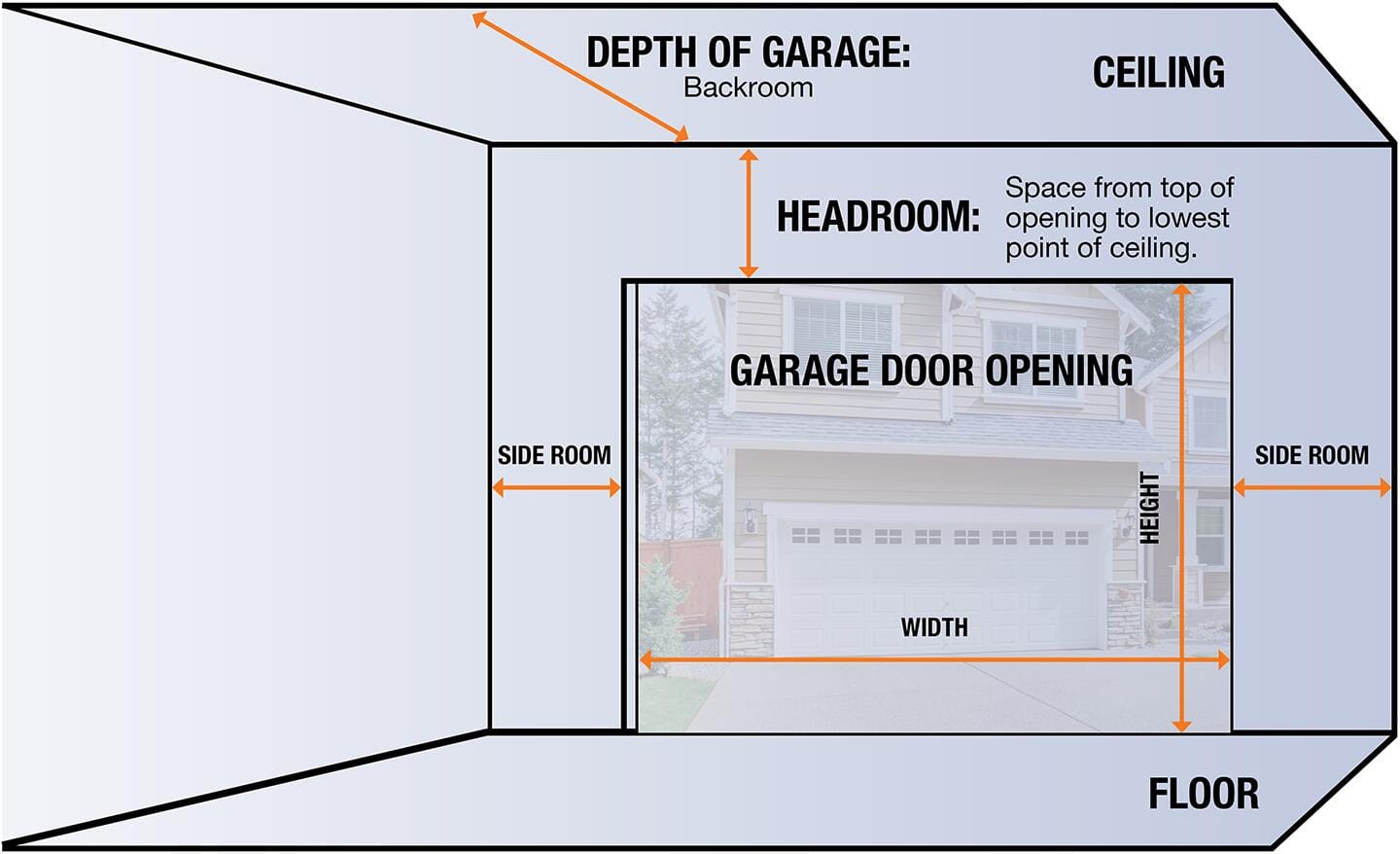
- Measure the opening width: From one side of the finished opening to the other.
- Measure the opening height: From the floor to the top of the finished opening.
- Check headroom: The space between the top of the opening and the ceiling (needed for the door mechanism).
- Check sideroom: The space on each side of the opening (needed for tracks).
- Backroom: The distance from the opening to the back wall (door needs to fit when open).
Write down all numbers in feet and inches. Use a metal tape for accuracy.
Example: Measuring For A Standard Door
- Opening width: 9 feet
- Opening height: 7 feet
- Headroom: 14 inches
- Sideroom: 5 inches on each side
- Backroom: 18 feet
This space fits a standard single door (9×7 feet).
Factors That Affect Garage Door Size
Not every garage uses a standard size. Here are some reasons your door might be different.
1. Age Of The Home
Older homes often have smaller garage openings (sometimes only 7 feet wide). Modern homes usually use 8 or 9 feet for singles, 16 feet for doubles.
2. Vehicle Size
Large trucks, SUVs, or vans need more space. Families with bikes or sports gear may want a bigger door for easy movement.
3. Storage Needs
If you use your garage for storage, a wider door helps move large items in and out.
4. Local Building Codes
Some cities have rules about garage door size and type. Check with your local office before buying.
5. Custom Designs
Custom homes or unique garage layouts may use non-standard sizes. These doors cost more and take longer to order.
Credit: www.homedepot.com
Pros And Cons: Single Vs Double Garage Doors
Choosing between single and double doors can change how you use your garage. Here’s a quick comparison:
| Feature | Single Door | Double Door |
|---|---|---|
| Cost | Lower | Higher |
| Convenience | Each car has its own door | Both cars use same opening |
| Energy Efficiency | Better (smaller area exposed) | Less efficient (larger opening) |
| Looks | Classic, balanced | Modern, wide look |
| Breakdown Risk | Only one door may fail | If door fails, both cars blocked |
Custom Garage Door Sizes
While standard sizes are easy to find, sometimes you need a custom size. Custom doors are made to fit your exact opening.
- When to choose custom: Unusual garage shapes, extra-tall vehicles, or if you want a special style.
- Downsides: Custom doors are more expensive and take longer to order.
- Tip: If your opening is close to a standard size, ask your installer if it can be adjusted instead of ordering custom.

Credit: www.homedit.com
Choosing The Right Size For Your Home
Picking the right size is about more than just measuring. Think about your needs now and in the future.
Questions To Ask Yourself
- How many vehicles do you have?
- Will you get a larger vehicle soon?
- Do you need extra space for storage or hobbies?
- Do you want your garage to look modern or classic?
Example Scenarios
- Single car, small family: 9×7 feet is usually enough.
- Two cars, growing family: 16×7 feet lets you park side by side.
- RV or work truck: You may need 10 feet high or more.
- Home gym or workshop: Consider extra height or width.
Installation Tips For Beginners
If you are new to garage doors, keep these tips in mind:
- Hire a pro: Installing a garage door requires special tools and skills.
- Check the opener: Make sure your door opener fits the new size.
- Weather seals: Add seals to keep out wind, rain, and pests.
- Safety sensors: Modern doors must have sensors to stop if something is in the way.
Non-obvious Insights For Beginners
Most beginners think only about the width and height. There are a few other details that matter:
- Headroom and backroom can limit your options. If your garage ceiling is low or there’s not much space behind the door, you may need a low-headroom track or special opener.
- Door thickness impacts insulation. Thicker doors usually offer better insulation. If you live in a cold or hot area, consider a thicker, insulated door.
- Panel design can change clearance needs. Some doors fold in sections, while others tilt up in one piece. Sectional doors need less space in front but more headroom.
- Opener horsepower matters for heavy doors. If your door is extra wide or made of solid wood, you may need a stronger opener.
Cost Comparison Of Standard Garage Door Sizes
Prices can vary based on size, material, and features. Here’s an average cost guide for the US:
| Door Size | Material | Average Price (Installed) |
|---|---|---|
| 8×7 ft (Single) | Steel | $700 – $1,000 |
| 9×7 ft (Single) | Steel | $800 – $1,100 |
| 16×7 ft (Double) | Steel | $1,500 – $2,300 |
| 18×8 ft (Oversized) | Steel | $2,000 – $3,500 |
| Custom Size | Wood/Composite | $3,000 and up |
Tip: Installation costs can be 20-30% of the total price. Ask for a full quote.
Mistakes To Avoid When Choosing Garage Door Size
- Guessing instead of measuring: Always measure before you buy.
- Ignoring opener compatibility: Not all openers work with all door sizes.
- Overlooking building codes: Some areas have rules about garage door size.
- Forgetting about insulation: In cold/hot climates, an insulated door matters.
- Not planning for future vehicles: Choose a size that fits possible new cars.
Where To Find More Information
If you want more technical details or code guidelines, check the Window & Door Manufacturers Association for in-depth standards.

Credit: aprodoor.com
Frequently Asked Questions
What Is The Most Common Garage Door Size In The Us?
The most common size for a single garage door is 9 feet wide by 7 feet high. For double doors, 16 feet wide by 7 feet high is the standard.
Can I Install A Larger Garage Door In An Old Garage?
It depends on the structure. You may need to widen the opening or raise the ceiling, which can be costly. Consult a professional before changing the size.
How Much Headroom Do I Need For A Garage Door?
Most standard doors need at least 12–18 inches of headroom above the opening for tracks and the opener. If you have less, ask for a low-headroom kit.
Are Custom Garage Doors Worth The Extra Cost?
Custom doors are a good choice if you have unique needs or a non-standard opening. For most homes, standard sizes are more affordable and faster to install.
Do Garage Door Sizes Affect Home Insurance?
Not directly, but a proper fit and a secure, modern door can lower your risk of break-ins or damage, which may help with insurance costs.
Choosing the right garage door size can improve your daily life, save energy, and boost your home’s value. Take time to measure, plan for the future, and ask experts when unsure. Your garage door is an investment—make sure it fits your needs today and tomorrow.