
If you use your garage as a workshop, gym, or extra living space, you know how hot it can get in summer or how cold in winter. Many homeowners want to install an air conditioner in the garage but often forget about the most important part: venting. Venting means letting hot air out, and bringing fresh air in, so your AC works well and safely. Without proper venting, your garage can stay uncomfortable, your AC can break down early, and your energy bills can go up. Let’s explore how to vent an air conditioner in your garage the right way, what options you have, and what mistakes to avoid.
Why Venting Your Garage Air Conditioner Matters
Most garages are not made for comfort. They have little insulation, few windows, and often no air vents at all. When you add an air conditioner, especially a portable or window unit, it creates hot air as a byproduct. If you don’t vent this air outside, it stays trapped and cancels out the cooling.
Proper venting does more than just cool your garage:
- Prevents overheating of the AC unit
- Reduces humidity, which can cause mold or rust
- Saves energy and lowers your bills
- Improves air quality by removing fumes or odors
Some people try to run an AC with no vent in their garage, but this is a common mistake. The space never gets cool, and the air conditioner works too hard. Over time, this can damage the unit and cost you more money.
Types Of Air Conditioners For Garages
Before choosing a venting method, you need to know what kind of air conditioner you have or want. Each type has different venting needs.
| Type | Venting Needed | Best For |
|---|---|---|
| Window AC | Through window or wall | Small to medium garages |
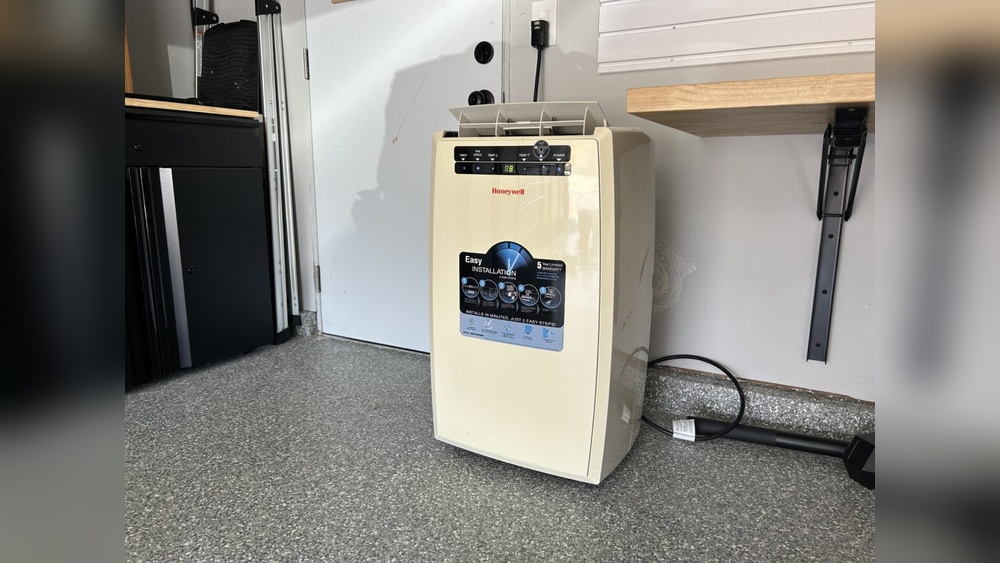
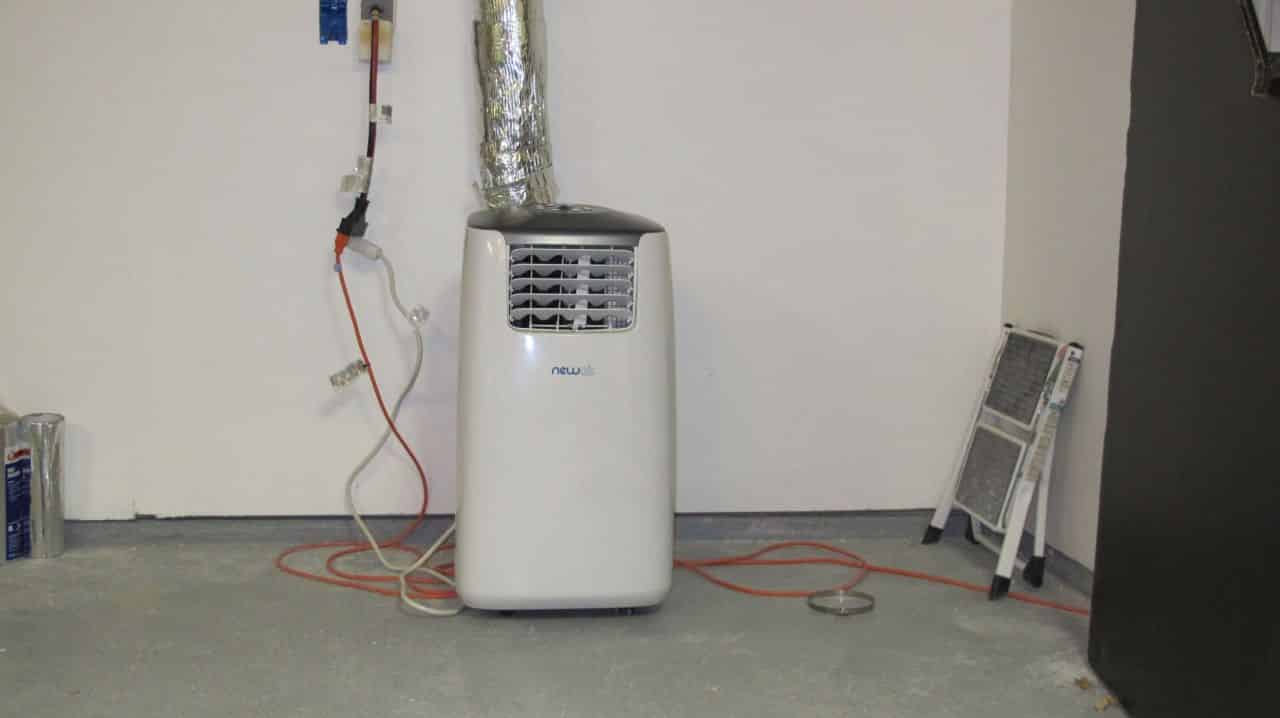
| Portable AC | Hose out window, wall, or door | Flexible setups |
| Mini-Split AC | Line set through wall, outdoor unit | Permanent, efficient cooling |
| Evaporative Cooler | Open window/door for airflow | Dry climates only |
A window AC is the easiest if you have a window. A portable AC is good if you need to move it or don’t have a window. A mini-split is best for long-term use and efficiency. Evaporative coolers are not true ACs but work in dry places.
How To Vent A Garage Air Conditioner: Methods And Steps
There are several ways to vent your garage AC. The best method depends on your garage’s layout, your AC type, and your budget.
1. Venting Through A Window
This is the most common and simplest method.
- Most window ACs are designed for this.
- Many portable ACs come with a window kit.
Steps:
- Open the window a few inches.
- Insert the AC unit or vent hose. Seal gaps with foam or weatherstripping.
- Make sure the vent points outside, not into another room or attic.
- Lock the window for safety.
Tip: Use plexiglass or wood cutouts for odd-shaped windows.
2. Venting Through A Wall
If your garage has no window, you can vent through an exterior wall.
- Good for mini-split systems (needs a small hole for pipes).
- Can also work for portable AC hoses.
Steps:
- Choose a wall that faces outside, not toward your house.
- Drill a hole slightly larger than the vent hose or pipe.
- Insert the vent and seal with caulk to prevent leaks.
- Add a vent cover outside to keep out rain and bugs.
Tip: Check for wires or pipes in the wall before drilling.
3. Venting Through The Garage Door
Some people use the garage door for venting, especially renters.
- Buy a garage door vent kit or make your own.
- Works for portable AC hoses.
Steps:
- Cut a hole in a thin panel (usually the bottom or side of the door).
- Insert the vent hose and seal the edges.
- Remove when not in use.
Note: This method is not as airtight and may let in dust or bugs.
4. Ceiling Or Attic Venting
Venting into the attic is not recommended for most AC units.
- The attic gets very hot and can send heat back into the garage.
- Can cause moisture problems.
If you must vent into the attic (for short term), make sure the attic is well-ventilated.
Tip: Always try to vent directly outside for best results.
Comparing Venting Methods
Which venting method is best for you? Here’s a quick look:
| Method | Cost | Difficulty | Pros | Cons |
|---|---|---|---|---|
| Window | Low | Easy | Simple, fast setup | Needs a window |
| Wall | Medium | Medium | Works without window | Permanent change |
| Garage Door | Low | Easy | No wall/window needed | Less efficient, less secure |
| Attic | Low | Medium | Hidden vent | Heat, moisture issues |
For most beginners, window venting is the fastest and least risky. If you want a permanent solution and own your home, wall venting with a mini-split is the most energy efficient.

Credit: www.youtube.com
Choosing The Right Air Conditioner Size
Venting alone is not enough. You must also choose an AC unit that’s the right size for your garage. Too small, and it won’t cool. Too big, and it wastes energy.
How to calculate size:
- Measure your garage in square feet (length x width).
- Garages are often 200–600 sq ft.
- Use 20–25 BTUs per square foot as a rule.
Example:
A 400 sq ft garage needs 8,000–10,000 BTU.
Other factors:
- Insulation: Poorly insulated garages need more power.
- Sunlight: Garages facing south or west get hotter.
- Ceiling height: Higher ceilings need more cooling.
- Activities: Gym or workshop uses produce extra heat.
Tip: Always round up if you are unsure.
Mistakes To Avoid When Venting A Garage Ac
Many first-timers make the same errors, which can cost money and comfort.
- Venting into the house or attic: Always vent outside to avoid heat and moisture problems.
- Not sealing gaps: Small leaks let hot air back in and reduce efficiency.
- Ignoring maintenance: Clean filters and check vents every month.
- Choosing the wrong AC size: Measure your space and buy the right size.
- Blocking airflow: Do not block the vent hose or outside vent.
Non-obvious tip: Some portable ACs have two hoses (in and out). These are more efficient because they don’t pull hot air from the rest of the garage. Look for dual-hose models if possible.

Credit: www.youtube.com
Improving Garage Comfort Beyond Venting
Venting the AC is critical, but you can make your garage even more comfortable with a few extra steps.
- Add insulation to walls and doors to keep cool air inside.
- Seal cracks around doors and windows.
- Install a weatherproof door sweep on the garage door.
- Use light-colored paint on walls and roof to reflect heat.
- Install a ceiling fan to improve air movement.
These steps reduce how hard your air conditioner works and can cut energy use by up to 30%.
Safety And Air Quality Considerations
Garages often contain chemicals, car fumes, and dust. Venting helps, but make sure:
- You do not vent AC air into living spaces.
- You have a carbon monoxide detector if you run cars or engines inside.
- You never block exhaust paths for water heaters or furnaces.
If you use your garage for hobbies that create fumes (painting, welding), consider an exhaust fan in addition to the AC. This keeps air fresh and safe.
Credit: blog.briancmoses.com
Cost Of Venting A Garage Air Conditioner
Costs depend on your method:
- Window kit: $30–$100
- Wall vent: $75–$300 (DIY), up to $800 (pro install)
- Garage door kit: $50–$150
- Mini-split install: $1,200–$3,500 (includes venting)
Tip: DIY kits are budget-friendly, but professional installation ensures safety and best performance.
Real-world Example
Let’s say Mike wants to turn his 400 sq ft garage into a home gym in Texas. He buys a 10,000 BTU portable AC. His garage has no windows, so he:
- Installs a 6-inch wall vent kit ($120).
- Seals the vent with foam and caulk.
- Adds insulation to the garage door.
Mike’s summer garage temp drops from 100°F to 75°F. His monthly energy bill goes up by $40, but he can now work out in comfort. He also cleans the AC filter every 2 weeks to keep it running well.
Where To Learn More
For official advice on home cooling and venting, visit the US Department of Energy.
Frequently Asked Questions
Can I Vent A Portable Air Conditioner Inside My Garage?
No. Always vent portable ACs outside. If you vent inside, hot air stays in the garage, and the room never gets cool. Venting inside also increases humidity and can damage the unit.
Is It Safe To Cut A Vent In My Garage Wall?
Yes, but check for electrical wires or plumbing first. Use a stud finder or call a pro. Seal all gaps to keep out water, insects, and drafts.
How Often Should I Clean My Garage Ac Vent?
Check and clean the vent every month, especially during heavy use. Dust, leaves, and bugs can block airflow and reduce efficiency. A clogged vent can also cause overheating.
Can I Use The Same Vent For Both My Ac And Garage Heater?
No. Each unit needs its own vent to prevent backflow of gases or heat. Sharing a vent can be dangerous and is against most building codes.
What Size Air Conditioner Do I Need For My Garage?
Measure your garage (length x width) and multiply by 20–25 BTU per sq ft. For example, a 400 sq ft garage needs 8,000–10,000 BTU. Add extra power for poor insulation or heavy use.
Venting your garage air conditioner correctly is the key to enjoying a cool, safe, and comfortable space. Choose the right method for your garage, seal all gaps, and keep your system clean. With these tips, you can beat the heat and make your garage a true extension of your home.