
Measuring your garage door might seem simple, but getting it right is essential. Wrong measurements can lead to buying the wrong door, poor fit, or even safety issues. Many homeowners make mistakes during this step, especially if they are new to home improvement.
This guide explains how to measure a garage door accurately, even if you are a beginner. You’ll get clear steps, practical examples, and insights most people miss. By the end, you’ll be confident to measure your own garage door and avoid common pitfalls.
Why Accurate Measurement Matters
A garage door that fits perfectly will:
- Open and close smoothly
- Improve security
- Save energy by reducing drafts
- Increase your home’s value
If your measurements are off, you may face:
- Costly returns or modifications
- Gaps that let in water, pests, or cold air
- Problems installing automatic openers
Accurate measuring is especially important if you are replacing your garage door or ordering a new one online. Modern garage doors often come in standard sizes, but older homes may have custom openings. Getting the numbers right the first time saves time and money.
Tools You’ll Need
Before you start, gather these tools:
- Tape measure (at least 12 feet long)
- Step ladder (for reaching higher points)
- Pen and paper or a note-taking app
- Flashlight (for dark corners)
- Helper (optional, but useful for wide doors)
A metal tape measure is best because it doesn’t stretch and gives more precise numbers.
Key Measurements To Take
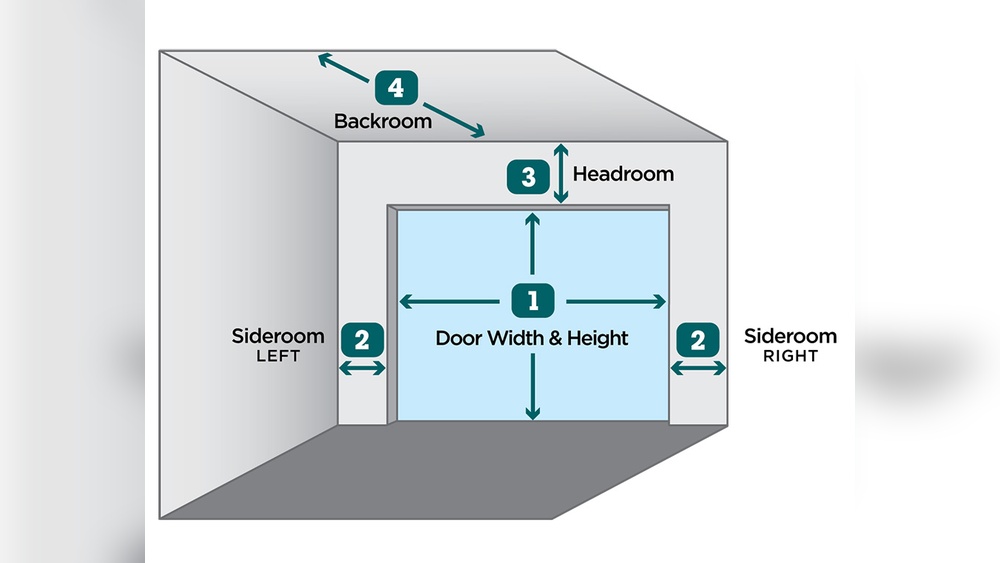
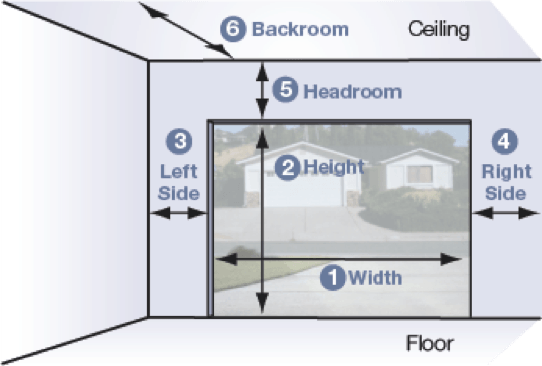
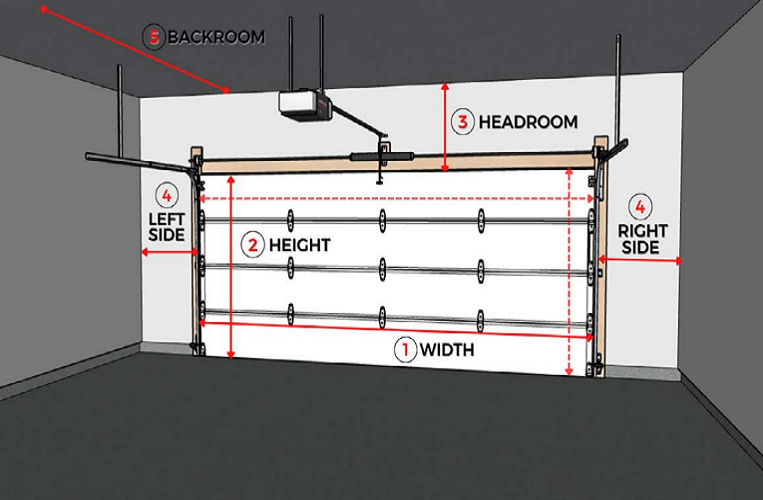
You need to measure more than just the width and height of the opening. Here are the five essential measurements:
- Width of the opening (side to side)
- Height of the opening (floor to top)
- Side room (space from opening edge to the wall)
- Headroom (space above the opening)
- Backroom (space from opening to the back wall or obstruction)
Each measurement plays a role in how your new garage door will fit and operate.
Example: Why Each Measurement Matters
- If your side room is too narrow, tracks may not fit.
- If you have low headroom, some doors (like sectional types) might not open fully.
- Backroom is critical for the door to fully retract.
Step-by-step Guide: How To Measure Your Garage Door
Let’s walk through each measurement with practical steps and examples.
1. Measure The Width
- Stand inside the garage.
- Place the tape measure on one side of the finished opening (not frame or molding).
- Extend the tape straight across to the other side.
- Record this number in inches and feet.
Example: If your tape shows 8 feet, your garage door width is 8 feet (96 inches).
2. Measure The Height
- Place the tape measure at the floor.
- Pull it straight up to the top of the finished opening.
- Make sure the tape is vertical and not bent.
Tip: Measure both sides. Floors can be uneven, especially in older garages. Use the smaller measurement.
3. Measure Side Room
- Measure the distance from the edge of the opening to the nearest wall or obstruction (like pipes).
- Do this on both left and right sides.
Minimum needed: Most standard doors need at least 3.5 inches on each side for the tracks.
4. Measure Headroom
- Measure from the top of the opening to the ceiling or lowest obstruction above (like a beam or pipe).
Why it matters: Standard doors need 10–12 inches of headroom for the tracks and torsion spring. Low-headroom kits are available if you have less space.
5. Measure Backroom
- Measure from the opening to the back wall or first obstruction (like a water heater).
- The space should be at least the height of the door plus 18 inches.
If your door is 7 feet (84 inches) tall: You need at least 8.5 feet (102 inches) of backroom.
Example Measurement Table
Here’s how you might record your measurements:
| Measurement | Left Side | Right Side | Notes |
|---|---|---|---|
| Width | 8 ft (96 in) | Standard single door | |
| Height | 7 ft (84 in) | Check both sides | |
| Side Room | 4 in | 5 in | Plenty for tracks |
| Headroom | 11 in | Standard track OK | |
| Backroom | 108 in | Meets requirement | |
Standard Garage Door Sizes
Most garage doors come in common sizes. Before custom ordering, check if your opening matches these:
| Type | Width (ft) | Height (ft) | Common Uses |
|---|---|---|---|
| Single | 8, 9, 10 | 7, 8 | One car, small SUV |
| Double | 12, 14, 16 | 7, 8 | Two cars |
| RV/Custom | 10-20 | 8-10 | Vans, RVs, custom vehicles |
Tip: Always check the exact size needed by your garage, as even half an inch can make a difference.
Credit: www.bestohd.com
Measuring For Different Door Types
There are several garage door styles. The way you measure may change slightly:
- Sectional doors: Follow the steps above.
- Roll-up doors: Need more headroom.
- Swing-out or carriage doors: Check for extra space on sides and in front.
Non-obvious insight: If you plan to upgrade from a single to a double door, measure the support post between the two openings. Removing it may require structural changes.
Common Measurement Mistakes
Beginners often miss these details:
- Measuring from the frame or trim, not the finished opening
- Ignoring pipes or electrical boxes near the tracks
- Forgetting to check for uneven floors or ceilings
- Not measuring all the way to the back wall (for backroom)
- Using a cloth tape measure (less accurate than metal)
Pro tip: Write down every measurement immediately. Don’t trust your memory.

Credit: www.greatnortherndoor.com
Special Situations And Solutions
Some garages have unique features. Here’s what to do if you run into these:
Low Headroom
- Less than 10 inches above the opening? Ask for a low-headroom track kit.
- Some doors have springs mounted behind the tracks.
Sloped Floors
- Measure height at both sides.
- Use the lower number for ordering.
- Consider a bottom seal to close small gaps.
Obstructions
- Ducts, pipes, or lights near the ceiling can block the door.
- Mark the location and check if the door or opener will hit them.
Odd Widths Or Heights
- Most doors can be ordered in 1-inch increments.
- Custom sizes are possible but cost more.
Practical Example: Measuring A Double Garage Door
Let’s say you want to replace a double door.
- Measure the width: Tape shows 16 ft 2 in. Record as 16 ft.
- Measure the height: Tape shows 7 ft 1 in. Record as 7 ft.
- Side room: Both sides have 4 inches.
- Headroom: 12 inches.
- Backroom: 10 feet.
Result: You can order a standard 16×7 double garage door.
Tip: If your opening is a bit larger than a standard size, a professional can add wood framing to adjust it.
What To Do With Your Measurements
Once you have your numbers:
- Double-check each measurement.
- Take clear photos of the opening and surrounding area.
- Share the numbers and photos with your garage door dealer or installer.
- Ask if your space fits a standard door or if you need a custom size.
Non-obvious insight: Some installers check your measurements before ordering, but not all do. Always confirm yourself to avoid mistakes.
When To Call A Professional
While measuring is straightforward, call a pro if:
- You’re not sure about any measurement
- The opening is not square
- There are major obstructions or structural issues
A professional can help with complex situations and ensure you order the right door the first time.
Simple Measurement Checklist
- [ ] Measure width (finished opening, not frame)
- [ ] Measure height (use lower side if uneven)
- [ ] Measure side room (both sides)
- [ ] Measure headroom (above the opening)
- [ ] Measure backroom (from opening to back wall)
- [ ] Check for obstructions (pipes, ducts, etc.)
- [ ] Take photos for reference
Key Data: Single Vs Double Door Measurement Needs
Here’s a quick comparison for clarity:
| Door Type | Min. Width | Min. Height | Side Room | Headroom | Backroom |
|---|---|---|---|---|---|
| Single | 8 ft | 7 ft | 3.5 in | 10 in | 8.5 ft |
| Double | 16 ft | 7 ft | 3.5 in | 12 in | 18 ft |
Note: Some automatic openers may require extra headroom or backroom.
Credit: www.rwdoors.com
Frequently Asked Questions
How Do I Measure An Uneven Garage Floor?
If your garage floor is not level, measure the height on both sides of the opening. Use the smaller number when ordering your door. You can use a door bottom seal to fill small gaps.
What Is The Minimum Headroom Required For A Standard Sectional Garage Door?
Most standard sectional garage doors need at least 10–12 inches of headroom above the opening. If you have less, look for a low-headroom track system.
Should I Include The Door Frame Or Trim In My Measurements?
No, always measure the finished opening—the clear space without frame or decorative trim. Including the frame leads to buying the wrong size door.
Can I Install A Garage Door If I Have Pipes Or Ducts Near The Ceiling?
Yes, but you need to measure carefully and note the exact location of these obstructions. You may need a special track system or to move the pipes. Consult a professional if unsure.
Where Can I Find More Information On Garage Door Standards?
The International Door Association and other resources like Wikipedia provide helpful information on garage doors and industry standards.
Measuring your garage door is not complicated, but it does require attention to detail. Take your time, follow each step, and don’t rush. Accurate measurements will save you money and trouble later. If you’re ever in doubt, ask for help or consult an expert.
A properly measured garage door means better safety, looks, and convenience for your home.