
When planning a new home or updating an existing one, the garage is often a key focus. For many families, a 2 car garage is the ideal balance between space, cost, and function. But what are the right dimensions? How much space do you really need? This article will break down the common 2 car garage dimensions, explain what affects the size, and help you choose the best fit for your needs.
What Is A 2 Car Garage?
A 2 car garage is a space designed to fit two vehicles side by side. It’s one of the most popular garage types in the United States. But not all 2 car garages are the same size. The right dimensions depend on:
- Vehicle size (sedan, SUV, truck)
- Storage needs (bicycles, lawn tools)
- Extra space for work or hobbies
Understanding these basics will help you make smart choices.
Standard 2 Car Garage Dimensions
Most builders use standard sizes for 2 car garages. These sizes fit the needs of most families and cars. Here are the most common measurements:
- Width: 20–24 feet (240–288 inches)
- Depth: 20–24 feet (240–288 inches)
- Height: 7–8 feet (84–96 inches)
Let’s look at these in more detail.
Typical 2 Car Garage Sizes
Here’s a quick comparison of the most common 2 car garage dimensions:
| Size (Feet) | Width (Feet) | Depth (Feet) | Square Feet |
|---|---|---|---|
| Small | 20 | 20 | 400 |
| Standard | 22 | 22 | 484 |
| Large | 24 | 24 | 576 |
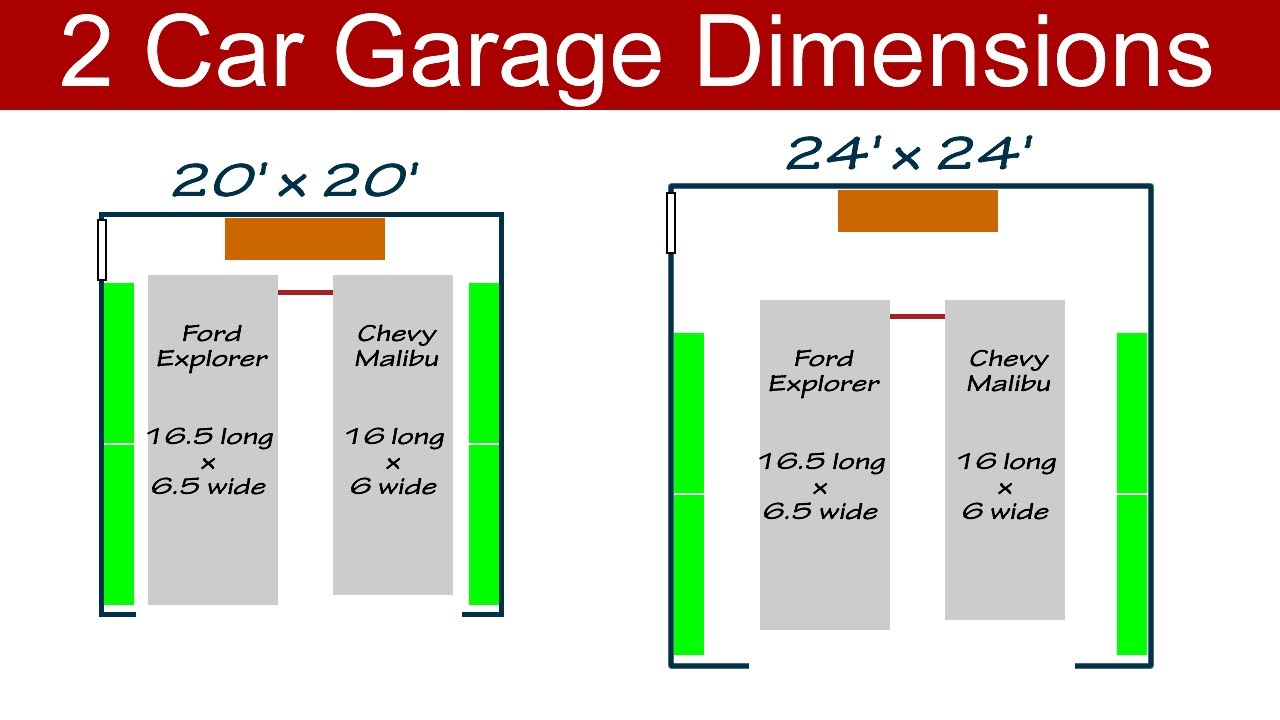
A 20×20 garage is the smallest practical size. It fits two small cars, but there is little space for storage or moving around. 22×22 is the most popular size, offering enough room for two mid-size cars and some storage. A 24×24 garage gives you extra space for larger vehicles, bikes, or a small workbench.
Why Dimensions Matter
Choosing the right garage size is important for daily comfort and long-term value. Here’s why:
- Car Doors: Enough space lets you open car doors fully without hitting walls.
- Storage Needs: Extra room means space for bikes, lawnmowers, or shelves.
- Resale Value: Standard sizes are better for future buyers.
Many homeowners regret building a garage that is too small. It’s smart to think about your future needs, not just what works today.
Factors That Affect 2 Car Garage Size
Not every family needs the same garage. Several factors can change the ideal size:
Vehicle Size
- Small Cars: Two compact cars need less space (20×20 feet can work).
- SUVs or Trucks: Larger vehicles may need 22×22 feet or more.
- Mix of Vehicles: If you have a large and a small car, choose a bigger size.
Storage And Activities
Think about what else you’ll store:
- Bicycles
- Sports gear
- Lawn tools
- Freezer or extra fridge
If you want a workbench or home gym, add at least 2–4 feet in width or depth.
Garage Door Size
The garage door also affects space:
- Single door: Usually 16 feet wide, fits both cars together.
- Double doors: Two 8–9 foot doors for separate bays.
A larger door means easier parking but may cost more.
Minimum Size Vs. Comfortable Size
Some people try to save money with the smallest possible garage. But is it wise? Let’s compare minimum and comfortable sizes:
| Feature | Minimum Size (20×20 ft) | Comfortable Size (24×24 ft) |
|---|---|---|
| Fits 2 cars | Yes (tighter) | Yes (more room) |
| Open car doors easily | Limited space | No problem |
| Storage space | Minimal | Plenty |
| Work area | No | Possible |
Tip: If you plan to stay in your home for years, choose the comfortable size.
Special 2 Car Garage Designs
Not all garages are just a box. You might want:
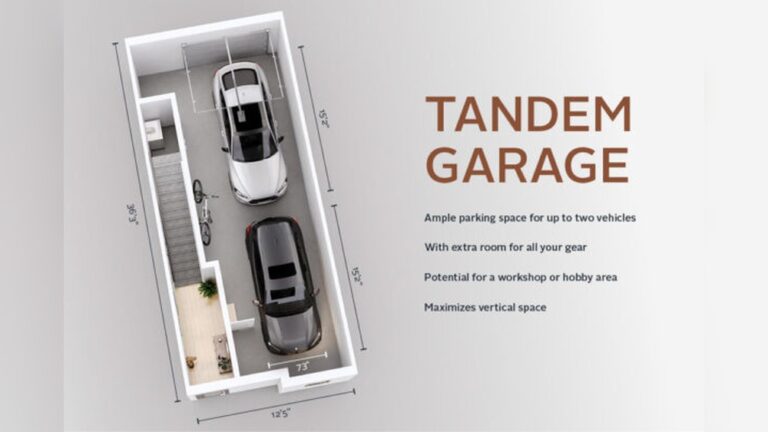
- Tandem garage: One car behind the other, not side-by-side. Needs less width but more depth.
- Extra deep garage: Good for trucks or SUVs with long bodies.
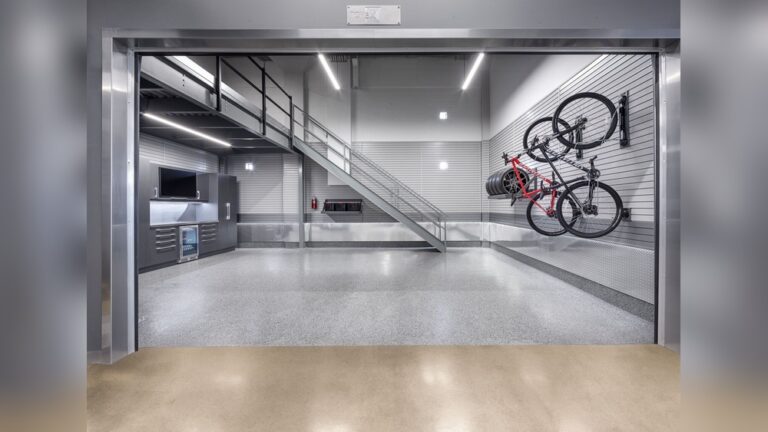
- Garage with storage loft: Adds vertical space for bikes or boxes.
Each design needs different dimensions. For example, a tandem garage might be 12 feet wide but 36 feet deep.
Practical Examples
Let’s look at some real-life needs:
- Family with Two Sedans
- Best size: 22×22 feet
- Enough space for cars, bikes, and a small workbench.
- Couple with SUV and Truck
- Best size: 24×24 feet (or larger)
- Extra space helps avoid door dings and allows for storage.
- Single Person, One Car + Hobby Space
- Best size: 20×24 feet
- Extra depth gives room for a hobby table or gym.
Common Mistakes When Choosing Size
Beginners often make these errors:
- Choosing the smallest size to save money (regret comes fast).
- Forgetting storage needs (bikes, tools, seasonal items).
- Not measuring vehicle size (SUVs need more space).
- Ignoring future changes (kids, more cars, hobbies).
Always measure your cars and make a list of storage needs before deciding.

Credit: www.angi.com
Custom Features That Change Garage Size
You may want extra features in your garage:
- Laundry area: Add 3–5 feet of depth or width.
- Workshop: Allow at least 4 feet along one wall.
- Staircase to attic: Needs at least 3 feet extra space.
If you plan to add these, increase your garage size by at least 2–4 feet on the needed side.
Planning For Easy Access
A garage isn’t just for parking. You need to walk around, carry groceries, or work on your car. Here’s how to plan for comfort:
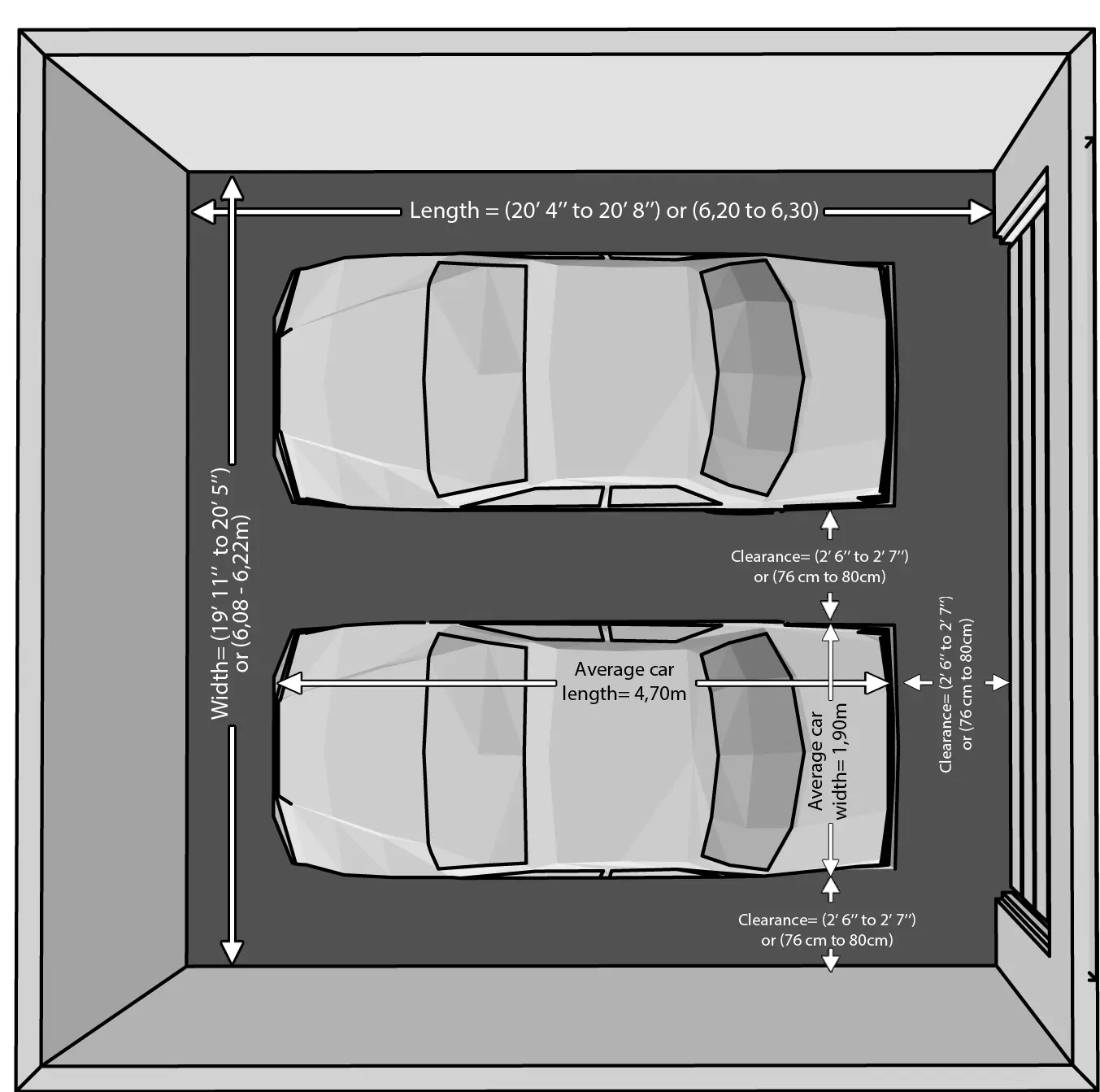
- Leave at least 3 feet between cars and walls for doors to open.
- Allow 4–5 feet between the front of your car and the wall for walking or storage.
- If adding shelves, plan for at least 2 feet of space.
Credit: thecarportco.com
How To Measure Your Vehicles
Before finalizing your garage, measure your cars:
- Length: Most sedans are 15–16 feet long. Large trucks can be 20 feet.
- Width: With mirrors, cars are usually 6–7 feet wide.
- Height: SUVs and trucks can be up to 6.5 feet tall.
Add at least 2 feet on each side for easy access. For two cars, add an extra 2–3 feet between them.
Building Codes And Local Rules
Before building, check your local building codes. Some cities require:
- Minimum garage size
- Fireproof walls if attached to the house
- Setbacks from property lines
Always ask your city’s building department for rules. This can save you time and money.
Credit: shedsunlimited.net
Cost Impact Of Garage Size
A larger garage costs more to build. Here’s a basic idea:
- 20×20 feet: $20,000–$28,000
- 22×22 feet: $23,000–$32,000
- 24×24 feet: $26,000–$36,000
Prices vary by location and materials. Don’t forget to add the cost of extra features (windows, insulation, doors).
Increasing Resale Value
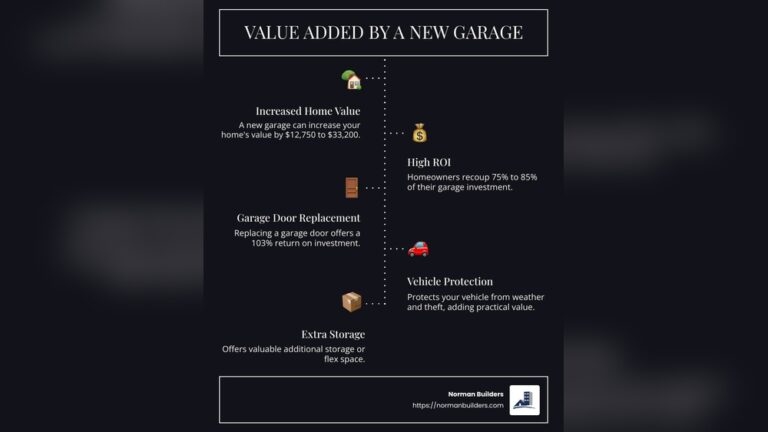
A smartly sized garage can boost your home’s value. Real estate agents say most buyers want a 2 car garage at least 22×22 feet. Too small, and buyers may look elsewhere. If you might sell your home, choose a size that meets common expectations.
How To Make A Small Garage Work
If you’re limited on space or budget, here are ways to maximize a small garage:
- Use wall-mounted shelves for storage
- Hang bikes from the ceiling
- Choose slimmer garage doors to save wall space
- Declutter often to keep space usable
Making the most of every inch can help a small garage feel bigger.
Future-proofing Your Garage
Think about the future:
- Will you get a larger car?
- Want to add a work area or gym?
- Planning to install electric car charging?
If yes, build at least one size bigger than you need now. It’s much cheaper than expanding later.
Real-world Advice
Many homeowners wish they had built a larger garage. The extra cost is small compared to the long-term value and comfort. Don’t just copy your neighbor’s garage—measure your needs and plan for the future.
Quick Reference: 2 Car Garage Size Recommendations
Here’s a simple guide:
- Small cars only: 20×20 feet (minimum)
- Most families: 22×22 feet (recommended)
- Large vehicles/storage: 24×24 feet or more
Always allow for extra space if you can.
Frequently Asked Questions
What Is The Minimum Size For A 2 Car Garage?
The minimum recommended size is 20×20 feet. This fits two small cars but leaves little room for storage or moving around. If you have larger cars or need storage, choose a bigger size.
Can I Fit Two Suvs In A 20×20 Garage?
It’s possible but very tight. You may struggle to open the doors fully or store items. For two SUVs, a 22×22 feet garage or larger is much more comfortable.
How Wide Should Each Car Space Be?
Each car needs at least 8–9 feet of width. For a 2 car garage, a total width of 18–20 feet is the minimum, but 22–24 feet is better for comfort and storage.
Does Garage Door Size Matter?
Yes. A 16-foot wide door is standard for 2 cars together. If you have two single doors, each should be 8–9 feet wide. Larger doors make parking easier but can cost more.
What If My City Has Special Garage Rules?
Always check with your local building department. Cities may have rules about minimum size, fire safety, or location. Following these rules avoids costly changes later.
For more details on building standards, you can read about garage guidelines on the National Association of Home Builders website.
A well-designed 2 car garage adds comfort, storage, and value to your home. Take time to measure, plan, and choose the right size for your needs—your future self will thank you.