
A new garage door can change how your home looks and works. Many homeowners worry about the garage door installation cost, but it helps to know what affects the price and how to plan your budget. Costs can range from affordable single doors to high-end custom models. This article explains everything beginners need to know about garage door installation costs, including key factors, common mistakes, and real examples. If you want clear, simple guidance on what to expect, you’re in the right place.
What Is The Average Garage Door Installation Cost?
Most homeowners in the US spend between $700 and $1,500 to install a standard garage door. The national average is about $1,200 for a typical single-car steel door, including both the door and professional installation. Some basic models cost less, while special doors or extra features can push costs higher.
Here are some real-world examples:
- A single, non-insulated steel garage door: $700–$1,000
- A double steel garage door (fits two cars): $1,200–$2,000
- Custom wood or insulated doors: $2,000–$4,000+
Luxury or specialty doors can cost over $10,000, but most people don’t need these unless they want something very unique.
Key Factors That Affect Garage Door Installation Cost
Many things influence the final price. Here are the most important:
1. Door Material
- Steel: Most popular and affordable. Durable and low maintenance.
- Aluminum: Light and rust-resistant, but dents easily.
- Wood: Beautiful but needs regular care. More expensive.
- Fiberglass: Good for coastal areas. Can crack in cold weather.
- Vinyl: Resists dents and rust, but limited styles.
Steel doors are the most budget-friendly, while wood and custom materials cost more.
2. Door Size
- Single doors (8–10 feet wide): Cheaper and easier to install.
- Double doors (12–16 feet wide): Cost more because they use more material and need stronger openers.
3. Insulation
- Non-insulated: Lowest price, but less energy efficient.
- Insulated: Costs $200–$500 more, but saves on heating/cooling and reduces noise.
Insulation is a smart choice in extreme climates.
4. Style And Design
- Standard panel: Most affordable.
- Carriage-style or custom windows: Add style but increase cost.
- Glass panels: Look great but are expensive.
5. Hardware And Opener
- Basic hardware: Included in most kits.
- Upgraded tracks, springs, or rollers: Extra cost, but can make the door last longer.
- Automatic opener: Usually $300–$600 more.
6. Labor
- Professional installation: $200–$500 depending on location and complexity.
- DIY installation: Can save money, but mistakes may void the warranty or cause safety risks.
7. Removal Of Old Door
- Hauling away your old door may add $50–$150.
8. Location
- Prices are higher in major cities or remote areas.
- Extra travel fees may apply for hard-to-reach homes.
Credit: www.fixr.com
Cost Breakdown By Door Type
Compare the average costs for different door types below.
| Type | Average Cost (Installed) | Best For |
|---|---|---|
| Single Steel | $700–$1,200 | Most homes |
| Double Steel | $1,200–$2,000 | Two-car garages |
| Wood | $1,500–$4,000 | Custom looks |
| Aluminum | $800–$2,500 | Modern designs |
| Glass | $2,500–$5,000 | High-end homes |
Garage Door Opener Cost
Most new doors need a new opener. The price depends on the type:
- Chain drive: $150–$300 (noisy, but affordable)
- Belt drive: $200–$400 (quieter, lasts longer)
- Smart openers: $300–$600 (can connect to your phone)
- Installation: $100–$250 extra
If your old opener is still good, you might reuse it, but newer doors may need updated hardware.
Credit: www.precisiondoor.net
Diy Vs. Professional Garage Door Installation
Some homeowners consider installing a garage door themselves. Here’s how DIY and professional installation compare:
| Aspect | DIY | Professional |
|---|---|---|
| Cost | Save $200–$500 | More upfront, fewer mistakes |
| Skill Needed | High (mechanical, electrical) | Low (they handle everything) |
| Time | 4–8 hours for beginners | 2–4 hours (faster) |
| Warranty | Often voided | Usually included |
| Safety | Risk of injury or mistakes | Safe and insured |
Professional installation is recommended for most people. Garage doors use heavy springs and complex parts. Mistakes can be costly or dangerous.
Hidden Costs To Watch For
Beginners often miss some extra costs. Here are two that surprise many:
- Electrical upgrades: If you add a new opener or lighting, you may need extra wiring. This can cost $100–$500 more.
- Structural repairs: If your garage frame is damaged or out of square, fixing it adds to the total cost. Repairs can be $200–$1,000 depending on the problem.
Always ask your installer if your garage needs extra work before starting.

Credit: www.familyhandyman.com
How To Save Money On Garage Door Installation
You can save money by making smart choices:
- Choose a standard size door to avoid custom fees.
- Pick steel or aluminum for best value.
- Skip extra windows or fancy hardware if you’re on a budget.
- Get several quotes from local installers.
- Ask about package deals (door + opener).
- Check for manufacturer rebates or local incentives.
Avoid the cheapest installer with poor reviews—bad installation can cost more later.
Real Cost Examples
Here are two sample situations to show how price changes:
Example 1:
*Sarah lives in Ohio. She chooses a basic single steel garage door with no insulation. She hires a local installer. *
- Door: $700
- Labor: $250
- Old door removal: $75
Total: $1,025
Example 2:
*David wants a double insulated steel door with windows and a smart opener in California. *
- Door: $1,800
- Insulation upgrade: $350
- Windows: $200
- Smart opener: $500
- Labor: $400
- Electrical work: $200
Total: $3,450
Prices can be higher in big cities or for custom requests.
Choosing The Right Garage Door For Your Home
The best door depends on your needs and budget. Here’s what to think about:
- Climate: Insulated doors help in hot or cold areas.
- Security: Thicker steel or strong locks protect your home.
- Noise: Insulated doors and belt-drive openers are quieter.
- Looks: Choose a style and color that matches your house.
Measure your garage opening carefully. Standard sizes are easiest to install and replace.
Common Garage Door Installation Mistakes
Avoid these errors to save time and money:
- Wrong size: Measure opening width and height twice before ordering.
- Ignoring local codes: Some areas require wind-resistant or fire-rated doors.
- Skipping insulation: Can cost more over time in energy bills.
- DIY without skills: Garage door springs are under high tension and can cause injury.
- Not checking warranty: Some brands require professional installation for coverage.
If you’re unsure, ask your installer for advice before buying.
How To Compare Quotes
When you get estimates, look for:
- Exact door model and size
- Material and insulation details
- Labor and removal costs
- Opener type and features
- Warranty length
- Timeline for installation
Compare at least three quotes. Don’t choose only by price—consider reviews and experience too.
Is Garage Door Replacement Worth The Cost?
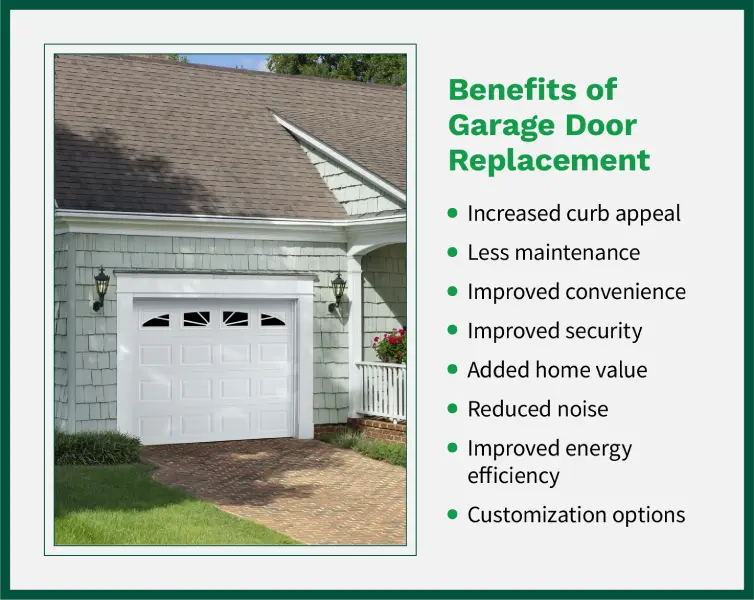
A new garage door can boost your home’s value and curb appeal. According to the 2023 Cost vs. Value Report, homeowners get back about 102.7% of their investment when selling their home after replacing a garage door. This means it’s one of the best home upgrades for return on investment.
Other benefits include:
- Lower energy bills (with insulation)
- Better security and safety
- Fewer repairs and less noise
If your old door is damaged, noisy, or hard to use, a new one can make daily life easier.
For more on home improvement returns, see this Remodeling Cost vs. Value Report.
Frequently Asked Questions
How Long Does Garage Door Installation Take?
Most jobs take 2–4 hours for a professional. Complicated installations or custom doors may need more time. If extra repairs are needed, add 1–2 hours.
Can I Install A Garage Door Myself?
It’s possible, but not recommended for beginners. Garage doors are heavy and use powerful springs. Mistakes can cause injury or damage. Most warranties require professional installation.
What’s The Cheapest Type Of Garage Door?
A non-insulated single steel door is usually the least expensive option. Prices start around $700 installed. Aluminum is also affordable but can dent more easily.
Do I Need A New Opener With A New Door?
Not always. If your old opener works and matches the new door’s weight, you may keep it. But if your door is heavier, or you want smart features, a new opener is a good idea.
How Often Should I Replace A Garage Door?
Most garage doors last 15–30 years with good care. If your door is rusted, damaged, or hard to use, consider replacing it sooner.
A new garage door is a smart investment for many homeowners. By understanding the real costs and what influences price, you can choose the best option for your home and budget. If you plan ahead and avoid common mistakes, you’ll enjoy a safer, better-looking garage for years to come.