
How Long Do Garage Door Springs Last
A garage door is one of the most used parts of a home. Every time you open or close it, the garage door springs do most of the heavy lifting. Many homeowners do not think about these springs until something goes wrong. But understanding how long garage door springs last can save you money, time, and even keep your family safe.
Knowing the lifespan of your springs helps you plan for repairs or replacements before they break. A broken spring can make your garage door hard to lift, or even dangerous. In this guide, you’ll learn about the lifespan of garage door springs, what affects their durability, warning signs, and how you can make them last longer.
What Are Garage Door Springs?
Garage door springs are strong metal coils that help move the door up and down. They work by storing energy when the door is closed, then releasing it to lift the door. There are two main types:
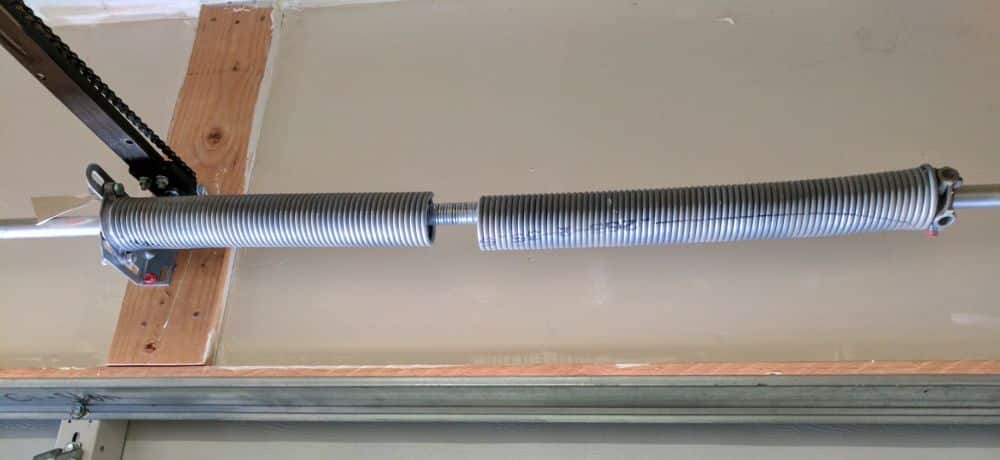
- Torsion springs: These sit above the garage door. They twist and untwist to move the door.
- Extension springs: These are along the sides of the door. They stretch and contract with the door’s motion.
Both types make opening and closing heavy garage doors much easier.
Typical Lifespan Of Garage Door Springs
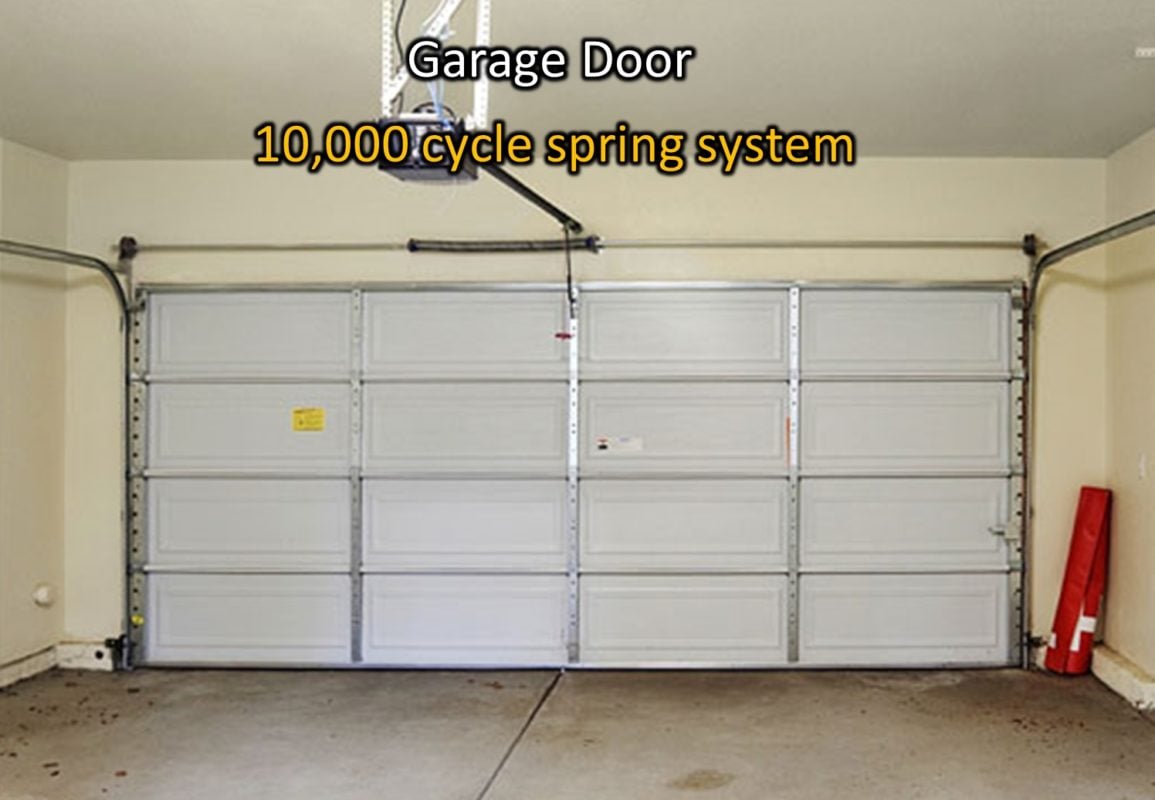
Most garage door springs are rated by cycles. One cycle means opening and closing the door once. Manufacturers use cycles instead of years, because how often you use the door matters more than how old the spring is.
Average Cycle Ratings
- Standard springs: 10,000 cycles (most common for homes)
- Heavy-duty springs: 20,000–25,000 cycles
- High-cycle springs: Up to 50,000 cycles (for commercial or special use)
If you use your garage door four times a day (two openings and two closings), a 10,000-cycle spring should last about 7 years.
Real-life Example
Let’s say you use your garage door 6 times a day:
- 10,000 cycles ÷ 6 cycles per day = about 1,667 days
- 1,667 days ÷ 365 = about 4.5 years
In homes with two cars or busy families, springs may wear out in just 4–6 years.
Credit: veterangaragedoor.com
Factors That Affect Spring Lifespan
Many things can change how long your springs last. Here are the most important factors:
1. Frequency Of Use
The more often you open and close the door, the faster the springs wear out.
2. Spring Quality
Cheap or low-quality springs break faster. High-quality steel lasts longer but costs more.
3. Garage Door Weight
Heavier doors put more stress on springs. Insulated or wooden doors need stronger springs.
4. Climate And Environment
Humidity, salt air, and extreme temperatures can cause rust or weaken the metal.
5. Maintenance
Regularly lubricating and checking your springs can extend their life.
Cycle-to-years Table
Here’s a quick comparison of how cycle ratings translate to real years:
| Spring Cycle Rating | Daily Door Uses | Estimated Lifespan |
|---|---|---|
| 10,000 cycles | 2 | ~13.5 years |
| 10,000 cycles | 4 | ~7 years |
| 10,000 cycles | 6 | ~4.5 years |
| 20,000 cycles | 4 | ~13.5 years |
Signs Your Garage Door Springs Are Wearing Out
A spring usually fails without warning, but there are some clues before it happens. Watch for these signs:
- Door feels heavy
If the door is harder to lift, the spring may be losing strength.
- Loud bang
A sudden noise from the garage could mean a spring has snapped.
- Gaps in the spring
Torsion springs should be tight and wound. If you see a gap, it’s broken.
- Uneven movement
The door shakes, opens crooked, or doesn’t stay up.
- Slower operation
The opener struggles or moves slower than before.
Never ignore these signs. A broken spring can make your garage door unsafe and damage the opener.
Why Spring Failure Is Dangerous
When a spring breaks, the garage door can fall quickly. This is very dangerous for people, pets, or cars nearby. The opener can also be damaged if it tries to lift a door with a broken spring.
Torsion springs are under a lot of tension. Trying to fix or replace them yourself can cause serious injury. Always call a professional for repairs.
Extension Vs. Torsion Springs: Which Lasts Longer?
Not all springs are the same. Here’s how they compare:
| Feature | Torsion Springs | Extension Springs |
|---|---|---|
| Location | Above door | Along sides |
| Average Lifespan | 7–10 years | 4–6 years |
| Cycle Rating | 10,000–20,000+ | 5,000–10,000 |
| Safety | Safer, less likely to snap apart | Can fly off if broken |
| Cost | Higher | Lower |
Torsion springs usually last longer and are safer, but cost more up front. Extension springs are cheaper but wear out faster and can be more dangerous if they break.
Credit: www.floridagaragedoorpros.com
How To Make Garage Door Springs Last Longer
You can’t stop springs from wearing out, but you can get more years out of them by following these tips:
1. Regular Lubrication
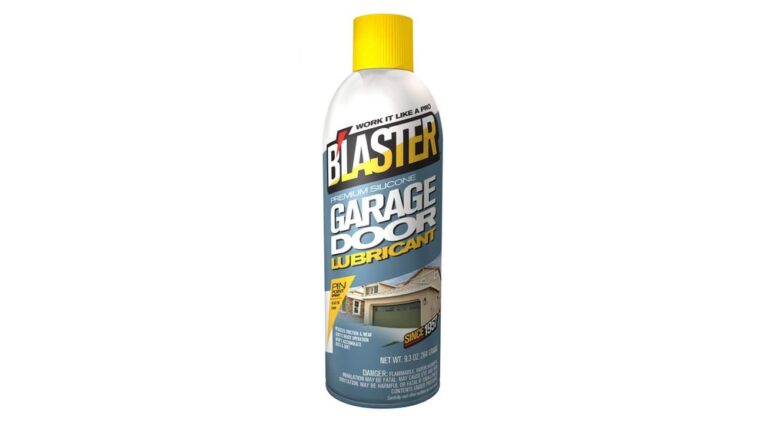
Use garage door lubricant or light oil on the springs every 6 months. This prevents rust and reduces friction.
2. Check Door Balance
A well-balanced door puts less stress on the springs. To check, disconnect the opener and lift the door halfway. It should stay in place. If not, call a pro.
3. Inspect For Rust
Rust weakens springs. Wipe off dirt and add lubricant if you see any.
4. Don’t Overload The Door
Avoid hanging heavy items on the door or adding insulation panels without adjusting the springs.
5. Limit Use
If possible, use a side door for quick trips instead of always opening the main garage door.
6. Professional Maintenance
Have a garage door technician check your springs once a year.
Maintenance Checklist
Here’s a simple maintenance plan:
- Lubricate springs every 6 months
- Check door balance every 6–12 months
- Look for rust or gaps monthly
- Schedule professional inspection yearly
Should You Replace One Spring Or Both?
If one spring breaks, it’s best to replace both springs at the same time. Here’s why:
- Both springs are likely the same age and will wear out at similar times.
- New and old springs together can cause uneven lifting.
- Replacing both saves on labor costs in the long run.
Even if only one side is broken, a matching set keeps your door balanced and safe.
Cost Of Garage Door Spring Replacement
The price can vary based on your location, spring type, and door size.
- Extension spring replacement: $100–$200
- Torsion spring replacement: $150–$350
This usually includes parts and labor. High-cycle or custom springs cost more.
Remember, DIY replacement is not safe for most homeowners. The risk of injury is high. Always choose a trained technician for this job.
Common Mistakes Homeowners Make
Many people make errors that shorten spring life or create safety problems. Watch out for these:
- Using the wrong type or size of spring for your door
- Adding weight to the door without adjusting springs
- Ignoring squeaks, jerks, or slow operation
- Trying to repair springs without proper tools or training
If you’re not sure, call a professional. It’s safer and can save money in the end.

Credit: jollygoatgaragedoors.com
The Real-world Impact Of Spring Failure
A broken spring is more than just an inconvenience. If your garage door won’t open, you might:
- Miss work or appointments
- Be unable to get your car out in an emergency
- Lose home security if the door can’t close
Planning ahead and replacing springs before they break avoids these headaches.
Comparing Garage Door Spring Quality
Not all springs are created equal. Here’s a quick comparison of three common types:
| Spring Type | Steel Quality | Coating | Lifespan |
|---|---|---|---|
| Standard torsion | Basic carbon steel | None or light oil | 7–10 years |
| Galvanized torsion | Medium carbon steel | Zinc coating | 8–12 years |
| High-cycle torsion | High-strength steel | Powder-coated | 15–20 years |
High-cycle springs cost more but can last two to three times longer than standard ones. For busy families or commercial use, this often makes sense.
When To Call A Professional
Some garage door jobs are safe for DIY, but spring replacement is not one of them. If you notice any warning signs, or your door stops working, call a licensed garage door technician.
A pro can:
- Safely remove and install springs under high tension
- Make sure your door is balanced and secure
- Choose the correct springs for your door weight and use
For more details about garage door safety and maintenance, visit the Wikipedia page on garage door openers.
Frequently Asked Questions
How Do I Know If My Garage Door Spring Is Broken?
If your garage door won’t open, feels very heavy, or you hear a loud snap, the spring is likely broken. Look for a visible gap in the torsion spring or a stretched-out extension spring.
Can I Replace Garage Door Springs Myself?
It’s not recommended. Springs are under high tension and can cause serious injury if handled incorrectly. Always hire a trained professional for replacement.
How Much Does It Cost To Replace Garage Door Springs?
Most homeowners pay between $100 and $350, depending on spring type and local labor rates. High-cycle or specialty springs may cost more.
Is It Better To Replace Both Springs At The Same Time?
Yes. Replacing both ensures your door stays balanced and prevents a second failure soon after. It also usually saves on labor costs.
How Can I Make My Springs Last Longer?
Lubricate springs every 6 months, check for rust, and have a professional inspect your door once a year. Try to limit how many times you open and close the door daily.
—
Understanding how long garage door springs last helps you avoid surprise breakdowns and keeps your home safer. With regular care and prompt replacement, your garage door will keep working smoothly for years to come.