
Manually opening your garage door may sound simple, but for many homeowners, the idea brings confusion and worry. When the power goes out or your garage door opener fails, knowing how to open your garage door manually is not just convenient—it’s necessary. This skill can save you from being stuck outside in bad weather or from missing important appointments. In this article, you’ll learn a clear, step-by-step process for opening your garage door by hand, understand safety tips, and get answers to common questions. All explanations use simple words and examples, perfect for beginners.
Why You Might Need To Open A Garage Door Manually
Modern garage doors rely on electric openers. However, there are times when the opener does not work. Some common reasons include:
- Power outage: Storms or electrical work can cut power.
- Opener malfunction: The motor or remote may stop working.
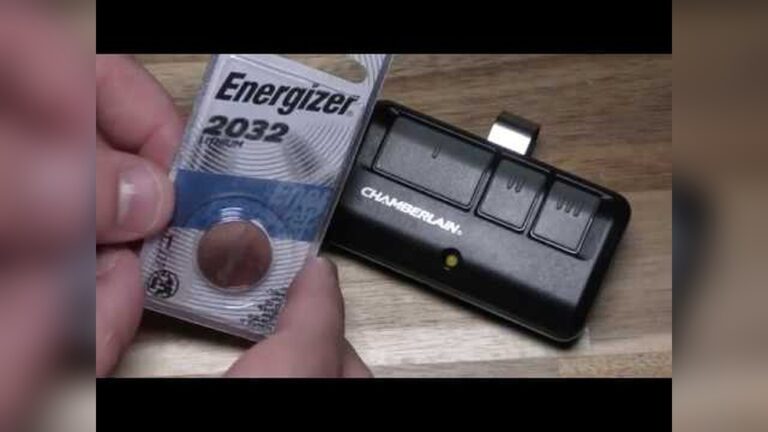
- Broken remote battery: Sometimes, the simplest problem is a dead remote.
- Spring or cable failure: Even with power, mechanical parts can break.
In these cases, being able to open your garage door manually helps you avoid frustration and delays.
Basic Parts Of A Garage Door System
Knowing the main parts of your garage door helps you understand the process.
- Garage door panels: The large, moving sections of the door.
- Torsion springs: Located above the door; help lift the door’s weight.
- Tracks: Guide the door as it moves up and down.
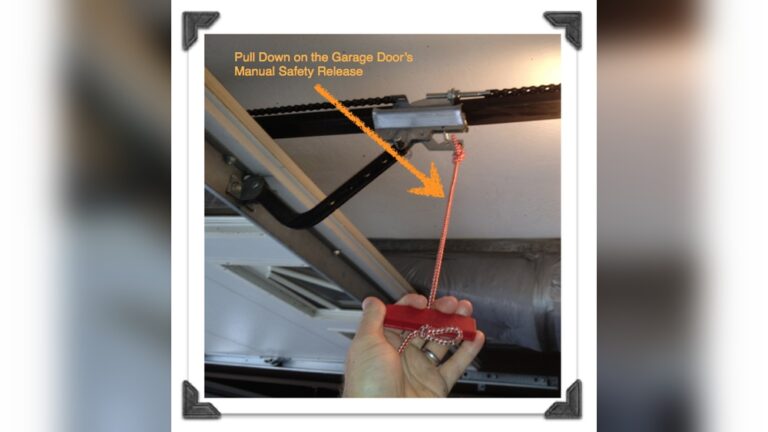
- Emergency release cord: Usually a red handle hanging from the opener rail.
- Opener carriage: The part that attaches the door to the opener system.
Here’s a quick comparison of manual vs automatic garage door operation:
| Feature | Manual Operation | Automatic Operation |
|---|---|---|
| Power Needed | No | Yes |
| Speed | Slower | Faster |
| Safety Locks | Manual | Automatic |
| Common Issues | Heavy lifting | Mechanical/electrical failure |

Credit: www.olympusgaragedoorrepairmd.com
Safety First: What To Do Before You Start
Garage doors are heavy—sometimes weighing over 100 pounds (45 kg). Safety is very important:
- Clear the area: Make sure no children, pets, or objects are in the way.
- Check the springs: If you see a broken spring (a large gap or snapped metal), do NOT try to open the door. Call a professional.
- Wear gloves: This helps you grip the handle and protect your hands.
- Use a flashlight: If it’s dark, good lighting prevents accidents.
Two insights beginners often miss:
- Never stand under the door while working. If the springs are damaged, the door can fall quickly.
- Don’t force the door open if it feels stuck. This could mean a mechanical failure.
Step-by-step Guide: How To Manually Open Your Garage Door
Follow these steps for a safe and easy process.
1. Make Sure The Door Is Closed
If possible, start with the door in the closed position. This is safer and prevents the door from slamming down if something goes wrong.
- If the door is partially open, close it carefully using the opener (if it works) or ask for help to guide it down slowly.
2. Unplug The Garage Door Opener
For extra safety, unplug the opener from the wall outlet. This prevents accidental activation while you work.
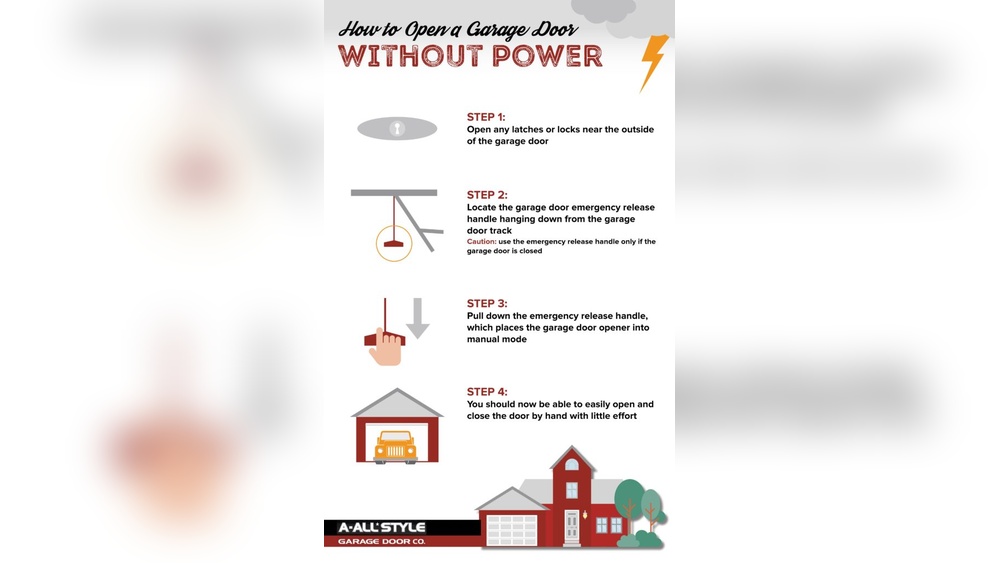
3. Locate The Emergency Release Cord
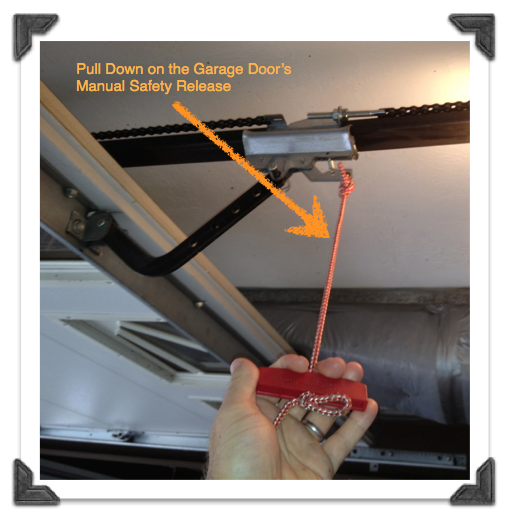
Find the red emergency release cord hanging from the opener rail. This cord connects to a release mechanism.
- The cord is usually bright red and hangs about halfway along the rail.
- If your garage has a ceiling-mounted opener, it will be near the center of the garage ceiling.
4. Pull The Emergency Release Cord Downward
- Grasp the cord handle firmly.
- Pull straight down. You may hear a “click” sound as the opener disconnects from the door.
- If your door is stuck, do not yank the cord—check for obstacles or call for help.
This releases the door from the opener, allowing manual movement.
5. Lift The Garage Door Slowly
- Stand with your feet apart for balance.
- Use both hands to grip the bottom handle or edge.
- Lift the door steadily. It should move smoothly if the springs are working.
- Raise the door until it is fully open and stops moving.
If the door feels extremely heavy or does not move, stop. This could mean a broken spring or cable—a dangerous situation.
6. Keep The Door Open (if Needed)
- If you need to keep the door open, prop it up with a sturdy object (like a wooden block).
- Never trust the door to stay open by itself—old springs can fail without warning.
A practical tip: If your garage door has side locks, use them to secure the door in the open position.
7. To Close The Door, Gently Pull It Down
- Hold the handle and guide the door down slowly.
- Watch your fingers—keep them away from the door’s edges.
Once closed, you can lock the door from inside for security.
8. Re-engage The Opener
When power returns or repairs are complete:
- Pull the emergency release cord toward the door (not straight down) until you hear a click.
- Plug the opener back in.
- Test the opener with the remote or wall switch. The carriage should reconnect automatically.
Different Types Of Garage Door Systems
Not all garage doors are the same. Knowing your type makes the process safer and easier.
| Type | Emergency Release Location | Special Steps |
|---|---|---|
| Sectional Door | Ceiling rail | Standard process |
| One-piece Tilt-up | Near top center | Heavier to lift, use care |
| Side-hinged Door | No opener rail | Open like a regular door |
Most homes use sectional doors with ceiling-mounted openers. If you have a different type, check your owner’s manual for the specific process.
What If The Door Is Locked From The Outside?
Some garage doors have a manual lock or handle on the outside. If you can’t open the door from inside:
- Find the lock and use the key to unlock it.
- For older doors, a special “emergency release kit” lets you insert a key and pull the release cord from outside.
Important: Keep your garage door keys in a known, safe place. Losing them can make manual opening impossible.

Credit: www.youtube.com
Reconnecting The Opener After Manual Use
Many beginners forget to re-engage the opener after using the door manually. If you do not reconnect, the remote will not work.
- Push the door toward the opener carriage until you hear a “snap.”
- Some openers require you to press the remote or wall button, which will reconnect the carriage automatically.
Check your model’s manual for exact steps.
Common Mistakes When Opening Garage Doors Manually
Avoid these errors for safety and efficiency:
- Forcing the door: If it’s stuck, don’t use extra strength. Something may be broken.
- Skipping the unplug step: Always disconnect power to avoid electrical surprises.
- Standing under the door: If springs fail, the door may fall fast.
- Leaving the door unsecured: Always lock or prop open the door if you need it to stay up.
When To Call A Professional
Some garage door problems are too risky for DIY fixes:
- Broken springs: These are under high tension and can cause injury.
- Snapped cables: The door may fall or become unbalanced.
- Serious opener faults: If you see burning smells, sparks, or hear loud grinding, call an expert.
According to the U.S. Consumer Product Safety Commission, over 20,000 garage door injuries occur each year—most from DIY repairs. When in doubt, get help.
Practical Example: Power Outage Scenario
Imagine it’s evening, there’s a storm, and your house loses power. You need to get your car out. Here’s what you do:
- Use a flashlight to reach your garage.
- Unplug the opener for safety.
- Pull the red emergency release cord.
- Lift the door by hand, making sure nothing is in the way.
- Drive out, then gently close the door by hand.
- Lock the door with the manual latch if you’re leaving.
This process works for most standard residential garage doors.
Comparing Manual Release Mechanisms
Different garage door brands may have unique release systems. Here’s a brief comparison:
| Brand | Release Cord Color | Re-engagement Method |
|---|---|---|
| Chamberlain | Red | Pull cord, then press remote |
| LiftMaster | Red | Manual push reconnect |
| Genie | Black or Red | Manual push reconnect |
Always consult your user manual for brand-specific details.
Extra Tips For Smooth Manual Operation
- Lubricate tracks and rollers every 6 months for easy lifting.
- Inspect the emergency release cord yearly for wear and tear.
- Label the emergency release so all family members know what it is.
A non-obvious insight: In extreme cold, garage door seals may freeze to the ground. Use warm water to loosen them before lifting the door by hand.
Keeping Your Garage Door Secure
Manual operation can make your garage less secure. Here’s how to protect your home:
- Lock the garage door with the built-in slide lock or a padlock.
- Re-engage the opener as soon as power returns.
- Don’t leave the emergency release cord hanging outside—this makes break-ins easier.
For more on garage door safety, check the official CPSC safety guide.
Frequently Asked Questions
What If My Garage Door Won’t Open After Pulling The Emergency Release Cord?
If the door feels stuck, check for:
- Broken springs or cables
- Locked side latches
- Obstructions in the tracks
If you still cannot move the door, call a professional for help.
Can I Open A Garage Door Manually From The Outside?
Yes, but only if you have a manual key release kit installed. This lets you unlock the emergency release through a small hole in the door.
Is It Safe To Manually Open A Garage Door If A Spring Is Broken?
No. Garage door springs balance the weight. Without them, the door is extremely heavy and can fall suddenly. Do not attempt to open it—call an expert instead.
How Do I Know If My Garage Door Is Balanced?
A well-balanced door:
- Lifts smoothly by hand
- Stays in place when half open
- Does not feel too heavy
If your door slams shut or is hard to lift, it may be unbalanced.
Will Using The Manual Release Damage My Garage Door?
No, using the emergency release as instructed will not harm your door. Forcing it or using it repeatedly without fixing the main issue can cause wear.
Manually opening your garage door may seem challenging at first, but with the right steps, it’s a safe and practical skill. Always put safety first, avoid forcing the door, and don’t hesitate to call a professional if you notice broken parts.
Practicing the process before an emergency ensures you’re ready when it matters most. With these tips, you can handle most manual garage door situations confidently and keep your home secure.
Credit: www.garagedoorspokane.com