
How Big Is A One Car Garage
Thinking about building or buying a one car garage? You’re not alone. Many homeowners and renters want to know how much space they really need for one vehicle, plus some storage. The answer is not as simple as a single number. Garages come in different sizes, shapes, and styles. Understanding the right size helps avoid problems later, like cramped parking or lack of storage.
Let’s break down exactly how big a one car garage is, how much space you need, and what you can fit inside. This guide explains standard sizes, practical uses, and important tips for choosing or building the best garage for your needs.
Standard One Car Garage Dimensions
Most one car garages in the United States follow certain standard sizes. These are the most common dimensions you’ll see:
- Width: 10 to 12 feet
- Depth (length): 18 to 24 feet
- Door width: 8 to 9 feet
- Door height: 7 to 8 feet
These are outside measurements. Interior space will be a bit less due to wall thickness.
Common Size Examples
Let’s look at three typical one car garage sizes:
- 10 x 18 feet (small, tight fit for compact cars)
- 12 x 20 feet (most common, fits most sedans and small SUVs)
- 14 x 24 feet (extra room for larger vehicles or storage)
Here’s a comparison table to make it clearer:
| Garage Size (ft) | Square Footage | Best For |
|---|---|---|
| 10 x 18 | 180 | Compact cars, tight spaces |
| 12 x 20 | 240 | Sedans, small SUVs |
| 14 x 24 | 336 | Large sedans, trucks, storage |
Insight: Many people assume any car will fit in a “standard” garage. In reality, some large pickups or SUVs need more space than the smallest 10 x 18 ft option.
Why Garage Size Matters
Choosing the right size impacts convenience, safety, and value. Here’s why it matters:
- Easy Parking: Too small, and you’ll struggle to open doors or walk around.
- Storage Needs: Bikes, tools, and boxes all need space.
- Future Proofing: Cars are getting bigger. A small garage might not fit your next vehicle.
- Resale Value: Bigger garages add more value to your home.
Practical Tip: Always measure your car and compare to garage plans before building or buying. Don’t guess.
How Much Space Do You Need For One Car?
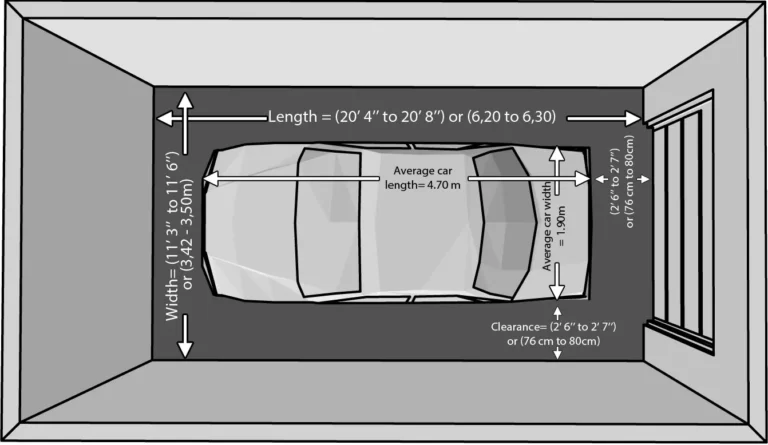
Let’s get specific. The average car in the US is about 6 to 6.5 feet wide and 15 to 16 feet long. But you need extra space to:
- Open doors fully
- Walk around the car
- Store items like bikes or lawn mowers
Minimum Recommended Space
- Width: 12 feet (car + door opening + walking space)
- Depth: 20 feet (car + walking space in front/back)
If you want storage shelves or a workbench, add at least 2 more feet to the width or depth.
Example: Parking A Sedan
Imagine you own a Toyota Camry (about 6.2 feet wide, 16 feet long):
- In a 12 x 20 ft garage, you can park, open doors, and walk around.
- In a 10 x 18 ft garage, you’ll fit but have little room to move or store items.
Beginner Mistake: Many homeowners forget to include space for opening car doors. Always allow at least 2.5 feet on each side of the parked car.
What Can You Fit In A One Car Garage?
A one car garage isn’t just for cars. People use it for bikes, tools, seasonal items, and more. Here’s what commonly fits with one car:
- Lawn mower
- Bicycles (1-2)
- Shelving units
- Small workbench
- Storage bins
If you want to fit all these, choose a garage at least 12 x 22 ft.
Space Planning Example
Suppose you have:
- One mid-size SUV (15.5 feet long)
- Two adult bikes (each about 6 feet long)
- One lawn mower (2.5 feet wide)
You’ll need space along the side or front for the bikes and mower. This makes a 12 x 22 ft garage a better fit.
Garage Door Sizes And How They Affect Usable Space
The garage door width is key. Most one car garages use:
- 8 feet wide: Standard, fits most cars but tight for large vehicles
- 9 feet wide: More comfortable for trucks, SUVs, and older drivers
Door height is usually 7 or 8 feet.
Door Size Comparison
| Door Width (ft) | Vehicles That Fit | Comments |
|---|---|---|
| 8 | Most sedans, small SUVs | Tight for wide vehicles |
| 9 | Large SUVs, trucks | More convenient |
Practical Insight: If you plan to park a large pickup or plan for aging in place, choose a 9-foot wide door.
Ceiling Height: Don’t Forget Vertical Space
Most people focus only on length and width. But ceiling height can affect what you store and how you use the garage.
- Standard height: 7 to 8 feet
- High ceiling: 9 to 10 feet (good for tall vehicles or overhead storage)
Higher ceilings allow for:
- Overhead storage racks
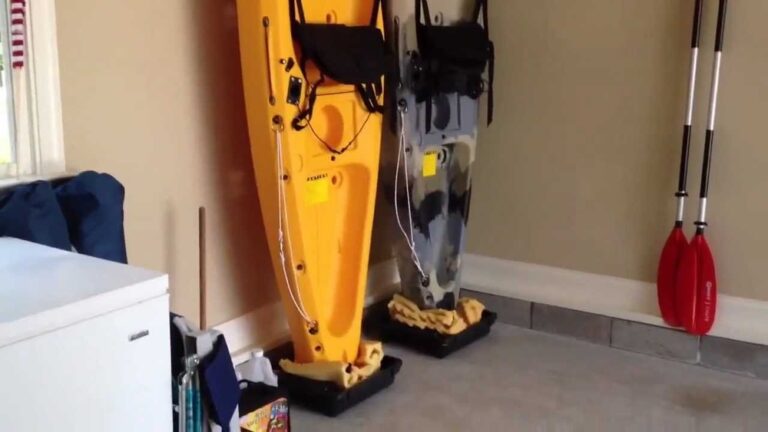
- Lifting bikes or kayaks
- Parking tall vehicles (vans, SUVs with roof boxes)
Beginner Mistake: Forgetting to check ceiling height when buying or renting. Always check if your vehicle and storage plans will fit.
Credit: thecarportco.com
Building Vs. Buying A One Car Garage
Thinking of building from scratch or buying a prefab kit? Here’s what to consider:
Building Custom
- Choose exact dimensions to match your needs
- Add insulation, electrical, or plumbing
- More expensive but higher home value
Buying Prefab
- Fast and cheaper
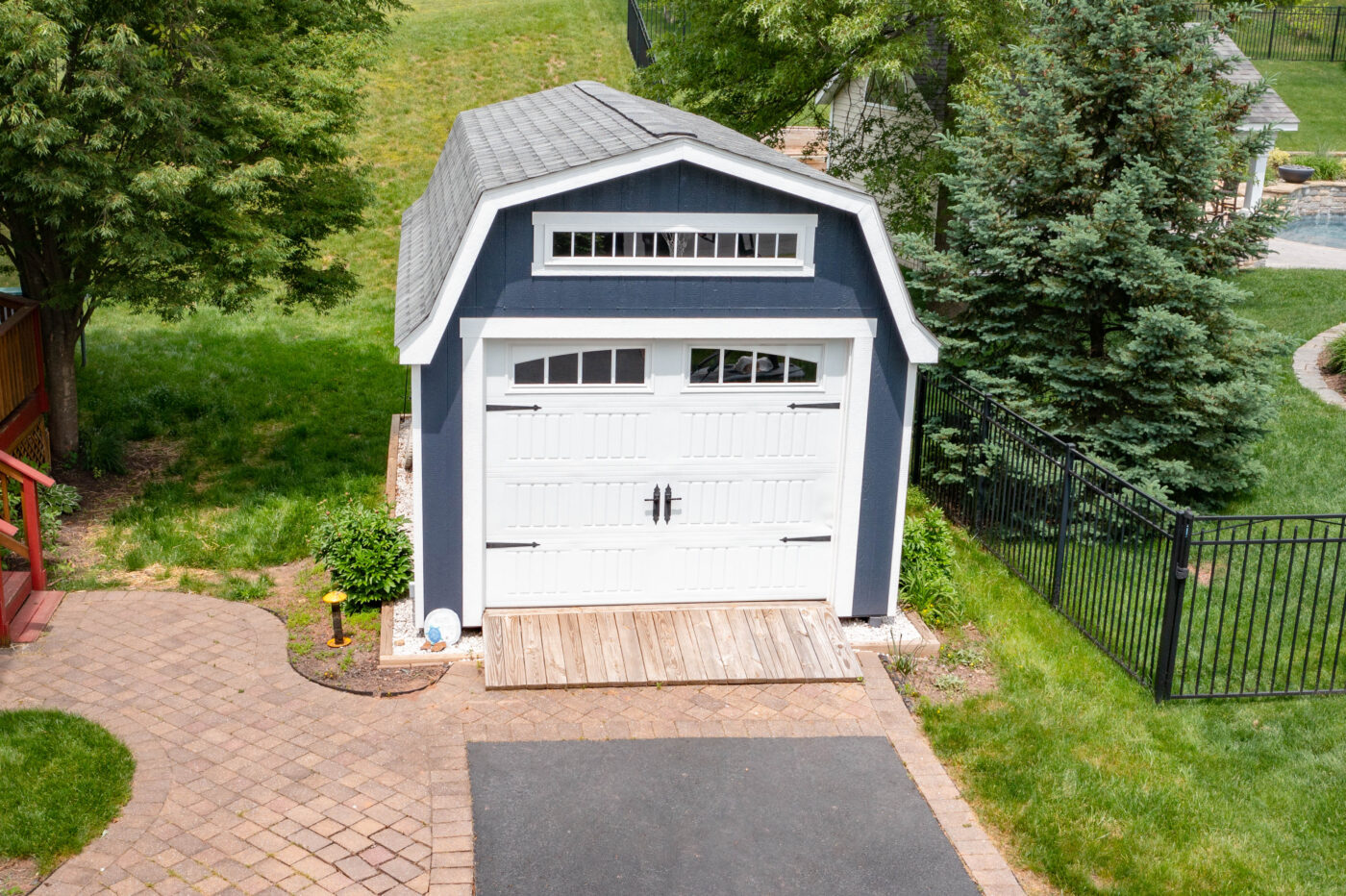
- Standard sizes (often 12 x 20 ft or 14 x 24 ft)
- Limited customization
Cost Comparison
| Type | Typical Size (ft) | Approx. Cost (USD) | Customization |
|---|---|---|---|
| Prefab Kit | 12 x 20 | $6,000 – $12,000 | Low |
| Custom Build | Varies | $12,000 – $25,000+ | High |
Practical Tip: If you need more storage or have a large vehicle, spending more for a custom design pays off in daily comfort.
Local Codes And Hoa Rules
Before you build or remodel, check local building codes and Homeowners Association (HOA) rules.
- Minimum garage size may be required
- Setbacks from property lines
- Restrictions on height or style
Beginner Insight: Some cities require at least a 12 x 20 ft garage for new homes. Always get approval before building.
Credit: shedsunlimited.net
Pros And Cons Of A One Car Garage
Let’s compare the benefits and limits of a one car garage.
Pros
- Lower cost than two or three car garages
- Takes less yard space
- Easier to build and maintain
- Great for small families or singles
Cons
- Limited storage
- Won’t fit two cars or large trucks easily
- Harder to add workspace or hobby area
Pro Tip: If you plan to stay in your home long-term, consider future needs. Upgrading to a larger garage later is expensive and disruptive.
Maximizing Space In A One Car Garage
Even with limited size, you can get more from your garage by using smart storage ideas:
- Wall-mounted shelves and hooks
- Ceiling racks for boxes or sports gear
- Foldable workbenches
- Slim storage cabinets
- Vertical bike racks
Practical Example: Hanging bikes on the wall saves over 10 square feet of floor space, making it easier to park and walk around your car.
Non-Obvious Insight: Many people forget to use the back of the garage door for hanging lightweight tools or organizers.
Real-life Examples
Let’s look at what fits in different one car garages:
- 10 x 18 ft: A compact sedan, no storage, very tight walkways.
- 12 x 20 ft: Most sedans and compact SUVs, room for wall shelves and one bike.
- 14 x 24 ft: Full-size SUV or truck, two bikes, lawn mower, storage shelves, and a small workbench.
Homeowner Story: One couple bought a home with a 10 x 18 ft garage. Their SUV fit, but they had to fold in mirrors and couldn’t store anything else. Later, they paid to expand the garage to 12 x 22 ft, which solved their problems and increased their home’s value.
One Car Garage Vs Two Car Garage
Many buyers ask: “Should I get a one car or two car garage?” Here’s a quick comparison to help decide:
- One car: Cheaper, takes less space, fits most needs for singles/couples
- Two car: More expensive, needs bigger lot, better for families or extra storage
SEO Insight: If you have one car but lots of gear (bikes, kayaks, tools), a slightly larger one car garage (14 x 24 ft) is often better value than a small two car garage.
Credit: www.carportcentral.com
When Is A One Car Garage Too Small?
You might find a one car garage too small if:
- You own a large pickup or full-size SUV
- You want to use your garage as a workshop
- You need lots of storage for sports gear, tools, or seasonal items
- You plan to park two cars side by side
Beginner Insight: It’s not just about car size. Factor in your lifestyle—hobbies, work-from-home needs, or kids’ bikes all need space.
Frequently Asked Questions
How Big Should A One Car Garage Be For A Large Suv Or Truck?
A garage at least 14 feet wide and 24 feet deep is best for large vehicles. This gives enough room to open doors and walk around. Don’t forget to check door width—choose 9 feet wide for big trucks.
Can I Fit Anything Besides My Car In A One Car Garage?
Yes, but only if you plan space well. Shelves, bikes, and a lawn mower can fit with a mid-size car in a 12 x 22 ft or larger garage. For small garages (10 x 18 ft), space is very tight.
What Is The Minimum Legal Size For A One Car Garage?
Many US cities require at least 12 x 20 feet for a one car garage, but rules vary. Always check your local building code before building.
Is It Worth Building A Bigger One Car Garage?
Yes, if you want storage or plan to keep your home long-term. A slightly bigger garage (like 14 x 24 ft) gives more flexibility and increases resale value.
Where Can I Find More Garage Design Ideas?
Great ideas and photos are on the Houzz Garage Design page. You’ll see layouts, storage tips, and real projects.
A one car garage is a smart choice for many homeowners, but size matters more than most people think. Measure your car, plan for storage, and check future needs before deciding. With the right dimensions, your garage will be a useful, valuable part of your home for years to come.