
Framing a garage door is a key part of building or renovating a garage. If you do it right, your door will work smoothly, close tightly, and last longer. Many beginners worry about getting the measurements correct or making the frame strong enough.
This guide breaks down each step in simple language, so you can frame a garage door confidently—even if you have never built anything before. By the end, you will know exactly what tools, materials, and methods to use, and you’ll understand common mistakes to avoid.
Understanding Garage Door Framing
Before you start, it’s important to know what framing means. Framing is building the structure around the garage door opening. It includes the sides, top, and bottom parts that hold the door and its hardware.
A well-framed garage door:
- Supports the weight of the door
- Keeps the door opening square and level
- Stops drafts, leaks, and pests
Standard garage doors are 7 to 8 feet high and 8 to 16 feet wide. Always check the size of your door before you start framing.
Tools And Materials You Need
Gather all your tools and materials first. This saves time and prevents mistakes.
Essential tools:
- Tape measure
- Carpenter’s square
- Circular saw or handsaw
- Level (4-foot recommended)
- Hammer or nail gun
- Power drill
- Pencil
- Safety glasses
Materials:
- 2×4 or 2×6 lumber (pressure-treated for bottom plate)
- Header material (often doubled 2x12s for wide doors)
- Fasteners (nails or screws)
- Metal brackets (for extra support)
- Construction adhesive
A 16-foot wide garage door usually needs a double 2×12 header to support the weight.
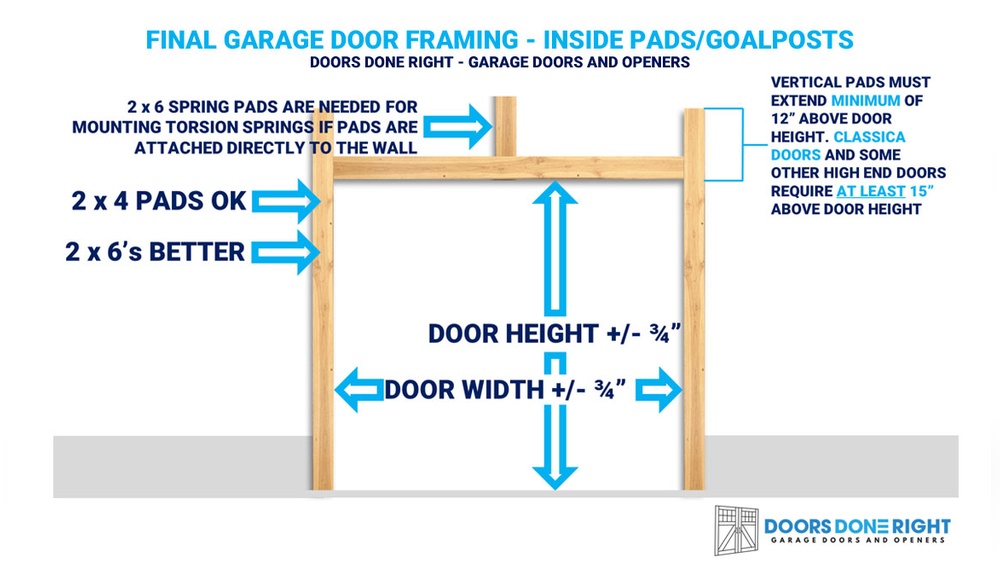
Credit: www.doorsdoneright.net
Measuring For The Garage Door Opening
Getting the measurements right is the most important step. Here’s how to do it:
- Check your door size. Look at your garage door package or manufacturer’s instructions.
- Mark the rough opening. The rough opening should be the same width and height as the door itself.
- Add space for trim. Leave 1–2 inches extra on each side for trim and hardware.
For example: If your garage door is 8 feet wide and 7 feet high, your rough opening should also be 8 feet by 7 feet.
Common mistake: Beginners often make the rough opening too small. This causes installation problems later.
Building The Bottom Plate
The bottom plate is the foundation of your frame. It sits on the concrete floor.
- Use pressure-treated lumber for the bottom plate. It resists moisture and rot.
- Cut the plate to match the width of your opening.
- Secure it to the floor with concrete anchors or construction adhesive.
Tip: If your floor is uneven, use shims to level the plate.
Installing The Side Studs
Side studs are vertical pieces of wood on each side of the opening.
- Place studs at both ends of your bottom plate.
- Make sure they are perfectly vertical using a level.
- Attach the studs to the bottom plate and the ceiling joists.
If your garage door is heavy, use double studs for extra strength.
Building The Header
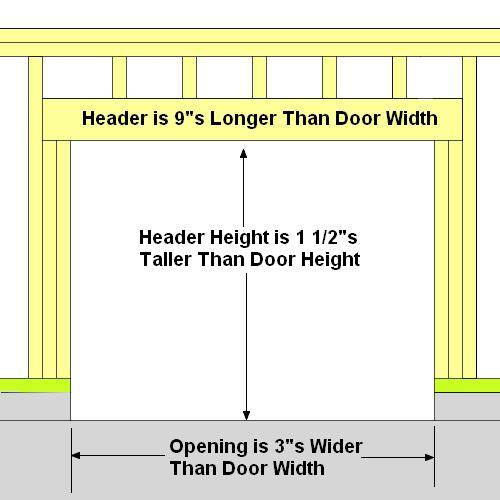
The header is the horizontal beam above the garage door. It carries the weight of the wall above.
Header sizes vary:
- For 8-foot doors: Double 2x8s or 2x10s
- For 16-foot doors: Double 2x12s
| Door Width | Header Size | Support Needed |
|---|---|---|
| 8 ft | 2×8 (double) | Standard |
| 10 ft | 2×10 (double) | Extra support |
| 16 ft | 2×12 (double) | Heavy-duty |
Steps to install the header:
- Measure the width of your opening.
- Cut header lumber to length.
- Place the header above the side studs.
- Use metal brackets for support.
- Secure the header with long nails or screws.
Non-obvious insight: A slightly oversized header can prevent sagging in cold climates where wood shrinks.

Credit: chsgaragerepair.com
Adding Jack And King Studs
Jack studs and king studs support the header.
- King studs run from floor to ceiling, lining up with side studs.
- Jack studs are shorter and hold up the header.
Place jack studs inside the king studs on both sides of the opening. Nail them tightly together.
Example: For an 8-foot wide door, use two jack studs and two king studs on each side.
Framing The Top Plate
The top plate sits above the header and ties the frame to the rest of the wall.
- Use a single 2×4 or 2×6, depending on wall thickness.
- Nail the top plate to the king studs and header.
- Make sure it is level.
Tip: Mark the center of your opening on the top plate for easier hardware installation later.
Checking Level And Square
If your frame is not square, your garage door will not open or close properly.
- Use a carpenter’s square to check corners.
- Use a level to check all sides.
- Measure diagonals; both should be equal.
Common mistake: Not checking diagonals. If one diagonal is longer, the opening is not square.
Securing The Frame
After building your frame, secure all parts tightly.
- Use metal brackets at connections for extra strength.
- Nail or screw every joint securely.
- Test by pushing gently on each part; nothing should move.
Example: For hurricane-prone areas, use hurricane clips for extra safety.
Preparing For Door Installation
Once your frame is ready, you can prepare for installing the garage door.
- Clean the opening of dust and debris.
- Seal gaps with construction adhesive or foam.
- Paint or seal the wood, especially if it will be exposed to moisture.
Practical data: A well-sealed frame can reduce air leaks by up to 25%, saving on heating and cooling costs.
Comparing Framing Methods
There are two main ways to frame a garage door: traditional wood framing and metal framing.
| Framing Type | Cost | Durability | Skill Needed |
|---|---|---|---|
| Wood | $200–$400 | Good | Beginner-friendly |
| Metal | $300–$600 | Excellent | Requires tools |
Wood framing is easier for beginners. Metal framing lasts longer but needs special tools.
Common Beginner Mistakes
Many first-timers make small errors that cause big problems later.
- Skipping measurements: Always measure twice before cutting.
- Using wrong lumber: Only use pressure-treated wood for bottom plates.
- Ignoring level and square: Double check with a level and square.
- Not securing joints: Use extra nails or screws for safety.
Non-obvious insight: If you live in a wet climate, add a moisture barrier under your bottom plate.
Final Inspection And Adjustments
Before installing the garage door, do a full inspection.
- Check all measurements again.
- Look for gaps or loose joints.
- Confirm header and studs are solid.
Ask a friend to help check your work. Sometimes, a second set of eyes catches mistakes you miss.

Credit: www.youtube.com
Example: Framing For A 9-foot Garage Door
Let’s walk through a real-world example for a 9-foot wide, 7-foot high garage door.
- Bottom plate: Cut a 2×4 to 9 feet. Secure to floor.
- Side studs: Place two 2×4 studs at each end.
- Header: Use double 2x10s, cut to 9 feet.
- Jack studs: Two per side, cut to height below header.
- King studs: Two per side, full height.
- Top plate: Cut to 9 feet, place above header.
- Secure: Nail all joints tightly.
This method works for most standard garage doors.
Cost And Time Estimates
Framing a garage door takes 4–8 hours for a beginner. Cost depends on materials and door size.
| Door Size | Lumber Cost | Labor Time |
|---|---|---|
| 8 ft x 7 ft | $150–$250 | 4–6 hours |
| 9 ft x 7 ft | $200–$300 | 5–7 hours |
| 16 ft x 8 ft | $300–$400 | 6–8 hours |
These numbers are average for US homes. Hiring a pro costs more but may save time.
Safety Tips
Working with wood and tools can be risky. Follow these safety tips:
- Always wear safety glasses
- Use gloves to protect hands
- Keep your workspace clean
- Lift heavy lumber carefully
If you’re unsure about any step, ask an expert or check official sources like Family Handyman.
Frequently Asked Questions
How Big Should The Rough Opening Be For A Garage Door?
The rough opening should match the width and height of the door itself. For an 8-foot by 7-foot door, the rough opening is 8 feet wide and 7 feet high.
What Type Of Lumber Is Best For Garage Door Framing?
Use pressure-treated lumber for the bottom plate. For studs and headers, standard 2×4 or 2×6 wood is fine. Headers often need doubled 2×8, 2×10, or 2×12 depending on door width.
Can I Frame A Garage Door By Myself?
Most beginners can frame a garage door if they follow clear steps and use the right tools. For heavy headers or large doors, ask a friend to help.
How Do I Know If My Frame Is Square?
Measure both diagonals of the opening. If they are equal, your frame is square. Also check corners with a carpenter’s square.
What Is The Most Common Mistake When Framing A Garage Door?
The biggest mistake is making the rough opening too small. This causes problems with fitting the door and installing hardware.
Framing a garage door takes careful planning and attention to detail. If you measure accurately, use the right materials, and double-check your work, your garage door will work well for years. Even beginners can handle this project by following these simple steps.
If you need more help or want extra tips, consult a trusted building site or local expert.