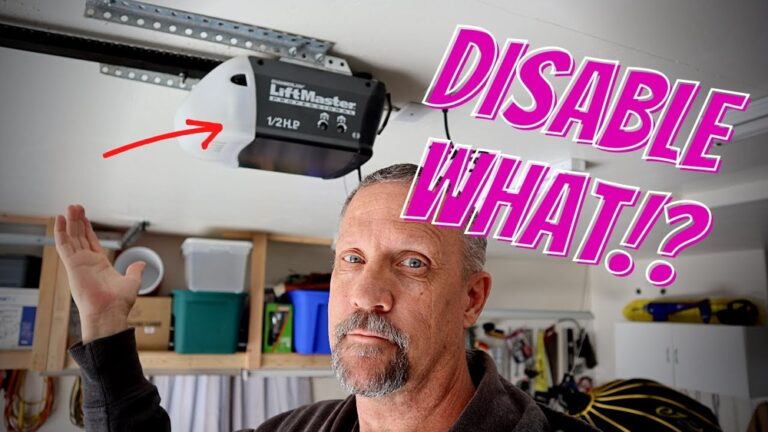

Choosing the right garage door opener can be confusing, especially when you see options like 1/2 horsepower and 3/4 horsepower. Many homeowners wonder what these numbers mean, which opener is best, and how much power is really needed. If you are new to garage door openers, this guide will help you understand the differences, pick the best model, and avoid common mistakes.
What Is Horsepower In Garage Door Openers?
Horsepower (HP) is a measurement of power. In garage door openers, it tells you how strong the motor is. A higher HP means the motor can lift heavier doors and do it more easily.
- 1/2 HP is a common size for garage door openers in homes.
- 3/4 HP is stronger and used for bigger or heavier doors.
Most garage doors are not very heavy, but if your door is large or made of solid wood, you might need more power.
Comparing 1/2 Hp Vs 3/4 Hp Garage Door Openers
To make the differences clear, here’s a quick comparison:
| Feature | 1/2 HP | 3/4 HP |
|---|---|---|
| Door Weight Support | Up to 300 lbs | Up to 500 lbs |
| Door Size | Single or standard double | Large double or heavy wood |
| Motor Lifespan | 5–10 years (typical) | 10+ years (less strain) |
| Noise Level | Average | Often quieter |
| Cost | Lower | Higher |
Practical Example
If your garage door is a lightweight steel model and is used only a few times a day, a 1/2 HP opener is likely enough. If you have a large wooden door or use the garage frequently, a 3/4 HP opener will last longer and work better.
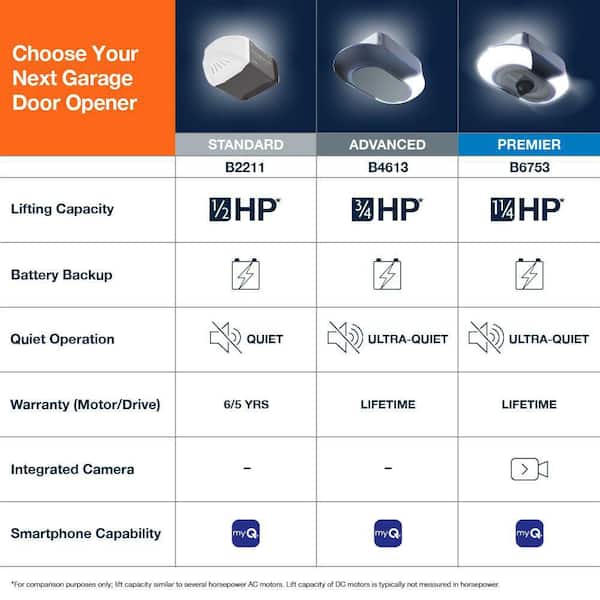
Credit: www.homedepot.com
How To Choose The Right Horsepower
Choosing the right opener depends on a few key factors:
- Door Weight: Heavier doors need more power.
- Door Size: Bigger doors usually need more HP.
- Usage: Frequent use puts more strain on the motor.
- Noise Preference: Stronger motors often run more quietly.
- Budget: Higher HP costs more but can save money in the long run.
Step-by-step Decision Process
- Measure Your Door: Find out its size and weight.
- Check Material: Steel is lighter; wood is heavier.
- Estimate Usage: How often will you open and close the door?
- Think About Future Needs: Will you upgrade or change your door?
- Set Your Budget: Decide what you are willing to spend.
Common Mistakes Beginners Make
Many homeowners make errors when buying garage door openers. Here are mistakes to avoid:
- Underestimating Door Weight: Always check the actual weight. Guessing can lead to choosing an underpowered opener.
- Ignoring Usage: If you open the garage many times each day, choose a higher HP for durability.
- Focusing Only on Price: Cheap openers might wear out faster, costing more in repairs.
- Not Checking Compatibility: Some doors require special openers or extra hardware.
- Skipping Professional Advice: Asking a garage door technician can save you trouble.
Credit: www.craftsman.com
Lifespan And Maintenance
The power of your opener affects its lifespan and maintenance needs. Here’s a side-by-side comparison:
| Opener Type | Expected Lifespan | Maintenance Tips |
|---|---|---|
| 1/2 HP | 5–10 years |
|
| 3/4 HP | 10–15 years |
|
A stronger motor does not have to work as hard, so it lasts longer and needs less repair.
Noise And Performance Differences
Noise is a big concern for many buyers. Generally:
- 1/2 HP openers can be noisier, especially if the door is heavy.
- 3/4 HP openers often have smoother starts and stops, making them quieter.
If your garage is attached to your home or near bedrooms, noise matters. Belt-drive models with higher HP are best for quiet operation.
Cost Breakdown: What You Get For Your Money
The price difference between 1/2 HP and 3/4 HP openers is noticeable, but not extreme. On average:
- 1/2 HP opener: $150–$250 (basic models)
- 3/4 HP opener: $200–$400 (more features, better build)
Features that affect price:
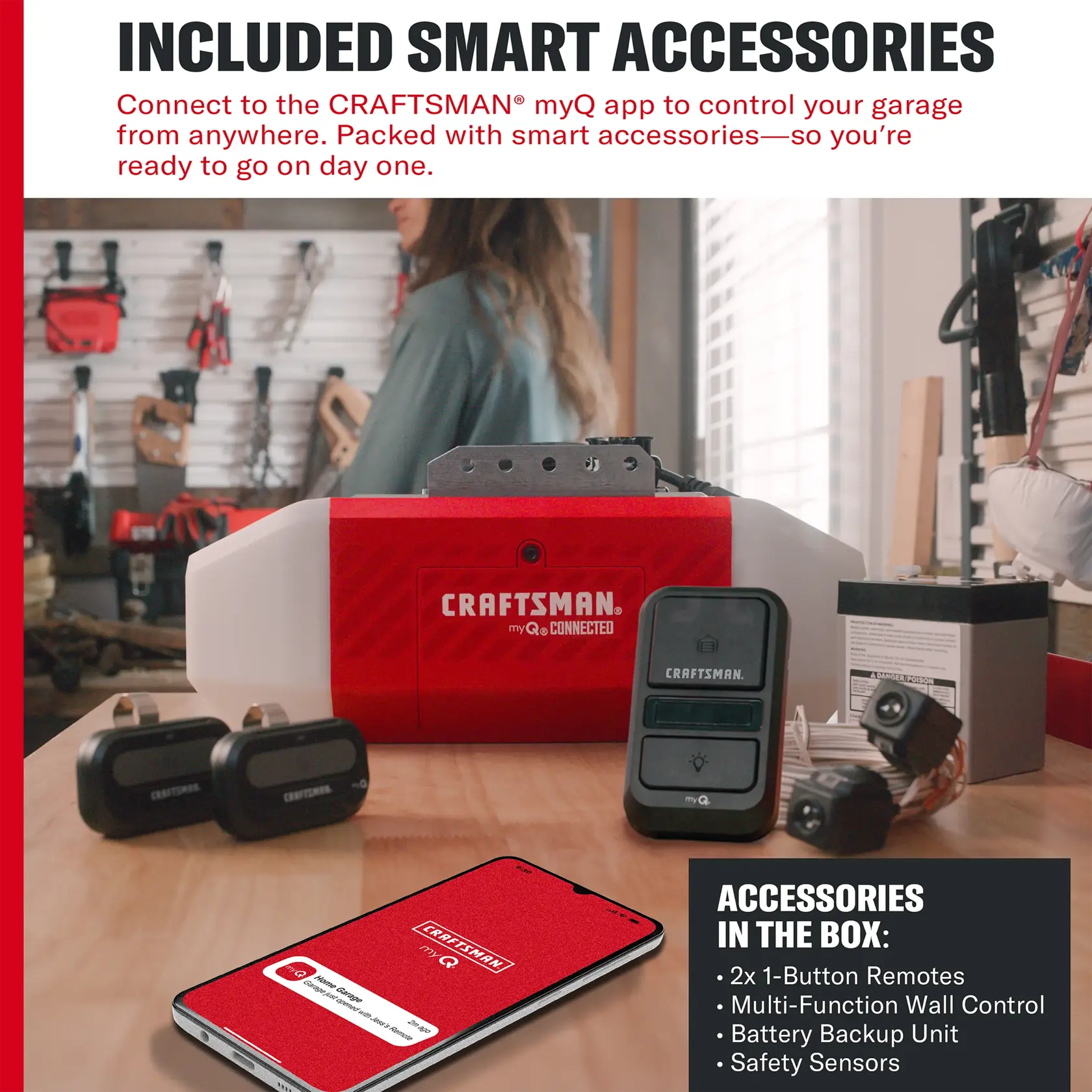
- Smart controls (Wi-Fi, smartphone apps)
- Battery backup
- Built-in lights
- Stronger rails and hardware
Investing a bit more upfront for a higher HP model can prevent expensive repairs later.
Real-life Examples
Let’s see how different homeowners make their choice:
- Case 1: Sarah has a single, lightweight steel door. She uses it only twice a day. A 1/2 HP opener works perfectly for her.
- Case 2: Mike owns a double wooden door, very heavy, and uses his garage several times a day. He picks a 3/4 HP opener to avoid motor strain.
- Case 3: Linda has a single insulated door. She wants quiet operation because her bedroom is nearby. She chooses a belt-drive 3/4 HP opener for less noise.
Energy Efficiency
Many people worry about power usage. Garage door openers are not big energy users, but stronger motors do use a bit more electricity.
- 1/2 HP motor: Uses about 4–5 amps during operation.
- 3/4 HP motor: Uses about 6–8 amps during operation.
However, the opener only runs for a few seconds at a time. Annual cost difference is usually less than $10. Choosing a model with energy-saving features, like LED lights and standby mode, can help.
Installation: Diy Or Professional?
Both 1/2 HP and 3/4 HP openers can be installed by homeowners with basic tools. However:
- Heavier doors and stronger motors may need extra bracing.
- Some models require wiring for smart features or battery backup.
- Professional installation costs $100–$250 but ensures safety.
If you are not comfortable with electrical work or heavy lifting, consider hiring a pro.
Security And Features
Horsepower does not affect security directly, but stronger motors usually come with advanced features:
- Rolling code technology prevents hacking.
- Auto-lock systems secure your door after closing.
- Smartphone control lets you monitor and control from anywhere.
Look for these features when choosing your opener.
When Should You Upgrade?
If your current opener is slow, noisy, or struggles to lift the door, it may be time to upgrade. Signs you need more horsepower:
- The motor makes loud or strange noises.
- The door moves unevenly or stops.
- You often need repairs.
Upgrading to a 3/4 HP model can solve these issues, especially for older or heavier doors.
Garage Door Types And Hp Compatibility
Different garage doors require different opener strengths. Here’s a quick guide:
| Door Type | Recommended HP |
|---|---|
| Single steel (lightweight) | 1/2 HP |
| Double steel (medium weight) | 1/2 HP or 3/4 HP |
| Single wood (heavy) | 3/4 HP |
| Double wood (very heavy) | 3/4 HP |
| Insulated doors | 1/2 HP or 3/4 HP (depends on weight) |
Always check your door’s actual weight before deciding.
Non-obvious Insights Beginners Often Miss
Here are two tips many new buyers don’t know:
- Motor Strain Shortens Lifespan: Using a 1/2 HP opener for a heavy door can burn out the motor faster. Even if it works today, it may not last long.
- Noise Is Not Just About HP: The drive type (belt vs chain) and installation quality can make a big difference. A well-installed 1/2 HP belt-drive opener can be quieter than a poorly installed 3/4 HP chain-drive model.

Credit: doorsinmotion.wordpress.com
Expert Guidance For Homeowners
If your door is heavy or you use your garage often, choose 3/4 HP. It may cost more, but it will save money on repairs and last longer. For light doors and occasional use, 1/2 HP is fine.
If unsure, ask a garage door technician or check manufacturer specs. For more technical details, visit the official Home Depot Garage Door Opener Guide.
Frequently Asked Questions
What Does Horsepower Mean In Garage Door Openers?
Horsepower measures the strength of the opener’s motor. Higher HP means more lifting power and longer lifespan, especially for heavy doors.
Is A 1/2 Hp Opener Strong Enough For A Double Door?
For lightweight double doors (like steel), 1/2 HP can work. For heavier doors (like wood), 3/4 HP is safer and more reliable.
Will A 3/4 Hp Opener Use Much More Electricity?
No. The difference is small, usually less than $10 per year. Both types only run for a few seconds at a time.
Can I Install A Garage Door Opener Myself?
Yes, if you have basic tools and skills. Heavy doors or advanced features may need professional installation for safety.
What Features Should I Look For Besides Horsepower?
Look for smart controls, quiet operation, security features, and battery backup. These make your opener more convenient and safe.
Choosing the right garage door opener doesn’t have to be difficult. By understanding horsepower, door weight, and your needs, you can make a smart choice. Remember, the best opener is one that fits your door, your budget, and your lifestyle. With this guide, even beginners can find the perfect match for their home.