
Many garages become crowded with bikes, leaving little space for cars and tools. If you want a cleaner, safer garage, learning how to hang bikes is a great solution. This guide will explain everything you need to know about hanging bikes in a garage—from choosing the best method to installation tips and common mistakes. Even if you’re a beginner, you’ll finish with confidence to tackle this project.
Why Hang Bikes In Your Garage?
Bikes take up valuable floor space. If left leaning against a wall or lying on the ground, they can cause:
- Tripping hazards
- Scratches on cars
- Bent wheels or damaged gears
Hanging bikes helps by:
- Freeing up floor space
- Protecting bikes from damage
- Making the garage look organized
- Reducing clutter and dust buildup
A survey by the National Association of Home Builders found that 80% of homeowners want more storage space in their garages. Proper bike storage is a simple way to achieve this.
Types Of Bike Hanging Systems
Choosing the right bike hanging system depends on your garage size, wall strength, and the types of bikes you own. Here are the main options:
| System Type | Best For | Max Weight (Typical) | Ease of Installation |
|---|---|---|---|
| Wall Hooks | Most homes, single bikes | 50 lbs | Easy |
| Ceiling Hoists | High ceilings, heavy bikes | 75 lbs | Medium |
| Wall Mount Racks | Multiple bikes, families | 200 lbs (total) | Medium |
| Freestanding Racks | Renters, no drilling | 120 lbs | Easy |
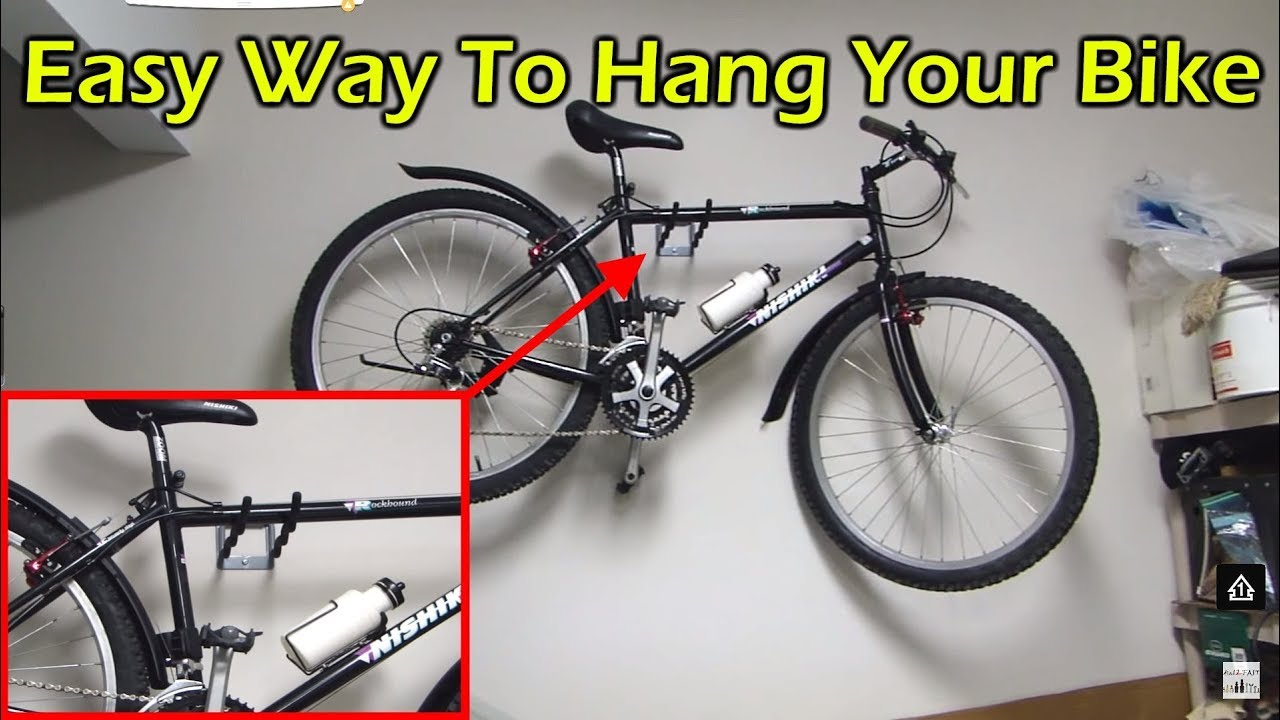
Wall Hooks
- Inexpensive and simple.
- Best for storing one or two bikes vertically.
- Hooks screw directly into wall studs.
Ceiling Hoists
- Use pulleys to lift bikes overhead.
- Great for garages with high ceilings.
- Keep bikes completely out of the way.
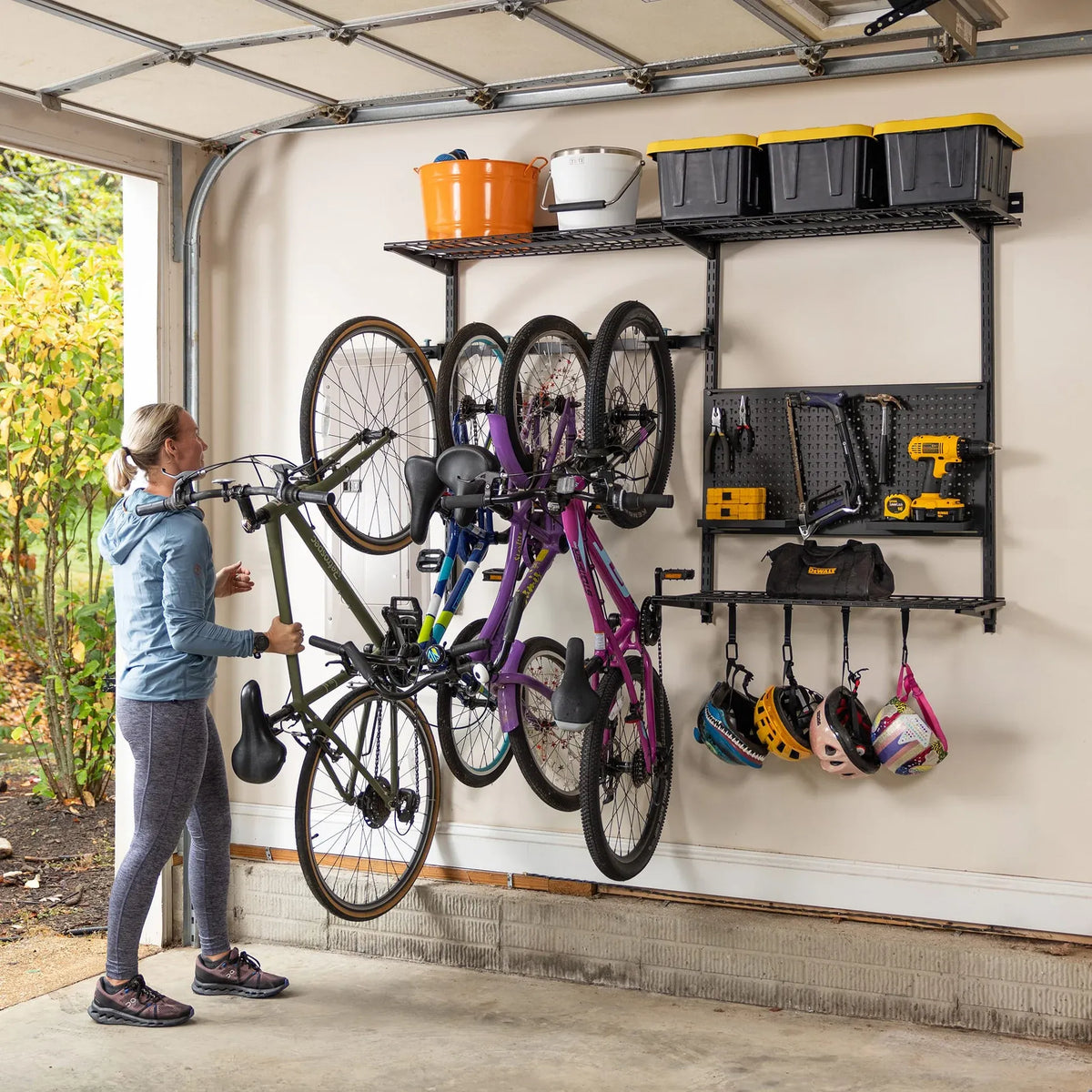
Wall Mount Racks
- Hold several bikes at once.
- Good for families or cycling enthusiasts.
- Some racks allow bikes to be stored horizontally or at an angle.
Freestanding Racks
- No drilling required.
- Move them wherever you want.
- Ideal for renters or temporary setups.
Credit: storeyourboard.com
How To Choose The Right Hanging System
Think about these factors before buying:
- Garage space: Measure your wall and ceiling space.
- Bike type and weight: Heavier bikes need stronger mounts.
- Frequency of use: Daily riders need easy access.
- Wall material: Drywall needs anchors; wood studs provide the best support.
- Number of bikes: Some systems hold one bike, others hold up to six.
Example: If you ride every day, a wall hook at shoulder height makes it easy to grab your bike. For mountain bikes or e-bikes, check the weight limit before buying.
Tools And Materials Needed
Before starting, gather these tools and materials:
- Stud finder
- Drill and drill bits
- Screws and wall anchors
- Tape measure
- Level
- Pencil
- Bike hooks, rack, or hoist kit
Using the right tools makes installation safer and faster. A level ensures your bikes hang straight, preventing falls and damage.
Credit: www.youtube.com
Step-by-step Guide: Hanging Bikes With Wall Hooks
Wall hooks are popular for beginners due to their simplicity. Here’s how to install them:
1. Find A Stud
Use a stud finder to locate wall studs. Mark the spot with a pencil. Hooks must go into studs, not just drywall, for strength.
2. Mark The Height
Measure 60–70 inches from the floor. Mark this spot for the hook. For kids’ bikes, lower the mark to 40–50 inches.
3. Drill Pilot Holes
Use a drill bit slightly smaller than your screw. Drill into the stud at your mark.
4. Install The Hook
Screw the bike hook into the pilot hole. Tighten until secure.
5. Hang The Bike
Lift your bike and hang it by the front wheel. Make sure the tire is fully seated in the hook.
6. Check Stability
Gently wiggle the bike. If it moves, tighten the hook.
Key Data
- Most wall hooks support up to 50 lbs.
- Spacing hooks at least 16 inches apart prevents handlebars from touching.
- For families, stagger hooks at different heights.
How To Hang Bikes From The Ceiling
A ceiling hoist system keeps bikes out of sight and maximizes floor space. Here’s a simple process:
1. Locate Ceiling Joists
Use a stud finder to find ceiling joists. Mark two points about 12–18 inches apart.
2. Install Pulleys
Drill pilot holes and screw in the hoist pulleys. Double-check alignment with a level.
3. Attach Ropes Or Straps
Thread the ropes through the pulleys, following the manufacturer’s instructions.
4. Lift The Bike
Hook the straps to the bike seat and handlebars. Pull the rope to raise the bike overhead. Secure the rope to a wall cleat.
Example
If your garage ceiling is 10 feet high, a hoist system will lift a 30 lb road bike easily, keeping it out of the way yet accessible.
Pros And Cons Of Popular Hanging Methods
Here’s a quick comparison to help you decide:
| Method | Pros | Cons |
|---|---|---|
| Wall Hooks | Cheap, simple, saves space | Can be hard for kids, needs wall studs |
| Ceiling Hoists | Great for heavy bikes, uses unused space | Tricky to install, harder to access bikes |
| Wall Racks | Holds many bikes, looks organized | More expensive, needs strong walls |
| Freestanding Racks | No drilling, portable | Takes up floor space, less stable |
Safety Tips For Hanging Bikes
Safety should always come first:
- Always use wall studs or ceiling joists for mounting.
- Double-check weight limits for hooks, racks, and your wall material.
- Keep bikes away from garage doors and vehicles.
- Use locks if you have an open garage to prevent theft.
- Check mounts twice a year for loosening or damage.
Non-obvious insight: Overloading a single stud with multiple bikes can weaken your wall over time. Spread the weight across different studs.
Mistakes To Avoid
Beginners often make these mistakes:
- Hanging bikes only on drywall (not strong enough).
- Placing hooks too close together (makes hanging/unhanging difficult).
- Ignoring bike size—child and adult bikes need different heights.
- Forgetting to check for pipes or wires in walls before drilling.
- Using weak screws or hardware not rated for bike weight.
Practical tip: When unsure, buy hardware rated for at least 25% more than your bike’s weight.
Maintenance And Long-term Care
Regular checks keep your system safe and your bikes in good shape:
- Inspect hooks, racks, and hoists for rust, bending, or wear.
- Tighten screws every few months.
- Clean hooks and racks to prevent dirt buildup on bike tires.
- Lubricate moving parts of hoists.
Expert insight: Hanging a bike by one wheel is fine for most models, but carbon fiber wheels are better stored horizontally to avoid long-term stress.
Example Garage Layouts
Here’s how you might arrange bikes in a single-car garage:
- 2 bikes: Use staggered wall hooks on the side wall.
- 4 bikes: Combine wall hooks for adults, lower hooks for kids, or add a ceiling hoist for the rarely used bike.
- 6 bikes: Install a horizontal wall rack or two ceiling hoists plus freestanding racks for easy access.
Adjust the layout based on car parking, door swing, and storage needs.
Environmental Conditions
Garages can get hot, cold, or damp. Protect your bikes by:
- Keeping bikes off the floor to avoid water damage.
- Using sealed hooks/racks to prevent rust.
- Covering bikes with a breathable cloth if your garage is dusty or damp.
Non-obvious tip: Avoid hanging bikes above power tools or chemicals—falling bikes can cause damage or spills.
Cost Breakdown
Bike hanging solutions fit most budgets:
- Wall hooks: $5–$15 each
- Ceiling hoists: $25–$60 per kit
- Wall racks: $40–$200
- Freestanding racks: $50–$150
Installation costs are low if you do it yourself. For professional installation, expect $50–$100 per hour.
Where To Buy Quality Bike Hanging Systems
Look for trusted brands at hardware stores, bike shops, or online. Popular options include:
- Home Depot
- Lowe’s
- Amazon
- Your local bike shop
Check reviews and weight ratings before buying. For more technical details, see the Wikipedia page on bicycle storage.

Credit: storeyourboard.com
Frequently Asked Questions
How High Should I Hang My Bike?
The ideal height is 60–70 inches from the floor for adults, or 40–50 inches for kids’ bikes. This makes it easy to lift on and off the hook.
Can I Hang A Bike By One Wheel?
Yes, most bikes can be hung by a single wheel without damage. However, for expensive carbon fiber wheels, consider a horizontal rack to reduce stress.
What Wall Anchor Should I Use If There’s No Stud?
Use heavy-duty drywall anchors rated for at least 50 lbs. But whenever possible, mount directly into a stud for safety.
How Many Bikes Can I Hang On One Wall?
This depends on wall length and stud spacing. A standard 12-foot wall with studs every 16 inches can hold 4–6 bikes if hooks are staggered.
Will Hanging A Bike Damage The Tires Or Rims?
No, short-term hanging is safe for most tires and rims. For long-term storage, check tires for sagging and rotate the bike every few months.
Creating space in your garage by hanging bikes is simple and effective. The right system makes your garage cleaner and your bikes last longer. With these tips, even beginners can create a safe, organized bike storage area at home.