
Measuring a garage door may sound simple, but getting the right numbers is the key to a perfect fit. Whether you want to replace your garage door, order a new one, or just need to know the size for insulation or repairs, accurate measurements save you time and money.
Many homeowners make mistakes here, leading to wrong orders, extra costs, or installation issues. This guide will walk you through the steps, tools, and tips to measure your garage door like a pro—even if you’ve never done it before.
Why Accurate Garage Door Measurement Matters
A small error in your measurement can create big problems. For example, ordering a door that’s even an inch too wide means it won’t fit the opening. Too small, and you’ll have gaps that let in wind, rain, or even pests. Precision is essential for:
- Proper door function and security
- Energy efficiency
- Easy installation
- Lower long-term maintenance costs
Many people don’t realize that manufacturers use exact sizes, not rough estimates. You need to give the precise width and height, plus extra measurements like side room and headroom, for the door to work correctly.
Tools You’ll Need
You don’t need special equipment, but having the right tools makes the job easier and more accurate. Gather these before you start:
- Tape measure (at least 12 feet long)
- Step ladder
- Pen and paper (or a phone/tablet to record numbers)
- Flashlight (for dark corners)
- Helper (recommended for large doors)
Tip: Always measure in inches for US standard garage doors. Most manufacturers use inches.
Credit: www.homedepot.com
Key Measurements To Take
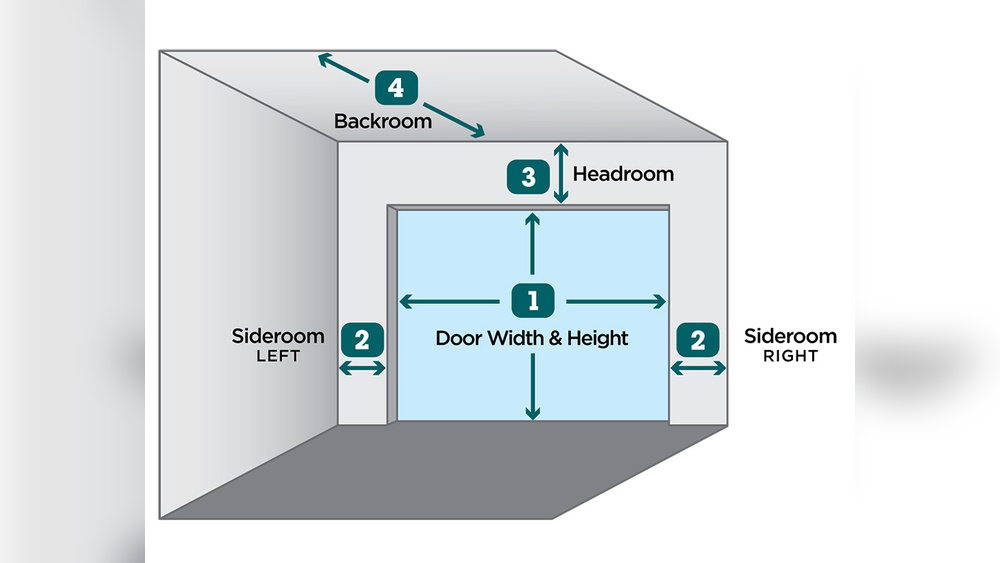
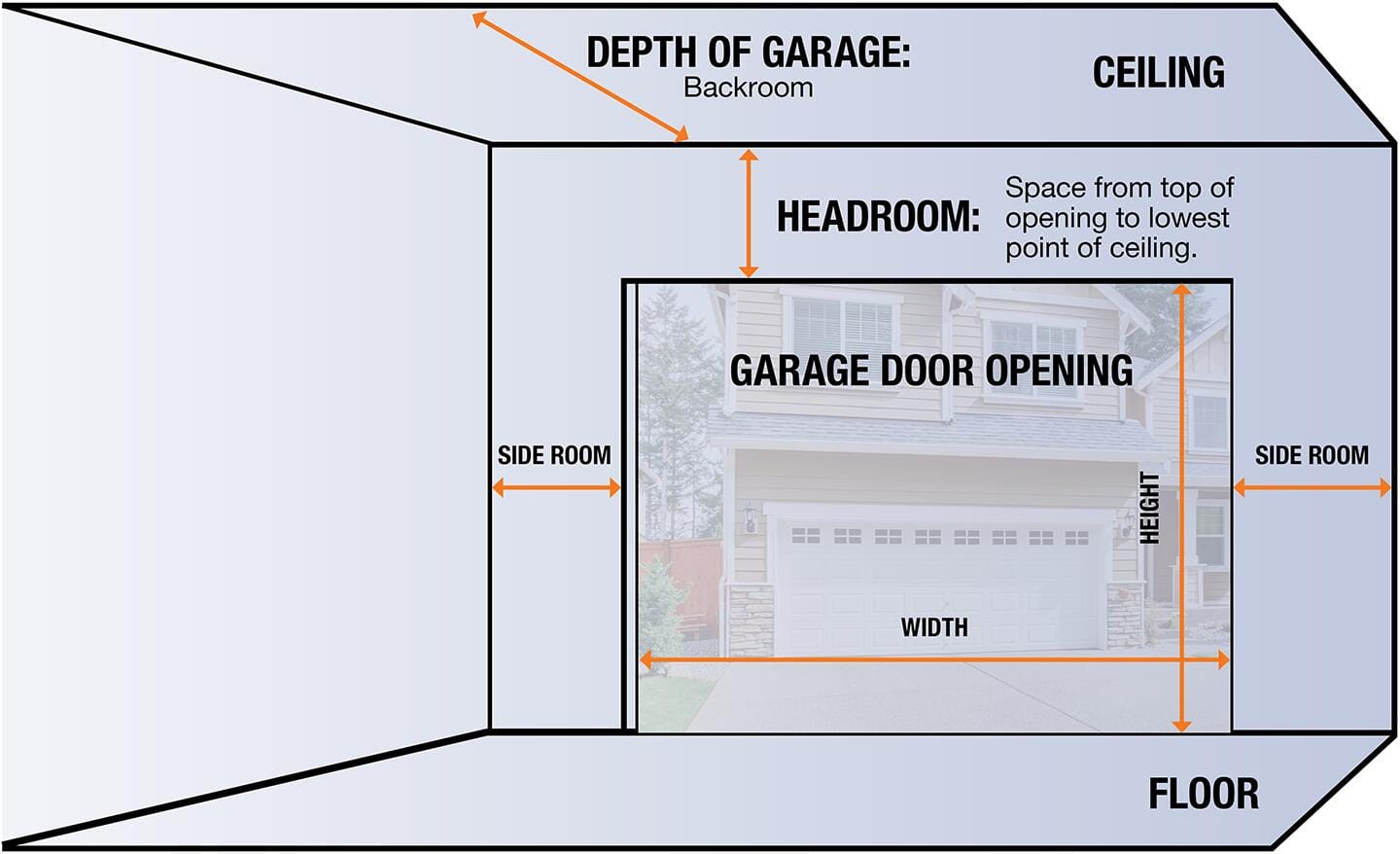
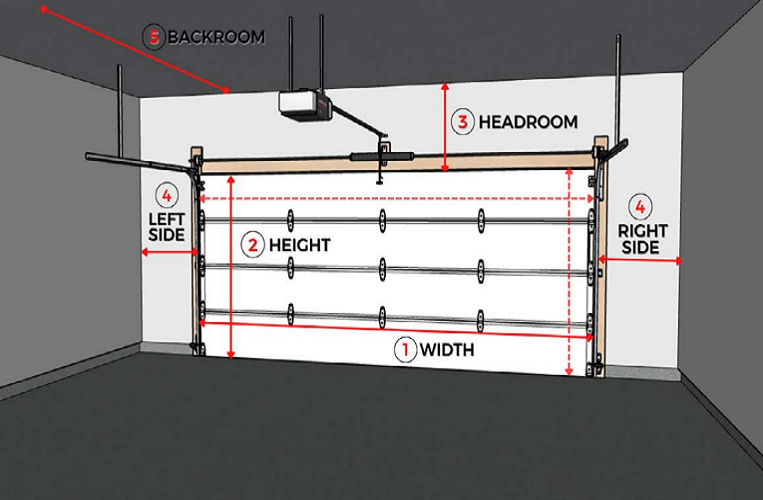
Garage doors need more than just width and height. Here are the six critical measurements you must record:
- Width of the opening (between the left and right sides)
- Height of the opening (from floor to top of opening)
- Side room (space between opening edge and wall on both sides)
- Headroom (space above the opening to the ceiling)
- Backroom (space from opening to the back wall)
- Jamb thickness (thickness of the wall or framing)
Each measurement has a purpose. For example, headroom is important for tracks and openers, while side room is needed for springs and cables.
Step-by-step Guide To Measuring Your Garage Door
Let’s break down each measurement. Follow these steps in order for best results.
1. Measure The Width
- Place your tape measure at the inside edge of one side of the garage door opening.
- Stretch across to the opposite side, keeping the tape straight and level.
- Record the width in inches.
Example: Most single garage doors are around 96 inches (8 feet) wide. Double doors are often 192 inches (16 feet).
2. Measure The Height
- Start at the floor and measure straight up to the bottom edge of the header (top frame of the opening).
- Make sure the tape is vertical.
Example: Common heights are 84 inches (7 feet) or 96 inches (8 feet).
3. Check The Side Room
- Measure from the edge of the opening to the nearest wall or obstruction on both sides.
- You need at least 3.5 inches on each side for standard tracks. More space is needed for doors with extension springs or special openers.
Example: If your opening is tight, write down both left and right side measurements—they might not be the same.
4. Measure Headroom
- Place the tape at the top of the opening (header).
- Measure up to the lowest point of the ceiling or any obstruction (like beams or pipes).
Minimum headroom for most standard garage doors is 12 inches. Some openers need 15 inches or more.
5. Measure Backroom
- Start at the garage door opening (inside edge).
- Measure straight back, parallel to the ceiling, until you hit the rear wall or anything hanging down.
You need enough backroom for the door to open completely plus room for the opener. A good rule: door height + 18 inches.
6. Jamb Thickness
- Use your tape to measure the thickness of the wall (jamb) where the door mounts.
- Standard thickness is 4.5 to 6.5 inches for most homes.
Knowing this helps with selecting tracks and proper mounting brackets.
Recording And Organizing Your Measurements
Write down each measurement clearly and label them. For example:
- Width: 96 inches
- Height: 84 inches
- Left side room: 4.5 inches
- Right side room: 5 inches
- Headroom: 16 inches
- Backroom: 108 inches
- Jamb thickness: 5 inches
Keep this record safe. Double-check each number—one wrong digit can mean a lot of wasted time.
Practical Example: Measuring A Standard Single Garage Door
Let’s say you have a one-car garage. Here’s how the numbers might look:
| Measurement | Example Value | Minimum Needed |
|---|---|---|
| Width | 96 inches | Varies by door |
| Height | 84 inches | Varies by door |
| Side Room (Left) | 4.5 inches | 3.5 inches |
| Side Room (Right) | 5 inches | 3.5 inches |
| Headroom | 16 inches | 12 inches |
| Backroom | 108 inches | 102 inches |
| Jamb Thickness | 5 inches | 4.5 inches |
With these numbers, you can confidently order a standard 8×7 ft garage door.
Measuring For Different Types Of Garage Doors
Not all garage doors are the same. Some designs need extra space or have special requirements.
Sectional Garage Doors
These are the most common in the US. They move up and over, so headroom and backroom are important. Make sure you measure both carefully.
Roll-up Doors
Popular in commercial spaces. They need less headroom, but the drum at the top still requires space. Always check the manufacturer’s requirements.
Side-hinged Doors
They swing open like regular doors. Focus on the side room for hinges and make sure nothing blocks the swing path.
Custom Or Carriage Doors
If you’re considering a special design, the installer may visit to measure, but your measurements help with quotes and planning.
Common Measurement Mistakes To Avoid
Many beginners make errors that lead to costly problems. Here are mistakes to watch out for:
- Measuring from the outside instead of inside the garage
- Ignoring uneven floors or headers (measure at several points)
- Rounding numbers up or down (always use exact inches)
- Forgetting to check for obstructions (pipes, lights, storage)
- Mixing metric and US units (stick to inches if in the US)
Non-obvious insight: Measure at multiple points. For example, the width at the top and bottom of the opening. If numbers differ, use the smaller one as your final measurement.

Credit: www.greatnortherndoor.com
When To Call A Professional
If your garage has unusual features—like sloped floors, odd angles, or tight spaces—a professional can help. Some installers offer free measurement services with installation. It’s also wise to get help if:
- The opening is not square
- There are visible cracks or structural issues
- You need a custom door or special opener
Comparison: Standard Vs. Custom Garage Door Measurements
Here’s how measuring for a standard door compares to a custom one:
| Feature | Standard Door | Custom Door |
|---|---|---|
| Width & Height | Pre-set sizes (e.g., 8×7 ft, 16×7 ft) | Any size (precision needed) |
| Side Room | 3.5–5 inches | May require more |
| Headroom | 12–18 inches | Varies by design |
| Backroom | Door height + 18 inches | Depends on door and opener |
| Jamb Thickness | 4.5–6.5 inches | May vary |
Custom doors need exact numbers. Never guess—always measure carefully.
Credit: www.rwdoors.com
Tips For Accurate Measuring
Here are some final tips to ensure you get it right:
- Always measure twice, write once
- Use a sturdy, metal tape measure for best accuracy
- Label each measurement clearly (width, height, etc.)
- Take photos of the garage opening and notes for reference
- If you’re unsure, ask the door supplier for their measuring guide
Non-obvious insight: If you plan to insulate your garage or finish the walls later, measure after those changes. Adding drywall or insulation can reduce the opening size.
What To Do With Your Measurements
Once you’ve got your measurements:
- Double-check all your numbers.
- Share them with your garage door supplier or installer.
- Keep a copy for your records.
- Use them when shopping online—many retailers have a sizing tool.
- If you’re installing yourself, review the door’s manual to confirm you have enough side, head, and backroom.
How Door Size Affects Cost And Installation
Garage door prices increase with size and special features. Here’s a simple comparison:
| Door Size | Average Cost (USD) | Installation Difficulty |
|---|---|---|
| Single (8×7 ft) | $600–$1,500 | Easy to Moderate |
| Double (16×7 ft) | $1,200–$2,500 | Moderate to Hard |
| Custom Size | $2,000 and up | Hard (professional recommended) |
Larger or custom doors often need special tracks or openers. Always check your measurements before buying.
Where To Learn More
For more detailed technical standards, you can check the Door & Access Systems Manufacturers Association (DASMA) for official guidelines.
Frequently Asked Questions
How Do I Know If My Garage Opening Is Not Square?
Measure the width at the top, middle, and bottom. If the numbers are different by more than 1/4 inch, your opening is not square. Use the smallest measurement for your door size.
Can I Install A New Garage Door If I Have Low Headroom?
Yes, but you’ll need a special low-headroom track or hardware. Some doors are designed for tight spaces—ask your supplier for these options.
What If I Want To Add Insulation Or Drywall Later?
Measure after any changes. Adding drywall or insulation can reduce both width and height. If you measure before, your new door might not fit later.
Why Is Side Room Important?
Side room is needed for the tracks, cables, and springs. If you don’t have enough, the door won’t operate safely or may not fit at all.
Should I Measure In Inches Or Feet?
Always measure in inches for garage doors in the US. Most manufacturers and installers use inches for precision.
Measuring your garage door the right way gives you peace of mind and saves you from costly mistakes. With a tape measure, a little patience, and this guide, you can handle the task confidently—even if it’s your first time.