
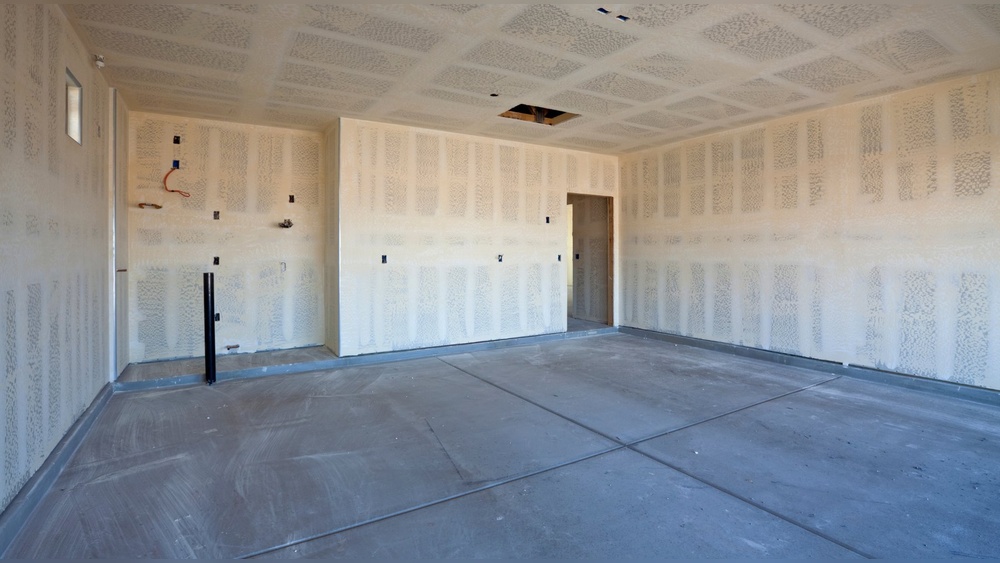
Painting your garage walls can make a huge difference. It turns a dull space into something bright, clean, and inviting. Many people think painting garage walls is hard, but it’s not. With simple steps, anyone can do it—even beginners. A fresh coat of paint protects your walls from dust and stains.
It also improves lighting and helps organize your garage better.
This guide will show you everything you need to know about painting garage walls. We’ll cover choosing paint, preparing surfaces, and the painting process itself. You’ll find practical tips, examples, and even common mistakes to avoid. By the end, you’ll feel confident to start your project.
Why Paint Garage Walls?
Painting garage walls is not just about looks. It provides several practical benefits:
- Protection: Paint acts as a barrier against moisture, oil, and dust.
- Easy cleaning: Painted walls are easier to wipe down and keep clean.
- Improved lighting: Light colors reflect more light, making your garage brighter.
- Value: A painted garage adds value to your home.
- Organization: Painted walls make it easier to spot tools and storage areas.
Many homeowners ignore their garage walls. But a simple paint job can change the whole atmosphere of the space.
Choosing The Right Paint For Garage Walls
Picking the right paint is important. Not all paints work well in garages, especially with moisture and temperature changes.
Main Paint Types
- Latex Paint: Water-based, easy to use, dries fast. Great for drywall and masonry.
- Acrylic Paint: Stronger than latex, resists stains and moisture better.
- Epoxy Paint: Very tough, used for floors but can work for walls needing high durability.
Finish Options
- Flat/Matte: Hides flaws but is harder to clean.
- Eggshell/Satin: Easy to clean, slight shine. Best for garages.
- Semi-gloss: Reflects light, very easy to clean. Good for areas needing frequent washing.
Recommended Paints
Most beginners choose latex satin paint for garage walls. It’s easy to apply, affordable, and simple to clean.
| Paint Type | Best For | Durability | Ease of Cleaning |
|---|---|---|---|
| Latex Satin | Drywall, Masonry | Medium | Easy |
| Acrylic | Concrete, Brick | High | Medium |
| Epoxy | Garage Floor, Walls | Very High | Very Easy |
How Much Paint Do You Need?
- One gallon covers about 350 square feet.
- Measure your garage walls: Height x Width for each wall.
- Add up all walls and divide by 350 to know how many gallons to buy.
Example: If your garage has four walls, each 10 feet high and 20 feet wide:
- 10 x 20 = 200 square feet per wall
- 200 x 4 = 800 square feet total
- 800 ÷ 350 = 2.3 gallons (buy 3 gallons to be safe)
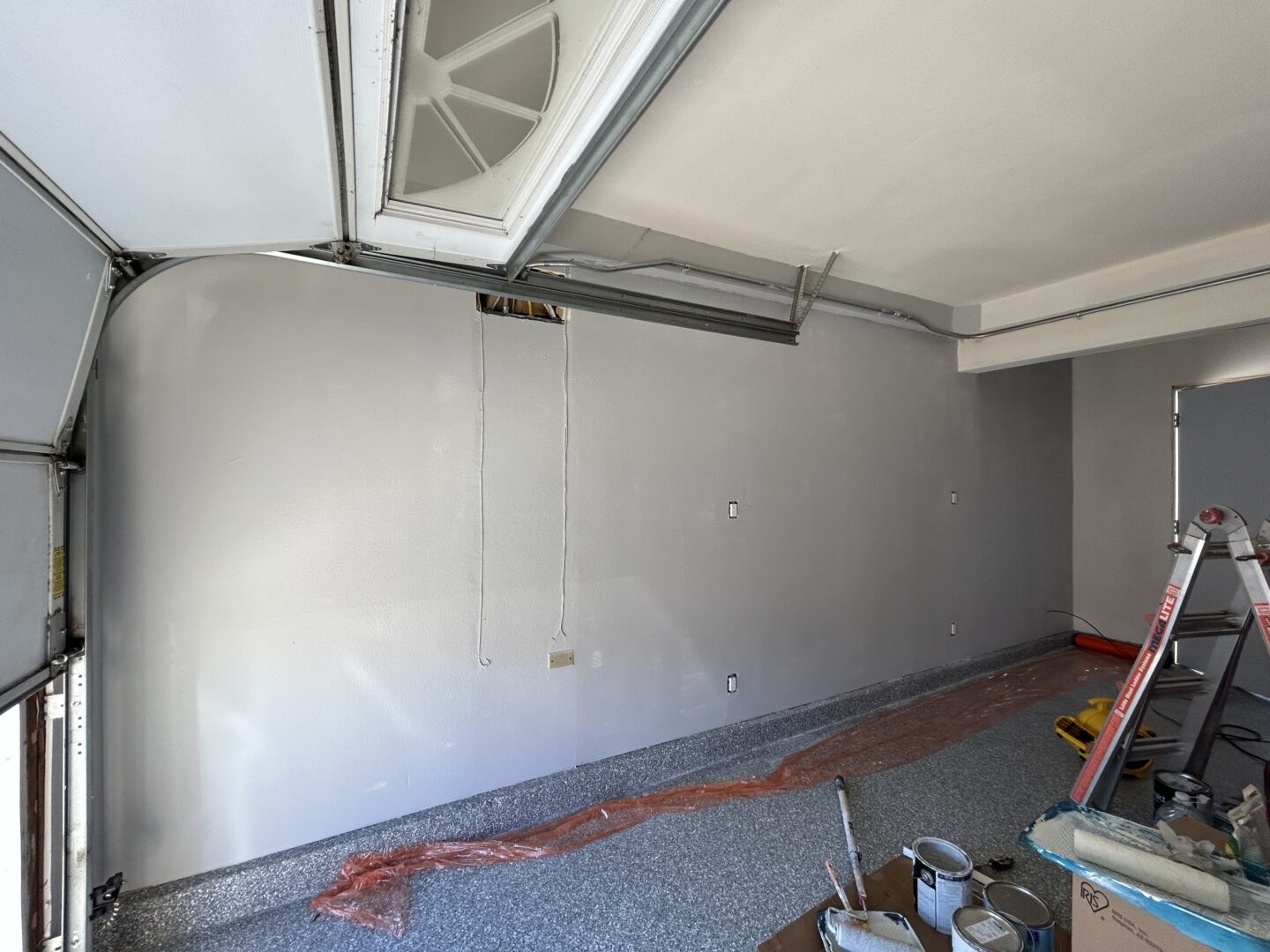
Credit: thetrackahead.com
Preparing Your Garage Walls
Proper preparation is key. If you skip it, paint may not stick or look good.
Basic Steps
- Clear the area: Move everything away from the walls.
- Clean the walls: Use soap and water. Remove grease, dust, cobwebs.
- Repair damage: Fill holes and cracks with spackle. Let dry.
- Sand rough spots: Use sandpaper to smooth patched areas.
- Prime the walls: Primer helps paint stick and covers stains.
Primer Types
- Drywall Primer: For new or bare drywall.
- Stain-blocking Primer: For walls with stains or water marks.
- Masonry Primer: For concrete or brick walls.
A common mistake is skipping primer. Walls may look patchy or paint may peel later.
| Wall Type | Recommended Primer | Reason |
|---|---|---|
| Drywall | Drywall Primer | Improves paint adhesion |
| Concrete | Masonry Primer | Seals porous surface |
| Stained Walls | Stain-blocking Primer | Blocks marks and odors |
Painting Tools And Materials
You don’t need fancy tools to paint garage walls. Here’s what you need:
- Paint rollers: For large areas
- Paint brushes: For corners and edges
- Drop cloths: Protect floor from spills
- Painter’s tape: Cover trim and outlets
- Paint tray: Holds paint for roller
- Extension pole: For reaching high spots
- Ladder: If your garage is tall
For most garages, a 9-inch roller works best. Use a brush for tight corners.

Credit: garagegiantusa.com
Step-by-step Painting Process
Painting garage walls is simple if you follow these steps:
1. Mask And Protect
- Use painter’s tape around windows, doors, outlets.
- Lay drop cloths over the floor and items you cannot move.
2. Apply Primer
- Start at the top and work down.
- Let primer dry completely (usually 1-2 hours).
3. Cut-in Edges
- Use a brush to paint corners and edges first.
- This helps rollers reach all areas later.
4. Roll The Paint
- Pour paint into tray.
- Load roller, remove excess.
- Start at one corner, roll up and down in sections.
- Overlap slightly to avoid streaks.
5. Apply Second Coat
- Wait for the first coat to dry (2-4 hours).
- Apply a second coat for best coverage and color.
6. Remove Tape And Clean Up
- Remove painter’s tape while paint is still slightly wet to avoid peeling.
- Clean brushes and rollers. Dispose of drop cloths if needed.
Most garages need two coats for a smooth finish. Make sure paint dries fully between coats.
Drying And Curing Time
Paint drying times depend on temperature and humidity.
- Latex paint: Dries in 1-2 hours, can recoat after 2-4 hours.
- Acrylic paint: Dries in 2-4 hours, recoating after 4-6 hours.
- Epoxy paint: Needs 6-8 hours, sometimes longer.
Curing (full hardness) can take up to 30 days for latex and acrylic. Avoid heavy cleaning during this period.
Common Mistakes Beginners Make
Many beginners face problems because they miss some key steps. Avoid these mistakes:
- Skipping primer: Paint won’t stick well.
- Painting over dirty walls: Dust and grease cause peeling.
- Using the wrong paint type: Not all paints resist garage moisture.
- Rushing drying times: Applying coats too soon creates bubbles.
- Ignoring temperature: Paint should be applied between 50°F–80°F for best results.
Practical Tips For Best Results
Some simple tricks can help your garage walls look great:
- Paint in daylight for better visibility.
- Mix all paint cans together for color consistency.
- Use a roller with a thicker nap (3/8” or 1/2”) for textured walls.
- Paint from top down to catch drips and runs.
- Keep pets and kids out until paint is fully dry.
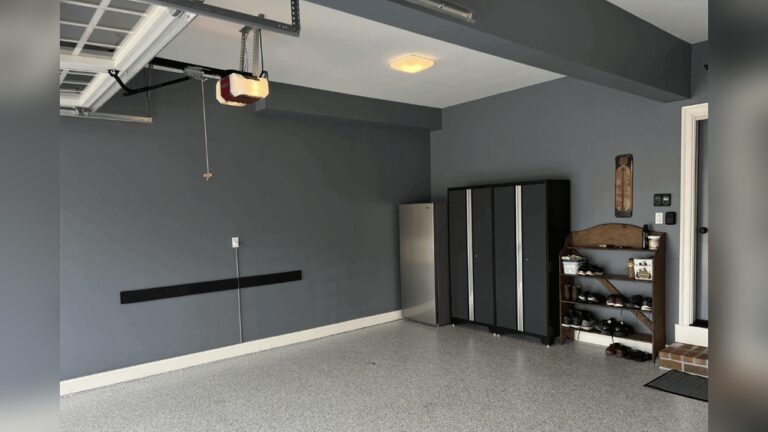
If you have a finished garage, choose light colors like white or light gray for brightness. For unfinished garages, darker shades hide marks better.

Credit: www.reddit.com
Example: Painting A Single-car Garage
Let’s walk through an example for a standard single-car garage (about 12×20 feet):
- Wall area: 10 feet high x 12+20+12+20 feet = 640 square feet
- Paint needed: 2 gallons
- Time needed: Prep (2 hours), painting (3 hours), drying (4 hours)
- Total cost: Paint ($60), primer ($30), tools ($40) = $130
This example shows you can paint a garage in a day with minimal expense.
Comparing Garage Wall Paints
Here’s a quick comparison of popular garage wall paints:
| Brand | Type | Price (per gallon) | Coverage | Washability |
|---|---|---|---|---|
| Behr Premium Plus | Latex Satin | $35 | 350 sq ft | Good |
| Benjamin Moore Regal | Acrylic Eggshell | $55 | 400 sq ft | Very Good |
| Rust-Oleum Epoxy | Epoxy | $60 | 300 sq ft | Excellent |
Choose based on your budget, wall surface, and cleaning needs.
How Painting Garage Walls Affects Home Value
According to real estate experts, a clean, painted garage adds about $2,000 to the average home’s value. Buyers like garages that look well cared for. It’s a low-cost improvement with high impact.
Frequently Asked Questions
How Long Does It Take To Paint Garage Walls?
Most single-car garages can be painted in one day. This includes prep, painting, and drying. Larger garages may need two days.
What Paint Color Is Best For Garage Walls?
Light gray and white are most popular. They make the garage brighter and easier to clean. Avoid dark colors unless you want to hide marks.
Do I Need To Use Primer Every Time?
Yes, primer is important. It covers stains and helps paint stick. Skipping primer can cause peeling and uneven color.
Can I Paint Over Old Paint?
You can, but clean and sand the surface first. Use primer if the old paint is glossy or stained.
Is It Safe To Paint Garage Walls Myself?
Yes. Most paints are safe, but keep doors and windows open for ventilation. Wear gloves and mask if you’re sensitive to fumes.
Painting your garage walls is one of the easiest ways to improve your home. With the right paint and preparation, beginners can achieve professional results. Take your time, follow each step, and enjoy your new garage space. For more technical details and paint recommendations, see Home Depot’s official guide.
A well-painted garage feels cleaner, brighter, and more organized. It’s a simple project that pays off for years to come.