
The Klein Tools 50080 is my best PVC pipe cutter pick for its listed capacity and replaceable blades.
A crooked pipe cut can turn a quick fix into a long job. You squeeze the handle, the pipe shifts, and the end comes out rough or slanted. A good PVC pipe cutter helps you make neat cuts with less mess than a saw. Yet the right tool depends on more than its blade. Pipe size, wall thickness, hand strength, and space around the pipe all matter. I compare seven options below, from small ratchet cutters to models listed for cuts up to 2-1/2 inches. Here is how I would choose one for home repairs, new pipe runs, and regular plumbing work.
See the differences between my top picks at a glance.
| PVC pipe cutter | Listed capacity | Listed pipe types | Key feature | Best fit | Shop |
|---|---|---|---|---|---|
| Klein Tools 50080 | 2-inch ID PVC | PVC, CPVC, PEX | Replaceable blades; one-handed ratchet | Regular use and larger pipe | View on Amazon |
| LIBRATON B0912Y24VN | Up to 2-1/2 inches* | PVC, PEX, hose | Ratchet cutting action | Mixed home pipe tasks | View on Amazon |
| Bates Ratchet Cutter | Up to 1-5/8 inches* | PVC | Smaller listed cutting range | Small-pipe repair kits | View on Amazon |
| Klein Tools 50063 | 1-1/4-inch ID PVC | PVC, CPVC, PEX | Replaceable blades; one-handed ratchet | Smaller pipe work | View on Amazon |
| SHALL Ratchet Cutter | Up to 2-1/2 inches* | PVC, PPR, PE, PEX, plastic hose | SK5 blade; aluminum body | Several plastic pipe types | View on Amazon |
| LIBRATON Two-Range Cutter | Up to 2-1/2 inches* | PVC | Two adjustable ranges | Jobs with mixed pipe sizes | View on Amazon |
| DOMINOX Ratchet Cutter | Up to 2-1/2 inches* | PVC, PEX, PPR, plastic hose | SK5 blade; aluminum alloy body | General plastic pipe work | View on Amazon |
*These capacities follow the supplied product titles. Where the title does not state inside or outside diameter, confirm that detail before buying. Pipe trade size and measured outside width are not always the same.
Disclosure: These are affiliate links, so I may earn a commission from qualifying purchases. I assess the listed features, not hands-on test results. I cannot verify live Amazon reviews, current prices, or 2026 listing changes. The scores below reflect feature fit for the stated use, not Amazon star ratings or measured cutting performance.
LIBRATON 2-1/2-Inch Ratchet PVC Pipe Cutter

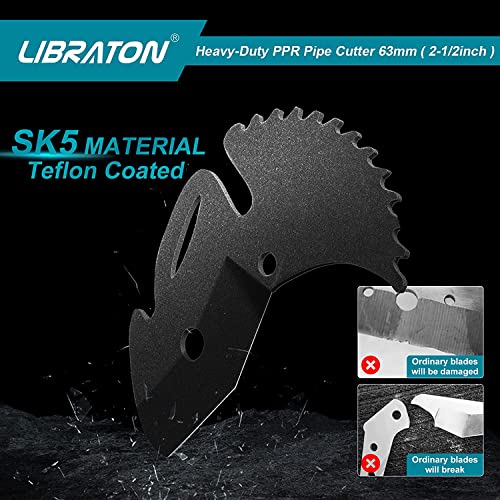
The LIBRATON B0912Y24VN suits buyers who want one ratchet cutter for several home tasks. Its title lists PVC, PEX, and hose cutting, with a capacity up to 2-1/2 inches. The ratchet lets you advance the blade through a series of handle squeezes. I would shortlist it for a repair kit that needs more cutting range than a small PVC tool.
The size claim needs care before you place an order. Do not assume that “2-1/2 inches” means it cuts every pipe sold under that trade size. Check the pipe’s outside width, wall thickness, and the cutter’s full instructions. I would also check blade service options, since the supplied title does not state that the blade is replaceable.
Pros:
- The listed 2-1/2-inch range offers scope for more than small tubing.
- Ratchet action spreads the cut across several squeezes.
- Listed PVC support fits common home repair needs.
- Listed PEX support adds use beyond rigid PVC pipe.
- Hose-cutting support may reduce the need for a separate tool.
- A hand cutter needs no outlet or charged battery.
Cons:
- The supplied title does not clarify the capacity’s diameter basis.
- Blade replacement details need a check on the current listing.
- A large jaw may be awkward where nearby pipes block access.
What Amazon Buyers Are Saying
I cannot confirm current buyer feedback for this model, so I will not claim a review trend. The most useful reviews would name the pipe type, measured size, and number of cuts made. Look for clear photos of cut ends and notes on blade wear. A review that only says “works great” tells you less than one that describes the actual job.
My Recommendation
I would consider this LIBRATON for varied home repairs if its verified size range matches your pipe. It has a useful set of listed uses, though blade support remains a point to check. My feature-fit rating is 4.0/5. Its value depends on the live price and whether you need the larger opening.
| Buying factor | Feature-fit score |
|---|---|
| Listed cutting range | 4.5/5 |
| Listed material coverage | 4.0/5 |
| Blade service information | 3.0/5 |
| Home repair suitability | 4.5/5 |
| Overall | 4.0/5 |
Klein Tools 50080 Ratcheting PVC Pipe Cutter

The Klein Tools 50080 is my best PVC pipe cutter pick on the supplied feature list. It lists cutting capacity for 2-inch ID PVC, plus use with CPVC and PEX. One-handed ratchet operation can help when the other hand supports loose pipe away from the blade. Replaceable blades make it more appealing for repeat use than a tool with no stated blade service path.
I give blade replacement real weight because a worn edge can spoil an otherwise sound cutter. A fresh blade can restore the tool’s usefulness without replacing the whole unit. Still, you need to confirm the right replacement part and its cost before buying. The listed capacity also does not prove equal ease across every wall thickness or pipe condition.
Pros:
- The title clearly states a 2-inch ID PVC capacity.
- Replaceable blades support longer-term tool use.
- One-handed operation leaves the other hand free for safe support.
- Ratchet action avoids the need for one long cutting squeeze.
- Listed CPVC support adds a second rigid plastic pipe use.
- Listed PEX support helps with mixed plumbing tasks.
Cons:
- Replacement blades may add to the long-term cost.
- The larger cutting range may be more than a small repair needs.
- Cutting force and blade life are not verified here.
What Amazon Buyers Are Saying
I do not have verified Amazon review data for the 50080. Before buying, I would look for feedback on full-size cuts, blade changes, and ratchet release. Reviews that state the pipe’s wall thickness are especially useful. Also check that each review refers to the 50080 rather than another size in a shared listing.
My Recommendation
I would choose the 50080 first for regular work within its confirmed limits. Its stated size, one-handed action, and replaceable blades form the strongest feature set for my needs. My feature-fit rating is 4.5/5, not a claim of tested durability. It is worth considering if you expect to make enough cuts to benefit from blade replacement.
| Buying factor | Feature-fit score |
|---|---|
| Capacity clarity | 4.5/5 |
| Blade replacement feature | 5.0/5 |
| Listed material coverage | 4.0/5 |
| Repeated-use feature set | 4.5/5 |
| Overall | 4.5/5 |
Bates 1-5/8-Inch Ratchet PVC Pipe Cutter
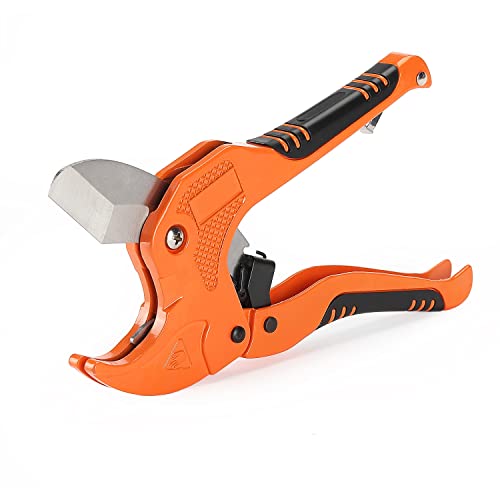
The Bates ratchet cutter is the small-range option in this group. Its supplied title lists PVC cutting up to 1-5/8 inches. I would start here for a narrow task list rather than buy a larger cutter by default. A tool matched to your pipe size can be a smarter purchase than one bought for capacity you never use.
This is not my choice for a repair kit that must handle large pipe. The smaller listed limit rules out jobs that need a wider opening. I would confirm the actual outside-diameter limit and supported wall thickness before ordering. Since no live price is available here, I would not label it the cheapest choice or promise budget value.
Pros:
- The smaller listed range suits a focused small-pipe kit.
- Ratchet action lets you work through a cut in stages.
- Listed PVC use matches a common home repair material.
- Manual operation needs no power supply.
- A blade cutter avoids the pile of saw chips from a hacksaw.
- The clear size limit helps you rule out unsuitable jobs early.
Cons:
- Its listed capacity is smaller than most tools in this comparison.
- The supplied title does not list CPVC or PEX support.
- Blade replacement and body material details need confirmation.
What Amazon Buyers Are Saying
I cannot verify buyer praise or complaints for this Bates model. For a small cutter, I would check reviews for pipe flattening, square cuts, and how the latch holds during storage. Give more weight to feedback from users cutting the same pipe as you. A soft hose job does not show how well a tool handles rigid PVC.
My Recommendation
I would buy the Bates only after matching its limits to a known small-pipe job. It may offer good value if its current price is low enough, but price alone should not decide the purchase. My feature-fit rating is 3.5/5. Its main appeal is task fit, not broad capacity or a stated blade service plan.
| Buying factor | Feature-fit score |
|---|---|
| Small-pipe task fit | 4.5/5 |
| Broader size coverage | 2.5/5 |
| Blade service information | 3.0/5 |
| Simple repair-kit suitability | 4.0/5 |
| Overall | 3.5/5 |
Klein Tools 50063 Ratcheting PVC Pipe Cutter

The Klein Tools 50063 takes the serviceable-blade approach into a smaller listed pipe range. Its title specifies cuts in 1-1/4-inch ID PVC, along with CPVC and PEX use. It also lists one-handed ratchet operation and replaceable blades. I see it as a strong option for buyers whose routine work does not need the 50080’s larger capacity.
Do not compare its 1-1/4-inch ID figure directly with another tool’s unclear diameter claim. Inside width and outside width describe different parts of the pipe. Check the full sizing guidance for each pipe type you plan to cut. I would favor this model over a larger one when the confirmed fit is right and the smaller range meets every planned job.
Pros:
- The title states the PVC capacity in inside-diameter terms.
- Replaceable blades help support ongoing use.
- One-handed operation can simplify safe handling of loose pipe.
- Ratchet action divides the cut into short handle movements.
- Listed CPVC and PEX use expands its role beyond PVC.
- Its smaller capacity gives buyers a distinct alternative to the 50080.
Cons:
- It does not offer the 50080’s listed 2-inch ID PVC range.
- Replacement blade price and stock need a current check.
- The title alone does not show grip comfort or required hand force.
What Amazon Buyers Are Saying
I cannot give a verified review summary for the 50063. I would focus on comments about small-pipe stability, handle reach, and repeat cuts with the same blade. Check whether buyers discuss the exact model and material you need. A useful review should explain both what worked and where the cutter reached its limits.
My Recommendation
The 50063 is my preferred feature-based choice for smaller jobs that still justify replaceable blades. I would not step up to the 50080 unless the pipe size calls for it. My feature-fit rating is 4.25/5. This model makes sense when you want a serviceable hand tool without buying unused cutting capacity.
| Buying factor | Feature-fit score |
|---|---|
| Smaller-pipe suitability | 4.5/5 |
| Blade replacement feature | 5.0/5 |
| Listed material coverage | 4.0/5 |
| Larger-job flexibility | 3.5/5 |
| Overall | 4.25/5 |
SHALL 2-1/2-Inch PVC Pipe Cutter with SK5 Blade

The SHALL cutter has one of the broadest material lists in this comparison. Its title names PVC, PPR, PE, PEX, and plastic hoses, with cuts up to 2-1/2 inches. It also lists an aluminum body and an SK5 blade. I would shortlist it for mixed plastic pipe work rather than a single small PVC repair.
SK5 names a blade steel grade, but that label alone does not prove edge life or cut quality. Blade shape, heat treatment, alignment, and care also affect results. The aluminum body description gives useful material detail, yet it does not verify hinge strength or ratchet wear. I would check those points and the size limits before treating the “heavy-duty” wording as a reason to buy.
Pros:
- The listed 2-1/2-inch range offers larger-pipe potential.
- The title names five types of plastic pipe or hose.
- Ratchet action allows controlled progress through the cut.
- The stated SK5 blade grade provides more detail than an unnamed blade.
- The stated aluminum body gives a clear construction detail.
- Broad listed uses may reduce the number of cutters in a kit.
Cons:
- SK5 steel does not guarantee a longer-lasting edge.
- The supplied title does not state whether the blade is replaceable.
- Each pipe type still needs its own size and wall-thickness check.
What Amazon Buyers Are Saying
I do not have verified customer reviews for this SHALL cutter. Since it lists several materials, I would sort feedback by the material actually cut. A report about flexible PE hose may not help with rigid PVC. Look for notes on cut shape, blade alignment, and whether the ratchet still works smoothly after repeated use.
My Recommendation
I would consider the SHALL when material range matters more than a confirmed replacement-blade feature. Its stated blade and body materials make it easy to compare on paper. My feature-fit rating is 4.25/5. Before buying, I would confirm the maximum outside diameter and look for clear blade service guidance.
| Buying factor | Feature-fit score |
|---|---|
| Listed material coverage | 5.0/5 |
| Listed cutting range | 4.5/5 |
| Blade service information | 3.0/5 |
| Mixed-job suitability | 4.5/5 |
| Overall | 4.25/5 |
LIBRATON 2-1/2-Inch Two-Range PVC Pipe Cutter
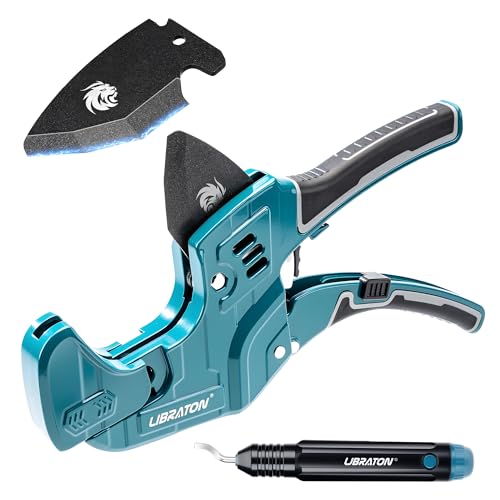
This LIBRATON model stands out for its two listed adjustable ranges. It also lists ratchet action and a maximum capacity up to 2-1/2 inches. I would consider it for projects that switch between smaller and larger PVC pipe. The range adjustment is a reason to compare it with the standard LIBRATON, not proof that it cuts faster or needs less force.
The full instructions should explain what each setting changes and which sizes it serves. I would read that detail before paying extra for the feature. An adjustment only adds value if it helps with the pipe you use and is easy to set correctly. The supplied title does not establish blade replacement, other supported plastics, or the effort needed at full capacity.
Pros:
- Two adjustable ranges offer a distinct setup option.
- The listed maximum size gives scope for larger PVC tasks.
- Ratchet action allows a cut to progress in stages.
- One tool may cover projects with more than one pipe size.
- Manual use avoids cords and battery upkeep.
- The range feature gives a clear point to compare with fixed-range models.
Cons:
- The supplied title does not explain the two settings in detail.
- Adjustment adds a setup step that a simpler cutter may not need.
- Blade service and non-PVC compatibility need verification.
What Amazon Buyers Are Saying
I cannot verify Amazon feedback for this two-range model. I would look for reviews that explain how buyers use both settings, rather than mention only the maximum size. Useful feedback would show whether the adjustment stays secure and suits mixed-size work. Also confirm the review belongs to this model, not the other LIBRATON cutter in the article.
My Recommendation
I would choose this model only if the two ranges solve a clear need in my work. For one pipe size, the extra setup may add little value. My feature-fit rating is 4.0/5. It deserves a place on the shortlist, but I would want clear adjustment instructions before making it my first choice.
| Buying factor | Feature-fit score |
|---|---|
| Range adjustment feature | 4.5/5 |
| Listed cutting range | 4.5/5 |
| Blade service information | 3.0/5 |
| Mixed-size project fit | 4.0/5 |
| Overall | 4.0/5 |
DOMINOX 2-1/2-Inch Ratchet PVC Pipe Cutter

The DOMINOX cutter lists an SK5 blade, an aluminum alloy body, and ratchet action. Its title also names PVC, PEX, PPR, and plastic hose use up to 2-1/2 inches. That puts it close to the SHALL on listed features. I would compare these two on confirmed capacity, blade support, return terms, and current price.
I would not declare one tougher based only on similar material labels. Body design and the fit of the moving parts matter as much as the alloy name. The same caution applies to the SK5 blade, since a steel grade is not a cut test. For occasional work, this feature set may be enough, but regular users should check how they will service the edge.
Pros:
- The listed 2-1/2-inch range supports a broad size shortlist.
- Ratchet action helps divide the cutting motion into steps.
- The title names PVC, PEX, PPR, and plastic hose uses.
- The SK5 blade listing gives a specific steel grade.
- The aluminum alloy body listing provides a useful build detail.
- It offers a direct feature-based alternative to the SHALL cutter.
Cons:
- The diameter basis needs confirmation before you buy.
- The supplied title does not promise a replaceable blade.
- Listed materials do not establish long-term hinge or ratchet durability.
What Amazon Buyers Are Saying
I cannot confirm current customer feedback for this DOMINOX model. I would check for reports on jaw alignment, blade wear, and the force needed near the size limit. Reviews from repeat users can help, but only when they state what they cut. Treat broad claims about “all plastic pipe” with care if the review gives no size or material details.
My Recommendation
I would keep the DOMINOX on my shortlist for general plastic pipe tasks within its confirmed limits. It offers a useful mix of listed capacity and material support. My feature-fit rating is 4.0/5. I would choose it over a close rival only when the full listing, service options, or current price gives it a clear edge.
| Buying factor | Feature-fit score |
|---|---|
| Listed cutting range | 4.5/5 |
| Listed material coverage | 4.5/5 |
| Blade service information | 3.0/5 |
| General repair suitability | 4.0/5 |
| Overall | 4.0/5 |
How to Choose the Best PVC Pipe Cutter
The best PVC pipe cutter is the one that fits your pipe, your hands, and your work space. A large size claim can draw your eye, but it should not make the choice for you. I check three things first: real pipe size, blade and ratchet design, and the tool’s cost over time. These checks help prevent a bad fit and wasted money.
1. Match the Jaw to the Pipe’s Real Size and Wall
Start with the pipe, not the tool. Read its markings and measure the outside width across the round end. A pipe’s trade size is a name used to identify it. That name may not match its inside width or outside width exactly. This is why two cutters with different size wording can be hard to compare at a glance.
For example, standard nominal 2-inch Schedule 40 PVC has an outside diameter of about 2.375 inches. A cutter clearly rated for 2-inch ID PVC may be intended for that class of pipe. A cutter that merely says “2 inches” needs a closer check. Never guess that its jaw will fit based on the number alone.
Wall thickness matters too. Schedule 40 and Schedule 80 pipe can share the same outside size while having different wall thicknesses. A jaw that fits around the pipe does not prove the blade can cut the thicker wall safely. Follow both the cutter’s limits and the pipe maker’s guidance.
Also check the plastic type. PVC, CPVC, PEX, PE, and PPR are not the same material. A PVC pipe cutter does not automatically suit them all. Use the named compatibility list, then confirm any extra limits in the instructions. For a job with several materials, write down each type and size before shopping.
2. Check Blade Service, Ratchet Action, and Hand Space
A sharp blade matters more than a bold “heavy-duty” label. A dull or damaged edge can push the pipe out of shape or leave a poor cut. Replaceable blades give you a way to renew the edge, which is why I favor the listed Klein features for regular use. Still, check the replacement part number and stock first.
Ratchet action lets the blade move through short squeezes. It does not make every cut easy or remove the need for good alignment. Handle reach can matter if you have small hands or reduced grip strength. Product photos help show the layout, but they cannot prove comfort.
Think about the space where you will cut. A cutter needs room around the pipe and room for the handle to move. A large tool may fit loose pipe on a bench yet fail to fit a tight cabinet. When safe and practical, cutting a loose section before fitting it can give you more control.
I also check the blade release and storage latch in the instructions. Keep fingers clear of the blade path, wear eye protection, and secure the pipe before cutting. Do not force a jammed tool or add a handle extension. If the pipe cracks, shifts, or flattens, stop and check the tool and material.
3. Compare Job Fit and Long-Term Cost
The best PVC pipe cutter is not always the largest or most costly one. For a few small cuts, a correctly sized simple model may meet the need. For frequent work, blade replacement and parts support can matter more than a small saving at checkout. I compare the full cost, not just the tool price.
Check what comes in the box. Do not assume a spare blade, case, or extra part is included unless the current listing says so. Then compare replacement blade prices and return terms. A low-priced cutter becomes less useful if the blade wears and no matching part is available.
Use reviews as job evidence, not as a substitute for size checks. Look for your pipe type, wall thickness, and working conditions. Read critical reviews for repeated, specific issues, but make sure they concern the exact model. A shared listing can mix feedback from different products.
Finally, know when a hand cutter is the wrong choice. Brittle, damaged, or very thick pipe may need another cutting method approved for that pipe. A suitable saw can be more practical for pipe beyond the cutter’s limits. After any cut, inspect the end, remove burrs, and prepare it as the pipe and fitting instructions require. A neat cut is only the first step toward a sound joint.
Final Verdict: Which Should You Buy?
I would choose the Klein Tools 50080 for its listed 2-inch ID PVC capacity, one-handed ratchet, and replaceable blades. For smaller work, I would consider the Klein 50063. Both choices depend on confirmed pipe fit and current blade availability.
The best PVC pipe cutter should match your real pipe size and workload. Check the limits first, then compare price, blade support, and safe access.
FAQs Of best pvc pipe cutter
What is the best PVC pipe cutter for home repairs?
My feature-based pick is the Klein Tools 50080 for its listed capacity and replaceable blades. The Klein 50063 is worth considering for smaller pipe. Confirm that the cutter supports your pipe type, outside diameter, and wall thickness.
Can a 2-1/2-inch PVC cutter cut nominal 2-inch PVC pipe?
It may, if the rating means outside diameter and the tool supports the pipe’s wall thickness. Standard nominal 2-inch Schedule 40 PVC has an outside diameter of about 2.375 inches. Confirm the cutter’s full limits before buying.
Why does my ratchet PVC cutter crack the pipe?
A dull blade, brittle pipe, poor alignment, or an unsuitable cutter can cause cracks. Cold conditions can also make PVC more prone to cracking. Stop cutting and check the pipe condition, blade, and tool limits.
Can I use a PVC pipe cutter on PEX and CPVC?
Only if the cutter lists those materials as supported. Several models here list PEX and CPVC, but not all do. Check the size limits for each material and inspect the cut before making a joint.
Is a ratchet PVC cutter better than a hacksaw?
A suitable ratchet cutter can make small-pipe cuts with fewer chips and less cleanup. A hacksaw can suit larger pipe or jobs outside the cutter’s limits. With either tool, keep the cut square and prepare the end as required.