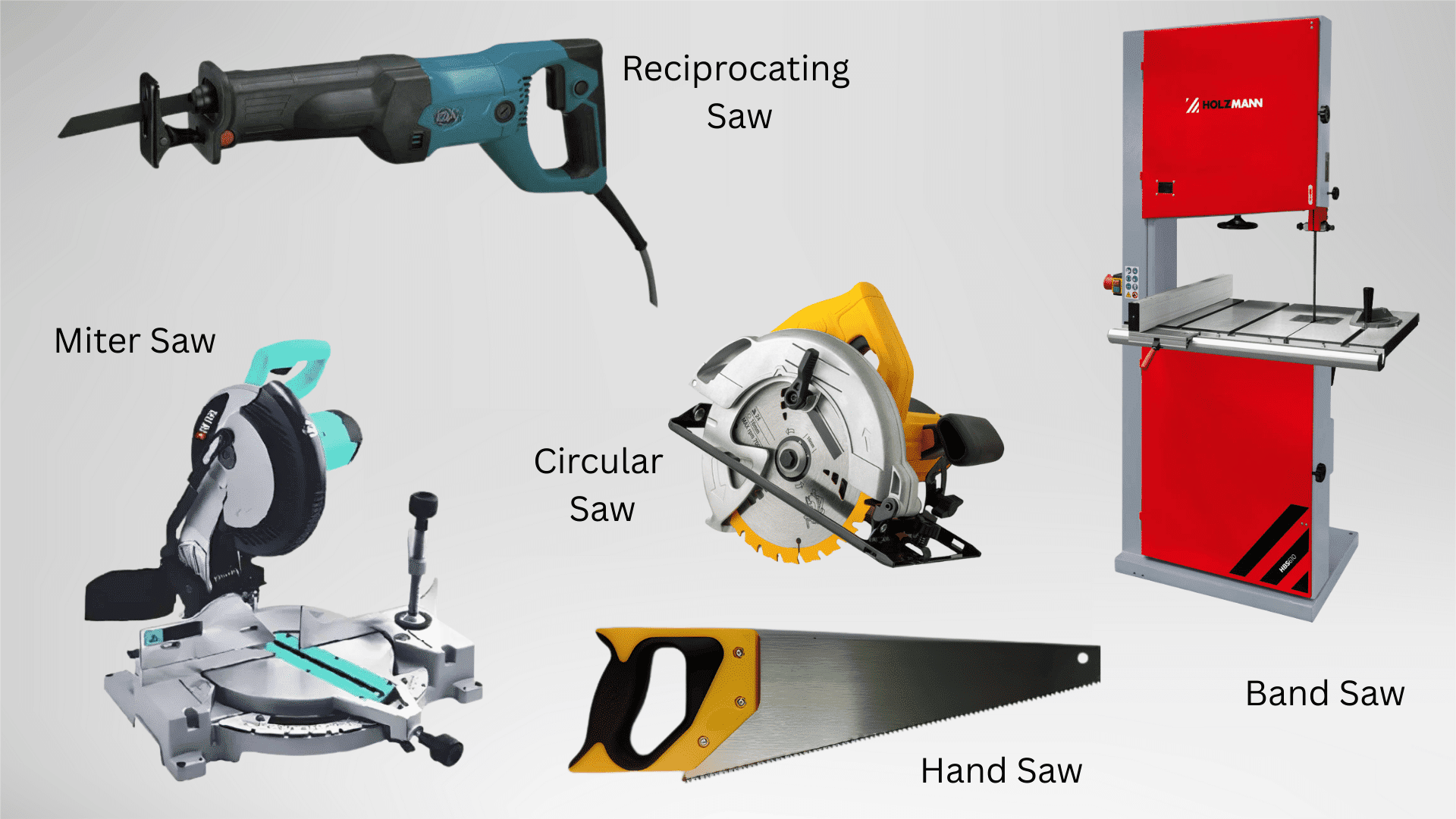
Different types of saws serve different cutting jobs. Hand saws work well for simple cuts and small repairs, while circular saws, jigsaws, miter saws, and table saws handle many home improvement and woodworking tasks. The right saw depends on the material, cut shape, accuracy, and project size.
From building a backyard deck in Texas to installing new kitchen cabinets in California, Americans use saws for countless home improvement and repair jobs. A saw can help cut lumber, trim a door, shape plywood, shorten metal pipes, or remove damaged material. Yet each job calls for the right blade, tool, and cutting method.
Choosing among the different types of saws and their uses can feel confusing at first. Some saws make long, straight cuts, while others follow curves or reach into tight spaces. Some rely on hand power, and others use electricity or batteries. Understanding these differences helps you choose a useful tool without spending money on features your project does not need.
This guide explains common hand saws, power saws, specialty cutting tools, and the materials they can handle. It also covers blade selection, practical examples, common mistakes, and basic safety steps. The goal is to help homeowners, DIY beginners, and woodworking hobbyists make informed choices for their next project.
Source: narodnatribuna.info
What Are the Main Types of Saws?
Saws are cutting tools with toothed blades or abrasive cutting elements. Their teeth remove material as the blade moves through a workpiece. Different designs control how the blade moves, how much material it removes, and whether the cut follows a straight line or a curve.
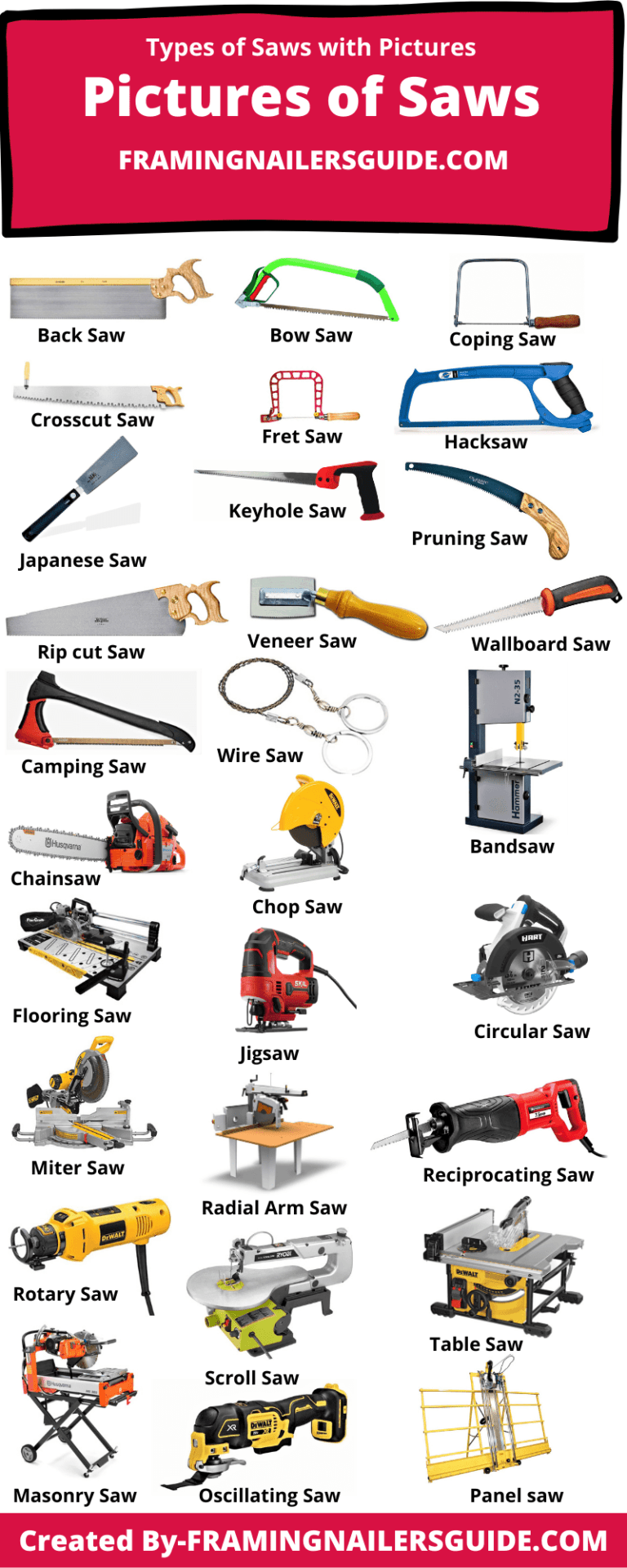
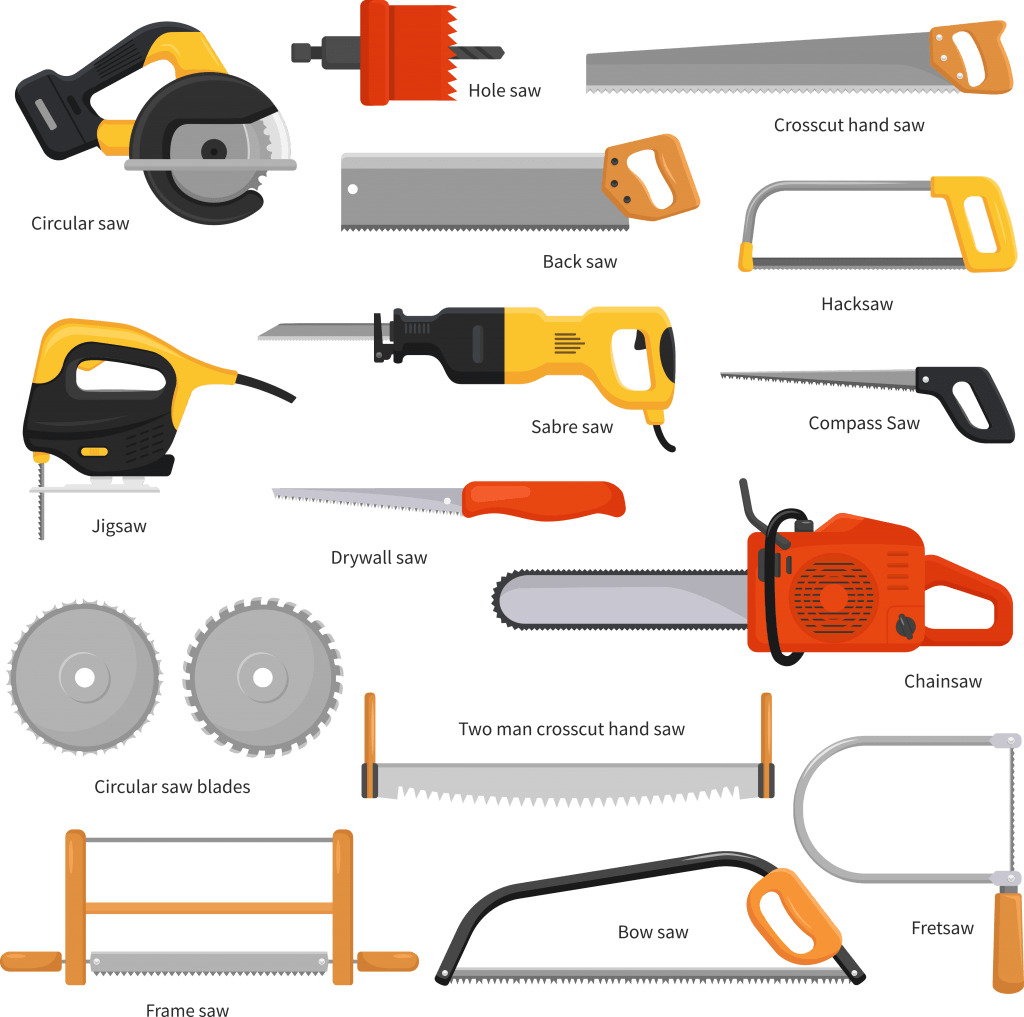
Most common saws fit into three broad groups: hand saws, powered saws, and specialty saws. Hand saws rely on physical effort. Powered saws use electricity, batteries, or, in some professional settings, other power sources. Specialty saws address particular materials, shapes, or access problems.
No single saw is best for every project. A homeowner cutting a few boards may need only a hand saw or circular saw. Someone installing cabinets may benefit from a miter saw, while a furniture maker may need a table saw, bandsaw, or backsaw for more controlled work.
Source: artofit.org
Hand saws
Best for simple cuts, small jobs, outdoor repairs, and tasks where portability matters more than speed.
Power saws
Best for repeated cuts, larger projects, sheet materials, and tasks that benefit from powered cutting.
Specialty saws
Best for specific needs such as cutting metal, following tight curves, making flush cuts, or trimming branches.
How to Choose a Saw Before You Start
Start by identifying the material and the shape of the cut. Then consider the thickness of the workpiece, the accuracy required, the available workspace, and how often you will use the tool. These details matter more than choosing the saw with the most power.
For example, a straight cut across a deck board may suit a circular saw or hand saw. A curved opening in plywood may call for a jigsaw. Cutting several pieces of door trim to matching angles is a common miter saw task. Always check the tool’s rated capacity and the blade manufacturer’s material guidance before cutting.
Check the material
Determine whether you are cutting solid wood, plywood, plastic, drywall, metal, masonry, or another material.
Check the cut
Decide whether you need a crosscut, rip cut, bevel, miter, curve, plunge cut, or flush cut.
Check the work area
Consider access to power, space for long stock, dust control, workpiece support, and safe clearance around the blade.
Common Types of Hand Saws and Their Uses
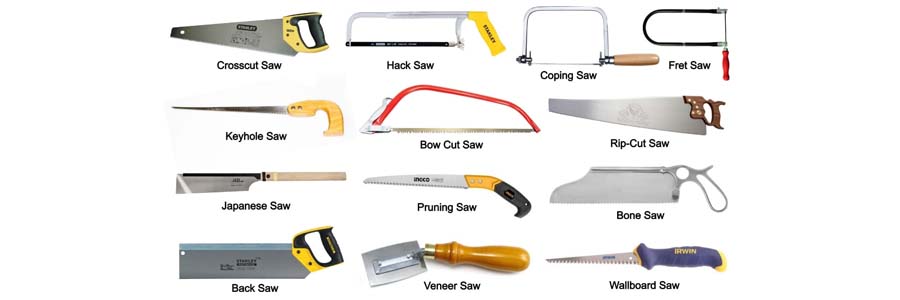
Hand saws are useful for repairs, small woodworking projects, and jobs where a powered tool would be unnecessary or difficult to control. They are portable, need no electrical supply, and often cost less than power saws. Their main trade-off is that cutting usually takes more physical effort and time.
Hand saws differ in blade shape, tooth pattern, stiffness, and intended material. Choosing the right design can improve control and reduce rough edges. A sharp, suitable blade also makes the job easier than forcing a dull saw through the material.
Source: luxuryhomestuff.com
General-purpose hand saw
A traditional hand saw is commonly used for straight cuts across lumber and other suitable wood stock. It works well for basic repairs, simple furniture projects, and occasional cuts.
Rip saw
A rip saw is designed to cut along the grain of wood. Its tooth geometry is suited to separating wood fibers in the direction of the grain.
Crosscut saw
A crosscut saw is designed to cut across the wood grain. It is useful for shortening boards and preparing lumber for assembly.
Backsaw
A backsaw has a stiffened back that helps keep its blade straight. It is useful for controlled joinery cuts, small trim work, and accurate woodworking.
Coping saw
A coping saw uses a narrow blade held in a frame. It is useful for cutting curves, internal shapes, and coping joints in trim work.
Bow saw
A bow saw has a narrow blade stretched across a metal frame. Depending on the blade, it can cut branches, logs, or suitable wood stock.
Hacksaw
A hacksaw is a hand saw designed mainly for cutting metal and certain plastics. Its thin blade is held in a frame, and replacement blades are available in different tooth patterns. A hacksaw is useful for shortening threaded rods, cutting small metal pipes, and trimming compatible plastic parts.
Choose a blade suitable for the material and thickness. Fine-tooth blades are often useful for thin metal, while other tooth patterns suit thicker stock. Secure the workpiece before cutting, keep the blade aligned, and avoid twisting it, because a thin blade can bend or break under side pressure.
Best uses
Small metal bars, threaded rods, thin pipes, and compatible plastic pieces.
Main limitation
It is slower than many powered cutting tools and is not designed for every metal thickness or shape.
Japanese Pull Saw
A Japanese pull saw cuts as the user pulls the blade toward the body rather than pushing it forward. This design can support thin blades and precise cuts when used correctly. It is popular for fine woodworking, joinery, dowels, and careful trimming.
Pull saws come in several forms. Some are designed for crosscuts, others for rip cuts, and some handle more than one type of cut. The best choice depends on the grain direction and the intended finish.
Best uses
Fine joinery, dowel trimming, precise wood cuts, and detailed furniture work.
Main limitation
Thin blades can be damaged by twisting or excessive pressure, and the tooth design must suit the material.
Pruning Saw
A pruning saw is designed to cut branches and woody plant growth. Its teeth are made for outdoor cutting, and many models have curved blades that help keep the saw engaged with a branch. Folding designs are easy to carry for routine garden maintenance.
Use a pruning saw only on branches that can be reached and controlled safely from the ground or a suitable stable work position. Large limbs, overhead hazards, and branches under tension can require professional tree-care equipment and training.
Best uses
Pruning shrubs, trimming small branches, and maintaining suitable garden plants.
Main limitation
It is not a substitute for a chainsaw or professional equipment for large trees and hazardous limbs.
Keyhole Saw
A keyhole saw has a narrow, pointed blade that can cut openings in suitable materials. It is often used for small holes and shaped cuts in drywall, wood, and some other materials when the blade is specifically suitable for them.
Before cutting into an existing wall, confirm that electrical wires, plumbing, and other hidden services will not be struck. Use a suitable inspection method and follow local safety requirements before opening a wall or ceiling.
Best uses
Small openings, shaped cutouts, and limited-access cuts in compatible materials.
Main limitation
It is not designed for long, high-volume cuts or materials that require a different blade.
Flush-Cut Saw
A flush-cut saw is used to trim material nearly level with an adjacent surface. It is handy for removing projecting dowels, trimming plugs, and finishing selected woodworking joints. Many models have flexible or offset blades that help protect the surrounding surface when used correctly.
Check the blade orientation and the finish of the nearby surface before cutting. Some blades have teeth on one or both sides, so using the wrong side against a finished panel can leave scratches.
Best uses
Trimming dowels, plugs, and other small projections in woodworking.
Main limitation
It is intended for controlled finishing cuts rather than general lumber cutting.
Different Types of Power Saws and Their Uses
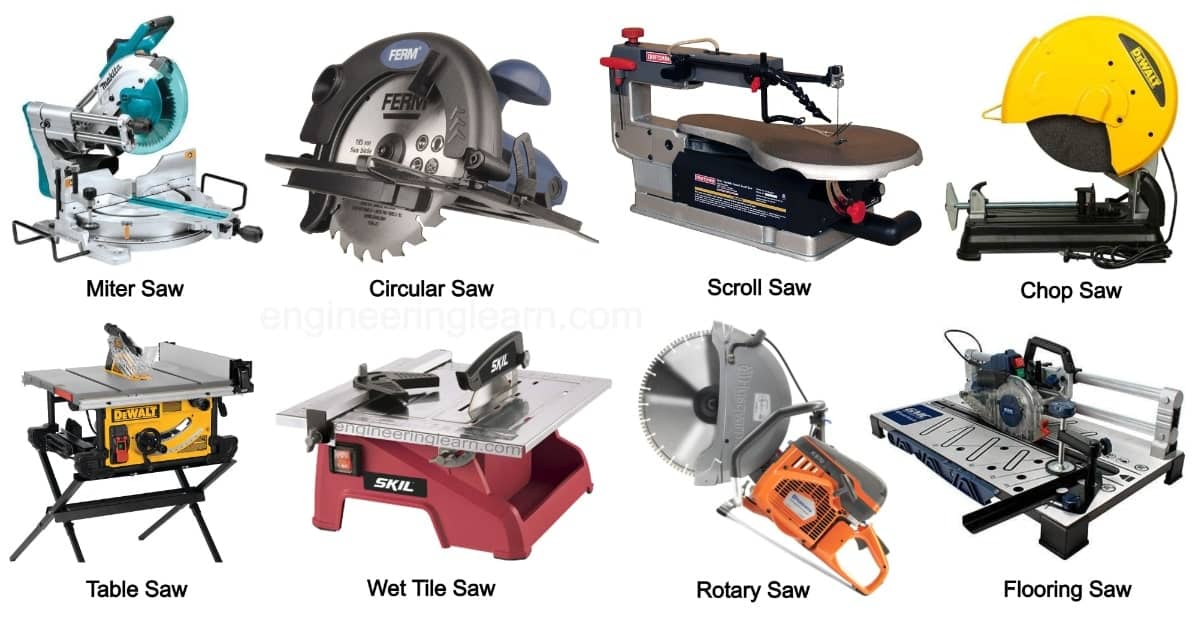
Power saws make many cutting tasks faster and reduce the physical effort needed for repeated work. They are common in American garages, home workshops, construction sites, and professional woodworking shops. However, greater cutting speed also brings greater risk, so proper setup, workpiece control, and blade selection matter.
Power saws are not interchangeable. Some guide the blade through the material, some move a blade rapidly back and forth, and others spin a circular blade. Understanding how each tool moves helps you select the right one for the task.
Source: storage.googleapis.com
Circular saw
A handheld circular saw uses a rotating round blade to make straight cuts in suitable lumber and sheet materials. It is often used for plywood, framing lumber, and deck boards.
Jigsaw
A jigsaw moves a narrow blade up and down. It is useful for curves, shaped cutouts, and short straight cuts in materials compatible with the selected blade.
Miter saw
A miter saw uses a circular blade on a pivoting arm to make crosscuts and angled cuts. It is common for trim, molding, and appropriately sized boards.
Table saw
A table saw has a circular blade that projects through a table. It is designed for controlled straight cuts in supported stock, including rip cuts and crosscuts with suitable accessories.
Band saw
A band saw uses a continuous loop of toothed blade running around wheels. It can cut curves, resaw suitable lumber, and perform selected straight cuts depending on the machine.
Reciprocating saw
A reciprocating saw moves its blade back and forth. It is useful for demolition, rough cuts, pruning with an appropriate blade, and work in areas where other saws are difficult to position.
Circular Saw
A circular saw is a practical choice for many home improvement projects because it can cut long, straight lines without requiring a large stationary machine. With the correct blade and setup, it can cut lumber, plywood, and some other sheet goods. Corded and cordless versions are available, and their cutting capacity depends on the model and blade.
Use a straightedge or suitable guide when accuracy matters. Support the material so the cut remains open and the blade does not bind. Keep hands outside the cutting path, allow the blade to reach the required operating speed before entering the material, and follow the manufacturer’s instructions for blade depth and guarding.
Best uses
Straight cuts in framing lumber, plywood, deck boards, and suitable sheet materials.
Main limitation
Freehand cutting can drift, and the tool may not provide the same repeatability as a properly set up stationary saw.
Jigsaw
A jigsaw is especially useful when a project needs curves, rounded corners, or openings inside a panel. Its narrow blade can follow a marked line more easily than a wide circular blade. The right blade also lets some jigsaws cut selected plastics and metals within the tool’s rated capacity.
Blade choice has a strong effect on the finish. Fine teeth may help produce a cleaner edge in some materials, while blades with other tooth patterns can be better for faster rough cuts. Support the workpiece and let the blade do the cutting instead of forcing the tool around a tight curve.
Best uses
Curved plywood cuts, countertop cutouts where the material and method permit them, decorative shapes, and selected plastic or metal cuts.
Main limitation
The blade may wander in thick material, and the cut edge may need sanding or further finishing.
Miter Saw
A miter saw is designed for accurate crosscuts and repeatable angles. It is often used to cut baseboards, door trim, window casing, and other stock that fits within the saw’s rated capacity. A miter setting changes the angle across the board, while a bevel setting tilts the blade for a slanted cut through its thickness.
A sliding miter saw can handle wider stock than some nonsliding models, but the exact capacity varies. Hold the workpiece firmly against the fence and table, keep hands clear of the blade path, and wait for the blade to stop before raising or moving the cutting head as directed by the manufacturer.
Best uses
Trim, molding, framing pieces, and repeated angled crosscuts.
Main limitation
It is not generally the first choice for long rip cuts or large sheet goods.
Table Saw
A table saw is built for repeatable straight cuts and is widely used in woodworking shops. The fence guides rip cuts parallel to the blade, while an appropriate miter gauge or compatible crosscut sled can guide crosscuts. The table supports the material, which can improve consistency when the setup is correct.
Table saws require particular care because the exposed blade can cause severe injury. Kickback can occur when the workpiece becomes trapped or is thrown back toward the operator. Use the manufacturer’s required guarding and anti-kickback equipment, a suitable riving knife where supplied, and push sticks or other appropriate aids. Never reach over or behind a moving blade to retrieve material.
Best uses
Straight rip cuts, repeatable sizing, and suitable crosscuts in supported wood stock.
Main limitation
It needs a stable setup, sufficient workspace, careful material support, and strong safety habits.
Band Saw
A band saw uses a continuous narrow blade that runs around two or more wheels. The blade travels in one direction through the cutting area, making the tool useful for curves and selected straight cuts. Larger band saws can also resaw suitable lumber into thinner boards when the machine has the required capacity and blade setup.
Choose a blade width and tooth pattern suited to the curve radius and material. A narrow blade can often follow tighter curves, while a wider blade generally supports straighter cuts. Keep the blade guides correctly adjusted and the workpiece supported according to the saw’s instructions.
Best uses
Curved woodworking, selected freehand shapes, and resawing on suitable machines.
Main limitation
Blade drift and setup can affect accuracy, and the machine’s throat and cutting height limit workpiece size.
Reciprocating Saw
A reciprocating saw is often used for rough cutting and demolition. Its back-and-forth blade motion helps cut through suitable wood, metal, plastic, or other materials when paired with the correct blade. Compact models can be useful for repairs in tight areas, while larger models are common on construction and remodeling jobs.
Before cutting an existing wall, floor, or pipe assembly, check for hidden wires, plumbing, gas lines, and other services. Use a blade length and type suitable for the task, secure loose material, and maintain control of the tool because aggressive cutting can cause the blade to catch or bend.
It usually produces a rougher cut than a tool designed for precise finish work.
Specialty Saws for Specific Jobs
Some cutting jobs call for tools that do not fit neatly into the usual hand-saw or general-purpose power-saw categories. Specialty saws are designed around particular materials, shapes, or working conditions. They can make difficult tasks more manageable when the tool matches the job.
Before buying a specialty saw, consider whether you need it often enough to justify the cost and storage space. For a one-time repair, renting a tool or hiring a qualified professional may be more practical, especially when the task involves hazardous materials or demanding cutting conditions.
Source: artofit.org
Chain saw
Uses a linked chain with cutting teeth to cut wood. It is used for tree work, cutting logs, and certain outdoor tasks. It requires specific training, protective equipment, and safe handling.
Tile saw
Often uses a diamond blade, sometimes with water, to cut compatible ceramic or porcelain tile. The blade and machine must be suitable for the tile type and thickness.
Scroll saw
Uses a narrow reciprocating blade for intricate curves and detailed shapes in suitable thin wood, plastic, and other compatible materials.
Drywall saw
A pointed hand saw designed for making openings and cuts in drywall. Check for concealed services before cutting an existing wall.
Pole saw
Places a pruning blade or powered cutting head on a long pole for selected high branches. Overhead work remains hazardous, particularly near power lines.
Masonry saw
Uses a suitable abrasive or diamond cutting system for compatible brick, block, concrete, or stone. Dust and silica exposure require appropriate controls.
Scroll Saw
A scroll saw is made for intricate work that needs small turns and detailed shapes. Its narrow blade can cut delicate patterns in thin wood and other materials approved for the machine. Crafters use scroll saws for ornaments, small decorative panels, templates, and fine hobby projects.
The blade is thin, so sharp turns and feed pressure must be managed with care. Select a blade suited to the material and thickness, and avoid pushing the workpiece faster than the blade can cut.
Best uses
Detailed decorative cuts, craft patterns, and small shapes that need tight curves.
Main limitation
It is not intended for heavy framing lumber, broad sheet breakdown, or large demolition jobs.
Tile Saw
A tile saw is designed for cutting compatible tile materials during bathroom, kitchen, and flooring projects. Some models use a stationary table and a sliding cutting head, while others use a different guided arrangement. Wet tile saws supply water to the cutting area to help manage heat and reduce airborne dust.
Not every blade or machine suits every tile. Confirm compatibility with ceramic, porcelain, stone, or the specific product you are installing. Follow the equipment instructions for water supply, electrical protection, guarding, and slurry cleanup.
Best uses
Straight cuts and selected angled cuts in compatible tile.
Main limitation
It is specialized equipment and may not be economical for occasional small jobs.
Chain Saw
A chain saw can cut wood quickly and is commonly used for logging, firewood preparation, storm cleanup, and tree maintenance. Gas-powered, corded electric, and battery-powered models are available, but power source alone does not determine whether a saw is suitable for a particular task.
Chain saws carry serious risks, including kickback, chain contact, falling limbs, and loss of control. Read the operating manual, use the specified protective equipment, maintain the chain and safety features, and obtain appropriate training. Large trees, storm-damaged limbs, and work near electrical lines should be handled by qualified professionals.
Best uses
Suitable log cutting, planned tree maintenance, and selected outdoor wood-cutting tasks.
Main limitation
It is hazardous equipment that requires specific training, maintenance, and protective measures.
Types of Saws and Their Uses by Material
The material you are cutting is one of the most important factors in choosing a saw. Wood, metal, plastic, tile, and drywall behave differently under a blade. A tool that cuts one material well may damage another material, produce a poor edge, or create a serious safety hazard.
Use the following table as a starting point, not as a substitute for the saw’s manual. The exact material thickness, blade specification, and tool capacity determine whether a particular cut is appropriate.
Source: wips-live.de
Solid wood and lumber
A hand saw, circular saw, miter saw, table saw, band saw, or reciprocating saw may be appropriate depending on the cut and required finish.
Plywood and sheet goods
A circular saw with a suitable blade and guide is useful for straight cuts, while a jigsaw or band saw can handle selected shaped cuts.
Metal
A hacksaw, suitable metal-cutting reciprocating blade, metal-cutting band saw, or purpose-built power saw may work depending on the metal and stock size.
Plastic
Use a blade specifically suitable for the plastic type and thickness. Manage heat and support the workpiece to reduce melting, chipping, or cracking.
Tile and masonry
Use a compatible tile saw, masonry saw, or approved cutting system with the required dust or water controls.
Drywall
A drywall saw or a suitable powered tool can make openings, but hidden electrical and plumbing services must be checked first.
Choosing a Saw Blade
The blade matters as much as the saw itself. Blade material, tooth geometry, tooth count, width, diameter, and thickness all affect what a saw can cut and how the cut looks. A blade with more teeth is often useful for a finer finish in compatible materials, while a coarser tooth pattern can remove material faster in other applications.
Do not choose a blade by tooth count alone. A fine-tooth blade may cut slowly or overheat in an unsuitable material, and a blade designed for wood is not automatically appropriate for metal or masonry. Match the blade to the material, the tool’s speed rating, and the manufacturer’s requirements.
High-speed steel blades
Common in certain hand tools and specialty blades, with suitability depending on the material and blade design.
Carbide-tipped blades
Commonly used for many woodworking power saws because carbide teeth can retain cutting performance under suitable conditions.
Bi-metal blades
Used in many hacksaw and reciprocating saw applications where a combination of flexibility and tooth hardness is useful.
Diamond blades
Used for compatible hard materials such as tile, concrete, and stone, subject to the blade’s intended application.
Quick Comparison of Common Saws
Comparing the main saw types side by side makes it easier to narrow down your choices. The best tool depends on whether you need straight cuts, curves, repeatable angles, fine joinery, or rough demolition work. The table below summarizes typical uses and important limits.
Source: storage.googleapis.com
Which Saw Should You Use?
For a small home repair, a general-purpose hand saw may be enough. For repeated cuts during a larger project, a suitable power saw can save effort. For precision work, choose a tool designed for the required cut rather than relying on speed alone.
Straight cuts in lumber
Use a hand saw for occasional cuts or a circular saw for many straight cuts. A table saw may suit repeated, properly supported cuts in a workshop.
Angled trim cuts
A miter saw is often the most practical choice when stock fits its rated capacity.
Curved cuts
Use a jigsaw for many general-purpose curves or a scroll saw for intricate cuts in suitable thin stock.
Detailed joinery
A backsaw or Japanese pull saw can provide control for selected fine woodworking tasks.
Metal rods and small pipes
A hacksaw can handle many small jobs when the blade suits the material and thickness.
Rough demolition
A reciprocating saw with the correct blade is often useful after hidden services and other hazards have been addressed.
Branches and logs
Use a pruning saw for suitable small branches and a properly selected chain saw only when the operator has the required training and protection.
How to Choose the Right Saw for Your Project
Choosing the right saw begins with the finished result you need. A rough cut hidden inside a wall does not require the same edge quality as a visible furniture joint. Likewise, a long board needs a different setup from a small decorative shape.
Think about the full job, including setup, material support, cleanup, and storage. A power saw may cut quickly but need more space, dust control, and maintenance. A hand saw may be slower yet easier to carry, store, and use for a small repair.
Source: enthrallinggumption.com
Step 1: Identify the material
Confirm the material type, thickness, and condition. Check for nails, screws, coatings, or other items that could affect cutting.
Step 2: Define the cut
Mark whether you need a straight cut, curve, angle, internal opening, or flush finish.
Step 3: Decide how precise the result must be
Fine joinery and visible trim often require more controlled tools and careful setup than rough construction cuts.
Step 4: Check tool capacity
Confirm blade size, cutting depth, workpiece dimensions, power requirements, and material compatibility in the manual.
Step 5: Plan safe support
Make sure the workpiece can be secured and supported without trapping the blade or allowing the offcut to fall unpredictably.
Step 6: Consider frequency and cost
For occasional use, a hand tool or rental may be enough. For frequent work, a suitable power saw may justify the additional cost and maintenance.
Example: Building a Wooden Deck
Suppose you are building a small deck in an American backyard. You may need to shorten deck boards, cut framing lumber, and trim some pieces to fit the layout. A circular saw can handle many straight cuts, while a hand saw can be useful for occasional adjustments.
If the project includes decorative trim with repeated angles, a miter saw may help make consistent cuts. Before using any tool, confirm that the lumber is suitable for its intended outdoor use and follow the deck design, applicable building requirements, and fastener specifications. A saw cannot correct an unsafe design or inadequate structural support.
For framing lumber
A circular saw or suitable hand saw can make common straight cuts.
For repeated angled trim
A miter saw can help produce repeatable angles in stock that fits the machine.
For small adjustments
A hand saw may be practical when only a few cuts remain.
Example: Installing Shelves or Cabinets
For a shelf or cabinet project, the required cut depends on the material and the fit. A circular saw with a suitable guide can cut sheet goods, while a table saw may be appropriate for repeated sizing in a properly equipped workshop. A jigsaw can make selected curved cutouts when the blade and material are compatible.
Measure carefully and account for the final dimensions, edge treatment, and installation space. If a panel must fit around pipes or other services, verify the position of hidden lines before cutting. For heavy cabinets and wall-mounted shelves, use suitable supports and fasteners for the wall type and expected load.
For straight panel cuts
A guided circular saw or suitable table saw can help produce straight edges.
For shaped openings
A jigsaw can handle many curves and cutouts in suitable panels.
For finished edges
Choose a suitable blade and support method, and plan any sanding or edge treatment needed.
Common Saw-Cutting Mistakes to Avoid
Many cutting problems come from using the wrong blade, poor support, inaccurate marking, or forcing the tool. A suitable saw still needs the correct setup to produce a clean cut. Take time to inspect the material and plan the cut before turning on a powered tool or beginning a hand cut.
If the blade binds, the material shifts, or the saw behaves differently from normal, stop and reassess the setup. Never try to correct a problem by placing a hand near a moving blade or by forcing the tool through the material.
Source: artofit.org
Using the wrong blade
A blade intended for another material may cut poorly, overheat, break, or damage the workpiece. Check the blade markings and manual.
Ignoring workpiece support
Unsupported material can shift, pinch the blade, or fall as the cut finishes. Secure the workpiece and support both sides as required by the cutting method.
Forcing the cut
Excessive pressure can reduce control, damage the blade, and increase the risk of binding. Let the tool cut at the pace its design allows.
Skipping measurements
Incorrect marks can waste material and create poor-fitting joints. Measure, mark clearly, and check the cut line before cutting.
Cutting without checking for hidden hazards
Walls, floors, and outdoor areas may contain electrical wires, plumbing, fasteners, or other hazards. Inspect the area and use suitable detection methods before cutting.
Using damaged equipment
Cracked blades, damaged cords, loose parts, missing guards, and faulty switches can create serious risks. Remove defective tools from service until properly repaired.
What to Do When a Saw Cut Goes Wrong
If a powered saw binds or stalls, release the trigger and follow the manufacturer’s procedure for stopping and safely disconnecting the tool. Do not pull a jammed blade free while it is moving. Once the tool is fully stopped and isolated from its power source, inspect the blade, workpiece, and support arrangement.
A rough or inaccurate cut may result from a dull blade, an incorrect blade type, a poorly marked line, or an unstable workpiece. Correct the cause before making another cut. If a blade is cracked, bent, or otherwise damaged, replace it with a compatible part rather than attempting an improvised repair.
If the blade binds
Stop the tool, isolate the power source when safe, and check for pinching, shifting material, and incorrect support.
If the cut wanders
Check blade condition, blade alignment, material support, and whether a suitable guide is needed.
If the material chips
Review blade suitability, cutting direction, feed rate, and support. Test adjustments on scrap material when possible.
Essential Saw Safety Tips
Safe saw use begins before the first cut. Read the manual for the exact tool, inspect its condition, prepare the work area, and make sure the blade matches the job. Wear suitable eye protection and use hearing protection when the tool or work environment requires it.
Keep loose clothing, jewelry, and long hair away from moving parts. Use the specified guards and safety devices, secure the material, and keep your hands out of the cutting path. Never disable a guard or operate a tool with missing safety components.
Different saws have different hazards. Table saws can cause kickback, chain saws can kick back or cut the operator, and masonry cutting can produce hazardous dust. Use the protective equipment, dust controls, and training required for the specific tool and material.
Source: framingnailersguide.com
Wear suitable protective equipment
Use safety glasses or goggles, hearing protection where needed, and any additional protection specified for the tool and material. Respiratory protection may be needed when effective dust controls do not eliminate exposure.
Secure the workpiece
Use clamps, a suitable vise, or the tool’s intended workholding method. Do not hold a small or unstable workpiece by hand near a moving blade.
Keep guards in place
Use blade guards, riving knives, and other supplied safety devices as directed. Do not bypass or remove protective equipment to make a cut easier.
Manage dust and debris
Use appropriate extraction or other dust controls, especially when cutting materials that create hazardous fine dust. Keep the work area clear without reaching near moving parts.
Disconnect before adjustments
Unplug corded tools or remove the battery as directed before changing blades, clearing jams, or performing maintenance.
Get training for high-risk work
Chain saw use, demanding demolition, hazardous overhead cutting, and other high-risk jobs may require formal training or qualified professional help.
When to Hire a Professional
Some cutting tasks should not be treated as ordinary DIY work. Large tree limbs, work near power lines, cuts in potentially load-bearing building components, and work involving unknown pipes or wiring can cause serious injury or property damage. Stop and obtain qualified help when you cannot verify the material, the hazards, or the structural role of the part being cut.
In the United States, workplace saw use may also be subject to applicable Occupational Safety and Health Administration requirements. Homeowners should follow the tool manufacturer’s safety instructions and relevant local requirements, while professional operators should follow the rules that apply to their work.
Structural building components
Consult a qualified building professional before cutting a beam, joist, post, or other component that may carry loads.
Electrical hazards
Do not cut near energized wiring or power lines. Have the hazard properly identified and controlled by a qualified person.
Large or unstable trees
Use a qualified tree-care professional for dangerous limbs, storm damage, or work that cannot be performed from a safe position.
Unknown materials
Stop if the material may contain hazardous substances or if the correct cutting method cannot be established.
Frequently Asked Questions
Q
What are the most common types of saws?
Common saws include hand saws, hacksaws, coping saws, circular saws, jigsaws, miter saws, table saws, band saws, and reciprocating saws. Specialty tools include chain saws, scroll saws, tile saws, and pruning saws. Each type serves a different purpose, so the best choice depends on the material, cut, and required accuracy.
Q
Which saw is best for beginners?
For simple projects, a basic hand saw can be a useful starting point because it needs no electricity and can handle many small cuts. A jigsaw may be useful for beginners who need curves, while a circular saw can suit straight cuts in larger materials when used with proper training and safety measures. Choose a tool based on the project rather than assuming that every power saw is easy to operate.
Q
What is the difference between a circular saw and a miter saw?
A circular saw is a handheld tool commonly used for straight cuts in lumber and sheet goods. A miter saw is usually mounted on a base and uses a pivoting cutting head to make controlled crosscuts and angles. A circular saw offers more portability for breaking down larger materials, while a miter saw is useful for repeatable cuts in appropriately sized stock.
Q
Which saw is best for cutting metal?
A hacksaw is a practical choice for many small metal-cutting jobs. For larger or repeated cuts, a suitable metal-cutting band saw, reciprocating saw with a compatible blade, or purpose-built power saw may be more appropriate. The metal type, stock thickness, tool capacity, and blade specification determine the correct choice.
Q
Can one saw cut wood, plastic, and metal?
Some saws can cut more than one material when equipped with the correct compatible blade. Jigsaws and reciprocating saws are examples, but their capabilities depend on the exact tool and blade. Never assume that a blade suitable for wood is also suitable for metal or plastic, and follow the manufacturer’s limits for each material.
Q
What does TPI mean on a saw blade?
TPI means teeth per inch. It describes how many teeth appear along one inch of a saw blade. Tooth count can affect cutting speed and finish, but the best TPI depends on the material, its thickness, the blade design, and the tool. A higher TPI does not automatically make a blade better for every job.
Q
What is the safest saw for home DIY projects?
There is no single safest saw for every project. Risk depends on the tool design, material, setup, operator training, and safety measures. A hand saw may be adequate for a small repair, but any saw can cause injury if used incorrectly. Choose the tool that fits the task, follow its manual, secure the workpiece, and use the required protective equipment.
Q
How many types of saws are there?
There is no single fixed number because saws can be classified by power source, blade design, material, and intended task. A basic guide may cover a dozen common types, while a detailed woodworking or industrial catalog may include many more specialized designs. It is more useful to understand the main categories and their uses than to memorize a fixed total.
✦ Wrapping Up
Conclusion
Understanding the different types of saws and their uses makes it easier to select the right tool for home repairs, woodworking, construction, gardening, and metal-cutting tasks. Hand saws are useful for simple jobs, circular saws handle many straight cuts, jigsaws follow curves, miter saws make repeatable angled cuts, and specialty saws address more specific needs.
Before choosing a saw, identify the material, the shape of the cut, the required accuracy, and the size of the workpiece. Check blade compatibility, tool capacity, and workpiece support. Most importantly, follow the manufacturer’s instructions and use suitable safety equipment. When a job involves structural components, hazardous services, dangerous tree work, or an unfamiliar material, qualified professional help may be the safest option.
💡 Key Takeaway
For your next project, write down the material you need to cut, the cut shape, and the level of accuracy required. Compare those needs with the saw’s rated capacity and blade options, then choose the simplest suitable tool that you can operate safely.
Sarah believes that a messy garage is a wasted room. After years of working in professional home staging and interior design, she shifted her focus to the most neglected part of the house: the garage. She focuses on vertical storage, aesthetic floor coatings, and converting dusty corners into functional workspaces. Sarah’s goal is to help you "unlock" every square inch of your garage.
Sarah believes that a messy garage is a wasted room. After years of working in professional home staging and interior design, she shifted her focus to the most neglected part of the house: the garage. She focuses on vertical storage, aesthetic floor coatings, and converting dusty corners into functional workspaces. Sarah’s goal is to help you "unlock" every square inch of your garage.