
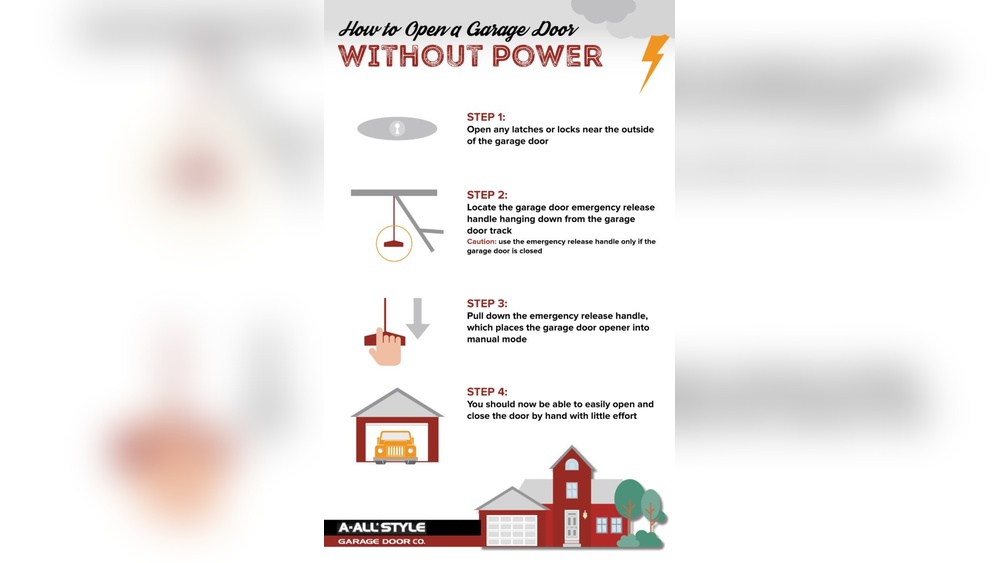
When your garage door won’t open because the power is out, it can feel frustrating and confusing. Many homeowners depend on automatic garage doors every day. So when there’s a blackout, storm, or electrical problem, you may wonder: Can you open a garage door without power? The answer is yes. You just need to understand the manual release mechanism and follow a few careful steps. This guide explains how to safely open your garage door in a power outage, how the system works, common mistakes to avoid, and what to do next.
How Garage Doors Work: Automatic Vs. Manual
Most modern garage doors use an electric opener. This device lifts and lowers the door with a motor, controlled by a wall button or remote. When the power goes out, the motor can’t run. But every automatic opener has a manual release for emergencies.
Automatic Garage Door Opener
- Uses an electric motor to move the door.
- Operates with remote controls and wall switches.
- Has safety sensors to stop if something blocks the door.
- Usually includes a manual release cord (often a red handle).
Manual Operation
- Manual release disconnects the door from the motor.
- Allows you to lift the door by hand.
- Useful during power outages, mechanical problems, or emergencies.
Understanding both methods helps you stay prepared. Most garage doors are designed to be opened manually when needed.
Step-by-step: Opening A Garage Door Without Power
If you need to open your garage door during a blackout or electrical failure, follow these steps. Read carefully before you begin.
1. Make Sure It’s Safe
- Check for damaged springs or cables. If you see damage, do not try to open the door. Call a professional.
- Make sure nothing is blocking the door’s path.
- If possible, have another adult help for safety.
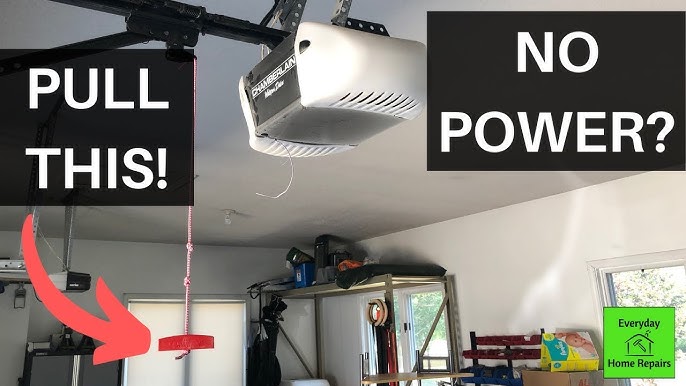
2. Find The Manual Release Cord
- Look for a red cord hanging from the garage door opener rail.
- It’s usually near the center of the garage, above your head.
3. Pull The Cord Down
- Grasp the handle firmly.
- Pull straight down. You may hear a click or feel the door disengage from the opener.
4. Lift The Door Carefully
- With the opener disconnected, lift the door by hand.
- Use both hands and stand to one side, not directly in front.
- If the door is too heavy or sticks, do not force it.
5. Secure The Door
- Once open, make sure it stays up. Some doors may slide back down if the springs are weak.
- Prop it open with a strong object or ask someone to hold it.
6. Close And Reconnect
- When you’re ready to close, lower the door gently.
- To reconnect the opener, pull the cord up and toward the opener. You may need to run the opener once power returns for full reconnection.
Note: Never use excessive force. If the door doesn’t move easily, there may be a mechanical issue.
Common Mistakes And Safety Risks
Opening a garage door manually is simple, but mistakes can cause injury or damage. Here are pitfalls to avoid:
- Trying to open a door with broken springs – these parts hold most of the weight.
- Standing directly under the door while lifting.
- Pulling the manual release while the door is open or halfway up.
- Using makeshift tools or ladders to force the door.
- Forgetting to secure the door once open.
Garage doors can weigh between 150–300 pounds. If your springs or cables are damaged, the door may drop suddenly. Always check for visible issues before trying manual operation.
Garage Door Types: Which Are Easiest To Open Without Power?
Different garage doors have unique mechanisms and weights. Some are easier to open manually than others. Here’s a quick comparison:
| Door Type | Manual Opening Difficulty | Typical Weight | Common Features |
|---|---|---|---|
| Single Panel | Easy | 150–200 lbs | Simple springs, light structure |
| Sectional Door | Medium | 200–300 lbs | Multiple panels, heavier |
| Roll-Up Door | Hard | Varies | Industrial, often locked |
Sectional doors are most common in homes. They’re usually safe to open manually if the springs are in good shape. Single panel doors are lighter and easier. Roll-up doors are more common in commercial garages and may require special keys or tools.

Credit: novagaragedoors.com
Practical Example: Opening During A Blackout
Imagine you’re leaving for work, but the power is out. Your garage door won’t respond to the remote. Here’s a real-world example:
- You locate the red manual release cord.
- Pull it down to disengage the opener.
- Lift the door slowly, using both hands.
- You notice the door feels heavy but moves smoothly.
- You prop it open with a wooden block until you drive out.
- Lower the door, making sure it’s closed securely.
- When power returns, you reconnect the opener by running it once.
Most homeowners can open a garage door manually in under 5 minutes if the system is in good condition.
Data: How Often Do Garage Doors Fail During Power Outages?
According to the U.S. Department of Energy, about 4–5 million Americans experience power outages every year due to storms or grid failures. With over 70% of U.S. homes using automatic garage doors, thousands face this problem regularly.
- Power outages are most common during storms, winter, and heat waves.
- Many homeowners don’t know about the manual release until they need it.
- Emergency services recommend practicing manual operation at least once a year.
If you have a backup battery system, your garage door opener may work for several hours during a blackout. But not all models offer this feature.
Credit: www.youtube.com
Backup Options: Battery Systems And Emergency Kits
Some garage door openers come with battery backup. This lets you open the door automatically even when the power is out. Compare battery backup with manual release:
| Feature | Battery Backup | Manual Release |
|---|---|---|
| Operation During Power Outage | Automatic | Manual |
| Ease of Use | Very Easy | Easy, but physical |
| Maintenance | Battery replacement | Spring/cable check |
| Cost | $50–$150 extra | Included |
If you live in an area with frequent outages, consider upgrading to a model with battery backup.
What To Do If The Door Won’t Move
Sometimes the garage door won’t open, even after pulling the manual release. Here’s what to check:
- Springs or cables may be broken or jammed.
- Tracks might be blocked or bent.
- Locking mechanisms could be engaged.
- The door may be off its tracks.
If you see broken parts, stop and call a garage door technician. Forcing the door can cause injury or damage.

Credit: www.olympusgaragedoorrepairmd.com
Tips For Easy Manual Garage Door Operation
To make manual opening safer and easier, follow these tips:
- Keep the manual release cord visible and accessible.
- Lubricate tracks and hinges every few months.
- Test manual operation once a year.
- Teach all adults in your home how to use the manual release.
- Never store heavy objects near the door’s path.
These steps help prevent problems during emergencies.
Garage Door Security During Power Outages
Manual operation is helpful, but it can also be a security risk. If you leave the manual release cord accessible from outside, thieves could pull it and enter your garage. Protect your home by:
- Installing a garage door lock for manual mode.
- Using zip ties to secure the release cord (but not too tight).
- Keeping the garage door closed and locked during outages.
- Installing motion sensors or cameras for extra security.
Most break-ins happen through unlocked garage doors. Always re-engage the opener and lock the door when power returns.
Garage Door Maintenance For Reliable Manual Operation
Regular maintenance keeps your garage door working smoothly. This is especially important for manual operation. Here’s a maintenance checklist:
- Inspect springs and cables for rust or wear.
- Lubricate moving parts (rollers, hinges, tracks) every 6 months.
- Check the manual release cord for fraying.
- Test manual operation, lifting and lowering the door.
- Tighten loose bolts or brackets.
Regular checks can prevent sudden failures and make manual operation easier.
When To Call A Professional
If your garage door is too heavy, stuck, or making strange noises, call a licensed garage door technician. Signs you need expert help:
- Broken springs or cables.
- Door won’t stay open or slams shut.
- Manual release doesn’t work.
- Door is crooked or off its tracks.
Professionals have the tools and training to fix these problems safely.
Frequently Asked Questions
How Do I Reconnect The Garage Door Opener After A Power Outage?
Once power returns, simply run the opener with your remote or wall button. The trolley will automatically reconnect to the door. If it doesn’t, pull the manual release cord up and toward the opener, then run the motor.
Is It Safe To Open My Garage Door Manually?
Yes, as long as the springs and cables are in good shape. Check for visible damage first. If the door feels very heavy or unstable, stop and call a professional.
Can I Open A Garage Door From Outside During A Power Outage?
Some garage doors have an emergency release lock on the exterior. This lets you insert a key, pull a cable, and open the door. If you don’t have this feature, you’ll need to access the manual release from inside.
What If The Manual Release Cord Is Missing?
If the cord is missing or broken, you can replace it with a strong rope. Attach it to the manual release lever. If the lever itself is damaged, call a technician for repair.
Are Battery Backup Garage Door Openers Worth It?
If you live in an area with frequent power outages, battery backup can be very convenient. It lets you open the door automatically for several hours. Models with battery backup cost more but offer peace of mind. See U.S. Department of Energy for outage statistics.
Opening a garage door without power is simple when you know how. Practice manual operation so you’re ready for emergencies. Maintain your door regularly, and upgrade to battery backup if you want extra convenience. Stay safe, and remember: a little preparation goes a long way.