
Does Garage Count As Square Footage?
When you look at a home listing, the square footage is one of the first things that stands out. Many buyers and sellers wonder: Does garage count as square footage? This question is important because it affects a home’s value, its price, and even how comfortable it feels to live in. The answer is not always simple, and rules can change from place to place. Here’s a practical guide to help you understand how garages fit into square footage calculations.
What Is Square Footage?
Square footage is the total area inside a home, measured in feet. Real estate agents, appraisers, and buyers use this number to compare homes. It’s a quick way to judge size and price.
- Living space is the main focus. This means bedrooms, living rooms, kitchens, and bathrooms.
- Areas like basements, attics, and porches are often counted separately or not at all.
For most people, more square footage means more space and higher value. But not every part of a house is always included.
How Square Footage Is Calculated
The way square footage is measured follows a few common rules:
- Only finished, heated, and livable areas are counted.
- Measurements are taken from the outside walls.
- Rooms must have a ceiling height of at least 7 feet in most areas.
- Spaces must be accessible from the main part of the house.
This helps buyers compare homes fairly. But it also means some parts, like garages, might be left out.
Why Garages Are Usually Excluded
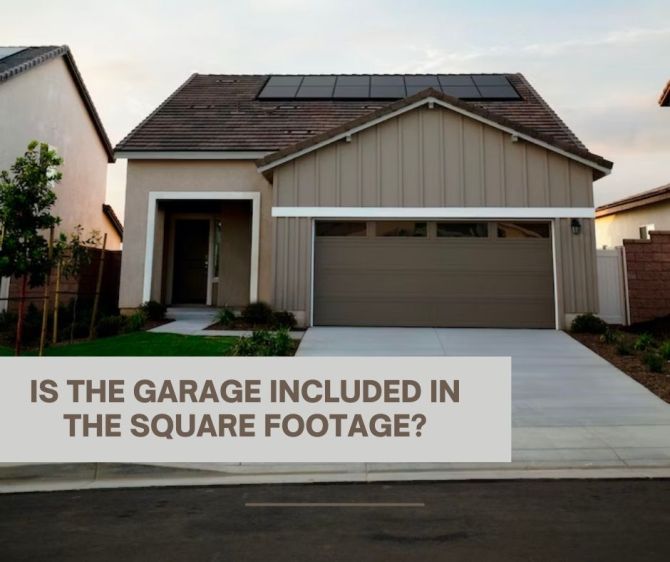
In almost all cases, garages are not included in square footage. Here’s why:
- Garages are not heated or cooled like the rest of the house.
- They are not finished living spaces. Most have concrete floors, no drywall, or open rafters.
- Garages are used for cars, tools, or storage, not for living or sleeping.
- Building codes see garages as separate from “living area.”
Let’s look at how this works with a simple example:
If a home is 2,000 square feet and has a 400 square foot garage, the listing will say 2,000 sq ft for the living space, and then mention the garage size separately.
Exceptions: When A Garage Might Count
There are rare cases when a garage can be included in square footage:
- The garage is fully finished—with drywall, insulation, flooring, and paint.
- It is heated and cooled with the same system as the house.
- There is a proper ceiling and the space is easy to access.
- The garage is converted into a bedroom, office, or living area.
In these cases, the former garage becomes part of the home’s living space. Appraisers and agents may add it to the total square footage.
Example: Garage Conversion
Suppose a homeowner turns a 400 sq ft garage into a family room:
- The space is finished, with heating, cooling, and proper flooring.
- It connects directly to the rest of the house.
Now, the home’s square footage increases by 400 sq ft, because it’s truly livable space.

Credit: www.reddit.com
How Different Regions Handle Square Footage
Rules about what counts as square footage can change by state or city. Here’s a quick look at some differences:
| Region | Garage Counted? | Other Notes |
|---|---|---|
| California | No | Only finished, heated space included |
| Texas | No | Garage size listed separately |
| Florida | No | Enclosed porches sometimes included |
| New York | No | Converted garages may count |
| Illinois | No | Basements usually not included |
This table shows that almost all U.S. regions follow similar rules. Always ask your real estate agent or appraiser about the local guidelines.
The Appraiser’s Role In Square Footage
A home appraiser is trained to measure and report square footage based on strict rules. Here’s what they look for:
- Is the space livable and finished?
- Is there permanent heat?
- Is the area connected to the main house?
- Does it have a finished floor, walls, and ceiling?
If the answer is “no” to any of these, the space—including garages—will not be counted.
How Garages Appear In Home Listings
Even though garages aren’t in the official square footage, real estate listings still highlight them. Here’s how:
- The main square footage number only covers living space.
- The listing will say, for example, “2-car garage, 400 sq ft.”
- Features like “attached” or “detached” are noted.
Buyers still care about garage size. A home with a large garage may be more attractive, even if it doesn’t raise the square footage.
Detached Vs. Attached Garages
There are two main types of garages: attached and detached. Neither is usually counted in the home’s square footage, but there are key differences:
| Type | Connected to House? | In Square Footage? | Common Uses |
|---|---|---|---|
| Attached | Yes | No | Parking, storage, laundry |
| Detached | No | No | Workshops, guest suites, parking |
Attached garages are easier to convert into living space because they share walls and utilities. Detached garages are usually left as-is.
Real-life Example: Home Listing Breakdown
Let’s look at a sample home listing to see how square footage and garage size are presented:
- Living area: 1,800 sq ft
- Garage: 500 sq ft (attached, 2 cars)
- Basement: 600 sq ft (unfinished)
- Porch: 100 sq ft (enclosed)
In this case, the 1,800 sq ft is the only number that counts for official living space. The garage, basement, and porch are listed for information, but do not add to the main square footage.
What Happens If You Include The Garage?
If a seller or agent tries to include the garage in the main square footage, it can lead to problems:
- The home may be overpriced compared to similar homes.
- Buyers may feel misled when they tour the house.
- Appraisers will correct the error, which can affect loans.
- Lenders might lower the loan amount if the real square footage is less.
To avoid these issues, always check if the garage is included by mistake. Ask for details and compare with similar homes in your area.

Credit: www.youtube.com
How Garage Conversions Affect Value
Converting a garage to living space can add to your home’s value, but it’s not automatic. Here’s what to consider:
- Quality of the conversion: Was the work done by professionals? Is it up to code?
- Local market: In some areas, buyers prefer garages for parking or storage. Removing a garage might lower value.
- Permits: Did the homeowner get the right permits for the conversion?
- Heating and cooling: Is the space comfortable year-round?
A well-done conversion can add real square footage. But if done poorly, it might hurt your home’s value.
How Square Footage Impacts Home Value
Square footage is one of the biggest factors in home prices. Here’s how it works:
- More living space usually means a higher price.
- Appraisers use dollars per square foot to compare homes.
- Only true living space counts toward this number.
If you include non-living areas like garages, your price per square foot will look wrong. This can hurt your chances of selling.
Example: Price Per Square Foot
Suppose two homes are for sale:
- Home A: 2,000 sq ft of living space, priced at $400,000. That’s $200 per sq ft.
- Home B: 1,800 sq ft of living space + 200 sq ft garage (not counted), also priced at $400,000.
If Home B’s garage is wrongly included, it looks like $181 per sq ft, but buyers will see less real living space.
Common Mistakes To Avoid
Many first-time buyers and sellers make errors when dealing with garages and square footage. Here are some common mistakes:
- Assuming all space under the roof counts. Only finished, heated, and livable areas are included.
- Trusting online listings without checking details. Always ask for a floor plan or appraiser’s report.
- Thinking garage conversions always add value. In some neighborhoods, losing a garage can lower your resale price.
- Using garage space for bedrooms without permits. This can cause trouble during appraisals or inspections.
How To Check What Counts
Before you buy or sell a home, take these steps:
- Ask for a detailed floor plan showing what is included in the square footage.
- Review the appraisal report for how the space is counted.
- Talk to your real estate agent about local rules.
- If you’re thinking of converting your garage, check local building codes and get permits.
A little homework can prevent costly surprises later.
Additional Insights Most Beginners Miss
- Unpermitted spaces are not counted. Even if a garage is finished and heated, if the work was not permitted by the city, it’s not part of the official square footage. This can hurt value and create legal problems.
- Appraisals for refinancing use the same rules. Lenders will not accept garages as living space for refinancing, even if you use them as a gym or office.
Many people think a nice garage adds value the same way as a living room. In reality, only finished, permitted, and heated spaces count.
The Role Of Home Inspectors
A home inspector looks at the condition of the garage, but does not decide if it counts in square footage. Their main focus is:
- Checking for electrical, fire, or safety issues.
- Looking at the garage door, walls, and roof.
- Making sure garage conversions are done safely.
If a garage was turned into living space, an inspector may note if the work looks professional and if it matches the rest of the house.
Garage Space In Appraisal Reports
Appraisal reports have a special section for additional spaces like garages. Here’s what you’ll see:
| Space Type | Included in Sq Ft? | Notes |
|---|---|---|
| Living Area | Yes | Finished, heated, main space |
| Garage | No | Listed separately |
| Basement | No | Sometimes listed if finished |
| Porch | No | Only if enclosed and finished |
This helps buyers and lenders see exactly what they’re getting.
Why Square Footage Matters For Insurance
Insurance companies use square footage to set premiums. Only living space matters for most policies:
- Garages are covered separately for fire, theft, or storm damage.
- Finished garages may need extra coverage.
- Misreporting square footage can lead to claim problems.
Always give your insurance agent accurate numbers for each part of the house.
Credit: www.thehomesdirect.com
Where To Find Official Guidelines
The American National Standards Institute (ANSI) provides clear rules for measuring square footage. Many appraisers and real estate agents follow their standards. You can learn more at the National Association of Realtors website.
Frequently Asked Questions
Does The Garage Count In The Home’s Total Square Footage?
No, garages are not included in a home’s official square footage unless they are converted into finished, heated, and livable space.
If I Convert My Garage To A Room, Can I Add It To The Square Footage?
Yes, but only if the conversion is fully finished, permitted, and meets all building codes. It must be heated and accessible from the main house.
Do Real Estate Listings Ever Include The Garage In Square Footage?
Most professional listings do not, but mistakes can happen. Always check with your agent and ask for a floor plan or appraisal.
How Does Including The Garage By Mistake Affect Home Value?
Including the garage in the total square footage can make your home seem more valuable, but appraisers and lenders will not count it. This can lead to pricing and loan problems.
Is A Detached Garage Ever Counted As Living Space?
No, detached garages are never included in square footage, even if finished. Only attached, converted garages may count if they meet all requirements.
Accurately measuring and reporting square footage is key for fair pricing, buying, and selling. By understanding the rules, you can make better decisions and avoid costly mistakes when dealing with garages and home size.