
Garage door openers make life easier, but the heart of many systems is the chain drive. When the chain tension is wrong—too tight or too loose—your garage door may get noisy, wear out faster, or even stop working. Many homeowners ignore this small detail, but the right chain tension can keep your garage door smooth and quiet for years.
Understanding how to check, adjust, and maintain your garage door chain tension isn’t just for professionals. Anyone can do it with the right instructions and a little care. This guide explains what chain tension is, why it matters, how to adjust it safely, and how to avoid common mistakes. Whether you’re a new homeowner or just want to prevent costly repairs, you’ll find practical steps and expert advice here.
What Is Garage Door Chain Tension?
Garage door chain tension means how tight or loose the chain is on your garage door opener. The chain connects the motor to the trolley, which moves the door up and down. If the chain is too loose, it may sag or jump off the rail. If it’s too tight, it can strain the motor and other parts.
A properly adjusted chain has a little slack—usually about 1/2 inch to 3/4 inch at the midpoint between the opener and the door. This slack lets the chain move smoothly but stay on track.
Why Chain Tension Matters
- Reduces noise: A loose chain slaps against the rail, causing loud rattling.
- Prevents wear: Too much tension wears out the motor and sprockets.
- Keeps door aligned: Correct tension ensures even, safe movement.
Small adjustments can prevent big problems later.
Signs Your Garage Door Chain Needs Adjustment
How do you know if your chain tension is wrong? Look for these signs:
- Sagging chain: If the chain hangs more than 3/4 inch below the rail, it’s too loose.
- Chain skips or jumps: The door may stop or jerk during movement.
- Loud operation: New grinding or rattling noises often mean tension issues.
- Slow or uneven movement: The door may hesitate, especially when opening.
- Chain looks very tight: No visible slack means too much tension.
If you see any of these, it’s time to check and adjust.
Tools And Safety Before You Start
Adjusting your garage door chain isn’t hard, but you need the right tools and must follow safety steps.
Basic Tools Needed
- Wrench set (usually 7/16” or 10mm)
- Screwdriver (flathead or Phillips)
- Stepladder
- Protective gloves
Safety Tips
- Unplug the opener before working.
- Never adjust while the door is moving.
- Wear gloves to protect your hands from sharp parts.
A few minutes of safety prep can prevent injuries.
How To Check Garage Door Chain Tension
Checking the tension is simple. Here’s how to do it:
- Close the garage door completely.
- Unplug the opener for safety.
- Stand on the stepladder and look at the chain along the rail.
- At the midpoint, press up on the chain with your finger.
The chain should move up about 1/2 inch to 3/4 inch. If it moves much more or feels very tight, adjustment is needed.
Example
Let’s say your chain sags about 1. 5 inches when you press it. That’s double the recommended slack. It’s time to tighten.
How To Adjust Garage Door Chain Tension
Follow these steps to fix the tension:
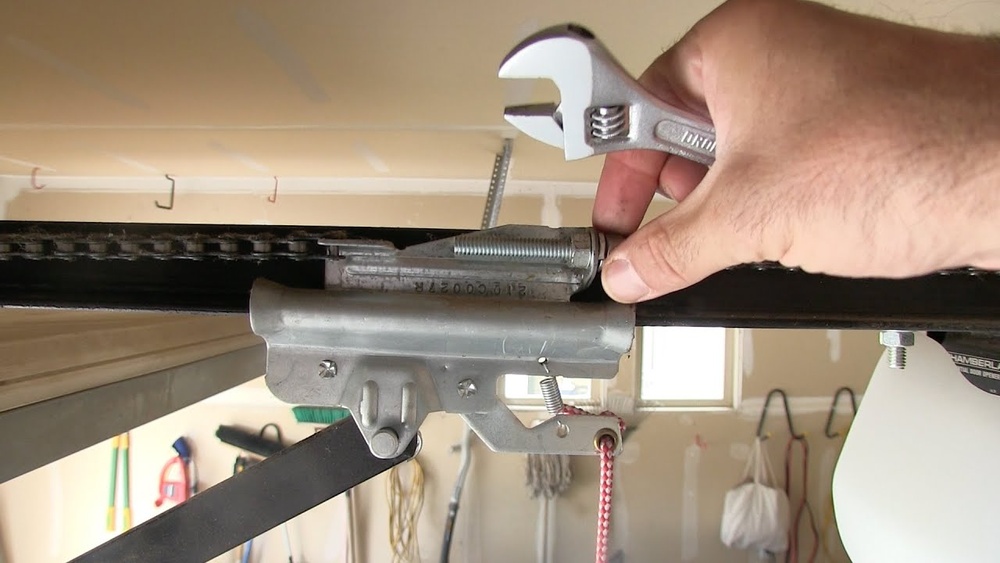
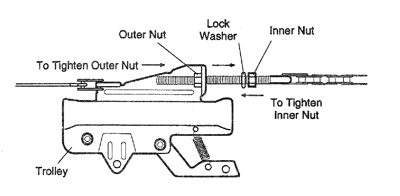
- Locate the adjustment bolt. It’s usually near the trolley (the part that moves with the chain).
- Loosen the locking nut with your wrench.
- Turn the adjustment nut:
- Clockwise to tighten the chain (reduce slack)
- Counterclockwise to loosen the chain (add slack)
- Check the slack again. Aim for 1/2 inch to 3/4 inch.
- Tighten the locking nut to secure the adjustment.
- Plug in the opener and test the door.
Quick Reference Table
Here’s a snapshot of chain slack and what it means:
| Chain Slack | What It Means | Action Needed |
|---|---|---|
| Less than 1/2 inch | Too tight | Loosen the chain |
| 1/2 to 3/4 inch | Just right | No action |
| Over 3/4 inch | Too loose | Tighten the chain |
How Often Should You Check Chain Tension?
Most experts recommend checking your garage door chain tension every 6 to 12 months. But you should check sooner if:
- You hear new noises
- The door moves strangely
- You notice the chain sagging
Regular checks can catch problems early and save money on repairs.
Credit: www.naturalhandyman.com
Common Mistakes To Avoid
Beginners often make the same errors when adjusting chain tension:
- Over-tightening: This is the most common mistake. Too much tension can wear out the motor and break the chain.
- Forgetting to secure the locking nut: If you don’t tighten the locking nut, the chain can loosen again quickly.
- Ignoring the opener type: Not all openers are the same. Belt-driven models need different adjustments.
- Not unplugging the opener: This is a safety risk. Always unplug before working.
- Not checking the rail alignment: Sometimes, a problem with the rail can look like a chain issue.
Take time to do it right and check your owner’s manual for your specific model.
Chain Drive Vs. Other Garage Door Opener Types
Many garage doors use chain drives, but some use belts or screws. Here’s a quick comparison:
| Opener Type | Noise Level | Maintenance | Cost |
|---|---|---|---|
| Chain Drive | High | Medium | Low |
| Belt Drive | Low | Low | Medium |
| Screw Drive | Medium | Medium | Medium |
Chain drives are the most common because they’re affordable and durable, but they need more attention to chain tension.
Lubrication And Chain Maintenance
Proper chain tension is only part of the solution. Lubrication keeps your chain moving smoothly and reduces noise.
- Use a silicone-based spray or garage door lubricant.
- Avoid using grease or WD-40, as these attract dust.
- Apply lubricant to the chain every 6 months.
Wipe off excess lubricant with a cloth. This small step can double the life of your chain and opener.
When To Call A Professional
Some problems need a pro. Call an expert if:
- The chain is damaged or rusted
- You see broken sprockets or loose rails
- Adjusting tension doesn’t fix the problem
Trying to force repairs can make things worse or unsafe. Professionals have special tools and experience.
Real-world Example: Cost Of Ignoring Chain Tension
Let’s look at what can happen if you ignore chain tension.
Example:
A homeowner notices the garage door shakes and makes noise, but ignores it. After six months, the chain jumps off the rail. The repair cost is:
- Service call: $80
- New chain: $45
- Labor: $60
Total: $185 (plus Time Lost And Frustration)
If the tension was checked and adjusted sooner, the cost would be $0.
Practical Tips For Beginners
- Mark the position of the adjustment nut before starting. This helps you track changes.
- Take a photo before you adjust. If you get confused, you can reset to the original position.
- Don’t rush. Small adjustments (a quarter turn at a time) are best.
- Test the door after every adjustment.
- If you’re not sure, watch an official video from your opener’s manufacturer.
Credit: www.diychatroom.com
Understanding Chain Wear And Replacement
Chains last a long time, but not forever. Signs of chain wear include:
- Rust spots
- Bent or broken links
- Chain jumps the rail even after adjusting tension
A worn-out chain should be replaced, not just tightened. Most chains last 10-15 years with regular care. If you use your garage door many times a day, check the chain more often.
Here’s a comparison of service intervals for garage door chains:
| Usage Level | Check Tension | Replace Chain |
|---|---|---|
| Light (1-2 uses/day) | Every 12 months | 12-15 years |
| Medium (3-5 uses/day) | Every 6 months | 8-12 years |
| Heavy (6+ uses/day) | Every 3 months | 5-8 years |
If your chain is wearing out faster, double-check tension and lubrication habits.
Environmental Factors That Affect Chain Tension
Some homeowners overlook how climate and environment can affect the chain:
- Humidity can cause rust and make the chain stick.
- Extreme heat or cold can change metal tension.
- Dust and dirt can clog the chain, increasing wear.
If your garage isn’t climate controlled, check chain tension more often and keep the chain clean.
Chain Tension And Garage Door Safety
Proper chain tension isn’t just about quiet operation—it’s about safety. A loose chain can cause the door to stop halfway, or even fall. A too-tight chain can cause the opener to fail suddenly.
Modern openers have safety sensors that stop the door if something is wrong. But correct chain tension is your first line of defense. If you notice your door reversing or stopping for no reason, check the chain before calling for service.
Frequently Asked Questions
What Happens If My Garage Door Chain Is Too Tight?
A chain that’s too tight puts extra stress on the motor, sprockets, and rail. This can cause premature wear or even break the chain. You may also notice the door moving more slowly and the opener making a whining noise.
How Do I Know If My Chain Is Too Loose?
A chain that sags more than 3/4 inch at the midpoint is too loose. You might hear rattling or see the chain jump during door movement. This can cause uneven opening and closing.
Can I Use Regular Grease On My Garage Door Chain?
No. Regular grease attracts dust and dirt, which can gum up the chain. Use a silicone-based lubricant made for garage doors for best results.
How Often Should I Lubricate The Garage Door Chain?
Lubricate the chain every 6 months, or more often if you live in a dusty or humid area. Proper lubrication reduces noise and wear.
Where Can I Find More Details On My Specific Opener Model?
Check your owner’s manual or the manufacturer’s website. For general information, the Wikipedia page on garage door openers has a good overview.
Maintaining the right garage door chain tension is simple but important. With regular checks, a few tools, and smart habits, you can keep your garage door running smoothly and avoid expensive repairs. Remember: a few minutes of care today can save a lot of trouble tomorrow.

Credit: www.youtube.com