
Garage Door Opener Horsepower
Choosing the right garage door opener horsepower can feel confusing, especially if you’re new to home improvement. Many homeowners don’t realize how much horsepower matters for smooth, reliable door operation. If your opener is too weak, it may struggle or wear out quickly. If it’s too strong, you might spend more money than necessary. This guide will help you understand horsepower, see what’s best for your garage, and avoid common mistakes.
What Is Horsepower In Garage Door Openers?
Horsepower (HP) is a measurement of power. In garage door openers, it shows how strong the motor is. A higher number means the opener can lift heavier doors with less stress. Most residential openers use motors between 1/3 HP and 1-1/2 HP.
- 1/3 HP: Usually for single, lightweight doors.
- 1/2 HP: Good for standard double doors.
- 3/4 HP and above: Needed for oversized, heavy, or custom doors.
Horsepower affects both the lifting power and the lifespan of the opener. If you choose the right HP, your opener lasts longer and works smoothly.
Why Horsepower Matters For Garage Door Openers
Many people focus on features like remotes or Wi-Fi. But the horsepower rating is just as important. Here’s why:
- Lifting Power: More HP means the opener can lift heavier doors without struggling.
- Durability: A motor that’s too small wears out faster.
- Safety: The right HP helps prevent the door from getting stuck or falling.
- Noise Level: Underpowered openers often make more noise.
If you pick the wrong HP, you may face costly repairs or even safety hazards.
Common Garage Door Sizes And Weights
Before choosing HP, you need to know your door’s size and material. Let’s look at typical examples:
| Door Type | Size (ft) | Material | Average Weight (lbs) |
|---|---|---|---|
| Single | 8×7 | Steel | 130 |
| Single | 8×7 | Wood | 180 |
| Double | 16×7 | Steel | 225 |
| Double | 16×7 | Wood | 350 |
| Oversized | 18×8 | Custom/Steel | 400+ |
Heavier doors need more HP. For example, a double wooden door needs at least 3/4 HP for reliable operation.
Types Of Garage Door Opener Motors
There are two main types of motors in garage door openers:
- AC Motors: Older style, often louder, but reliable.
- DC Motors: Quieter, can support soft start and stop features, often used in new models.
Most new openers use DC motors for better noise control and energy efficiency.
How To Choose The Right Horsepower
Choosing the right HP is easier than you think. Here’s a practical way to decide:
1. Identify Your Door Type
- Single, lightweight doors (steel or aluminum): 1/3 HP is usually enough.
- Standard double doors (steel): 1/2 HP is the most common choice.
- Heavy or insulated doors (wood, carriage style, or extra tall): 3/4 HP or more.
2. Consider Door Use
- Light use (1-2 cycles per day): Lower HP can work.
- Frequent use (multiple cars, families, or busy garages): Higher HP is better for durability.
3. Think About Future Needs
- If you plan to insulate your garage or upgrade your door, get a bit more HP now.
- A stronger opener will handle upgrades without problems.
4. Check For Additional Features
- Battery backup: Needs a reliable motor, often DC.
- Smart features: Usually available with all HP levels, but check compatibility.
Comparison: Common Horsepower Options
Here is a quick look at what each HP range offers:
| Horsepower | Best For | Pros | Cons |
|---|---|---|---|
| 1/3 HP | Single, lightweight doors | Low cost, energy efficient | Not for heavy doors |
| 1/2 HP | Double doors, most homes | Versatile, widely available | May struggle with heavy doors |
| 3/4 HP | Heavy, insulated, or frequent use | Strong, reliable | Costs more, uses more power |
| 1 HP+ | Oversized or custom doors | Maximum strength | Higher price, overkill for most homes |
Many experts suggest choosing 1/2 HP for most double garage doors. If you have a unique or heavy door, move up to 3/4 HP.
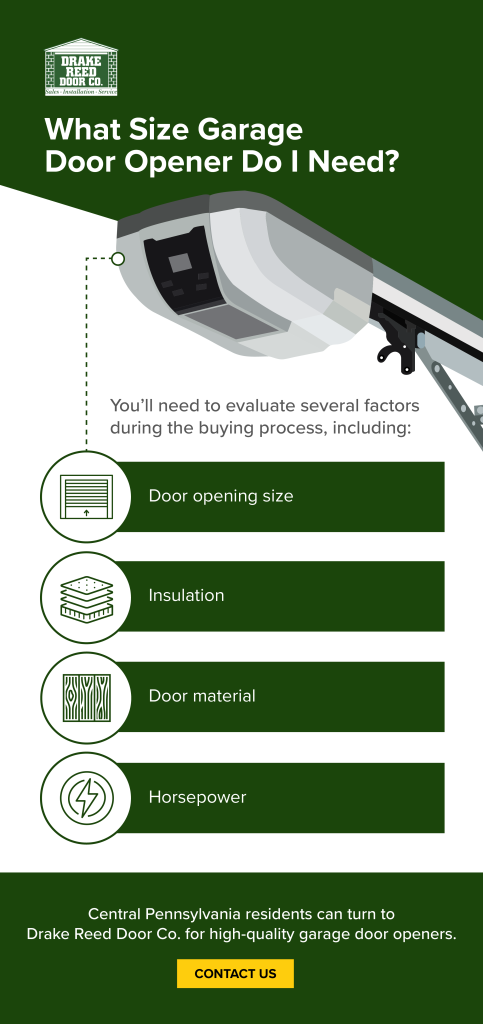
Credit: drakereeddoorco.com
Practical Examples
Let’s look at some real-world examples:
- A small steel single door (8×7 feet, 130 lbs): A 1/3 HP opener works well. It’s quiet and budget-friendly.
- A standard double steel door (16×7 feet, 225 lbs): A 1/2 HP opener is the best balance of power and cost.
- A wooden double door (16×7 feet, 350 lbs): A 3/4 HP opener is needed to handle the extra weight.
- Large, custom doors (18×8 feet, 400+ lbs): Choose at least 1 HP for reliable and safe lifting.
If you’re not sure, always choose the higher HP within your budget.
Common Mistakes When Choosing Garage Door Opener Horsepower
Many homeowners make simple mistakes that lead to problems later. Here are the most common ones:
- Underestimating Door Weight: Doors with windows or insulation weigh more. Always check your door’s specs.
- Ignoring Long-Term Use: Frequent use or future upgrades need more HP.
- Choosing Only by Price: The cheapest opener often has the lowest HP.
- Overpowering Small Doors: Too much HP is unnecessary for a light door and may increase noise.
- Forgetting About Springs: Weak or old springs put more strain on the opener.
A good rule: It’s safer to have a little extra HP than not enough.
The Relationship Between Opener Type And Horsepower
Your opener’s drive system also affects the HP you need:
- Chain-drive: Durable, works well with any HP.
- Belt-drive: Quieter, but needs enough HP for heavy doors.
- Screw-drive: Good for wide doors, best with higher HP.
If you want a very quiet garage, choose a belt-drive with DC motor and enough HP for your door’s weight.
How Horsepower Affects Opener Lifespan
A motor that matches your door’s needs will last longer. If the opener struggles, it heats up and wears out faster. But if you buy an opener with too much HP for a small door, you’re spending extra for no real benefit.
- Right HP: Smooth operation, less wear, longer life.
- Too Low HP: Frequent repairs, early failure.
- Too High HP: No damage, but higher cost and sometimes more noise.
Safety And Code Compliance
Safety is a key reason to match HP to your door:
- Auto-reverse features: Work better with the right HP.
- UL 325 standard: Requires safety sensors, but a strong enough opener helps sensors work properly.
- Local codes: Some cities require certain HP for large or heavy doors.
Always check your local codes or ask a professional if you’re unsure.
Cost Vs. Value: Is Higher Horsepower Worth It?
Higher HP models cost more, but not always much more. Here’s what to consider:
- 1/3 HP openers: $120–$150 for basic models.
- 1/2 HP openers: $150–$220, best value for most homes.
- 3/4 HP and higher: $200–$350, best for heavy or oversized doors.
If your door is heavy or you use your garage often, the extra cost for higher HP pays off in reliability and fewer repairs.
Tips For Homeowners: Getting The Most From Your Garage Door Opener
- Know your door’s weight and material before buying.
- Test your springs: If you can lift the door easily by hand, your springs are good. If not, fix them before installing a new opener.
- Check the warranty: Some brands offer longer coverage on higher HP models.
- Choose professional installation for large or heavy doors.
- Look for ENERGY STAR or efficient models if you want to save on electricity.
Non-obvious Insights For Beginners
- Insulated doors are often much heavier than standard steel doors. Even if your door looks light, insulation adds a lot of weight.
- Garage door balance is as important as horsepower. A well-balanced door needs much less force to open, reducing wear on the opener.
- Opener speed is not just about HP. Some high-HP models move slowly for safety, so check speed ratings if you want fast operation.

Credit: www.lowes.com
When To Upgrade Your Garage Door Opener
Consider a new opener with more HP if:
- Your current opener struggles or makes grinding noises.
- You added insulation or changed to a heavier door.
- The opener is over 10 years old or lacks modern safety features.
A new, right-sized opener can solve many problems and add features like smart controls or battery backup.
External Resource
For more detailed standards and safety information, visit the Wikipedia page on Garage Door Openers.

Credit: www.lowes.com
Frequently Asked Questions
What Horsepower Do I Need For A Two-car Garage Door?
Most two-car (double) garage doors work best with a 1/2 HP opener. If your door is heavy, insulated, or made of wood, consider a 3/4 HP model for better performance and durability.
Can Too Much Horsepower Damage My Garage Door?
No, using a higher HP opener won’t damage your door. But it may be louder and cost more. For very light doors, too much HP isn’t necessary.
How Do I Know My Garage Door’s Weight?
Check your door’s manual, look for a label on the door, or contact the manufacturer. As a rough guide, steel doors are lighter, wood doors are heavier, and insulated doors add weight.
Does Horsepower Affect Garage Door Opener Noise?
Not directly. Noise is more affected by the drive type (chain, belt, screw) and motor quality. However, an underpowered opener may strain and make more noise.
Should I Hire A Professional To Install A High-horsepower Opener?
If your door is large, heavy, or you’re unsure about installation, it’s wise to hire a pro. They will ensure the opener is installed safely and meets local codes.
A well-chosen garage door opener horsepower means smooth operation, fewer repairs, and peace of mind. Take time to match HP to your door’s needs, and you’ll enjoy years of reliable service.