
Choosing the right garage door size is more than just matching your car’s dimensions. It affects your home’s look, your daily convenience, and even your property value. Many homeowners feel confused when they see so many garage door sizes on the market.
If you are planning a new garage, replacing an old door, or building a new home, understanding standard and custom garage door sizes is essential.
You’ll find that garage doors are not one-size-fits-all. Some are perfect for small cars, others for SUVs or workshops. Some people need double garage doors, while others need extra height for RVs. This guide will help you understand the different garage door sizes, how to measure your opening, and what to consider before you buy.
Standard Garage Door Sizes
Most American homes use a few standard garage door sizes. These sizes fit the majority of vehicles and garage types.
Single-car Garage Doors
A single-car garage door is for one vehicle. These are the most common in older homes or small houses.
- Width: 8 feet, 9 feet, or 10 feet
- Height: 7 feet or 8 feet
The most popular size is 9 feet wide by 7 feet high. This size fits most sedans, small SUVs, and pickup trucks. If you have a larger vehicle, a 10-foot-wide door is more comfortable.
Double-car Garage Doors
If you want to park two cars side by side, you need a double-car garage door.
- Width: 16 feet, sometimes 14 or 18 feet
- Height: 7 feet or 8 feet
The most common double-car door is 16 feet wide by 7 feet high. This allows two midsize cars or a car and a small SUV to fit comfortably.
Rv And Oversize Garage Doors
Some homes need bigger doors for RVs, boats, or tall vehicles. These doors are much larger than standard sizes.
- Width: 10 feet, 12 feet, or even more
- Height: 10 feet, 12 feet, or more
A typical RV garage door might be 12 feet wide by 12 feet high. Always measure your vehicle and add extra space for mirrors and roof racks.
Custom Garage Door Sizes
Not every garage fits a standard door. Older homes, custom-built garages, or workshops sometimes need custom sizes.
- Custom widths and heights are available from most manufacturers
- You pay more for a custom door, but it will fit your space perfectly
- Custom sizes are common for unique vehicles, home workshops, or unusual architecture
Before ordering a custom size, measure your garage carefully. Professional installers can help you avoid costly mistakes.

Credit: www.homedit.com
How To Measure For A Garage Door
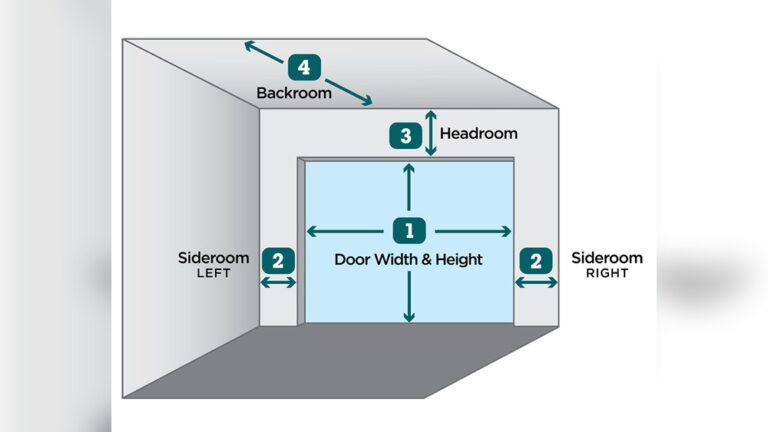
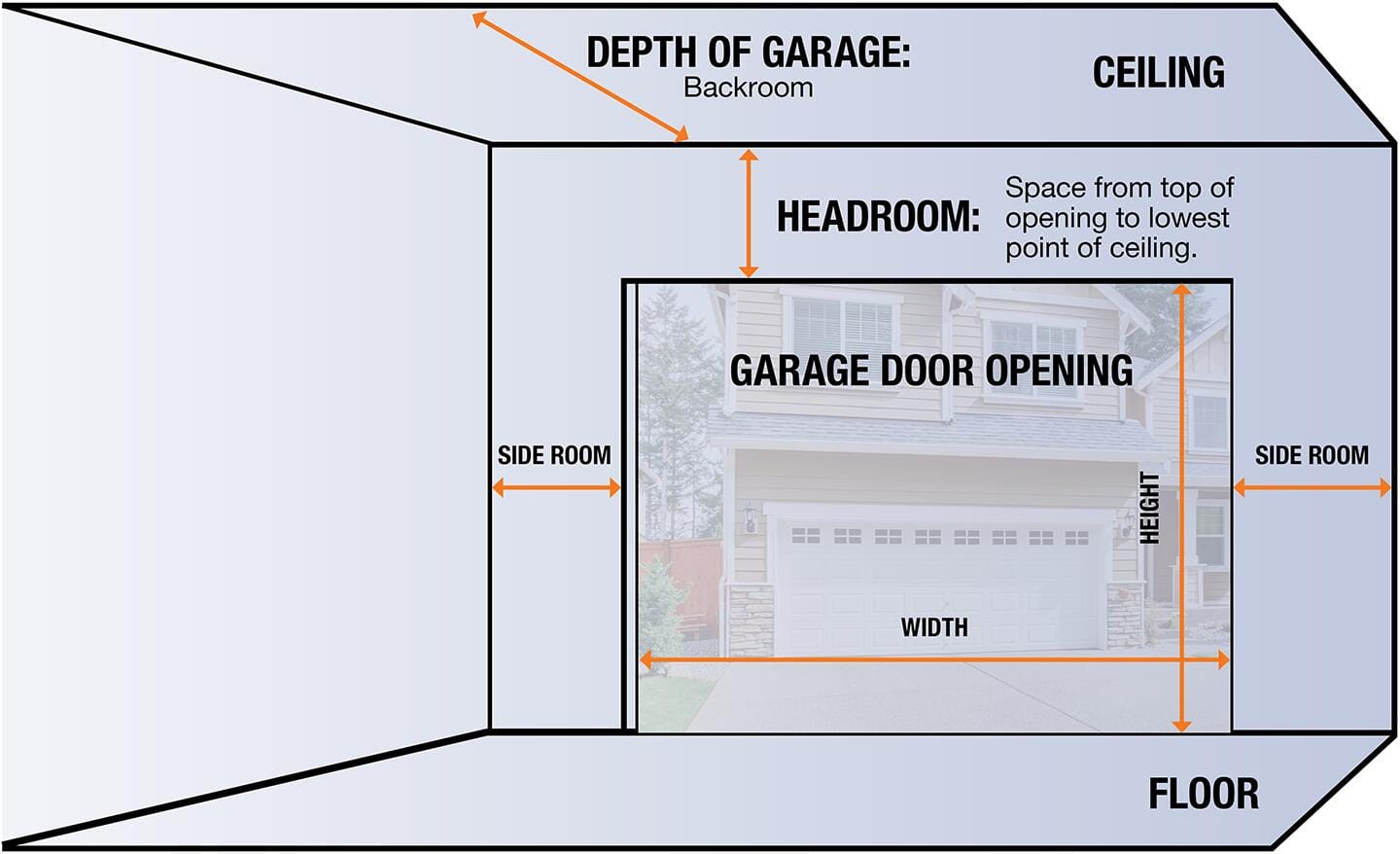
Measuring your garage opening correctly is critical. Even a small mistake can mean your new door won’t fit. Here’s how to do it:
- Width: Measure the finished opening from left to right, at the widest point.
- Height: Measure from the floor to the lowest point at the top of the opening.
- Side Room: Check the space on each side of the opening. You need at least 3.5 inches for tracks and hardware.
- Headroom: Measure from the top of the opening to the ceiling. Standard doors need 10–12 inches of headroom.
- Backroom: Measure from the opening to the back wall. The door needs space to roll up.
Tip: Always measure in several places and use the smallest measurement. If you’re not sure, get a professional measurement.
Common Garage Door Sizes: Quick Comparison
Here’s a quick reference for standard garage door sizes:
| Type | Common Widths (ft) | Common Heights (ft) | Best For |
|---|---|---|---|
| Single-car | 8, 9, 10 | 7, 8 | Most cars, small trucks, compact SUVs |
| Double-car | 14, 16, 18 | 7, 8 | Two vehicles, large SUVs, family vans |
| RV/Oversize | 10, 12+ | 10, 12+ | RVs, boats, tall vehicles |
Factors That Affect Garage Door Size Choice
Choosing the right size is about more than fitting your car. Consider these points:
- Type of Vehicle: Full-size trucks, SUVs, or vans may need a wider or taller door.
- Number of Vehicles: Do you need space for one car, two, or more?
- Storage Needs: If you store bikes, tools, or other items, you may want extra width.
- Future Needs: Think about cars you may own later. A slightly bigger door can avoid future problems.
- Building Codes: Some cities have rules about garage sizes. Always check local codes before you buy.
Pros And Cons: Single Vs. Double Garage Doors
Some homeowners choose two single doors for a double garage. Others prefer one big double door. Here’s how they compare:
| Feature | Single Doors | Double Door |
|---|---|---|
| Appearance | Traditional look, more symmetry | Modern, wide opening |
| Convenience | Each car has its own door | Easier for large vehicles, less risk of hitting center post |
| Cost | Two openers, more hardware | One opener, fewer parts |
| Breakdown Impact | One door can still work if other breaks | If broken, both cars stuck |
Tip: Double doors are easier for large vehicles, but two singles offer more flexibility if one opener fails.
Height Matters: Why Door Height Is Important
Most garage doors are 7 feet high. But modern vehicles are taller than before. If you drive a large SUV, van, or pickup, consider an 8-foot or taller door.
- Standard Height: 7 feet fits most cars and midsize SUVs
- Taller Vehicles: 8 feet is better for large SUVs, some vans, and trucks
- RV/Boat: 10 feet or more for recreational vehicles
Non-obvious insight: Don’t forget about roof racks, bike mounts, or raised suspension. Even if your car fits today, accessories can make it too tall for a standard door.
Special Considerations For Unique Vehicles
Some homeowners have special needs:
- Lifted trucks: May need 8-foot or higher doors
- Boats or trailers: Require extra width and height
- Golf carts or motorcycles: A smaller side door can be helpful
Practical advice: If you plan to add a car lift or store a tall trailer, measure both your vehicle and the equipment before picking a door size.
Credit: www.homedepot.com
Regional Differences In Garage Door Sizes
Garage door sizes can vary by region or builder. In the Midwest and South, 8-foot doors are common for both width and height. In older Northeastern cities, garages may be smaller due to older building codes. Always check what’s typical in your area if you want to match local style.
When To Choose A Custom Size
A custom garage door is the best choice when:
- Your home is historic or has a unique design
- Your garage opening is not a standard size
- You want to maximize storage or workspace
- You need an exact fit for security or weatherproofing
Custom doors cost more and take longer to order, but they solve problems that standard doors cannot.

Credit: aprodoor.com
Cost Considerations
Garage door price depends on size, material, and features:
- Standard single door: $600–$1,500 installed
- Standard double door: $1,200–$2,500 installed
- Custom doors: $2,000 and up
Oversize or custom doors cost more due to extra materials and special hardware. Don’t forget to budget for insulation, windows, and openers.
Non-obvious insight: Sometimes, a slightly larger standard door is cheaper than a small custom door. Check standard sizes first before ordering custom.
Measuring Mistakes To Avoid
Many people make errors when measuring their garage for a new door. Avoid these common mistakes:
- Measuring only the door, not the full opening
- Forgetting to check headroom or side room
- Not allowing space for tracks or openers
- Ignoring sloped floors or uneven walls
A professional installer can double-check your measurements and spot problems before you buy.
Future-proofing Your Garage Door Choice
Think ahead before you buy. Here’s how to make a choice that lasts:
- Choose a slightly wider or taller door if you might get a bigger car
- Consider how your needs might change (workshop, storage, new drivers)
- Pick a size that is common in your area for better resale value
Practical tip: A little extra space costs less today than a full replacement later.
Garage Door Sizes And Home Value
A well-chosen garage door can boost your home’s value:
- Curb appeal: A door that fits well looks better and attracts buyers
- Function: Easy parking and storage are big selling points
- Modern sizes: Buyers prefer doors that fit today’s vehicles
If you plan to sell your home in the next few years, choose a size that suits most buyers in your area.
Insulation And Materials
Larger doors often need better insulation, especially in cold or hot climates. Insulation keeps your garage more comfortable and protects your belongings.
- Steel doors: Durable, common, often insulated
- Wood doors: Beautiful but need more care
- Aluminum: Light, resists rust, but less insulating
Extra tip: Thicker insulation is important for tall or wide doors, which can let in more air.
Garage Door Size And Opener Compatibility
Not all garage door openers can lift heavy or large doors. When you choose a bigger door:
- Check the opener’s horsepower rating (1/2 HP for single, 3/4 HP or more for double or RV doors)
- Chain, belt, or screw drive openers all work, but heavier doors need stronger openers
Don’t forget: If you upgrade your door, you may need a new opener too.
Example Scenarios
- Compact car in a small home: An 8×7 foot single door is enough.
- Family with two SUVs: A 16×8 foot double door is more comfortable.
- RV owner: Needs a 12×12 foot oversize door, possibly custom built.
- Workshop plus car storage: Choose a double door for cars and a smaller single door for workshop access.
These examples show how needs can change the best door size for each situation.
Frequently Asked Questions
What Is The Most Common Garage Door Size?
The most common size in the US is 9 feet wide by 7 feet high for single doors and 16 feet wide by 7 feet high for double doors. These fit most cars and small SUVs.
How Do I Measure My Garage Door Opening Correctly?
Measure the width and height of the finished opening, check side room (space on sides), headroom (space above), and backroom (space behind). Measure in several places and use the smallest number. For complex garages, ask a pro for help.
Can I Install A Bigger Garage Door In An Older Home?
Often yes, but you may need to widen or raise the opening. This can be costly if walls or wiring must be moved. Always check with a local contractor and see your city’s building codes before making changes.
Do I Need A Custom Garage Door?
You need a custom size if your opening is not standard, you have a unique vehicle, or your home’s design demands a special look. For most people, standard sizes are enough and cost less.
Where Can I Find More Information About Garage Door Sizes?
The Home Depot Garage Door Size Guide has more charts and examples for different needs.
Picking the right garage door size is a smart investment in your home’s value and your daily comfort. If you plan ahead, measure carefully, and consider future needs, you’ll have a garage door that works well for many years.