
Building a parking garage is a major investment, and the cost to build a parking garage can vary a lot. Whether you are planning a small structure for an apartment building or a large garage for a busy city area, understanding the cost drivers will save you time and money. This article will break down the main factors, give real numbers, and answer common questions in clear language. If you are a beginner or just curious, keep reading to learn what really affects the price of building a parking garage.
What Makes Up The Cost Of A Parking Garage?
Several factors come together to create the final price. Each one can change the total cost by a lot, so it’s important to know what to expect.
- Size: More spaces mean higher costs, but the price per space can go down as the garage gets larger.
- Location: Land prices, local labor rates, and city rules can increase costs.
- Design: Simple garages are cheaper. Fancy designs, extra features, or green technology will cost more.
- Materials: Concrete is common but steel or pre-cast panels change the price.
- Number of Levels: Multi-story garages cost more per space than single-level, but they save land.
- Amenities: Lighting, elevators, security systems, and electric vehicle (EV) charging stations increase costs.
- Site Preparation: Building on a hill, old site, or in a flood zone needs more work and money.
Typical Cost Ranges In The Us
The cost to build a parking garage in the US can vary widely based on the factors above. Here’s a look at typical numbers for 2024.
| Garage Type | Cost Per Space | Total Cost (100 Spaces) |
|---|---|---|
| Above-Ground, Basic | $18,000 – $25,000 | $1.8M – $2.5M |
| Above-Ground, Mid-Range | $25,000 – $35,000 | $2.5M – $3.5M |
| Underground | $35,000 – $55,000 | $3.5M – $5.5M |
These numbers are for a basic parking garage. Costs can be higher if you need more features or are building in a high-cost city like New York or San Francisco.

Credit: homeguide.com
Breakdown Of Main Cost Drivers
1. Land And Site Preparation
Land is often the biggest part of the budget, especially in cities. Some key points:
- Urban areas: Land may cost millions per acre.
- Suburbs: Land is cheaper, but you may need more land for a larger garage.
- Site work: Clearing old buildings, grading, and soil testing add cost.
Building on a flat, empty lot costs less than building on a hill or an old industrial site. Site issues can add $1,000 to $5,000 per space.
2. Structural Design And Materials
The way a garage is built changes the price:
- Cast-in-place concrete: Durable, common, mid-priced.
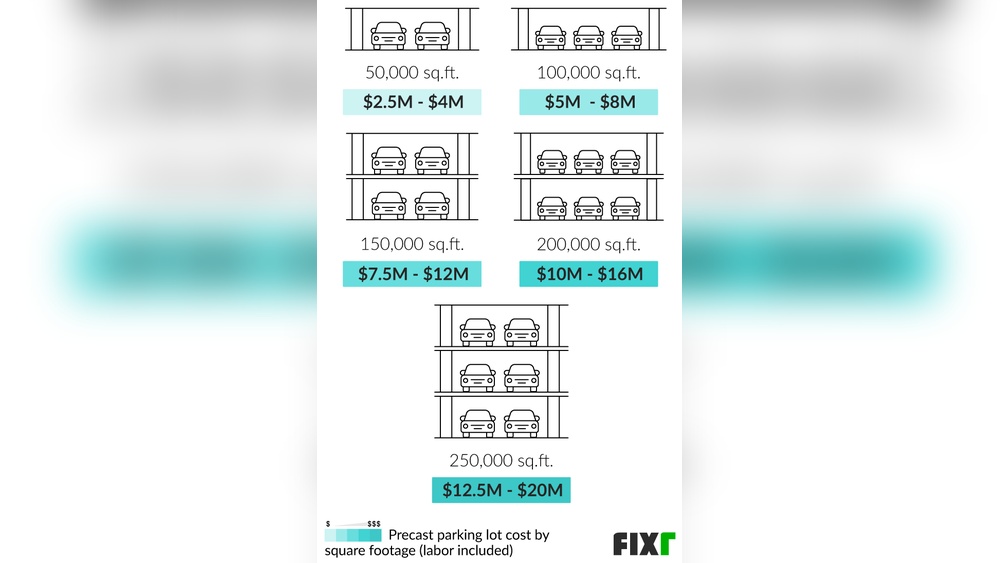
- Precast concrete panels: Faster to install, may cost more upfront but save time.
- Steel frame: Lighter, sometimes used for small or modular garages.
The choice depends on local construction skills, weather, and speed needs. Precast can be 10-15% more expensive per space but is faster to build.
3. Number Of Levels
A multi-story garage uses less land but costs more to build per space due to stronger foundations and safety needs. Adding ramps, elevators, and more structure increases costs.
Example: A two-level garage may cost 15% more per space than a single level, but save 50% in land use.
4. Local Labor And Building Codes
Labor costs are higher in big cities and unionized markets. Local rules may require:
- Stronger structures (earthquake or hurricane zones)
- Accessibility features (ramps, elevators, wider spots)
- Fire safety systems
Rules can add $2,000 to $5,000 per space, especially in tough cities.
5. Amenities And Technology
Extras that add comfort, safety, or value:
- Lighting: Good lighting is a must, especially for security.
- Security cameras: Needed in busy areas, add $100-$300 per space.
- EV chargers: Each charger can add $3,000 to $7,000.
- Elevators: Each elevator may cost $80,000 to $150,000.
- Solar panels: Going green adds upfront cost but saves energy later.
A basic garage may skip these, but most city garages include at least some.
Real-world Example: Small Vs Large Garage
Here’s a simple comparison for a 100-space garage and a 500-space garage.
| Garage Size | Type | Cost Per Space | Total Cost |
|---|---|---|---|
| 100 Spaces | Above-Ground, Basic | $20,000 | $2,000,000 |
| 500 Spaces | Above-Ground, Basic | $18,000 | $9,000,000 |
Notice that the cost per space drops as the garage gets bigger. This is called “economies of scale.” Larger projects often get bulk discounts on materials and more efficient labor.

Credit: www.fixr.com
Underground Vs Above-ground: Big Price Difference
Building Underground Is Much More Expensive Than Above Ground. Why?
- Excavation: Digging deep costs a lot.
- Waterproofing: Needed to keep water out.
- Ventilation and lighting: Underground needs more systems.
- Structural support: Must hold up the ground above.
On average, an underground garage can cost 1. 5 to 2 times more per space than above ground. For example, a 100-space underground garage might cost $4–5 million, compared to $2 million for above ground.
Hidden Costs Beginners Often Miss
Many people focus only on the construction cost and forget about:
- Permits and fees: Cities charge for permits, impact fees, and inspections. This can be $50,000 to $300,000 or more.
- Architect and engineer fees: Planning, design, and supervision are 5–15% of total cost.
- Financing costs: Loans have interest and fees.
- Insurance: Required during construction and for the finished garage.
- Maintenance: Ongoing costs for cleaning, repairs, and upgrades.
These costs add up. Make sure to include them in your budget.
Cost-saving Tips For Building A Parking Garage
If your budget is tight, these strategies can help:
- Choose simple designs: Skip fancy facades and keep the layout basic.
- Build above ground if possible: Avoid underground unless land is very expensive.
- Standardize: Use common sizes and materials to get better prices.
- Build larger: Bigger projects often cost less per space.
- Work with experienced contractors: They know how to avoid costly mistakes.
A smart tip: Always set aside a 10% “contingency” fund for surprises.
Common Mistakes When Budgeting
Beginners often make these errors:
- Underestimating site prep costs, especially for old or sloped land.
- Forgetting about permits and city fees.
- Not planning for future needs, like EV charging or extra security.
- Choosing a design that is too complex for the budget.
Talk to experienced builders and check local prices before starting.
Financing Options
Most parking garages are paid for with a mix of:
- Loans: From banks or special building funds.
- Bonds: Cities may issue bonds for public garages.
- Private investment: In some cases, private companies fund and operate garages.
Interest rates and payback plans affect the total cost, so compare your options carefully.
How Long Does It Take To Build A Parking Garage?
The timeline depends on size, design, and site. Typical time frames are:
- Small garage (100 spaces): 6–9 months
- Medium garage (300–500 spaces): 9–14 months
- Large/complex garage: 14–24 months
Delays are common if you run into bad weather, permit problems, or supply shortages. Planning well helps avoid extra costs.
Comparing Parking Garage Costs To Surface Lots
Some property owners wonder if it’s better to build a simple surface lot instead. Here’s a quick comparison:
| Type | Cost Per Space | Land Needed (approx.) |
|---|---|---|
| Parking Garage | $18,000 – $55,000 | Small |
| Surface Lot | $3,000 – $7,000 | Much Larger |
A surface lot is much cheaper to build but uses more land. In busy cities, land is too valuable to use for a surface lot, so garages are the only choice.
Practical Example: Budget For A 200-space Garage
Let’s break down a sample budget for a 200-space, above-ground, mid-range garage:
- Construction (at $28,000 per space): $5,600,000
- Site Preparation: $250,000
- Permits and Fees: $100,000
- Design/Engineering: $400,000
- Lighting/Security: $150,000
- Contingency (10%): $650,000
Total Estimate: $7,150,000
Remember, actual costs can be higher or lower depending on your location and choices.

Credit: homeguide.com
How To Get An Accurate Estimate
For the best results:
- Hire a local architect or builder with experience in garages.
- Ask for detailed bids, not just rough numbers.
- Visit other garages in your area to compare.
- Factor in all extra costs, not just construction.
You can also check out resources like the Wikipedia Parking Garage page for more background.
Frequently Asked Questions
How Much Does It Cost To Build A Single Parking Space In A Garage?
On average, one parking space in a garage costs between $18,000 and $55,000 in the US. The price depends on whether the garage is above ground, underground, or has extra features like elevators or security.
Why Are Underground Garages So Expensive?
Underground garages require more digging, strong walls, waterproofing, and special systems for air and water. All these add to the price, making underground garages 1.5 to 2 times more expensive than above-ground ones.
Are There Ways To Reduce Parking Garage Costs?
Yes. Keep the design simple, build above ground if possible, avoid extra features unless needed, and work with experienced local builders. Building larger garages can also lower the cost per space.
How Long Does It Take To Pay Off A Parking Garage Investment?
Most garages are paid off in 15–30 years, depending on usage, parking fees, and financing. Busy locations with high demand pay off faster.
What Are The Main Ongoing Costs After Building A Parking Garage?
You will need to pay for cleaning, repairs, lighting, security, and insurance. Budget 2–4% of the garage’s construction cost each year for maintenance.
Building a parking garage is a big decision. Knowing the real costs, what factors matter, and how to save money will help you make smart choices for your project. Whether you need a small garage for your building or a large structure for city parking, careful planning and research are key to success.