
Adjusting garage door springs is a task many homeowners face, but it can feel intimidating if you’re new to home repairs. Garage door springs play a big role—they hold the weight of the door and make it easy to open and close.
If the springs are too loose or tight, your door won’t work properly, and it could even become dangerous. This guide shows you step-by-step how to adjust garage door springs safely, using clear explanations and practical tips. You’ll learn what tools to use, how to spot problems, and how to avoid mistakes that beginners often make.
Understanding Garage Door Springs
Garage doors usually have two types of springs:
- Torsion springs sit above the door and twist to lift it.
- Extension springs stretch along the sides to help raise the door.
Most modern doors use torsion springs because they are safer and last longer. Extension springs are common in older models or lighter doors.
Key Differences
Here’s a simple comparison:
| Spring Type | Location | Safety | Average Lifespan |
|---|---|---|---|
| Torsion | Above door | Safer (less risk of flying parts) | 15,000 cycles |
| Extension | Along sides | More risk (need safety cables) | 10,000 cycles |
Cycles means how many times you can open and close the door before the spring wears out. One cycle = one open and close.
Why Adjust Garage Door Springs?
If your garage door:
- Opens too fast or closes too quickly
- Doesn’t stay open
- Feels heavy to lift
- Makes loud noises
It may need spring adjustment. Properly adjusted springs keep your door balanced and safe.
Safety Precautions Before Adjusting
Garage door springs are under high tension. Adjusting them wrongly can cause injury.
Follow these safety tips:
- Always wear safety glasses and gloves.
- Use the right tools (never use screwdrivers instead of winding bars).
- Disconnect the garage door opener before starting.
- Work with a friend if possible for extra support.
- If you feel unsure, call a professional.
Fact: Over 20,000 garage door injuries happen every year in the US, many from spring issues.

Credit: www.wikihow.com
Tools And Materials Needed
Before you start, gather these tools:
- Winding bars (for torsion springs)
- Adjustable wrench
- Vice grips
- Step ladder
- Safety glasses
- Gloves
- Tape measure
For extension springs, you might need:
- Pliers
- Safety cables
- Replacement springs (if needed)
Having the right tools makes the job safer and faster.
How To Identify The Correct Spring Type
Check your garage door:
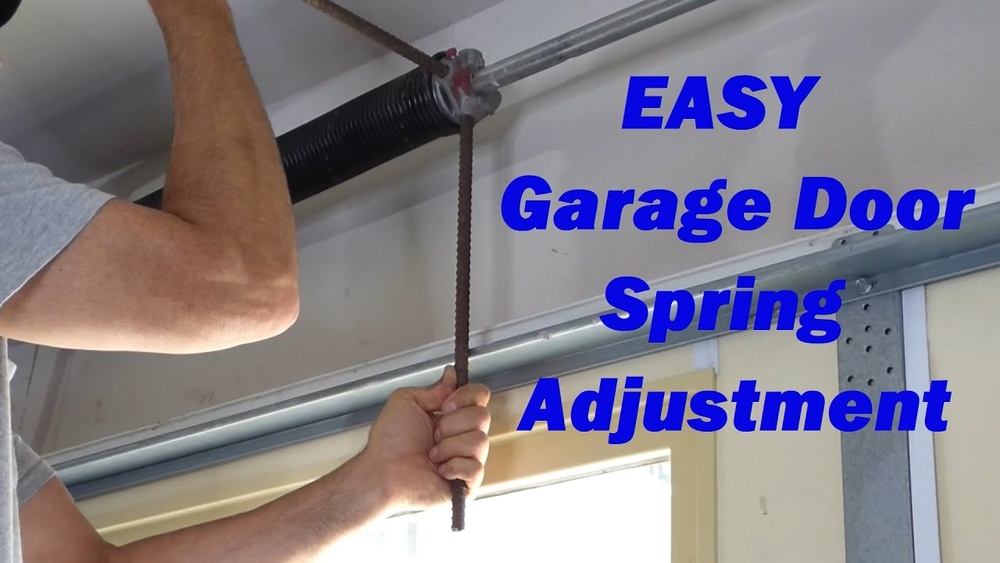
- Torsion spring: Look for a long coil above the door, attached to a metal shaft.
- Extension spring: Find springs running along the sides, parallel to the tracks.
If your door is heavy and wide (over 10 feet), it likely uses torsion springs.
Step-by-step Guide To Adjusting Garage Door Springs
Adjusting Torsion Springs
Most homeowners have torsion springs. Here’s how to adjust them:
- Disconnect the opener.
- Unplug the opener or turn off the power.
- Close the door fully.
- The door must be shut to reduce tension.
- Clamp the door.
- Use vice grips on the track to keep the door from moving.
- Locate the spring’s adjustment bolts.
- Find the winding cone at the end of the spring. It has holes for winding bars.
- Insert winding bars.
- Use two winding bars for safety. Never use anything else.
- Loosen the set screws.
- With one winding bar in place, use your wrench to loosen the screws.
- Adjust the tension.
- To increase tension, turn the winding bar upward (usually one-quarter turn at a time).
- To decrease tension, turn downward.
- Tighten the set screws.
- Secure the winding cone after adjustment.
- Remove clamps and test.
- Test the door’s balance. It should stay halfway open without moving.
Adjusting Extension Springs
If your door has extension springs:
- Disconnect the opener.
- Open the door fully.
- Use clamps to keep it open.
- Locate the spring adjustment.
- Find the hook or pulley system.
- Move the spring hook.
- To increase tension, move the hook to a hole closer to the door.
- To decrease tension, move it farther away.
- Check safety cables.
- Make sure cables are secure. They prevent springs from flying out if they break.
- Test the door.
- Remove clamps and check if the door opens smoothly.
Practical Example
If your garage door slams shut quickly, your springs are too loose. Try tightening by:
- For torsion: One-quarter turn upward on each spring.
- For extension: Move the hook one hole closer.
After adjustment, the door should open smoothly and stay open by itself at halfway.
Common Mistakes Beginners Make
Many people make errors when adjusting springs. Here are frequent mistakes:
- Using wrong tools (like screwdrivers instead of winding bars)
- Not securing the door before working
- Over-tightening springs (door becomes too hard to open)
- Forgetting to disconnect the opener
- Ignoring safety cables on extension springs
Avoid these mistakes by following each step carefully.

Credit: www.wikihow.com
Signs You Need To Replace, Not Adjust
Adjustment helps if the springs are loose or tight. But sometimes, springs are old or damaged. Replace springs if:
- They are rusted or broken
- The door makes popping noises
- The door shakes or jerks badly
- Your springs are over 7 years old (average lifespan)
Here’s a comparison of when to adjust or replace:
| Condition | Adjust | Replace |
|---|---|---|
| Door closes too fast | ✔️ | |
| Spring is broken | ✔️ | |
| Door feels heavy | ✔️ | |
| Spring is rusted | ✔️ | |
| Spring over 7 years old | ✔️ |
How To Check Door Balance After Adjustment
Testing balance is crucial. Here’s how:
- Close the door and disconnect the opener.
- Lift the door halfway manually.
- Let go gently.
- If it stays, springs are good.
- If it moves up or down, adjust more.
Repeat until the door stays in place.
When To Call A Professional
Some jobs are best left to experts. Call a pro if:
- You have double torsion springs (more complicated)
- The spring is broken or you see damage
- You feel nervous about safety
Garage door technicians have experience and tools for tough jobs. It’s okay to ask for help.
Extra Tips For Beginners
- Keep a notebook: Write down how many turns you make on each spring.
- Take photos: Before and after adjustments, for reference.
- Lubricate springs after adjustment: Use garage door lubricant to keep springs healthy.
Garage Door Spring Adjustment Costs
Adjusting springs yourself is cheap—just the cost of tools (about $25–$50). Hiring a pro costs $100–$200 per door. If you need new springs, add $50–$150 for parts.
| Adjustment Type | DIY Cost | Professional Cost |
|---|---|---|
| Torsion Spring Adjustment | $25–$50 (tools) | $150–$200 |
| Extension Spring Adjustment | $20–$40 (tools) | $100–$150 |
| Spring Replacement | $50–$150 (parts) | $200–$350 |
Real-world Example
John from Texas noticed his garage door was hard to lift and closed too quickly. He:
- Checked his springs (torsion type)
- Used winding bars to tighten by one-quarter turn
- Tested the door’s balance
- Lubricated springs after adjustment
His door now opens smoothly and stays open at halfway. He saved $150 by doing it himself.
Helpful External Resource
For more detailed safety guidelines, visit the Home Depot Garage Door Spring Adjustment Guide.
Frequently Asked Questions
How Often Should Garage Door Springs Be Adjusted?
Springs need adjustment when the door feels heavy or unbalanced. Usually, this is every 2–4 years, depending on usage. If your door works smoothly, adjustment is not required.
What Tools Are Essential For Torsion Spring Adjustment?
You must use winding bars, not screwdrivers or other tools. Also, have an adjustable wrench, vice grips, safety glasses, and gloves.
Can I Adjust Garage Door Springs Alone?
It’s possible, but safer with a helper. Some steps need extra hands, especially for holding the door and checking balance.
What Are Signs A Spring Is About To Fail?
Watch for rust, loud noises, gaps in the coils, or if the spring is over 7 years old. A failing spring may make the door shake or drop suddenly.
Is It Safe To Adjust Extension Springs Without Safety Cables?
No. Always use safety cables with extension springs. They keep the spring from flying out if it breaks, preventing injury or damage.
—
Adjusting garage door springs is a practical skill for any homeowner. With the right tools, safety steps, and careful attention, you can fix common spring problems and keep your door working smoothly. Remember, if you ever feel unsure, it’s smart to call a professional.
Regular checks and small adjustments can prevent bigger issues and save money in the long run. Stay safe, work slowly, and your garage door will stay balanced for years.

Credit: www.youtube.com