
A garage door is one of the biggest moving parts in most homes. If your garage door uses a chain drive opener, you might notice the chain gets loose over time. A loose chain can make the door noisy, slow, or even unsafe. Tightening the chain is a simple job if you follow the right steps and know what to look for.
Many homeowners worry about touching their garage door opener. But fixing a loose chain doesn’t require special skills. You only need some basic tools, patience, and a clear process. This guide will help you understand why chain tension matters, what tools to use, and how to safely tighten your garage door chain.
You’ll also learn common mistakes and how to avoid damaging your opener.
Why Garage Door Chain Tension Matters
The chain is the main link between your opener’s motor and the door. If it’s too loose, several problems can happen:
- Noisy operation: A loose chain slaps against the rail and creates loud noises.
- Door misalignment: The door may not open or close smoothly.
- Extra wear: The opener’s parts can wear out faster.
- Safety risks: Loose chains can break or fall off during operation.
Keeping the chain tight improves door performance and extends the life of your opener. Most chain drive systems need a chain tension check every 6–12 months.
Example: Chain Drive Vs. Belt Drive
Garage doors usually use either a chain or a belt drive. Here’s a quick comparison:
| Drive Type | Noise Level | Maintenance | Lifespan |
|---|---|---|---|
| Chain Drive | High | Regular (tightening, lubrication) | 10–15 years |
| Belt Drive | Low | Minimal | 15–20 years |
Chain drives are popular because they’re tough and less expensive. But they need more attention, especially with chain tension.
Signs Your Garage Door Chain Needs Tightening
Knowing when to tighten your chain is important. Look for these signs:
- Rattling noise when opening or closing the door
- Chain sagging more than ½ inch below the rail
- Door jerks or moves unevenly
- Chain skips or jumps on the sprocket
If you notice any of these, your chain probably needs tightening. Most chains should have a slight sag, but not more than ½ inch in the middle of the rail.
Practical Example
If you see your chain hanging down like a skipping rope, it’s too loose. If it’s tight like a guitar string, it may be over-tightened. Aim for a slight curve but no visible slack.
Tools And Materials You’ll Need
Before you start, gather these items:
- Wrench set (usually 7/16” or ½”)
- Screwdriver
- Step ladder
- Safety glasses
- Gloves
- Garage door lubricant (optional)
Most garage door openers use a similar adjustment system. Always check your owner’s manual for exact tool sizes.
Useful Data: Common Chain Opener Models
Here’s a comparison of popular chain opener brands:
| Brand | Adjustment Nut Size | Typical Chain Sag | Adjustment Frequency |
|---|---|---|---|
| Chamberlain | 7/16” | ¼–½ inch | Yearly |
| LiftMaster | ½” | ¼–½ inch | Every 18 months |
| Craftsman | 7/16” | ½ inch | Yearly |
This shows most brands use similar hardware and adjustment schedules.
Step-by-step Guide: How To Tighten Garage Door Chain
Follow these simple steps to get your chain tension right. Always unplug your opener before starting.
1. Prepare The Area
- Disconnect power: Unplug the opener or turn off the breaker.
- Close the door: The chain is easier to adjust when the door is closed.
- Set up your ladder: Make sure it’s stable and safe.
2. Inspect The Chain
- Look for visible sag in the middle of the rail.
- Check for rust or damage on the chain.
- Make sure the chain is not twisted.
If the chain is damaged, replace it before adjusting.
3. Find The Adjustment Mechanism
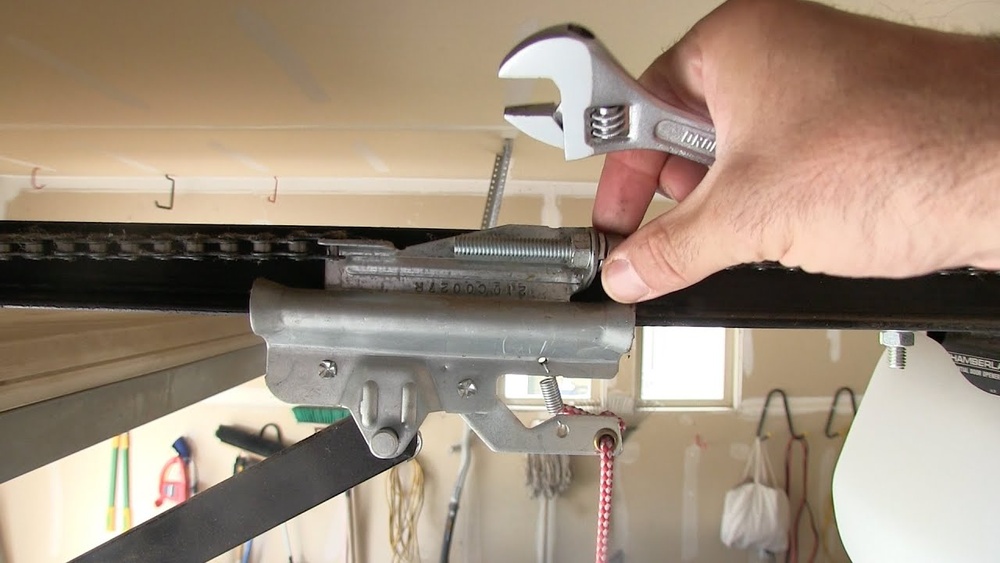
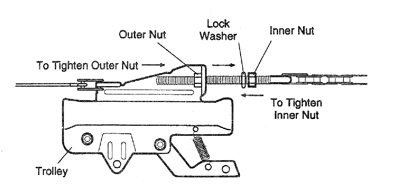
- Most openers have a tension bolt near the front (by the door) or back (by the motor).
- It’s usually a threaded rod with two nuts (locknut and adjustment nut).
- Some models have a turnbuckle instead.
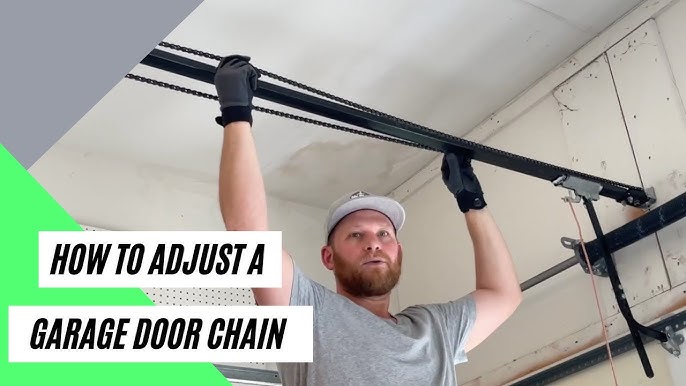
4. Adjust The Chain Tension
- Use your wrench to loosen the locknut (the outer nut).
- Turn the adjustment nut clockwise to tighten the chain.
- Check the chain sag as you turn. Stop when there’s about ¼ to ½ inch of slack in the middle.
Do not over-tighten. The chain needs a little slack to work smoothly.
5. Secure The Adjustment
- Hold the adjustment nut steady.
- Tighten the locknut against the adjustment nut to prevent slipping.
This keeps the chain tension from changing as you use the door.
6. Test The Door
- Plug the opener back in.
- Open and close the door a few times.
- Listen for smooth, quiet operation.
- Watch for chain movement and check the sag again.
If the door moves quietly and the chain stays tight, your job is done.
7. Lubricate The Chain (optional)
- Use a garage door lubricant or light oil.
- Spray lightly along the chain, avoiding excess.
- Wipe off any drips.
Lubrication helps reduce noise and wear.
Credit: www.youtube.com
Common Mistakes Beginners Make
Many people make small errors when tightening their garage door chain. Here are mistakes to avoid:
- Over-tightening: The chain should not be straight and rigid. This puts stress on the motor and can cause damage.
- Ignoring the locknut: If you don’t tighten the locknut, the chain may loosen again.
- Skipping lubrication: A dry chain creates extra noise and wears faster.
- Adjusting with the door open: Always adjust with the door closed for accurate tension.
- Forgetting safety: Always disconnect power to prevent accidental starts.
Non-obvious Insight
If your chain keeps loosening, the sprocket or turnbuckle may be worn out. Replacing these parts is easy, but most beginners overlook them.
How Often Should You Tighten The Garage Door Chain?
Most chains need tightening every 12–18 months. But frequency depends on:
- Door usage: High-traffic garages need more checks.
- Climate: Humid areas can cause faster chain wear.
- Opener age: Older openers need more frequent adjustments.
Some homeowners check chain tension at the start of each season. This habit prevents sudden problems.
Example
If your family opens the garage 10 times daily, plan for twice-a-year checks. If you only use it for storage, yearly is enough.

Credit: diy.stackexchange.com
How Tight Should The Garage Door Chain Be?
Proper chain tension is key for safe operation. The chain should:
- Sag ¼ to ½ inch at the center of the rail
- Move freely without binding
- Not slap or jump when the door operates
If you’re unsure, check your opener’s manual or look for a sticker on the rail.
Data Table: Chain Sag Vs. Performance
| Chain Sag | Noise Level | Door Performance | Risk |
|---|---|---|---|
| None (fully tight) | Low, but motor stress | May jam | Motor damage |
| ¼–½ inch | Normal | Smooth | Safe |
| Over ½ inch | High | Jerky | Chain slip/failure |
Aim for the middle range for best results.
Safety Tips For Garage Door Chain Adjustment
Working on a garage door is safe if you follow basic steps:
- Always disconnect power before starting.
- Wear safety glasses to protect from debris.
- Keep fingers clear of moving parts.
- Use a sturdy step ladder.
- If unsure, call a professional.
Garage doors are heavy and can cause injury if mishandled. Safety comes first.
When To Call A Professional
Sometimes, tightening the chain is not enough. Consider professional help if:
- The chain is rusted or broken
- The door is misaligned
- You hear grinding or see metal shavings
- The opener fails after adjustment
Garage door technicians can replace chains, sprockets, and motors. If your opener is more than 10 years old, a full replacement may be smarter.
Non-obvious Insight
Some newer chain openers have auto-tensioning systems. If you see a spring-loaded mechanism, consult your manual before adjusting. Many beginners don’t realize this feature exists.
Maintenance Tips After Tightening
Keeping your chain in good shape extends the opener’s life. Easy maintenance steps:
- Check tension every few months.
- Lubricate the chain twice a year.
- Inspect for rust and replace parts if needed.
- Keep the rail clean and free of debris.
Proper maintenance prevents costly repairs and keeps your garage secure.
Credit: www.naturalhandyman.com
Frequently Asked Questions
How Do I Know If My Garage Door Chain Is Too Tight?
If the chain is straight with no sag, it’s probably too tight. Over-tightening creates extra motor stress and may cause the opener to jam or break. Always leave a small sag in the chain.
Can I Use Wd-40 On My Garage Door Chain?
It’s not recommended. WD-40 is a cleaner, not a lubricant. Use a garage door-specific lubricant or light machine oil. This protects the chain and reduces noise.
How Often Should I Check My Chain Tension?
Check the chain every 6–12 months or after heavy usage. If your door starts making noise or moves unevenly, check the tension right away.
What Happens If I Don’t Tighten A Loose Chain?
A loose chain can cause noisy operation, make the door jerk, and even damage the opener. In some cases, the chain can jump off the sprocket, making the opener unusable.
Is It Safe To Adjust The Chain Myself?
Yes, for most people. Follow safety steps: disconnect power, use the right tools, and don’t over-tighten. If you’re unsure, ask a professional. For more details, visit the International Door Association.
Keeping your garage door chain tight is a simple job that makes your opener last longer, work better, and stay safe. With regular checks and a careful approach, you can fix most chain problems yourself and avoid expensive repairs. Remember, small maintenance steps save big money and keep your home secure.