
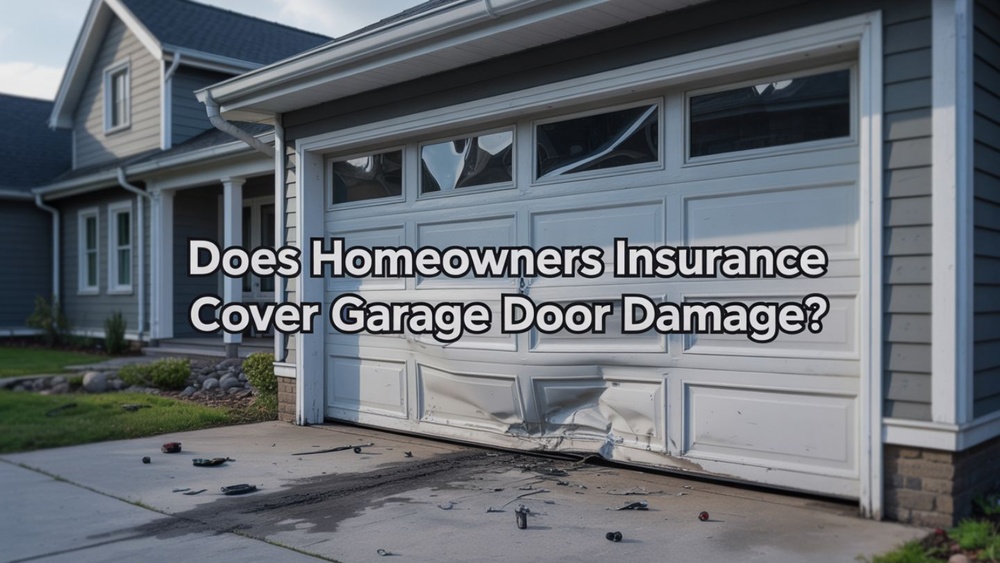
Does Home Insurance Cover Garage Door?
Many homeowners wonder, “Does home insurance cover garage door damage? ” It’s a smart question. The garage door is one of the largest moving parts in your house. It’s also an entry point for cars, storage, and sometimes even for people.
If your garage door gets damaged, fixing or replacing it can be expensive. Understanding what your home insurance covers can save you stress and money.
This guide explains how most home insurance policies handle garage doors. You’ll learn about common types of damage, what’s usually covered, and what isn’t. We’ll also share real examples and practical tips to help you make the best decisions for your home.
How Home Insurance Works For Garage Doors
Home insurance protects your property from specific risks, called perils. These are things like fire, theft, and storms. When something bad happens, your policy may pay to repair or replace damaged items, including the garage door.
Most standard home insurance policies (HO-3) include the garage and its door as part of your home’s structure. Coverage depends on the cause of the damage.
Common Perils That Are Covered
Most insurance covers garage door damage from:
- Fire
- Wind and hail
- Theft or vandalism
- Falling objects (like a tree branch)
- Damage from vehicles (if someone else crashes into your door)
If any of these events cause damage, you can usually file a claim.
What’s Usually Not Covered
There are some situations where home insurance does not cover garage door damage:
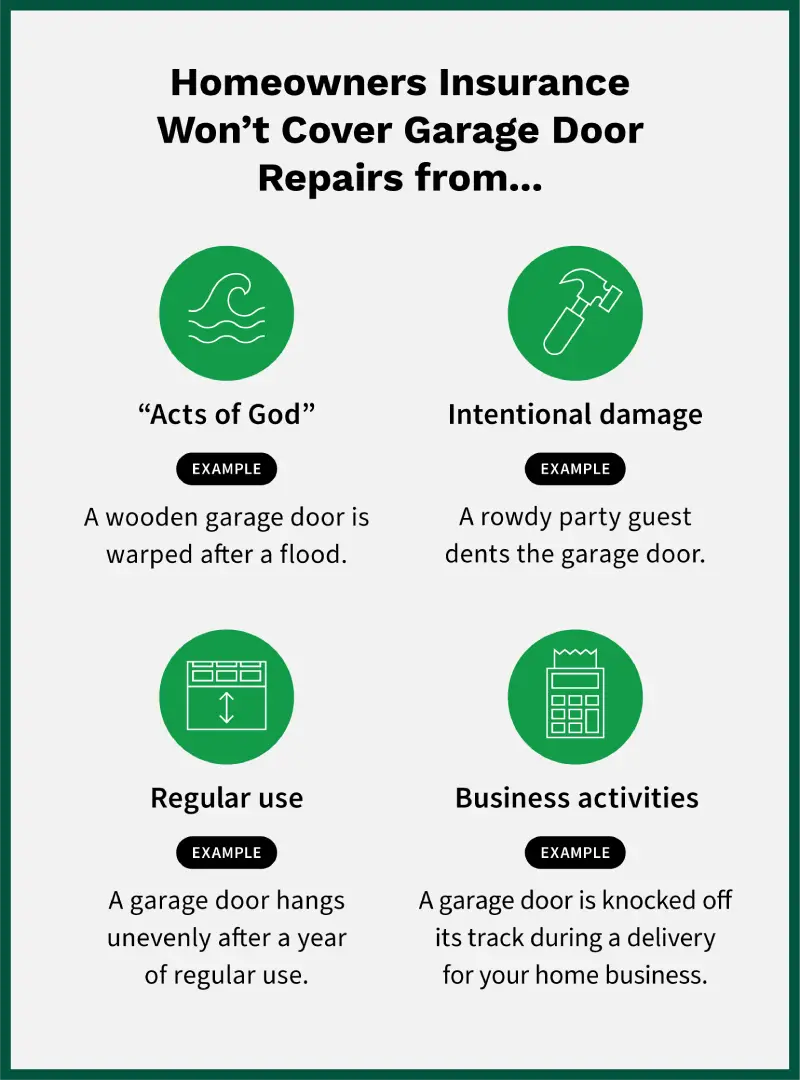
- Wear and tear: Damage from aging or lack of maintenance.
- Mechanical breakdown: Problems with springs or openers due to regular use.
- Floods and earthquakes: These need separate policies.
- Intentional damage: Damage you or a resident cause on purpose.
Types Of Garage Doors And Coverage Differences
Not all garage doors are the same. The material and type can affect replacement cost and, sometimes, coverage.
| Garage Door Type | Average Replacement Cost | Special Coverage Notes |
|---|---|---|
| Steel | $600 – $2,000 | Most common; covered under standard policy |
| Wood | $1,200 – $4,000 | Higher cost; may need special limits |
| Aluminum | $800 – $2,500 | Lightweight; covered under standard policy |
| Custom/Designer | $2,500 – $10,000 | Coverage may be capped; check policy |
If you have a high-end or custom door, review your policy’s limits. Standard coverage may not pay for full replacement.
Real-life Examples
Seeing how insurance works in real situations makes things clearer.
- Tree Falls on Garage Door
- During a storm, a large tree branch crashes onto your steel garage door.
- Insurance covers repairs because the damage is sudden and accidental.
- Car Accident
- A neighbor accidentally drives into your garage door.
- Your policy covers the damage, and the neighbor’s auto insurance may also help.
- Old Springs Break
- After 15 years, the door’s springs snap, causing the door to bend.
- Insurance will not cover this because it’s due to wear and tear.
- Vandalism
- Someone spray-paints your garage door at night.
- This is covered under “vandalism” in most home policies.
- Flood Damage
- Water from a flood warps your garage door.
- Standard home insurance will not cover this. You need flood insurance.
How Much Will Insurance Pay?
The amount your insurance pays depends on:
- Your policy’s coverage limit
- Your deductible (the amount you pay out of pocket)
- Actual Cash Value (ACV) vs. Replacement Cost Value (RCV)
Understanding Deductibles
If your deductible is $1,000 and repairs cost $1,500, insurance pays $500. If repairs cost less than your deductible, you pay everything.
Acv Vs. Rcv
- ACV pays what the door is worth today (after depreciation)
- RCV pays the full cost to replace the door with a new one
Most basic policies use ACV. Some let you upgrade to RCV for a higher premium.
What About Detached Garages?
Many homes have detached garages. Are they covered? Usually, yes—but under a different section of your policy called Other Structures.
| Structure Type | Coverage Category | Typical Coverage Limit |
|---|---|---|
| Attached Garage | Main Dwelling | 100% of Dwelling Coverage |
| Detached Garage | Other Structures | 10-20% of Dwelling Coverage |
If your home is insured for $300,000, a detached garage may have $30,000–$60,000 in coverage. If your detached garage is large or custom-built, check if you need extra coverage.
Special Situations And Common Questions
Home insurance can get tricky. Here are special cases that often confuse homeowners.
Someone Else’s Car Hits Your Garage Door
If a visitor or neighbor accidentally damages your garage door with their car:
- Your home insurance will cover the damage, minus your deductible.
- You can also file a claim with their auto liability insurance.
- Sometimes, your insurer will recover costs from the at-fault driver’s insurer (called subrogation).
Your Own Car Hits The Door
If you or a household member accidentally drive into your own garage door:
- Home insurance does not cover it as “accidental damage” from your own car.
- Your auto insurance may cover it under collision coverage (if you have it).
- Repairs to the car itself usually fall under auto insurance, not home insurance.
Garage Door Opener Damage
Garage door openers are often covered as part of the home’s electrical system. If a covered peril (like lightning or fire) damages the opener, your policy should pay. But, mechanical failure or old age is not covered.
Smart Garage Doors And Technology
Smart garage door systems are becoming popular. If your smart opener or sensors are damaged by a covered peril, insurance may pay to replace them. However, there may be coverage limits on electronics.
Credit: www.precisiondoor.net
Steps To Take When Your Garage Door Is Damaged
Here’s what to do if your garage door suffers damage:
- Document the Damage
- Take clear photos from several angles.
- Write down what happened and when.
- Check Your Policy
- Read your insurance policy or contact your agent.
- Confirm if the event is a covered peril.
- Get Repair Estimates
- Request quotes from licensed repair companies.
- Keep records of all communications.
- File a Claim
- Contact your insurer as soon as possible.
- Provide all evidence and estimates.
- Meet with Adjuster
- The insurance company may send an adjuster to inspect.
- Review Settlement Offer
- Review the offer carefully. Ask questions if something is unclear.
- Complete Repairs
- Use reputable contractors. Save all receipts.
Practical Tips To Avoid Garage Door Claim Problems
Many claims get denied due to small mistakes. Here’s how to avoid trouble:
- Maintain your garage door. Lubricate moving parts and check for rust or cracks.
- Fix problems early. Don’t wait until a small issue becomes a big one.
- Update your policy if you install a high-value or custom garage door.
- Understand your deductible so you’re not surprised by out-of-pocket costs.
- Keep proof of value for custom or expensive doors (receipts, photos).
- Don’t delay claims. Report damage quickly to avoid denial.
Credit: www.meadowsgaragedoors.com
Garage Door Insurance Claim Data
Insurance data shows that garage door claims are common. According to the Insurance Information Institute:
- Wind and hail are the top causes for home insurance claims in the US.
- Theft and vandalism make up about 2% of all claims.
- Average home insurance claim payout: Around $13,800 (all claim types).
For garage door-only claims, most repairs cost $300 to $2,500. Full replacement for custom doors can reach $10,000 or more.
What To Watch For In Your Policy
Home insurance policies are not all the same. Watch out for:
- Named Perils vs. All Risk: “Named peril” policies only cover what’s listed. “All risk” covers everything except exclusions.
- Coverage limits: Check if your door’s value exceeds your policy’s limit.
- Exclusions: Flood, earthquake, and poor maintenance are usually not covered.
- Endorsements/Riders: You can add extra coverage for high-value doors.
Always review your policy every year, especially after upgrades.
Cost Vs. Benefit: Is It Worth Filing A Claim?
Sometimes, paying for repairs yourself is better than filing a claim. Why?
- If the repair cost is close to your deductible, you may get little or no payout.
- Too many small claims can raise your premium or cause non-renewal.
- Only file claims for significant damage or high-cost repairs.
Here’s a quick comparison:
| Repair Cost | Deductible | Should You File a Claim? |
|---|---|---|
| $400 | $500 | No |
| $1,500 | $500 | Maybe |
| $4,000 | $1,000 | Yes |
When Should You Get Extra Coverage?
You may need more coverage if:
- You have a custom or high-value garage door
- Your area has frequent storms, hail, or theft
- You use your garage for business or store valuable items
Talk to your agent about endorsements or higher limits if needed.
Where To Get More Information
Every policy is different. For more details about specific coverage, visit the Insurance Information Institute.
Frequently Asked Questions
Is Garage Door Damage From Storms Covered By Home Insurance?
Yes, most standard policies cover storm damage, including wind and hail, to your garage door. Always check your policy for specific exclusions.
Does Home Insurance Cover Garage Door Opener Repairs?
If the opener is damaged by a covered peril (like fire or lightning), it is usually covered. Damage from normal use or age is not covered.
What If My Garage Door Is Damaged By Someone Else’s Car?
Your home insurance will cover the damage, but you may also claim from the at-fault driver’s auto insurance. Your insurer may seek reimbursement from them.
Does Home Insurance Cover Garage Door Damage From Floods?
No, flood damage is not covered under standard home insurance. You need a separate flood insurance policy for that.
Will My Premium Go Up If I File A Claim For Garage Door Damage?
Filing a claim can cause your premium to increase, especially if you file multiple claims in a short time. Weigh the repair cost against the possible premium hike.
Homeowners insurance is a valuable tool for protecting your property, including your garage door. Knowing what’s covered—and what’s not—helps you avoid surprises and make smart choices. Regular maintenance and understanding your policy are key to getting the coverage you need.
If you’re ever in doubt, talk to your insurance agent and keep records of all your home improvements.

Credit: raynor.com