
The garage door industry is much bigger and more dynamic than most people think. Every home and business needs secure, easy access, and garage doors are a key part of that. If you are a homeowner, a business manager, or just curious about the industry, understanding the latest statistics can help you make better decisions.
In this article, you’ll find clear, practical data and real-world examples that explain how the garage door market works, who the main players are, and what trends are shaping its future. All explanations use simple, direct language—perfect for beginners and non-native English readers.
Garage Door Market Size And Growth
The garage door industry has grown quickly in the past decade. In 2023, the global market value was about $7.8 billion. Experts expect it to reach $11 billion by 2030. This means steady yearly growth of around 5.6%.
- The US market is the biggest, accounting for nearly 35% of global sales.
- Demand is driven by new housing, home improvements, and rising security needs.
- Commercial garage doors (used in factories, shops, parking garages) make up about 30% of the market.
Here’s a simple comparison of market size in different regions:
| Region | 2023 Market Size (USD) | Expected 2030 Market Size (USD) |
|---|---|---|
| North America | $2.7 Billion | $3.7 Billion |
| Europe | $1.9 Billion | $2.6 Billion |
| Asia-Pacific | $2.3 Billion | $3.5 Billion |
| Rest of World | $0.9 Billion | $1.2 Billion |
Non-obvious insight: Many beginners don’t realize that Asia-Pacific is now growing faster than North America, especially in cities where new homes and factories are being built.
Key Garage Door Types And Materials
Garage doors come in several styles and materials. Each type has its own market share and benefits.
Main Types
- Sectional doors: The most popular in homes. They open by sliding up and overhead.
- Roll-up doors: Common in commercial spaces. They roll into a cylinder above the opening.
- Swing-out doors: Classic look, but less common today. They open outward like barn doors.
- Sliding doors: Used for large garages or industrial buildings.
Main Materials
- Steel: About 45% of all garage doors are made from steel. Strong and durable, but can rust.
- Aluminum: Lightweight and rust-resistant. Used in modern designs.
- Wood: Provides a classic look. Makes up 15% of the market, but needs more maintenance.
- Fiberglass & Vinyl: Used for budget options and coastal areas.
Here’s a simple table comparing material popularity and average price:
| Material | Market Share (%) | Average Price (USD) | Main Benefit |
|---|---|---|---|
| Steel | 45% | $600–$1,500 | Strength |
| Aluminum | 22% | $700–$1,200 | Lightweight |
| Wood | 15% | $1,200–$2,500 | Appearance |
| Fiberglass/Vinyl | 18% | $500–$1,100 | Low Maintenance |
Practical tip: For most homeowners, steel doors offer the best mix of durability and price.

Credit: rjgaragedoorservice.com
Industry Leaders And Top Brands
A few large companies dominate the garage door industry. These brands are trusted because of their wide product range, strong warranties, and nationwide service.
- Clopay: The largest North American brand. Offers both residential and commercial doors.
- Overhead Door: Known for innovation and automatic openers.
- Wayne Dalton: Popular for custom designs and strong materials.
- Hormann: Europe’s biggest manufacturer, expanding into the US market.
- Amarr: Focuses on energy-efficient doors.
Non-obvious insight: Many local installers use products from these big brands, but also offer custom doors from smaller suppliers. Don’t assume only major brands are available.
Garage Door Installation And Replacement Statistics
Installing or replacing a garage door is a common project for homeowners. Industry data shows:
- Average installation cost: $1,200–$2,200, depending on door type and region.
- Installation time: Usually 3–6 hours for a standard door.
- Replacement frequency: Most doors last 15–30 years with good care.
- DIY vs Professional: Only 20% of installations are DIY. The rest use professional installers.
Example: Typical Us Homeowner
- Replaces garage door every 18–22 years.
- Spends about $1,700 including labor.
- Chooses steel or insulated doors for security and comfort.
Common mistake: Beginners often underestimate installation costs. Always ask for a full quote—including removal of old doors and disposal fees.
Smart Garage Doors And Technology Trends
The garage door industry is rapidly adopting new technology. Smart garage doors are becoming more popular, and offer features like remote control, smartphone apps, and security alerts.
- Smart doors: Over 25% of new garage doors sold in the US are now “smart” enabled.
- Remote access: Allows opening/closing from anywhere using a phone.
- Security features: Cameras, motion sensors, and automatic locking are common.
Here’s a comparison of traditional vs smart garage doors:
| Feature | Traditional Door | Smart Door |
|---|---|---|
| Open/Close Method | Manual/Remote | Smartphone App, Voice |
| Security | Basic Lock | Alerts, Cameras, Lock Automation |
| Maintenance | Regular checks | App reminders, Diagnostics |
| Price | $800–$1,500 | $1,200–$2,500 |
Practical tip: Smart doors cost more but offer better security and convenience. For families, this can mean safer access and peace of mind.
Commercial Garage Door Statistics
Commercial garage doors are used in warehouses, car shops, and factories. This segment is growing fast, driven by new construction and stricter safety rules.
- Annual sales: About $2.5 billion globally.
- Main users: Auto repair shops, logistics companies, shopping centers.
- Safety upgrades: Over 40% of new installations now include advanced safety features.
Non-obvious insight: Many commercial doors are custom-sized. Beginners might not realize that commercial doors often cost 2–3 times more than residential models due to size and safety requirements.

Credit: rjgaragedoorservice.com
Garage Door Safety And Maintenance Data
Safety is a top concern for garage door owners and manufacturers. Injuries from garage doors are rare, but can be serious.
- Average injuries per year (US): About 10,000, mostly minor.
- Most common cause: Spring failure or improper DIY repairs.
- Maintenance habits: Only 35% of homeowners check their doors annually.
Practical Maintenance Advice
- Lubricate hinges and tracks every 6 months.
- Test auto-reverse feature monthly.
- Check springs and cables once a year.
Common mistake: Not scheduling regular checks. Neglecting maintenance can lead to higher repair costs and safety risks.
Environmental Impact And Energy Efficiency
Modern garage doors are designed to be more energy-efficient and environmentally friendly.
- Insulated doors: Now over 50% of new residential doors sold in the US.
- Energy savings: Good insulation can cut garage heating/cooling costs by 15–25%.
- Materials: Many brands use recycled steel or sustainable wood.
Practical tip: If your garage is attached to your home, an insulated door can improve comfort and lower energy bills.
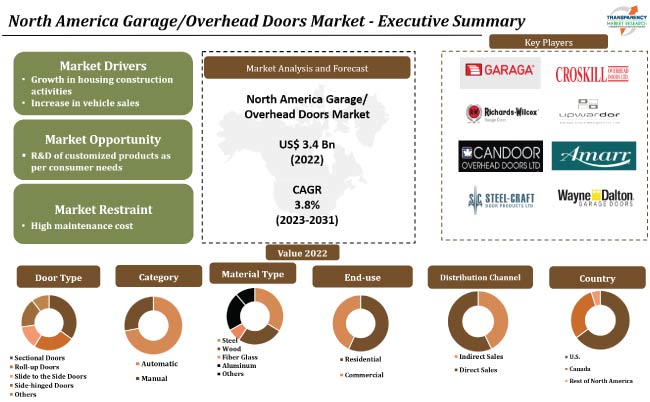
Credit: www.transparencymarketresearch.com
Industry Challenges And Opportunities
The garage door industry faces several challenges, but also has many opportunities for growth.
Challenges
- Supply chain delays: Shortages of steel and electronics can slow production.
- Rising costs: Material and labor prices are up about 8–12% in the last two years.
- Competition: More brands means buyers have many choices, but quality varies.
Opportunities
- Smart technology: Growth in smart doors and home automation is a big trend.
- Eco-friendly designs: Demand for green products is rising.
- Expansion in developing markets: Asia-Pacific and Latin America show strong growth.
Non-obvious insight: Many new buyers now look for garage doors that match their home’s style and offer smart features, not just basic security.
Frequently Asked Questions
How Long Does A Typical Garage Door Last?
Most garage doors last 15–30 years. The exact lifespan depends on the material, usage, and maintenance. Steel and aluminum doors tend to last longer, while wood doors need more care.
What Is The Average Cost To Install A Garage Door?
The average installation cost in the US is $1,200–$2,200. This includes the door, hardware, and labor. Smart or custom doors can cost more.
Are Smart Garage Doors Worth The Extra Price?
For many homeowners, smart garage doors are worth it. They offer better security, easier access, and remote control. If you travel often or want more peace of mind, the extra investment makes sense.
How Can I Make My Garage Door More Energy Efficient?
Choose an insulated garage door, and check for weatherstripping around the frame. Regular maintenance and sealing any gaps will help keep the garage comfortable and lower energy costs.
Who Are The Top Garage Door Brands?
Top brands include Clopay, Overhead Door, Wayne Dalton, Hormann, and Amarr. These companies offer strong warranties, wide product ranges, and good support. Local installers may also provide custom options.
The garage door industry is changing fast, driven by smart technology, new materials, and rising demand in global markets. Whether you’re shopping for a new door or just learning about the market, knowing these statistics helps you make smarter choices. With strong growth expected, now is a great time to explore options, compare features, and find a garage door that fits your needs. For more detailed market data, see Statista.