
Preventing Garage Flooding: A Beginner’s Guide
A flooded garage is more than a nuisance. Water can damage tools, cars, and walls. Mold may grow, and repairs can cost thousands. Many homeowners don’t realize that simple steps can stop most flooding before it starts. This guide will show you how to protect your garage from water damage, even if you’re not handy.
You’ll learn why flooding happens, how to fix weak spots, and what experts recommend for garages in flood-prone areas.
Why Garages Flood
Flooding often surprises people. The causes are not always obvious. Understanding them helps you prevent future problems.
- Heavy rain: Sudden storms can overwhelm drains, sending water toward your garage.
- Poor drainage: If your driveway slopes toward the garage, water flows inside.
- Blocked gutters: Leaves and debris stop water from flowing away, so it spills over.
- Cracks and gaps: Even tiny cracks in walls or floors let water seep in.
- High groundwater: In some areas, water rises from below, especially after rain.
Example: In Houston, TX, many homes face heavy rainfall. A study found that garages with poor drainage are 5 times more likely to flood during storms.
Assessing Your Garage’s Risk
Before you fix anything, check if your garage is at risk. Here are steps you can take:
- Check the slope: Stand in your driveway. Does it slope toward the garage? If yes, water is likely to run inside.
- Look for cracks: Walk around your garage. Find cracks in the floor, walls, or foundation.
- Inspect gutters and downspouts: Are they clogged? Do they drain away from the garage?
- Check weather history: Has your area had recent floods? Search local news or ask neighbors.
Comparing Common Risk Factors
Here’s a comparison of garage flood risks:
| Risk Factor | Flood Likelihood | Example Area |
|---|---|---|
| Driveway Slope | High | Midwest suburbs |
| Blocked Gutters | Medium | Southeastern US |
| Cracks in Foundation | Medium | Older city homes |
| High Groundwater | Low | Coastal regions |

Credit: cleverseal.com
Practical Steps To Prevent Garage Flooding
You don’t need to be an expert. Simple, affordable steps can make a big difference.
Improve Drainage Around The Garage
Good drainage is your first defense. Here’s how to improve it:
- Install a channel drain: This is a trench in front of your garage door. It catches water and directs it away.
- Add gravel or permeable paving: These materials absorb water, reducing runoff.
- Create a rain garden: Plant grass or shrubs in a low spot near the garage to soak up extra water.
Tip: Always direct water away from the house and garage. Never let it pool near walls.
Seal Cracks And Gaps
Water sneaks through small openings. Sealing cracks is easy and cheap.
- Use concrete sealant: Buy a tube at any hardware store. Clean the crack, then squeeze the sealant inside.
- Seal garage door edges: Weatherstripping blocks water at the bottom and sides of the door.
- Caulk windows and vents: Stop leaks before they start.
Data point: A 2021 survey found that sealing cracks reduced garage flooding by 60% in homes with minor leaks.
Maintain Gutters And Downspouts
Blocked gutters are a hidden problem. Keeping them clear helps stop flooding.
- Clean gutters twice a year: In fall and spring, remove leaves and dirt.
- Install gutter guards: These keep out debris, saving you time.
- Extend downspouts: Make sure they end at least 6 feet from the garage.
Example: In Seattle, gutter guards helped homeowners reduce water damage by 40% after heavy rains.
Elevate Items In The Garage
Protect your belongings by moving them off the ground.
- Use shelves and racks: Store boxes, tools, and equipment above floor level.
- Elevate appliances: Put washers, dryers, and water heaters on blocks or platforms.
- Hang bikes and gear: Keep sports equipment safe from water.
Non-obvious insight: Even if your garage floods, elevated items will stay dry. This saves money and stress.
Install Flood Barriers
Flood barriers are a smart solution in high-risk areas.
- Sandbags: Place them along the garage door to block water.
- Removable flood panels: Attach panels before storms. They seal the bottom of the door.
- Automatic barriers: These rise when water is detected. Useful for frequent floods.
Comparison of Flood Barriers
| Barrier Type | Cost | Ease of Use | Effectiveness |
|---|---|---|---|
| Sandbags | Low | Manual | Medium |
| Flood Panels | Medium | Easy | High |
| Automatic Barriers | High | Automatic | Very High |
Install A Sump Pump
A sump pump removes water that gets inside. It’s best for garages in flood-prone areas.
- Install in a low spot: The pump sits in a pit. When water collects, it pumps it outside.
- Test regularly: Make sure the pump works before storms.
- Add a backup battery: Pumps run even if the power goes out.
Statistic: Homes with sump pumps see 80% fewer flood insurance claims.
Upgrade Garage Door
Some garage doors are weak against water. Upgrading can prevent leaks.
- Choose a waterproof door: Look for doors with tight seals and water-resistant materials.
- Install a flood-resistant threshold: This is a raised strip at the bottom of the door.
- Add extra weatherstripping: Seal the edges for best results.
Example: Flood-resistant doors cost $400–$1,000 but can save thousands in repairs.
Common Mistakes Beginners Make
Many people miss simple solutions. Avoid these mistakes:
- Ignoring small leaks: Water always finds a way in. Fix leaks early.
- Letting gutters stay clogged: Even if you clean once a year, leaves can block gutters in weeks.
- Storing valuables on the floor: Always use shelves or racks.
- Waiting until after a flood: Prevention is cheaper and easier than repair.
- Not checking local flood maps: Your area may be at risk even if you’ve never flooded before.
Non-obvious insight: Most garage floods happen during unexpected weather, not big storms. Staying prepared is key.
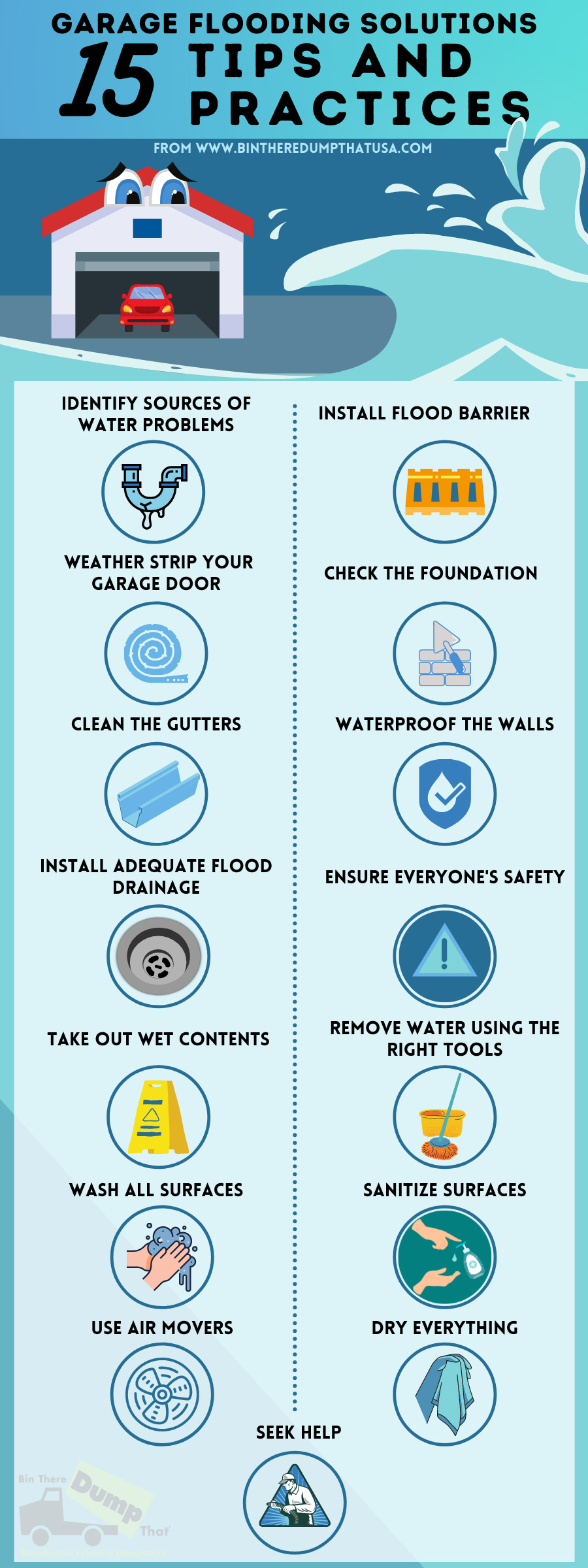
Credit: www.bintheredumpthat.com
Professional Solutions For Severe Flooding
If DIY fixes aren’t enough, consider professional help.
- French drains: Pros dig trenches and fill them with gravel and pipes. Water moves away from the garage.
- Foundation repair: Experts seal deep cracks and reinforce weak spots.
- Grading and landscaping: Professionals reshape your yard to direct water elsewhere.
Cost comparison
| Solution | Estimated Cost | Typical Effect |
|---|---|---|
| French Drain | $2,000–$5,000 | Major water redirection |
| Foundation Repair | $500–$3,000 | Stop leaks |
| Landscaping | $800–$2,500 | Improved drainage |
Tip: Get multiple quotes. Ask for references. Make sure the company is licensed and insured.
Regular Maintenance Checklist
Preventing flooding is not a one-time job. Maintenance keeps your garage safe.
- Clean gutters and downspouts every 6 months.
- Inspect garage floor and walls for cracks quarterly.
- Test sump pump before storm season.
- Check weatherstripping yearly.
- Confirm driveway slope and drainage after heavy rains.
Bonus insight: Setting reminders on your phone helps you stay ahead of problems.

Credit: restorepro911.com
Extra Protection: Insurance And Emergency Plans
Sometimes, the best efforts fail. Flood insurance and emergency plans can save you.
- Flood insurance: Covers damage not included in standard homeowner policies. Check rates with your agent.
- Emergency kit: Keep flashlights, batteries, and first aid in your garage.
- List emergency contacts: Print numbers for local repair services.
Learn more: For official flood safety advice, see FEMA Floods.
Frequently Asked Questions
How Can I Tell If My Garage Is At High Risk For Flooding?
Check the slope of your driveway, inspect for cracks, and look at your local flood maps. If the driveway points toward your garage and you see water pooling after rain, you are at higher risk.
What Is The Fastest Way To Stop Garage Flooding During Heavy Rain?
Use sandbags or flood panels at the garage door. These can be installed quickly before a storm. Also, check gutters to make sure water flows away from the garage.
Should I Install A Sump Pump Or Just Seal Cracks?
If your area floods often, a sump pump is a good investment. Sealing cracks helps prevent minor leaks but won’t stop water from heavy floods. Both solutions together offer better protection.
Is Flood Insurance Necessary For Garages?
Standard homeowner insurance usually does not cover flooding. If you live in a flood-prone area, flood insurance is wise. It covers damage to your garage, tools, and appliances.
How Much Does It Cost To Flood-proof A Garage?
Costs vary. Basic fixes like sealing cracks and cleaning gutters may cost under $100. Installing a sump pump or upgrading the garage door can cost $400–$1,500. Professional solutions like French drains can be $2,000–$5,000.
Protecting your garage from flooding is easier than you might think. Small steps like sealing cracks, improving drainage, and regular maintenance can make a huge difference. Even if you’re not handy, many solutions are affordable and easy to do. Stay prepared, and your garage—and everything inside—will stay safe and dry.