To use a pole saw, wear the right safety gear, inspect the tool, stand on firm ground, and cut only small branches that you can reach without leaning. Keep people clear of the drop zone, stay well away from power lines, and let each cut finish without forcing the blade.
In American yards, tree branches can grow over driveways, fences, sheds, and roof edges. A pole saw can help homeowners trim some of these branches without climbing a ladder. It has a long shaft and a cutting head that reaches above shoulder height. Some models use a hand-powered blade, while others use a small chain driven by a motor.
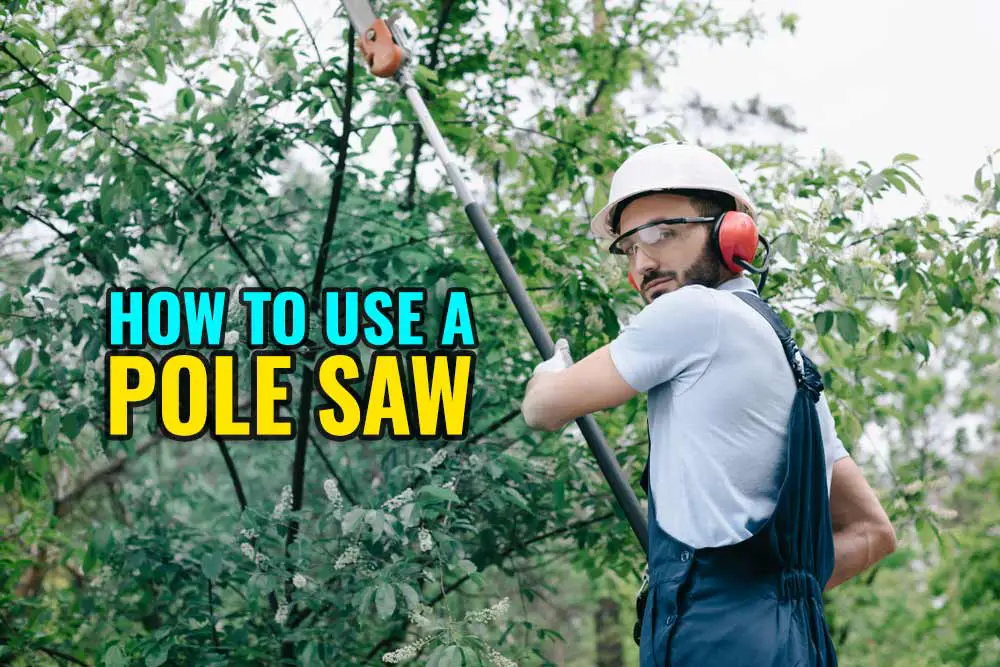
The safest way to learn how to use a pole saw is to start with a small, reachable branch and a clear work area. First, check the tool manual and wear eye protection, a hard hat when needed, sturdy footwear, and other recommended protective gear. Then plan where the branch will fall before you begin. Never work near power lines or attempt to remove large, heavy, or unstable limbs on your own.
A pole saw is useful for routine pruning, but it is not the right tool for every tree job. Branch weight, tree height, wind, nearby structures, and the condition of the wood all affect the risk. This guide explains how to prepare, make controlled cuts, avoid common errors, and recognize when a qualified tree professional should take over.
Source: www.pinterest.com
What Is a Pole Saw and When Should You Use One?
A pole saw is a pruning tool with a cutting blade or saw chain attached to a long pole. The extra reach lets you trim certain branches while standing on the ground. Depending on the model, the pole may be fixed or extendable, and the cutting head may use a manual saw blade or a powered chain.
For homeowners in the United States, a pole saw can help with routine yard care around ornamental trees, shrubs, and some fruit trees. It may also help remove small dead branches that are easy to identify and safe to reach. The tool does not make every overhead cut safe, and it should not replace professional equipment or training for difficult tree work.
Source: theforestrypros.com
Manual pole saw
A hand-powered saw that cuts when you pull or push the blade as directed by its design. It is usually simpler to maintain, but cutting can take more effort.
Electric pole saw
A powered model that uses electricity to drive the chain. Corded versions need a safe power setup, while cordless versions depend on a charged battery and compatible equipment.
Gas-powered pole saw
A motorized model that runs on fuel. It needs engine maintenance and careful handling of fuel, exhaust, vibration, and noise.
Telescoping pole saw
A model with an adjustable shaft. Set the length according to the manual, lock each section securely, and avoid extending it farther than needed.
Choose the right tool for the branch
Use a pole saw only when the branch is within the tool’s rated cutting capacity and can fall into a clear area. A small branch that hangs over open lawn is very different from a heavy limb above a garage. If a branch is large, cracked, tangled with other limbs, or likely to swing, split, or strike a structure, leave it to a qualified professional.
Good fit
Small, accessible branches that are within the tool’s capacity and have a clear fall path.
Poor fit
Heavy limbs, branches under tension, storm-damaged wood, work near power lines, and cuts that require climbing or balancing on a ladder.
Safety Gear and Preparation Before You Start
Prepare the work area before you lift the saw. A pole saw can send wood chips flying, and a cut branch can fall, bounce, or swing in an unexpected direction. A longer pole also changes the tool’s balance, so even a light saw can become tiring when held overhead.
Read the manual for the exact model you own. It explains how to assemble the pole, tension and lubricate a chain when applicable, fit the cutting head, operate the controls, and shut the tool down. Never use a tool with a loose head, damaged pole, cracked handle, faulty trigger, or missing safety part.
Source: handymantips.org
Eye and face protection
Wear safety glasses or goggles suited to flying debris. Add a face shield when recommended, but do not treat a face shield as a replacement for eye protection.
Head protection
Use a suitable hard hat when falling branches or other overhead hazards make it necessary. A hard hat does not make dangerous overhead work safe.
Hearing protection
Use appropriate hearing protection with powered saws when the noise level and manual call for it.
Hands and feet
Wear sturdy gloves and slip-resistant work boots. Use any additional protective equipment required by the manufacturer and the task.
Work clothing
Choose close-fitting clothing. Tie back long hair and remove jewelry that could catch on the tool or branches.
Clear the ground and plan the fall zone
Move children, pets, bystanders, vehicles, and loose items away from the work area. Keep people out of the space where the branch could land or bounce. If the branch may reach a neighbor’s yard, sidewalk, road, roof, or other property, do not begin until the hazard can be managed safely and legally.
Look up and around the tree before cutting. Check for overhead wires, nearby branches, deadwood, buildings, and anything that could trap the saw. If a branch could contact an electrical line, stop and contact the utility or an appropriately qualified professional. Do not assume that a wire is harmless because it looks insulated.
Check the weather
Do not operate a pole saw in strong wind, storms, lightning, or other conditions that make branches or footing unpredictable.
Check your footing
Choose dry, stable, level ground where practical. Remove trip hazards and do not work from a slippery slope, unstable surface, ladder, or improvised platform.
Inspect the tool
Check the pole locks, cutting head, blade or chain, fasteners, guard, battery or cord, and controls. Correct problems before use.
How to Use a Pole Saw Step by Step
The basic method is to position yourself safely, steady the pole, place the cutting head on the branch, and make a controlled cut without pulling the saw toward your body. Follow the exact operating steps for your model, especially when using a powered chain saw. Never start cutting until you know where the branch will go.
Source: storage.googleapis.com
Step 1: Choose a small, suitable branch
Start with a branch that is easy to identify and comfortably within the saw’s capacity. Look for dead, damaged, crossing, or poorly placed growth that can be removed without disturbing the tree’s main structure. Do not start with a large limb simply because it is the lowest branch.
Estimate the branch’s size, weight, and direction before making a cut. Check whether it is bent, caught between other branches, or supporting extra weight. If the wood is under tension or the branch may split or fall unpredictably, stop and seek professional help.
Begin with an easy cut
Choose a small branch over clear ground, away from people and property.
Know the limit
Do not exceed the maximum branch size or reach stated in the tool manual.
Step 2: Set the pole length and cutting angle
Adjust the pole before starting the cut. Use only the length needed to reach the branch, and lock each telescoping section according to the instructions. A fully extended pole can be harder to control, so a shorter setting is often easier to handle when it provides enough safe reach.
Stand with your feet apart for balance and keep your back in a natural position. Hold the tool with both hands where the design requires it. Keep the cutting head away from your face and body, and do not lean sideways to reach a branch. Move your feet to a better position instead.
Keep control
Use a balanced stance and avoid overreaching or twisting your torso.
Check clearance
Make sure the pole, cutting head, and branch will not hit wires, windows, roofs, or other obstacles.
Step 3: Position the saw on the branch
For a manual pole saw, place the blade against the branch where the cut can be made cleanly and the branch can fall into the planned area. Follow the blade’s intended cutting direction. Use steady strokes and let the teeth do the work instead of jerking the pole.
For a powered pole saw, follow the manufacturer’s start-up procedure and keep the chain brake or other safety controls in the required state until you are ready to cut. Bring the cutting head into position before engaging the chain when the manual directs this approach. Keep hands on the designated handles and never touch a moving chain.
Avoid a poor angle
Do not force the blade sideways or twist the shaft to make the cut fit.
Watch for binding
If the branch pinches the blade or chain, stop and follow the manual’s safe procedure. Do not yank or twist a running saw free.
Step 4: Make a controlled cut
Cut with smooth, deliberate movements. A manual saw needs consistent strokes; a powered saw needs a steady position and a light, controlled feed. Pushing harder is not a reliable way to cut faster and can reduce control or cause the chain to bind.
For some larger branches, a correctly placed undercut followed by a top cut can help limit bark tearing. However, this technique is not suitable for every branch or every pole saw. Use it only when the branch size, access, and tool design allow you to work safely and the manufacturer’s instructions support the method. Do not use a pole saw to dismantle heavy limbs overhead.
Keep watching the branch
Pay attention to movement, cracking, bending, and changes in the cut. Stop if the branch shifts in a way you did not expect.
Do not rush the final cut
The branch may drop or swing as the remaining wood gets thin. Keep your body away from its path and stop if you cannot predict its movement.
Step 5: Let the branch fall and lower the saw
As the branch separates, keep your eyes on its movement and stay outside the fall zone. Do not try to catch it, push it away with the pole, or guide it by hand. Once it has landed and stopped moving, lower the tool under control.
If the branch hangs up in the tree, leave it in place and keep people away. Do not tug it loose with the saw, climb up to retrieve it, or cut supporting branches at random. A suspended limb can fall without warning and may require a trained tree worker to remove.
Wait for the area to settle
Do not walk under the tree or approach a hanging branch while anything remains unstable.
Stop the tool
Switch off a powered saw and follow the manual before moving, clearing debris, or adjusting the cutting head.
Step 6: Inspect the cut and finish the job
Once the branch is on the ground and the saw is off, inspect the cut from a safe position. A clean cut should not leave a long torn strip of bark. Avoid cutting into the trunk or removing the branch collar, which is the slightly raised area where a branch joins the trunk or a larger limb.
Do not remove large amounts of living growth simply because the pole saw makes it easy to reach. The correct amount to prune depends on the tree species, health, age, and purpose of the work. If the tree’s structure is unclear or a cut could affect a major limb, consult a qualified arborist.
Check for damage
Look for bark tears, split wood, and unexpected movement. Stop if the tree appears unstable or further work seems unsafe.
Clean up safely
Collect branches only after the saw is off and the work area is safe. Cut fallen limbs into smaller pieces with a suitable ground-level tool, not by swinging the pole saw.
How to Cut Branches Without Damaging the Tree
Good pruning removes a branch while limiting damage to the tree’s bark and living tissue. A pole saw can reach high growth, but its reach does not make a poor cut acceptable. Before cutting, identify the branch collar and the branch bark ridge when they are visible, and avoid cutting flush against the trunk.
For routine pruning, remove only the growth that serves a clear purpose. This might include a small dead branch, a damaged twig, or a branch that rubs against another. Avoid topping a tree or cutting back large limbs just to reduce height; these practices can create weak regrowth and lasting damage.
Source: artofit.org
Understand the branch collar
The branch collar is the area where the branch meets the trunk or parent limb. It contains tissues that help the tree respond to a wound. A cut that removes the collar can make recovery more difficult, while a long stub may also interfere with proper closure. Aim for a suitable pruning cut just outside the collar when the branch and tool can be reached safely.
Do not try to make a perfect pruning cut if doing so would require an unsafe angle or position. Safety comes first. If you cannot see the branch attachment clearly, or the branch is too large to control, leave the job to a professional.
Avoid flush cuts
Do not cut directly against the trunk or parent branch in an attempt to make the surface smooth.
Avoid long stubs
When conditions allow, make the cut near the natural branch attachment rather than leaving a long piece of dead branch.
Decide whether the branch should be removed
Not every low-hanging or inward-growing branch needs to go. A tree’s natural form, the season, the species, and its health all affect pruning choices. If a branch is alive and does not pose a clear problem, consider whether removing it is necessary before making a cut.
Dead or broken growth
Small, safely reachable dead branches may be suitable for a pole saw if they are stable and within its capacity.
Crossing branches
A small branch that rubs against another may be a pruning candidate, provided removal does not compromise the tree’s structure.
Large structural limbs
Branches that support major parts of the crown or affect tree stability require careful assessment and may need an arborist.
Manual vs. Powered Pole Saws: Which Is Easier to Use?
The best pole saw for a job depends on the branch size, work duration, access, and your ability to control the tool. A manual saw has fewer mechanical parts and no motor, but it can take longer to cut. A powered saw reduces manual cutting effort, yet it introduces a moving chain or blade, a power source, and added maintenance needs.
Do not select a saw based only on its maximum advertised reach. The longer the pole, the harder it may be to control. Choose a model you can handle without excessive strain, and stay within the manufacturer’s stated cutting capacity.
Source: storage.googleapis.com
Manual pole saws
Useful for occasional pruning of small branches when a slower, hand-powered cut is practical. Check blade sharpness and use smooth strokes.
Corded electric pole saws
Can provide steady power but require careful management of the cord. Keep the cord away from the cutting head, sharp edges, wet conditions, and trip hazards. Follow the manual’s electrical safety instructions.
Cordless electric pole saws
Offer mobility without a power cord. Check battery charge, fit, and compatibility, and remove the battery before maintenance as instructed.
Gas-powered pole saws
Can suit certain demanding outdoor tasks but need fuel handling, engine upkeep, and careful control of noise and exhaust. Never operate a gas-powered tool indoors or in an enclosed space.
A simple decision guide
For a few small branches in an accessible yard, a manual pole saw may be enough. For repeated cuts, a powered model may reduce effort, provided you can safely control its weight and vibration. For thick limbs, high branches, or difficult locations, hiring a professional is usually the more sensible choice than buying a larger saw.
Choose manual
When the branches are small, the work is limited, and you prefer a tool with simple maintenance.
Choose powered
When repeated suitable cuts justify motorized assistance and the tool can be used safely in the available space.
Choose professional service
When branch size, height, tension, electrical hazards, or nearby property makes the job difficult to control.
Common Pole Saw Mistakes and How to Avoid Them
Most avoidable pole saw problems start before the cut. Poor footing, an unclear fall zone, a loose pole section, or a branch that is too large can turn a simple pruning task into a dangerous one. Take a moment to check the setup each time you move to a new branch.
Source: theforestrypros.com
Standing directly under the branch
Move to a position outside the likely fall path. If you cannot reach the branch without standing where it may land, do not make the cut.
Using a ladder
Do not operate a pole saw from a ladder. The tool’s length, cutting force, and changing balance can cause a loss of footing.
Forcing the blade
Use controlled strokes or a steady feed according to the tool design. Forcing a blade can cause binding, poor control, or damage.
Ignoring overhead wires
Never work where the saw, branch, or your body could contact a power line. Keep away and contact the utility or a qualified professional.
Cutting a branch that is too large
Stay within the tool’s capacity. A large branch may split, swing, or drop suddenly, even when the cut begins normally.
Working in strong wind
Wait for safe conditions. Wind can change a branch’s movement and make the pole harder to control.
Reaching too far
Move to a better position rather than leaning or twisting. If the branch cannot be reached from stable ground, stop.
Clearing a jam while the saw is running
Switch the tool off and follow the manufacturer’s safe procedure. Disconnect power or remove the battery when required before touching the cutting assembly.
When should you stop and call a professional?
Stop work if you see a cracked trunk, a split limb, a hanging branch, a leaning tree that may be unstable, or damage caused by a storm. Also stop when a branch is near power lines, over a public path, above a roof, or beyond your ability to control. A qualified arborist or tree service can assess the tree and choose suitable equipment and methods.
Do not assume that a branch is safe to cut because it looks dry or small from the ground. Dead wood can be brittle, and a branch may carry hidden weight or tension. If the branch could cause injury or property damage when it falls, do not take the risk.
Electrical hazards
Keep away from power lines and contact the electric utility or a qualified professional for help.
Storm damage
Avoid cutting cracked, suspended, or partially detached limbs yourself.
Uncertain tree condition
Seek an arborist’s assessment if the trunk, root area, or main limbs show signs of instability.
Pole Saw Care, Cleaning, and Storage
A clean, properly maintained pole saw is easier to inspect and can make more predictable cuts. Turn the tool off before cleaning or adjusting it, and follow the model’s instructions for disconnecting power, removing the battery, or handling fuel. Never work on a moving blade or chain.
After use, remove sap, dirt, and loose debris with the cleaning method approved by the manufacturer. Inspect the blade or chain, bar, fasteners, pole locks, handles, and safety controls. If you find cracks, loose parts, damaged wiring, or a worn cutting assembly, do not use the tool until the issue has been corrected.
Source: handymantips.org
Maintain a manual pole saw
Clean the blade after use and check it for dull teeth, rust, cracks, and loose fittings. Store the blade with its guard or cover in place. Sharpen or replace it according to the manufacturer’s directions rather than using a damaged blade.
Clean after cutting
Remove sap and sawdust using an approved method, then dry the tool as directed.
Check the blade
Replace or service a blade that is cracked, bent, or too dull to cut properly.
Maintain an electric or gas pole saw
Powered models need extra care. Follow the manual for chain tension, chain lubrication, bar inspection, battery storage, electrical cord checks, or engine service. Use only compatible parts and specified lubricants or fuels. If a repair requires disassembly you are not trained to perform, use an authorized repair service.
Check chain tension
For chain-driven models, inspect and adjust tension only as directed, with the power safely disconnected.
Inspect the power source
Check cords, plugs, batteries, and fuel systems for damage or leaks before the next use.
Store securely
Keep the tool dry, protected from unauthorized use, and out of reach of children. Follow any battery or fuel storage requirements.
Troubleshooting: What If the Pole Saw Will Not Cut Properly?
If a pole saw cuts slowly, binds, or feels difficult to control, stop and inspect the tool rather than pushing harder. Switch off the motor, disconnect the power source as directed, and wait for all moving parts to stop. Never try to fix a jam while the chain or blade is moving.
Source: www.pinterest.com
The blade cuts slowly
Possible causes include a dull or dirty blade, unsuitable cutting technique, or wood that exceeds the tool’s capacity. Clean and inspect the blade, then sharpen or replace it as the manual directs.
The chain binds in the cut
The branch may be pinching the bar, or the cut may be under tension. Stop the saw and follow the manual’s procedure. Do not twist the pole or restart the chain while it is trapped.
The saw vibrates or feels loose
Loose fasteners, a damaged pole, a worn chain, or another fault may be responsible. Stop using the tool until the cause is found and corrected.
The motor will not start
Check the manual for the correct start procedure, battery charge, safety lock, fuel, or power supply. Do not bypass safety switches or open electrical or engine components while the tool is energized.
The pole is hard to control
The shaft may be extended too far, the tool may be too heavy for the task, or your stance may be poor. Shorten the pole if appropriate, reposition your feet, or stop if control does not improve.
Know when a repair is beyond routine care
Do not keep using a pole saw that has a cracked shaft, damaged trigger, faulty safety control, exposed wiring, fuel leak, or damaged chain brake. These are not problems to solve by adjusting your grip. Follow the manufacturer’s service instructions or take the tool to a qualified repair provider.
Stop immediately
Switch off the saw if it makes unusual noises, develops heavy vibration, or shows visible damage.
Use approved parts
Fit only compatible replacement parts and follow the exact service procedure for the model.
Frequently Asked Questions
Q
Can a beginner use a pole saw?
Yes, a beginner may use a pole saw for small, manageable branches after reading the manual and learning the safety controls. Start at a short pole setting, work from stable ground, and keep the fall area clear. Do not begin with large overhead limbs, storm-damaged branches, or work near power lines.
Q
Should I use a pole saw from a ladder?
No. Do not operate a pole saw while standing on a ladder. The extended shaft and cutting action can shift your balance and make it difficult to recover if the tool or branch moves. Use the saw from stable ground only when the branch can be reached safely, or hire a qualified professional.
Q
How thick a branch can a pole saw cut?
The safe cutting size depends on the exact model, blade or chain, wood condition, and your ability to control the tool. Check the manufacturer’s stated cutting capacity and do not exceed it. A branch that is technically within the tool’s capacity may still be unsafe if it is heavy, under tension, or positioned above a structure.
Q
How do I keep a pole saw from getting stuck?
Choose a branch that is suitable for the tool, keep the cutting head aligned, and use the cutting method described in the manual. Branch weight and tension can pinch the blade or chain. If the saw binds, switch it off and follow the manufacturer’s safe release procedure. Never yank or twist a running saw free.
Q
Can a pole saw cut dead branches?
A pole saw can cut some small, stable dead branches, but dead wood may be brittle and may break unpredictably. Inspect the branch and its surroundings before cutting. Do not attempt to remove hanging, cracked, suspended, or storm-damaged limbs; keep people away and contact a qualified tree professional.
Q
When is the best time to prune tree branches?
The best time depends on the tree species, its health, the reason for pruning, and local growing conditions. Some routine pruning is best done during dormancy, while dead or hazardous branches may need prompt attention. Flowering trees and certain species have specific timing needs, so check reliable guidance for the exact tree before pruning.
Q
Can I use a pole saw near power lines if I am careful?
No. Do not use a pole saw where the tool, a cut branch, or your body could contact an overhead power line. Electrical hazards can be fatal, and a branch may move in an unexpected direction. Stay clear and contact the electric utility or a qualified professional who is equipped for the situation.
✦ Wrapping Up
Conclusion
Learning how to use a pole saw starts with choosing the right tool, checking the work area, and understanding which branches can be removed safely. A stable stance, a clear fall zone, a properly maintained cutting head, and slow, controlled movements help make routine pruning more manageable.
The most important skill is knowing when not to cut. Large limbs, unstable trees, hanging branches, and electrical hazards call for professional help rather than a longer pole or a stronger saw. Protect the tree as well as yourself by making suitable cuts and removing only the growth that needs to go.
💡 Key Takeaway
Before your next pruning job, read your pole saw manual, inspect the tool, put on the required protective gear, and choose one small branch with a clear fall path. If any part of the job feels unstable or could affect power lines or property, stop and call a qualified professional.
Sarah believes that a messy garage is a wasted room. After years of working in professional home staging and interior design, she shifted her focus to the most neglected part of the house: the garage. She focuses on vertical storage, aesthetic floor coatings, and converting dusty corners into functional workspaces. Sarah’s goal is to help you "unlock" every square inch of your garage.
Sarah believes that a messy garage is a wasted room. After years of working in professional home staging and interior design, she shifted her focus to the most neglected part of the house: the garage. She focuses on vertical storage, aesthetic floor coatings, and converting dusty corners into functional workspaces. Sarah’s goal is to help you "unlock" every square inch of your garage.