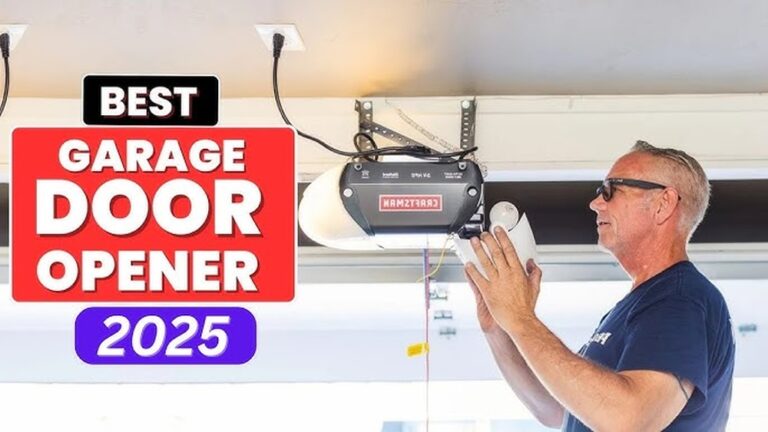

Why Do Garage Door Springs Break
When you press a button and your garage door opens smoothly, it’s easy to forget how many parts are working behind the scenes. One of the most important parts is the garage door spring. Without these springs, it would be almost impossible for you or the opener to lift the heavy door. But why do these springs break so often? For homeowners, a broken garage door spring is a common problem that can cause frustration and even safety risks. Let’s break down the real reasons springs fail, what you can do about it, and how to spot trouble before it happens.
How Garage Door Springs Work
To understand why springs break, you first need to know their job. A garage door spring acts like a counterbalance. It stores energy as the door closes, then releases that energy to help lift the door.
There are two main types:
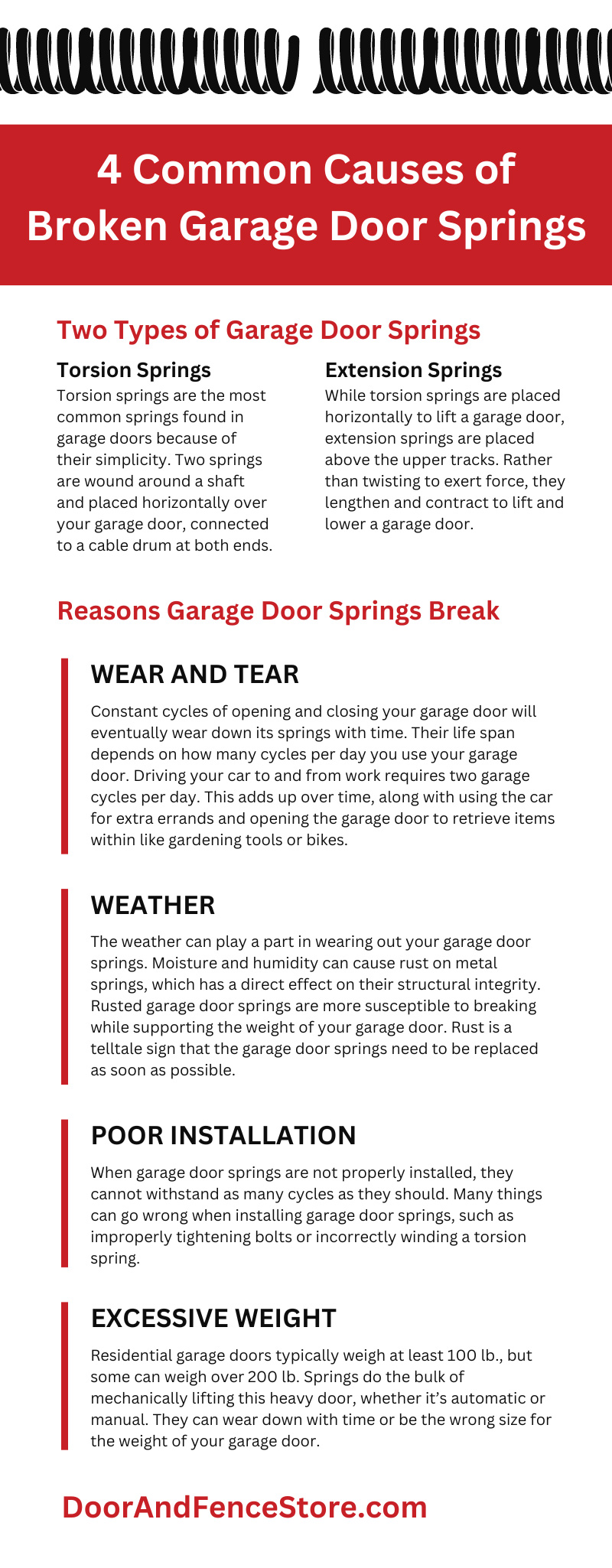
- Torsion springs: Mounted above the door, twisting to store energy.
- Extension springs: Located on both sides, stretching as the door closes.
These springs take on most of the door’s weight, making the opener’s job much easier. On average, a garage door can weigh between 130 and 400 pounds. The spring does the heavy lifting every time you open or close it.
The Most Common Reasons Garage Door Springs Break
Understanding why springs fail helps you prevent problems and know what to look for. Here are the main causes:
1. Natural Wear And Tear
Springs are rated by “cycles”—one up and down movement equals one cycle. Most standard springs are designed for about 10,000 cycles. If you open and close your door four times a day, that’s about seven years of use.
- Frequent use shortens lifespan.
- Springs weaken over time, even if they look fine.
- Signs of wear include gaps in the coil or the door feeling heavy.
2. Rust And Corrosion
Rust is a major enemy of springs. When moisture builds up, metal springs start to rust. This weakens the metal and makes it more likely to snap. Corrosion can cut spring life in half.
- Humid climates or garages with poor ventilation are most at risk.
- Salt from roads (in winter) can also cause rust.
- Spraying the springs with a garage door lubricant twice a year helps prevent rust.
3. Poor Maintenance
Many homeowners don’t realize that springs need care. Lack of maintenance is a top reason springs break early.
- Not lubricating the springs causes more friction.
- Ignoring early warning signs (like squeaking or jerky movement) leads to bigger problems.
- Simple checks every few months can spot issues before they get worse.
4. Wrong Spring Size Or Type
If the wrong spring is installed, it can’t handle the door’s weight properly. This causes stress and early failure.
- Replacing springs with the wrong size is a common DIY mistake.
- Doors with windows or insulation need stronger springs.
- Always match the spring type and strength to your door’s weight.
5. Extreme Temperature Changes
Springs are made of metal, which expands and contracts with heat and cold. Sudden temperature swings can weaken springs over time.
- In winter, metal can become brittle.
- In summer, expansion stresses the coils.
- Garages without climate control see more spring failures.
6. Manufacturer Defects
While rare, sometimes springs break early because of a manufacturing flaw. Low-quality metal or poor workmanship can lead to weak points in the spring.
- Cheaper springs often have a shorter lifespan.
- Reputable brands provide cycle ratings and warranties.

Credit: www.garagedoorspecialist.net
Signs Your Garage Door Spring Is Failing
A broken spring is obvious, but springs often show warning signs before snapping. Watch for these clues:
- The door feels heavier than usual.
- The opener strains or stalls.
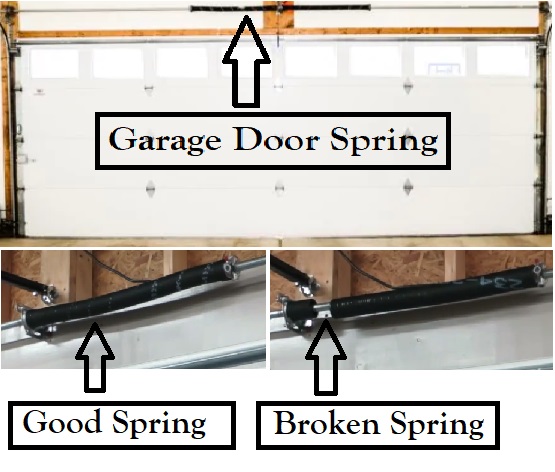
- You see a gap in the spring coil.
- Loud banging or popping noises.
- The door opens only a few inches, then stops.
- The door looks crooked when opening.
Spotting these signs early can save you from sudden breakdowns.
Real-world Data: Spring Lifespan And Failure Rates
Let’s look at some practical numbers to see how long garage door springs usually last, and what affects their lifespan:
| Spring Type | Average Lifespan (Cycles) | Average Years (4 Cycles/Day) |
|---|---|---|
| Standard Torsion | 10,000 | 7 |
| High-Cycle Torsion | 20,000–30,000 | 15–20 |
| Standard Extension | 10,000 | 7 |
Most homes use standard torsion or extension springs. If you have a busy household, your springs may wear out even faster.
Interesting Insight: Many people don’t realize that installing two torsion springs instead of one can double the door’s cycle life. This is especially useful for large or heavy doors.
Example: The Cost Of Ignoring Spring Issues
Let’s say your garage door is making a loud squeaking sound, but you ignore it. A few weeks later, the door suddenly refuses to open. You call a repair service. Not only do you pay for a spring replacement, but you might also need to fix the opener or cables, which can get damaged when springs break.
- Spring replacement cost: $150–$350 (parts and labor)
- Opener or cable repair: $100–$300 extra
A little maintenance can save you hundreds of dollars and a lot of hassle.
How To Prevent Garage Door Spring Breakage
You can’t stop all problems, but you can make your springs last longer with a few smart habits:
Regular Lubrication
- Use a garage door lubricant (not WD-40) every six months.
- Spray along the spring coil, then open and close the door to spread the oil.
- Lubrication reduces friction and helps prevent rust.
Visual Inspections
- Look for gaps, rust, or stretched coils.
- Check the door’s balance. Disconnect the opener and lift the door halfway. It should stay in place. If not, the springs may be worn.
- Listen for odd noises.
Control Moisture
- Keep your garage dry and well-ventilated.
- Seal any leaks or gaps that let in rain or snow.
- Wipe springs if you see condensation or water.
Schedule Professional Tune-ups
- Have a technician check your door and springs once a year.
- Professionals can spot problems you might miss.
- They can also adjust the tension for smooth operation.
Upgrade To High-cycle Springs
- Ask for high-cycle springs if you use your garage a lot.
- These cost a bit more but last up to three times longer.
- Consider two-spring systems for heavy doors.
Comparing Spring Quality: Standard Vs. High-cycle
Not all springs are created equal. Here’s a quick comparison of standard and high-cycle springs:
| Feature | Standard Spring | High-Cycle Spring |
|---|---|---|
| Cycle Life | 10,000 | 20,000–30,000 |
| Price | Lower | Higher |
| Best For | Light use homes | Busy families, commercial |
| Replacement Frequency | Every 7 years | Every 15–20 years |
Upgrading can be a smart investment if your family uses the garage as the main entry.
Common Mistakes That Lead To Early Spring Failure
Many homeowners make simple mistakes that can shorten spring life:
- Using the garage door as the main entrance for people, not just cars.
- Ignoring regular maintenance.
- Trying DIY spring replacement without proper tools or knowledge.
- Letting children hang or swing on the garage door.
- Not replacing both springs when one breaks (if your system uses two).
Avoiding these mistakes can add years to your springs’ lifespan.
Credit: doorandfencestore.com
When To Call A Professional
A broken garage door spring can be dangerous. The stored energy in these springs can cause injury if released suddenly. Here’s when you should call a pro:
- If you see a gap in the spring coil.
- If the door is too heavy to lift by hand.
- If the opener struggles or makes loud noises.
- If you’re unsure what type of spring you have.
Never try to fix or replace garage door springs yourself unless you have proper training and tools. The risk of injury is high.
Comparing Professional Vs. Diy Spring Replacement
Is it worth calling a professional? Here’s a side-by-side look:
| Aspect | Professional Repair | DIY Repair |
|---|---|---|
| Safety | High | Low (risk of injury) |
| Tools Needed | Provided | Special tools required |
| Time | 1–2 hours | 3+ hours (if inexperienced) |
| Warranty | Usually included | None |
| Cost | Higher upfront | Lower upfront, higher risk |
For most people, hiring a professional is safer and more reliable.
Frequently Asked Questions
What Are The Signs Of A Broken Garage Door Spring?
A few signs include the door feeling extremely heavy, a visible gap in the spring, the opener only lifting the door a few inches, or a loud bang when the spring snaps. If you notice these, stop using the door and call a professional.
Credit: mygaragesolutions.com
How Long Do Garage Door Springs Usually Last?
Standard springs last about 10,000 cycles—roughly 7 years for most homes. High-cycle springs can last 15–20 years with normal use.
Can I Open My Garage Door If The Spring Is Broken?
It’s possible but not recommended. The door will be very heavy and could fall quickly, causing injury or damage. Use the door only in an emergency, and never try to lift it alone.
How Can I Make My Garage Door Springs Last Longer?
Lubricate the springs twice a year, inspect them regularly, and keep your garage dry. Consider upgrading to high-cycle springs if you use your garage often.
Should I Replace Both Springs If Only One Breaks?
Yes. If your door uses two springs, always replace both. The other spring is likely worn and may break soon. Replacing both ensures balanced operation and longer life.
A little care goes a long way with garage door springs. By understanding why they break and how to look after them, you can avoid sudden hassles and keep your garage running smoothly for years. If in doubt, always trust a qualified technician—your safety is worth it. For more detailed technical information, visit the Wikipedia page on garage door openers.