
How To Ventilate A Garage
A garage often becomes stuffy, hot, or even dangerous if not ventilated well. Many people store chemicals, cars, and tools in their garages, which can cause bad air and high humidity. Without proper airflow, your garage can turn into a place for mold, strong odors, and even harmful gases like carbon monoxide.
If you spend time in your garage—whether for hobbies, work, or parking—ventilating it is not just about comfort but also about safety and protecting your belongings.
This guide explains how to ventilate a garage in simple steps. You’ll learn which methods suit different garages, what tools and devices make a real difference, and how to avoid common mistakes. Whether you use your garage for storage, as a workshop, or just for your car, these tips will help you create a safer and healthier space.
Why Garage Ventilation Matters
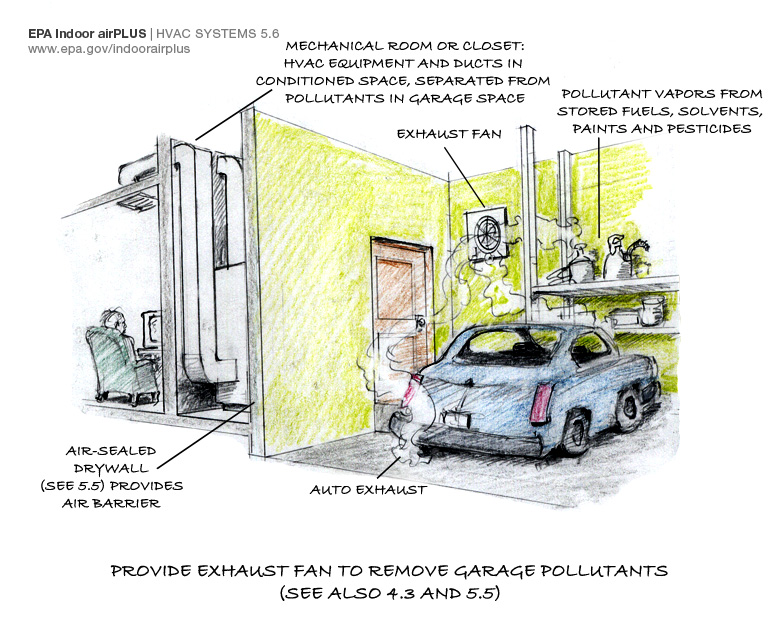
Many people underestimate the risks of poor garage ventilation. A closed garage traps fumes from cars, paints, and cleaning products. These fumes can be dangerous, especially if your garage connects to your home. Proper ventilation helps you:
- Remove harmful gases (like carbon monoxide)
- Lower humidity levels (reducing rust and mold)
- Control temperature (making the garage more comfortable)
- Eliminate bad odors
- Protect your car and tools from corrosion
For example, the U.S. Environmental Protection Agency warns that carbon monoxide from running cars can build up quickly in closed garages—even with the door open a little. Good airflow prevents this risk.
Common Signs Your Garage Needs Better Ventilation
How do you know if your garage has bad air? Look for these signs:
- Strong chemical smells that linger
- Condensation on windows, walls, or your car
- Rust on tools or metal shelves
- Mold spots on walls or ceiling
- Feeling hot, sticky, or short of breath inside
If you notice any of these, it’s a clear signal to improve your garage ventilation.
Main Types Of Garage Ventilation
There are several ways to move air in and out of a garage. The best method depends on your garage’s size, layout, and how you use it.
1. Natural Ventilation
This method uses openings like windows, vents, and the main garage door. It’s simple and low-cost.
How To Use Natural Ventilation
- Open the garage door for 10–15 minutes after starting or parking your car.
- If you have windows, open them on opposite sides to create a cross-breeze.
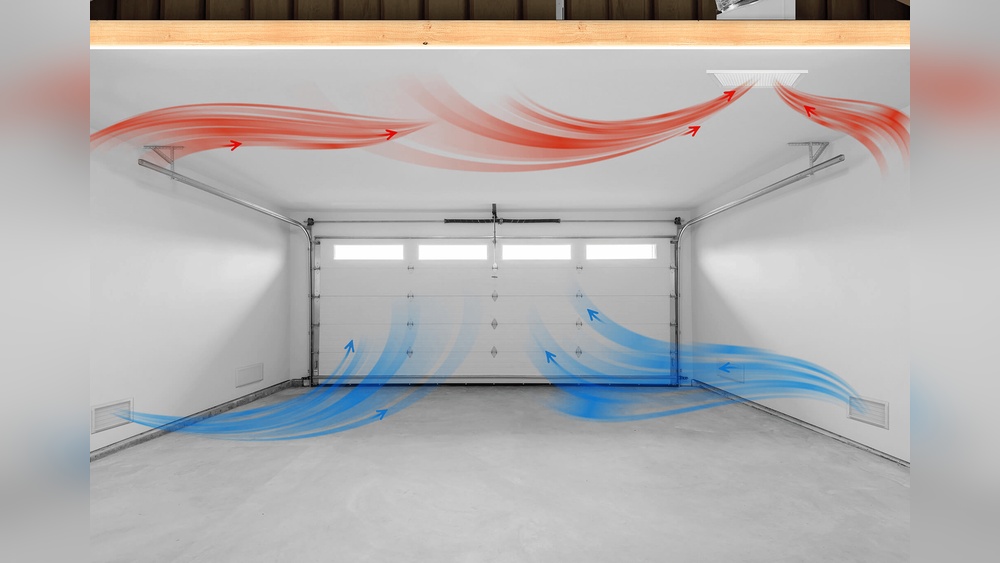
- Install wall vents or louvered vents high and low on opposite walls to help air flow naturally.
Pros And Cons
| Pros | Cons |
|---|---|
| Low cost | Less control over airflow |
| Easy to set up | Weather dependent |
| No electricity needed | Not enough for large garages |
2. Passive Vents
These are fixed vents you install in walls or the roof. They allow air to escape without fans.
- Soffit vents (under the eaves) and ridge vents (along the roof peak) work together to let hot air rise and exit.
- Gable vents go on the garage’s side walls, helping hot air escape.
Passive vents are a good upgrade if you don’t want the noise or cost of fans.
3. Mechanical Ventilation
Mechanical systems use fans to force air in or out. This gives you more control.
Popular Mechanical Solutions
- Exhaust fans: Installed in a wall or ceiling, these pull air out of the garage.
- Intake fans: Bring fresh air in, often paired with an exhaust fan.
- Whole-house fans: Can include the garage in the air cycle, moving large volumes of air.
Example: Sizing An Exhaust Fan
For a standard 2-car garage (about 400 sq ft), you’ll want a fan that can move about 600–800 cubic feet per minute (CFM). Calculate the right size:
- Measure garage length × width × height = total cubic feet.
- Multiply by 10 (for 10 air changes per hour).
- Divide by 60 for the minimum CFM needed.
So, for a 400 sq ft garage with 8 ft ceilings:
400 × 8 = 3,200 Cubic Feet
3,200 × 10 = 32,000
32,000 ÷ 60 = About 533 Cfm Minimum
Comparing Garage Ventilation Methods
Choosing the right method depends on your budget, climate, and garage use.
| Method | Best For | Cost | Effectiveness |
|---|---|---|---|
| Natural Ventilation | Detached garages, mild climates | Low | Moderate |
| Passive Vents | Permanent solution, low noise | Low-Mid | Good for moderate needs |
| Mechanical Fans | Workshops, attached garages | Medium-High | High |
Credit: www.danmarque.co.uk
Step-by-step: How To Ventilate A Garage
You don’t need to be an expert to improve your garage’s air. Here’s how:
Step 1: Assess Your Garage
- Measure the size (length, width, and height).
- Note the number of cars, tools, or machines inside.
- Check for any existing vents or windows.
Step 2: Choose Your Ventilation Method
- For small, detached garages: Natural ventilation or passive vents may be enough.
- For attached or large garages: Consider mechanical fans or a combination.
Step 3: Install Vents Or Fans
- If adding wall vents, place one low and one high on opposite walls.
- For roof vents, install soffit vents low and ridge vents high.
- If adding a fan, cut a hole in the wall/ceiling, mount the fan, and connect it to power. Always follow safety instructions.
Step 4: Test Airflow
- Light a stick of incense and watch the smoke. If it moves toward the vent or outside, your system works.
- If air feels stale or hot, increase the size or number of vents/fans.
Step 5: Use Smart Habits
- Open the main door when running engines or using strong chemicals.
- Don’t block vents with shelves or boxes.
- Clean vents and fans every few months.
Extra Tips To Maximize Garage Airflow
- Add a door vent at the bottom of the garage door for extra airflow.
- Use a portable fan on hot days to push air toward an open window or vent.
- For garages with attic space, install a roof vent to let hot air rise and escape.
- Seal cracks or gaps in walls to prevent unwanted air leaks, focusing airflow where you want it.
Common Mistakes To Avoid
Even with the best intentions, people make errors that reduce garage airflow:
1. Using Only The Main Garage Door
This brings in air, but also lets in dust, bugs, and weather. It’s not enough for real ventilation.
2. Ignoring Humidity
High moisture causes mold. Use a dehumidifier if you live in a damp area.
3. Blocking Vents
Shelves and storage can block airflow. Always keep vents clear.
4. Installing A Fan That’s Too Small
Many people buy the cheapest fan. If it’s not strong enough for your garage size, it won’t help.
5. Not Maintaining Vents And Fans
Dust and dirt can clog vents. Clean them regularly for the best results.
When To Call A Professional
If you notice strong gasoline smells, visible mold, or headaches when in the garage, consider hiring a pro. They can check for serious issues like carbon monoxide leaks, hidden mold, or electrical hazards. Sometimes, local building codes require certain vent types or sizes, especially in new homes.
Real-world Example
Maria had a one-car attached garage in a humid area. She noticed tools rusting and a musty smell. She installed two passive wall vents (one high, one low) and added a small exhaust fan. Within two weeks, the smell disappeared and her tools stayed dry.
She spent less than $200, and the job took one afternoon.
Garage Ventilation And Climate Control
Good ventilation also helps regulate temperature. In hot climates, a garage can be 10–20°F hotter than outside. In cold climates, poorly ventilated garages can hold moisture, leading to ice or condensation.
Consider combining ventilation with insulation for best results. Insulation keeps heat out in summer and warmth in during winter, while ventilation removes stale air and moisture.
Credit: www.danleys.com
Safety Precautions
- Never leave your car running in a closed garage, even for a few minutes.
- Keep flammable liquids sealed and away from vents or electrical devices.
- Use only UL-listed fans and electrical parts for safety.
- Check local codes before adding vents or fans, especially for attached garages.
Comparing Garage Fan Types
There are many fan options. Here’s a quick comparison:
| Fan Type | Noise Level | Airflow (CFM) | Best For |
|---|---|---|---|
| Wall Exhaust Fan | Medium | 300–800 | 1-2 car garages |
| Attic/Roof Fan | Low-Medium | 500–1500 | Large or attached garages |
| Portable Floor Fan | High | 200–1000 | Temporary use |
Credit: basc.pnnl.gov
Practical Data: Garage Ventilation Rates
Experts recommend at least 6–10 air changes per hour for garages. This means all the air in your garage should be replaced with fresh air every 6 to 10 times each hour. For a 400 sq ft garage with 8 ft ceilings, that’s about 3,200 cubic feet of air. An exhaust fan moving 600 CFM will change all the air in about 5 minutes.
Non-obvious Insights For Beginners
- Vents work best in pairs: One for intake (low), one for exhaust (high). This creates a path for air to flow.
- Garage contents affect air quality: Stored items like paint, gasoline, and fertilizer give off fumes even when closed. Good airflow removes these slow leaks before they build up.
Where To Learn More
For more details about safe garage ventilation and air quality, see the EPA’s Indoor Air Quality resource.
Frequently Asked Questions
Why Is My Garage Always So Hot?
Garages heat up because they absorb sun through the roof and walls. Without ventilation, hot air gets trapped. Adding roof vents or a fan can help remove heat and lower temperatures.
Can I Use A Bathroom Fan In My Garage?
A standard bathroom fan is usually too small for a garage. Most bathroom fans move only 50–110 CFM, but garages need 400–800 CFM. Use a fan designed for larger spaces.
How Much Does It Cost To Ventilate A Garage?
Costs range from $50 for simple wall vents to $300 or more for a strong exhaust fan with installation. Passive vents are cheapest; mechanical fans cost more but work better for large or attached garages.
Is Garage Ventilation Required By Building Codes?
In many areas, attached garages must have some ventilation by law. Check your local building codes before starting work, especially if you are adding electrical fans.
Can Good Ventilation Help With Car Fumes?
Yes. Proper ventilation quickly removes carbon monoxide and other car exhaust gases, making the garage safer for you and your family. Always open the door when starting or parking your car.
A well-ventilated garage is safer, more comfortable, and protects your property. With the right steps, you can improve your garage air quality, no matter your budget or experience level.