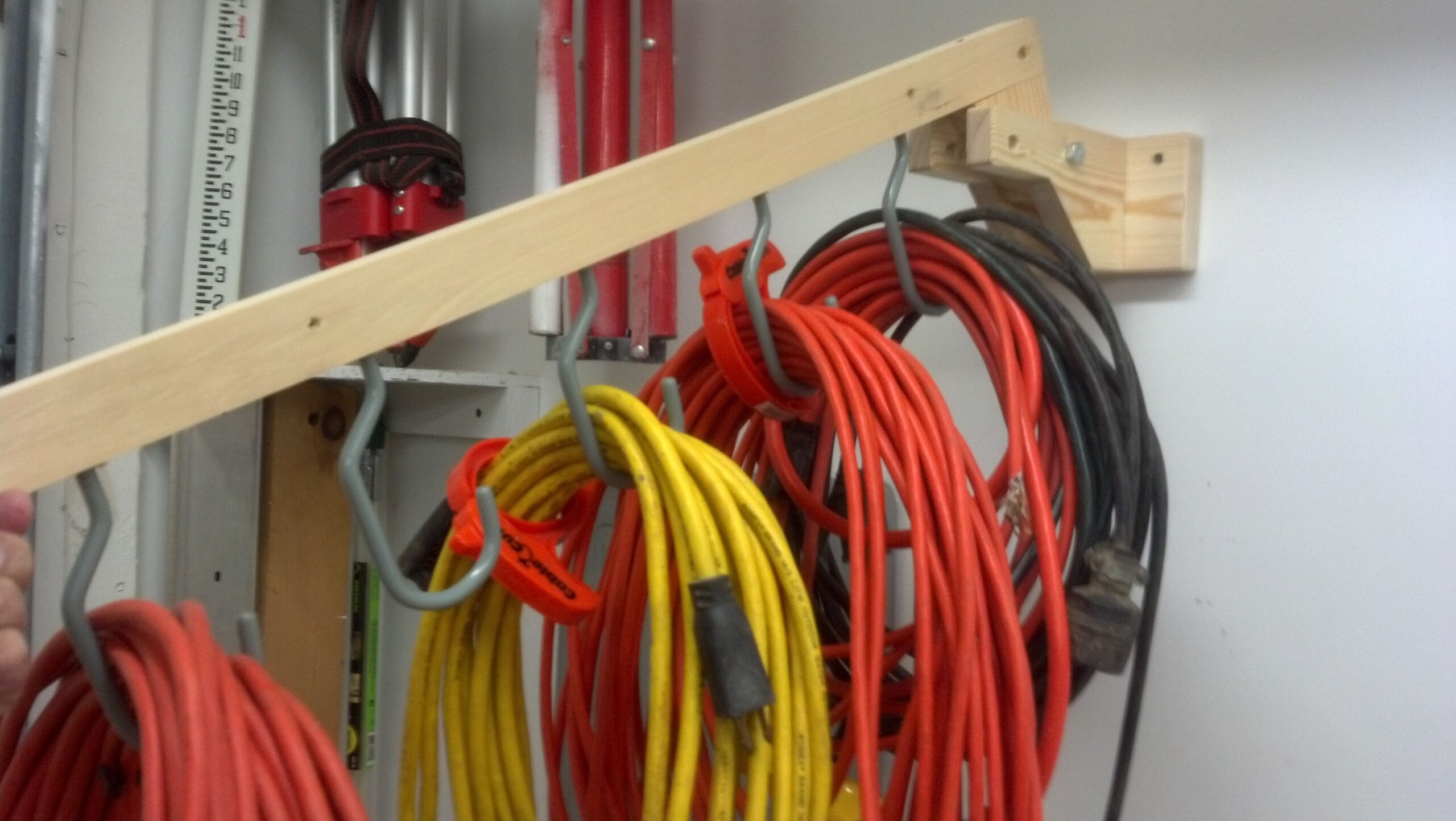
The best extension cord storage ideas include loose over-under coiling, wall-mounted hooks, cord reels, labeled storage bins, and dedicated garage racks. Choose a method that fits the cord length, keeps plugs easy to reach, and protects the cord from damage.
In American homes, extension cords often end up in garages, basements, sheds, and crowded utility closets. A cord used for holiday lights may sit beside a heavy-duty cable for power tools, while shorter cords get mixed with chargers and household supplies. The result is a tangled pile that takes time to sort and can hide damaged wires.
A simple storage system can make your garage or workshop easier to use. You do not need an expensive organizer or a large amount of wall space. A few suitable hooks, a cord reel, or a labeled bin can work well when you match the method to the cord and its intended use.
Safe storage matters just as much as neat storage. A cord should be unplugged before you coil it, kept away from sharp edges and excessive heat, and checked for cuts, crushed spots, loose plugs, or other damage. Never use a damaged cord, and do not assume that a neatly wrapped cable is safe to use under every electrical load.
Source: static.recode.net
15 Practical Extension Cord Storage Ideas
The right storage method depends on how often you use a cord, how long it is, and where you keep it. A short indoor cord needs little space, while a long outdoor cord may be easier to manage on a suitable reel or large hook.
Start by sorting your cords into groups. Separate indoor household cords, outdoor extension cords, heavy-duty workshop cords, and specialty cables. Then choose one storage method for each group instead of forcing every cord into the same solution.
Source: fity.club
Choose storage by cord type
Keep frequently used cords easy to reach, and place seasonal cords in labeled storage.
Inspect before organizing
Remove damaged cords from service instead of placing them back into storage.
1. Use the Over-Under Coiling Method
Over-under coiling is a useful way to store flexible extension cords without adding the repeated twists that can develop with a simple circular wrap. It works well for household cords, workshop cables, and cords that you need to unwind often.
Unplug the cord and straighten it on a clean surface. Make one loop in its natural direction, then make the next loop in the opposite direction. Continue alternating the loops until the cord is gathered, and secure it loosely with a reusable hook-and-loop strap.
Keep the loops broad enough to avoid sharp bends. Do not pull the cord tight around your hand, wrap it around a small object, or force a stiff cable into a compact coil. The cord manufacturer’s minimum bend guidance takes priority.
Best for
Flexible cords that are frequently removed from storage and used in different locations.
Main benefit
The cord is easier to unwind and less likely to develop unwanted twists.
2. Install Wall-Mounted Cord Hooks
Wall-mounted hooks turn unused garage or workshop wall space into simple cord storage. They are useful when you want to keep cords off the floor and within reach of a workbench.
Choose a hook with enough width and a smooth surface to support the cord without pinching it. Mount the hook into a suitable wall stud or use an anchor rated for the wall material and expected load. Follow the hardware manufacturer’s installation instructions.
Hang the cord in broad loops rather than wrapping it tightly around a narrow hook. Keep the plug from dragging on the floor, and place the hook away from sharp tools, moving equipment, and hot surfaces.
Best for
Garages, sheds, and workshops with available wall space.
Main benefit
Cords stay visible, accessible, and off walking paths.
3. Store Long Cords on a Suitable Cord Reel
A cord reel can make a long extension cord easier to wind and unwind. It is especially useful for workshop tasks, yard maintenance, and other jobs that require moving a cord between locations.
Select a reel that matches the cord’s length, wire gauge, plug type, and intended use. Some reels are designed for indoor use, while others are made for specified outdoor conditions. Check the manufacturer’s instructions before buying or using one.
Pay attention to heat when using a reel. Coiled cord can retain heat under electrical load, and some reels have a lower permitted load when the cord remains wound. Follow the marked ratings and instructions, including any requirement to fully unwind the cord before use.
Best for
Long cords that are used regularly and would otherwise form large, tangled loops.
Main benefit
The reel provides controlled winding and can reduce handling time.
4. Add a Wall-Mounted Cord Rack
A cord rack is a good choice when you own several extension cords of different lengths. Multiple hooks or support points let you keep each cord separate, making it easier to choose the right one for a job.
Install the rack at a height that lets you lift cords on and off without straining. Leave enough space between hooks so bulky coils do not overlap or become difficult to remove. Label each position with a simple description, such as indoor, outdoor, or workshop.
Avoid overloading the rack or using sharp metal edges that could cut the insulation. A rack should support the weight of the cord without crushing it.
Best for
Busy garages and workshops with several cords.
Main benefit
Each cord has a clear place, which makes cleanup easier.
5. Use a Dedicated Storage Bin
A storage bin is a simple option for small homes, apartments, and garages with limited wall space. Choose a bin large enough to hold broad cord loops without forcing them into a tight bundle.
Use a separate bin for extension cords rather than mixing them with sharp hand tools, screws, or heavy equipment. If the cords are used outdoors, make sure they are clean and fully dry before putting them away.
Do not treat an ordinary plastic bin as a protective enclosure for live electrical connections. Storage containers are for unplugged cords, not for operating electrical equipment.
Best for
Occasional-use cords and small storage areas.
Main benefit
A bin keeps cords together and makes shelf storage simple.
6. Repurpose a Pegboard
A pegboard offers flexible storage for a home workshop. You can arrange compatible hooks and holders to separate extension cords from other workshop supplies.
Use hooks designed for the pegboard system and suitable for the weight of the cords. Keep the loops large, and arrange the board so plugs do not catch on nearby tools.
This method works best when you have a clear wall and want to adjust the layout as your tool collection changes. It may be less useful for very heavy or bulky cords unless the mounting system is rated for them.
Best for
Home workshops with pegboard tool storage.
Main benefit
The storage layout can change as your needs change.
7. Make a DIY Cord Holder From Scrap Wood
A basic wooden cord holder can be made from suitable scrap lumber and sturdy mounting hardware. It may include a broad support or several rounded pegs that hold separate coils.
Sand all contact surfaces until they are smooth. Remove splinters, protruding screws, and sharp corners that could damage the cord. Attach the holder securely to an appropriate support and check that it can handle the expected load.
Do not make narrow slots that squeeze the cord or use exposed nails as hooks. A DIY holder should be easy to load and unload without forcing the cord into a tight bend.
Best for
DIY enthusiasts who already have basic woodworking supplies.
Main benefit
The size and number of holders can be tailored to your storage space.
8. Use Large Reusable Cable Straps
Reusable hook-and-loop straps help keep a coil together when you store it on a shelf, in a cabinet, or on a rack. They are easy to remove when you need the cord again.
Place the strap around the gathered loops without pulling it tight. The strap should prevent the coil from falling apart, not compress the cable or bend it sharply near the plug.
Avoid thin ties that cut into the jacket, and do not use tight plastic zip ties as permanent cord restraints. If you use a tie for temporary storage, check that it does not create pressure points.
Best for
Keeping individual coils tidy before placing them on a shelf or hook.
Main benefit
The coil stays together without needing a dedicated organizer.
9. Organize Cords in a Garage Cabinet
A garage cabinet keeps extension cords away from dust, clutter, and accidental contact with stored tools. It also provides a clear place for cords that are not used every day.
Use shelves or separate compartments to keep different cord types apart. Store heavy cords on a lower shelf if that makes them easier to lift, and avoid placing sharp tools on top of the coils.
The cabinet must be suitable for the storage environment. An ordinary cabinet is not automatically weatherproof, waterproof, or fireproof, so do not rely on it to protect cords from damp conditions or extreme heat.
Best for
Homeowners who want a cleaner garage with hidden storage.
Main benefit
Cords stay grouped and protected from everyday workshop clutter.
10. Keep Short Cords in a Small Organizer
Short extension cords and appliance cords can get lost in large storage bins. A small compartment organizer or divided drawer keeps them separate and easy to find.
Use broad loops and leave enough room for plugs and connectors. Do not bend a cord sharply to make it fit a small compartment, and never force a thick cord into a container intended for thin charging cables.
If you store several types of cable in the same drawer, label the compartments. This helps prevent confusion between extension cords, data cables, and specialty power leads.
Best for
Short indoor cords and small household cables.
Main benefit
Small cords remain separated instead of disappearing into a large bundle.
11. Create a Seasonal Cord Storage Zone
Seasonal cords are easier to manage when they have a dedicated storage area. Holiday lighting cords, outdoor decorations, and occasional-use extension cords can be stored together without crowding the cords you use every week.
Coil each cord loosely, attach a label, and group the cords by task. For example, one container can hold cords used for holiday lighting, while another holds cords for occasional yard work.
Before storing a cord for several months, unplug it, inspect the jacket and plugs, and make sure it is dry. Remove damaged cords from service rather than saving them for another season.
Best for
Holiday decorations and other occasional household tasks.
Main benefit
Seasonal items stay together and are easy to retrieve.
12. Add Clear Labels to Every Cord
Labels make a storage system more useful because the right cord is easier to identify. Mark the cord with its length, intended setting, and any relevant rating information that you can read from its markings.
Use a label or tag that does not damage the insulation. Keep it away from plug contacts, and avoid wrapping adhesive tape so tightly that it compresses the cord. Do not cover the manufacturer’s safety markings.
Labels do not replace checking the cord’s actual ratings. A label that says outdoor does not prove that a cord is suitable for every weather condition or electrical load.
Best for
Homes and workshops with several cords that look alike.
Main benefit
You can select a suitable cord without unwinding every coil.
13. Use a Heavy-Duty Cord Storage Hanger
A broad, purpose-built cord hanger can support a larger coil without taking up much floor space. It may work well for a heavy-duty extension cord used with suitable outdoor equipment or workshop tools.
Check the hanger’s load rating, mounting method, and surface finish. Use a mounting point that can support the full load, and avoid hanging a heavy coil from a small hook attached only to weak drywall.
Do not confuse a storage hanger with an electrical reel. A hanger holds an unplugged cord, while a reel may be designed for winding and, in some cases, controlled use according to its specific instructions.
Best for
Bulky cords that are too large for small household hooks.
Main benefit
A suitable hanger keeps a heavy coil off the floor.
14. Use a Portable Cord Organizer for Mobile Work
A portable cord organizer is useful when you carry extension cords between a garage, driveway, jobsite, or storage shed. A sturdy organizer can keep the cord together while allowing you to move it as part of a tool kit.
Choose a design with enough space for broad loops and a handle that supports the cord’s weight. Keep the plug protected from impacts and avoid placing heavy tools on top of the organizer.
For work outside the home, inspect the cord before each use and make sure it is suitable for the environment and equipment. Storage convenience does not change the cord’s electrical rating.
Best for
People who move tools and cords between work areas.
Main benefit
The cord can be carried and stored as one organized unit.
15. Build a Dedicated Cord Storage Station
A dedicated storage station combines several methods in one place. You might use a rack for long cords, a small bin for short cords, a reel for a frequently used cable, and labels for each category.
Choose a location with enough room to remove each cord without pulling neighboring coils down. Keep the station away from direct heat, water leaks, and sharp objects, and do not block exits or access to electrical panels.
A simple station can be built over time. Start with the cords you use most often, then add storage for seasonal or specialty cords as needed.
Best for
Large garages, home workshops, and households with many cords.
Main benefit
Every cord has a consistent place, which supports safer handling and faster cleanup.
How to Choose the Best Extension Cord Storage Method
The best storage method is the one that fits your cord and your space without causing damage. Consider cord length, thickness, weight, how often you use it, and whether it stays indoors or goes outside.
For a few short cords, a labeled bin may be enough. For a collection of long workshop cords, wall racks or compatible reels can make a bigger difference.
Source: fity.club
Consider the available space
Use wall-mounted storage when floor space is limited, or choose bins and cabinets when the walls are already full.
Consider how often you need the cord
Keep daily-use cords within easy reach and seasonal cords in a separate labeled area.
Consider cord weight and flexibility
Large, stiff cables need broader support than thin, flexible household cords.
Storage Method Comparison
Use the table below to compare common methods by their main purpose. These are practical selection guidelines, not test results or universal performance rankings.
Wall hook or rack
Useful for frequently used cords when suitable wall space and secure mounting are available.
Cord reel
Useful for long cords that need controlled winding, provided the reel matches the cord and its intended use.
Storage bin
Useful for occasional-use cords and small spaces, as long as the cords are dry and not tightly packed.
Over-under coil with a strap
Useful for flexible cords that need to be stored and removed often.
Cabinet or storage station
Useful for organizing several cord types in a garage or workshop.
Match Storage to Your Room
In a garage, wall racks and broad hooks can free up floor space. In a basement, a shelf or cabinet may be more practical, provided the area stays dry and the cords remain away from heat sources.
In a small apartment, a labeled bin stored in a dry closet may be enough. For a workshop, separate holders for long cords and short cords can make it easier to select the right cable without disturbing the rest.
Garage
Use sturdy racks, hooks, or a dedicated storage station.
Basement
Choose a dry shelf or cabinet above any area that may flood.
Apartment
Use a compact organizer or a bin with broad loops.
Workshop
Use separate storage points for different lengths and cord types.
How to Organize Extension Cords Step by Step
You can organize most household extension cords in a short session. The key is to sort first, inspect every cord, and then assign a storage place that makes sense for its intended use.
Do not rush through the inspection just to finish the job. Finding a damaged cord before it goes back into storage is more useful than making a neat display of cords that should no longer be used.
Source: storage.googleapis.com
Step 1: Gather the cords
Collect extension cords from the garage, utility closet, basement, shed, and other storage areas.
Step 2: Unplug everything
Disconnect cords from outlets and equipment before handling, coiling, or inspecting them.
Step 3: Check for damage
Look for cuts, cracks, exposed conductors, crushed sections, bent plug blades, and loose connections.
Step 4: Sort by purpose
Separate indoor cords, outdoor cords, heavy-duty cords, and specialty cables.
Step 5: Choose a storage method
Use hooks, racks, reels, bins, or broad coils according to cord size and storage space.
Step 6: Add labels
Mark useful details such as length and intended use without covering the manufacturer’s markings.
Step 7: Test the storage setup
Remove one cord and put it back. Make sure the process is easy and does not pull, pinch, or sharply bend the cord.
Signs That Your Storage System Works
A good storage system lets you find the cord you need without moving a pile of other items. Each coil should come off its hook or out of its bin without snagging, and the plugs should remain easy to inspect.
You should also be able to tell indoor cords from outdoor cords and identify relevant electrical ratings before use. If cords keep falling, tangling, or getting crushed, change the holder size or storage layout.
Easy access
You can remove and replace one cord without disturbing several others.
Clear identification
Labels and cord markings help you choose a suitable cord.
No visible damage
Stored cords have no new cuts, crushed areas, or sharply bent sections.
Extension Cord Storage Safety Rules
Safe storage starts with an unplugged cord in good condition. Storage cannot repair damaged insulation or make an undersized cord suitable for a demanding appliance.
Follow the markings on the cord and the instructions supplied by the manufacturer. The right storage method also depends on the cord’s construction, flexibility, environment, and intended electrical load.
Source: storage.googleapis.com
Keep cords unplugged during storage
Never store a cord with exposed plug contacts connected to a live power source.
Avoid moisture
Store cords in a dry place and let a cord dry fully before storage if it has been exposed to water.
Avoid heat and sharp edges
Keep cords away from heaters, hot equipment, blades, and abrasive surfaces.
Do not overload holders
Use hooks, racks, and mounting hardware that can safely support the cord’s weight.
Can You Store an Extension Cord While It Is Coiled?
Yes. An unplugged extension cord can generally be stored in a loose coil when the coil does not violate the manufacturer’s bend guidance or put stress on the cable. Use broad loops rather than winding the cord tightly around a small object.
The main concern is not simply whether a cord is coiled in storage. Heat can become a problem when some cords are carrying electrical current while wound on a reel or tightly bundled. Follow the product’s instructions about winding and electrical load, and fully unwind the cord when required.
For storage
Use loose loops and avoid pressure on the insulation, plug, and strain relief.
For operation
Follow the cord and reel ratings, including instructions about unwinding before use.
How to Inspect a Cord Before Putting It Away
Run your eyes along the cord and inspect both ends. Look for damaged insulation, cuts, cracks, flattened sections, scorch marks, exposed wire, loose plugs, and signs of overheating.
Do not plug in a damaged cord to see whether it still works. Remove it from service and replace it with a suitable cord. If damage involves fixed household wiring, an outlet, or a permanent electrical installation, contact a qualified electrician.
Inspect the jacket
Check the full cable length for cuts, splits, cracks, and crushed areas.
Inspect the plugs
Look for bent blades, loose parts, discoloration, or signs of overheating.
Check the markings
Confirm the cord is appropriate for its intended environment and electrical load.
Outdoor Extension Cord Storage
Outdoor cords need storage that keeps them dry and protects them from sunlight, dirt, sharp objects, and extreme temperatures. A garage shelf or enclosed cabinet may work when the location is dry and the cord is appropriate for its intended outdoor use.
Do not assume that a waterproof storage box makes an indoor-rated cord suitable for outdoor use. Select the cord for the actual conditions, including moisture exposure and the equipment being powered.
After outdoor use, unplug the cord before handling it. Clean it according to the manufacturer’s instructions, allow it to dry fully, inspect it, and store it in the designated location.
Best practice
Keep outdoor cords separate from indoor cords and identify them clearly.
Avoid
Do not leave stored cords in standing water, damp soil, or places where vehicles can crush them.
Extension Cord Storage Mistakes to Avoid
Many storage problems begin with a cord being forced into a space that is too small. Tight bends, sharp hooks, and heavy objects can damage the insulation or place strain on the plug connections.
Another common mistake is storing every cable together without labels. This makes it harder to identify the right cord and can lead to unsuitable use. Keep electrical extension cords separate from charging leads and unrelated cables when that improves identification.
Tight wrapping
Avoid small loops, tight knots, and strong pressure from straps.
Poor mounting
Do not attach heavy coils to weak hooks or mounting points that cannot support them.
Ignoring damage
Do not return a damaged cord to storage for later use.
Using a reel without checking its instructions
A reel’s permitted load and winding requirements depend on its design and the cord it holds.
Affordable DIY Extension Cord Storage Projects
You can improve cord storage without buying a full garage organization system. A small DIY project can provide enough space for the cords you own, as long as the holder is smooth, secure, and suited to the cable’s size.
Start with the simplest option that solves the problem. A labeled bin may be all you need for a few household cords, while a wall-mounted rack makes more sense for a collection of long workshop cables.
Source: storage.googleapis.com
DIY project 1: A simple wall hook station
Mount suitable broad hooks to a secure support and assign one hook to each cord category.
DIY project 2: A divided storage box
Use a suitably sized box with dividers to separate short cords from larger coils.
DIY project 3: A labeled shelf system
Set aside separate shelf areas for indoor, outdoor, and heavy-duty cords.
What You Need Before Starting
Gather a tape measure, labels, reusable cord straps, and the storage hardware needed for your chosen method. If you plan to mount a rack, use hardware suited to the wall material and expected weight.
Measure the available space before buying materials. Leave room to lift a coil off the holder without scraping it against nearby shelves, tools, or sharp edges.
Measure first
Check the width, depth, and height available for the complete coil.
Choose suitable materials
Use smooth, durable supports that do not pinch or cut the cord.
Check the mounting
Make sure wall hardware and supports are suitable for the load.
How to Maintain the Storage Area
Check the storage area from time to time for dust, moisture, loose hardware, and new damage to the cords. Keep the floor clear and return each cord to its assigned spot after use.
When you buy a new cord, inspect its markings and decide where it belongs before adding it to the collection. Remove cords that are damaged, unsuitable, or no longer needed instead of allowing the storage area to become crowded again.
Keep the system simple
Use labels and storage categories that make sense to everyone in the household.
Review the hardware
Tighten or replace loose mounting hardware when needed, following the hardware manufacturer’s instructions.
How to Store Extension Cords in Small Spaces
Small spaces need compact storage, but compact should not mean cramped. Choose a method that uses available wall, shelf, or cabinet space while allowing each cord to keep a broad, relaxed coil.
A small collection may fit neatly in a labeled bin on a dry shelf. If you have many cords, separate them by size and intended use before deciding which items need to stay close at hand.
Source: fity.club
Use vertical space
A suitable wall rack can free up a shelf or floor area.
Store by frequency of use
Keep common household cords accessible and place seasonal cords in a separate area.
Avoid overfilling containers
Leave enough room to remove each cord without pulling or crushing other coils.
Storage Ideas for Apartments and Utility Closets
For an apartment, a small cabinet, dry closet shelf, or divided storage box can be enough. Use broad loops and choose a container that does not force thick cables into tight bends.
Keep extension cords away from cleaning chemicals that could damage their insulation, and do not place heavy objects on top of stored cables. If the closet contains a water heater or another heat-producing appliance, choose a different location that meets the appliance and cord storage requirements.
Use one labeled container
A dedicated bin makes it easier to keep extension cords separate from miscellaneous cables.
Keep cords accessible
Arrange the coils so you can lift out one cord without emptying the container.
A Simple Extension Cord Storage Plan for Your Home
A practical storage plan does not need to be complicated. Begin with one area, such as the garage or utility closet, and sort the cords you actually own before choosing organizers.
For many households, a combination works better than a single storage product. Use hooks or a rack for frequently used long cords, a bin for short indoor cords, and a separate labeled area for outdoor or seasonal cords.
Source: liveneat.com
Daily-use cords
Keep them on accessible hooks or a suitable rack near the work area, away from heat and hazards.
Occasional-use cords
Store them in a labeled bin or cabinet in a dry location.
Long or bulky cords
Use a properly sized hanger, rack, or reel that matches the cord.
Damaged cords
Remove them from service and replace them with cords suitable for the intended use.
A Quick Final Checklist
Before finishing, check that every cord is unplugged, inspected, and stored in a suitable location. Confirm that no coil is compressed by a tight strap, pinched by a hook, or trapped beneath heavy items.
Try taking out each cord and returning it to its place. If the process is easy and the cord stays in good condition, your storage setup is ready for regular use.
Inspect
Look for damage before storage and again before use.
Organize
Separate cords by purpose, size, and intended environment.
Protect
Use smooth supports and broad loops, and avoid moisture, heat, and crushing.
Identify
Keep useful labels and manufacturer markings visible.
Frequently Asked Questions
Q
What Is the Best Way to Store an Extension Cord?
For many flexible household cords, a loose coil secured with a reusable hook-and-loop strap is a simple option. A wall hook or rack works well when you have several cords, while a suitable reel can help manage a long cord that is used often. Choose the method that avoids tight bends, crushing, and strain on the plugs.
Q
Is It Safe to Wrap an Extension Cord Around Your Hand?
It is better to avoid wrapping a cord tightly around your hand because the resulting loops may be too small and can introduce twists. Instead, make broad loops on a clean surface and use an over-under technique when appropriate. Follow the manufacturer’s bend guidance, especially for thick or stiff cords.
Q
Should Extension Cords Be Stored in a Plastic Bin?
A plastic bin can be suitable for unplugged, clean, dry extension cords when it is large enough to hold them without tight bends. Keep the bin away from moisture, excessive heat, sharp tools, and heavy items that could crush the cords. An ordinary storage bin is not a protective enclosure for live electrical connections.
Q
Can You Leave an Extension Cord on a Reel?
You can store an unplugged cord on a suitable reel. During use, however, follow the reel and cord manufacturer’s instructions because electrical load, cord construction, and winding can affect heat buildup. Some products require the cord to be fully unwound before carrying a load, so check the markings and instructions rather than assuming every reel works the same way.
Q
How Do You Store Long Extension Cords Without Tangling?
Use a broad over-under coil, a suitable wall-mounted cord rack, or a compatible cord reel. Keep the loops large enough to avoid sharp bends and secure the coil loosely. For several long cords, separate hooks and clear labels can prevent one coil from becoming tangled with another.
Q
How Should Outdoor Extension Cords Be Stored?
Unplug the cord, inspect it, clean it according to its instructions, and allow it to dry fully before storage. Keep it in a dry location away from sharp tools, direct heat, and conditions that could damage its insulation. Use a cord rated for the intended outdoor conditions; a storage box alone does not make an indoor cord suitable for outdoor use.
Q
When Should an Extension Cord Be Replaced?
Remove a cord from service if it has exposed conductors, damaged insulation, a cracked plug, loose connections, scorch marks, or other signs of electrical damage. Do not repair a damaged household extension cord with ordinary tape or continue using it because it still supplies power. Replace it with a cord that meets the needs of the equipment and environment.
✦ Wrapping Up
Conclusion
The best extension cord storage ideas are simple, practical, and suited to the cords you use. Wall hooks, storage racks, cord reels, labeled bins, and loose over-under coils can all help keep a garage, workshop, or home organized.
Start by unplugging and inspecting every cord, then separate the cords by length and intended use. Choose smooth, sturdy storage that prevents tight bends, crushing, moisture exposure, and unnecessary strain on the plugs.
A well-organized storage area makes cords easier to find and return after use. More importantly, it gives you a chance to spot damage before a cord is used again.
💡 Key Takeaway
Gather your extension cords today, remove damaged ones from service, sort the rest by intended use, and give each cord a dry, clearly labeled storage place.
Sarah believes that a messy garage is a wasted room. After years of working in professional home staging and interior design, she shifted her focus to the most neglected part of the house: the garage. She focuses on vertical storage, aesthetic floor coatings, and converting dusty corners into functional workspaces. Sarah’s goal is to help you "unlock" every square inch of your garage.
Sarah believes that a messy garage is a wasted room. After years of working in professional home staging and interior design, she shifted her focus to the most neglected part of the house: the garage. She focuses on vertical storage, aesthetic floor coatings, and converting dusty corners into functional workspaces. Sarah’s goal is to help you "unlock" every square inch of your garage.