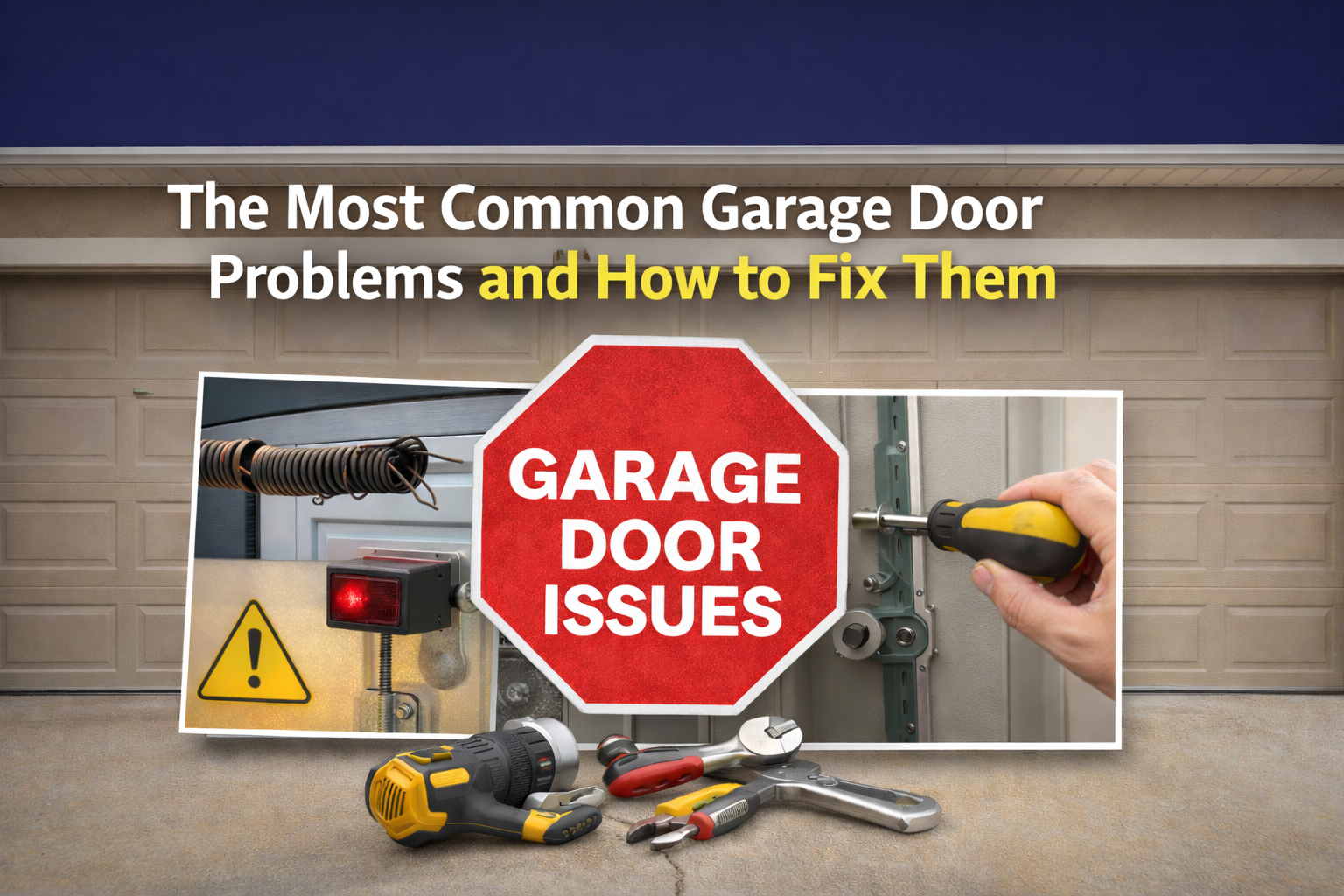
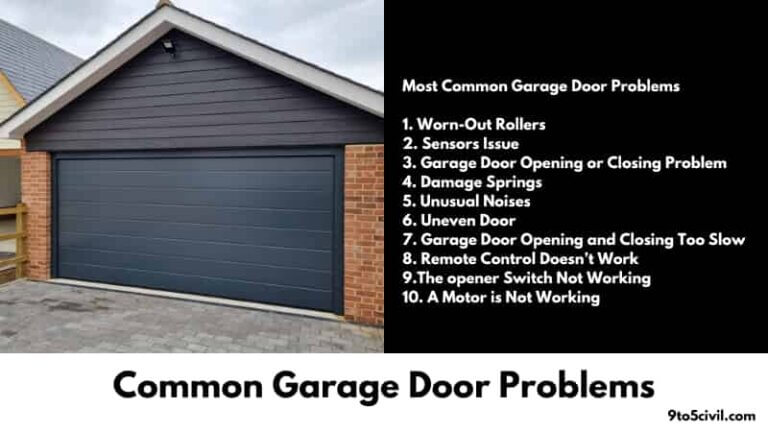
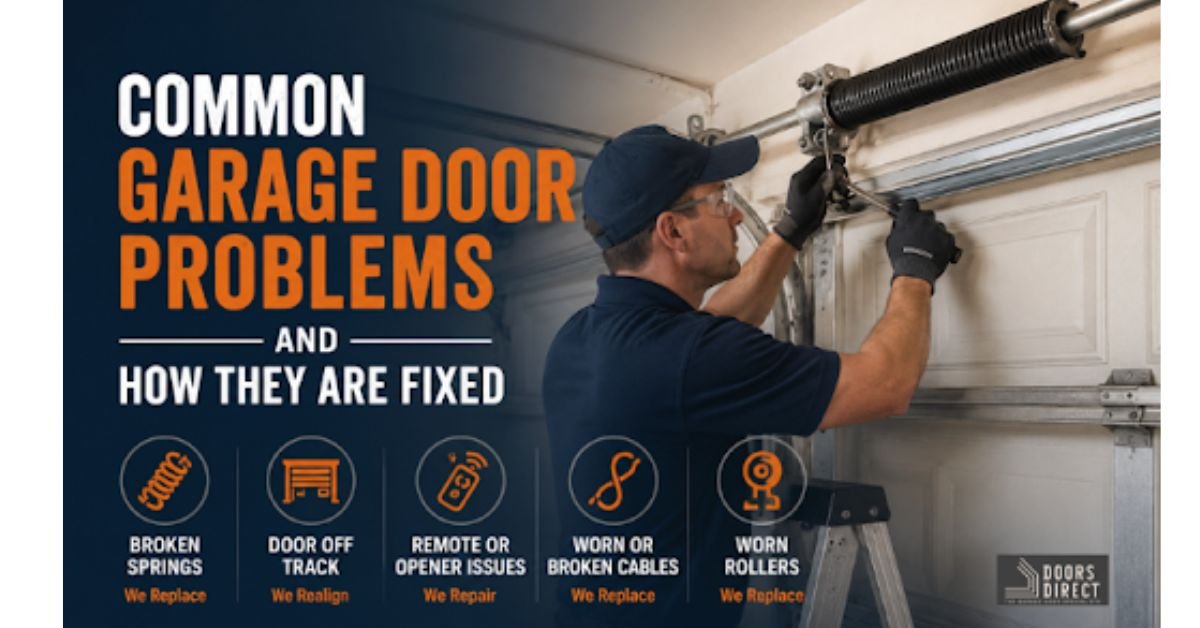
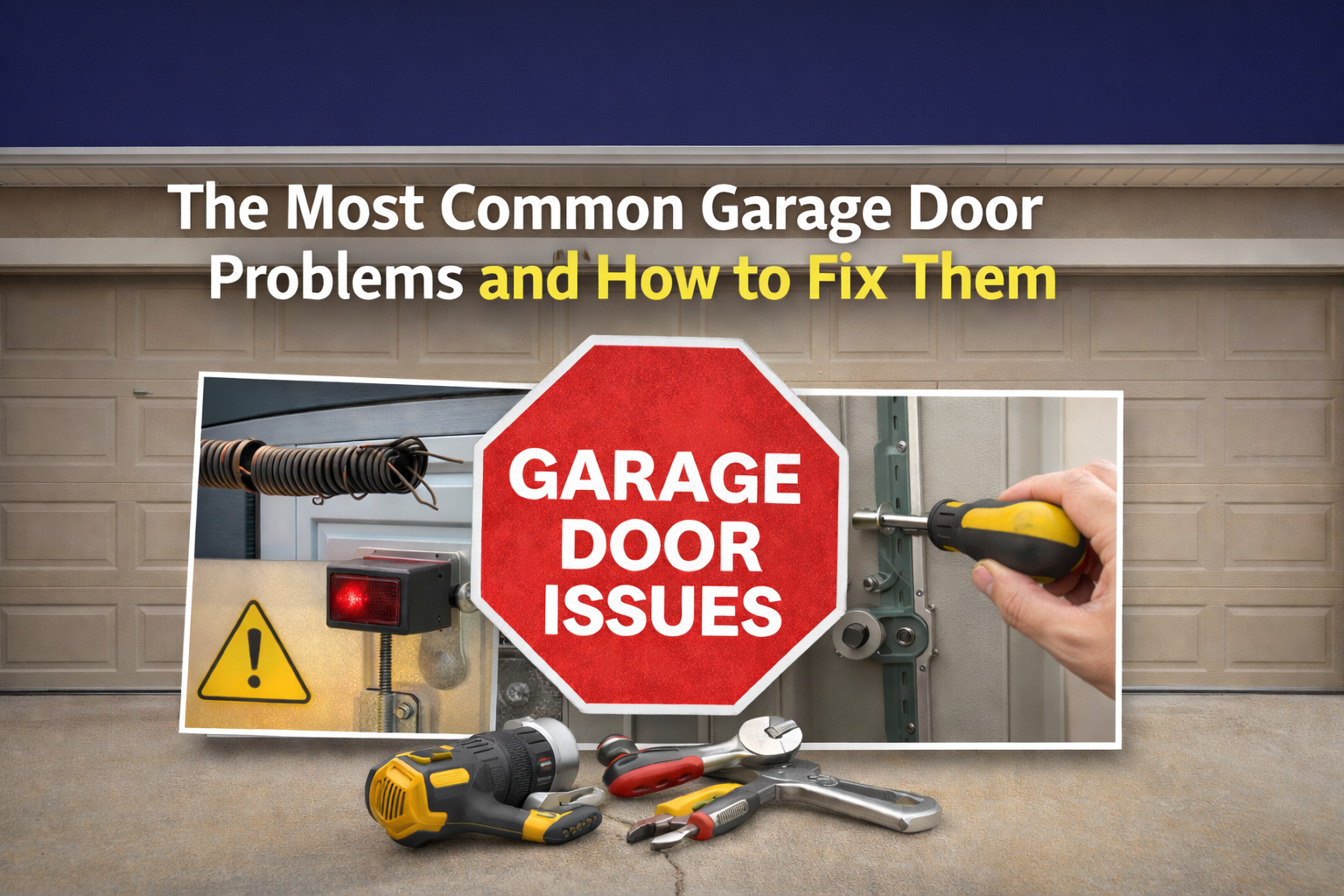
Common garage door problems include doors that will not open or close, noisy operation, broken springs, damaged rollers, misaligned safety sensors, remote control failures, and doors that move unevenly. Check the power supply, controls, sensor path, and visible tracks first. Leave springs, cables, and other high-tension parts to a trained garage door technician.
Across the United States, a garage door is a key part of daily home life. It protects cars, tools, and other belongings while giving many families a main way to enter the house. When the door stops working on a cold morning in Minnesota, during a rainy week in Florida, or in the heat of an Arizona summer, even a small fault can disrupt the day.
Most garage door problems have clear warning signs. A door may grind, shake, stop halfway, reverse before reaching the floor, or refuse to respond to a remote. These symptoms can point to a simple control issue, but they can also signal a worn part or a safety hazard.
This guide explains the most common garage door problems, their likely causes, and the checks homeowners can perform safely. It also shows which repairs need professional help. The goal is to help you identify the fault without risking injury or causing more damage.
Source: educba.com
1. The Garage Door Will Not Open
A garage door that will not open may have a power problem, a failed remote, a blocked mechanism, or a fault in the opener. Start with the easiest checks before considering a repair. If the door is crooked, unusually heavy, or visibly damaged, stop operating it and call a technician.
First, check whether the opener has power. Look at the ceiling outlet, the opener’s indicator lights, and the circuit breaker if it is safe to do so. If the breaker trips again after being reset once, leave it off and contact a qualified electrician or opener technician.
Next, try the wall-mounted control. If the wall control works but the remote does not, the problem may be a weak remote battery, a lost pairing, or a damaged remote. If neither control works, the opener’s power supply, wiring, control board, or drive system may need attention.
Source: mygarageandgates.com
Dead remote battery
Replace the battery with the type specified by the remote manufacturer, then test the remote near the garage door.
No electrical power
Check the outlet and breaker without opening electrical equipment. Have recurring power faults inspected.
Opener or drive fault
If the opener receives power but does not operate, check the owner’s manual for indicator codes and arrange service if needed.
What if the opener hums but the door does not move?
A humming opener that cannot move the door may have a jammed drive, damaged gears, or a door mechanism under excessive strain. A failed spring can also prevent normal movement. Do not keep pressing the control, because repeated attempts may overheat the motor or worsen the damage.
Look at the door and tracks from a safe distance. If you see a broken spring, loose cable, bent rail, or door hanging at an angle, stop and arrange professional service. A humming sound alone is not enough to identify the failed part.
Stop repeated attempts
Use the wall control or remote no more than needed to confirm the symptom. Stop if the motor strains, the door jerks, or movement is abnormal.
Avoid forcing the door
Do not pull the door open or disconnect the opener when the door may be unsupported by its spring system.
2. The Garage Door Will Not Close
A garage door that opens but will not close often has a safety sensor issue, a control problem, or a closing-path obstruction. Many modern residential openers use photo-eye sensors near the bottom of the door tracks. These sensors help detect objects or people in the door’s path.
Check the floor and the area between the sensors. A trash bin, garden tool, bicycle, or other object may block the beam. Dust, spiderwebs, loose mounting brackets, or direct sunlight affecting a sensor can also interfere with operation, depending on the opener model.
If the door starts closing and then reverses, observe the sensor indicator lights and the opener’s diagnostic signals. The exact light pattern varies by manufacturer, so use the manual for your model rather than relying on a universal color code.
Source: titangaragedoorsdesmoines.com
Clear the closing path
Move objects, leaves, toys, and other debris away from the doorway and tracks.
Clean the sensor lenses
Gently wipe the visible lenses with a soft, dry cloth. Do not spray liquids into the sensor housing.
Check visible alignment
Look for a sensor that has been bumped or turned. Follow the manual for alignment or call a technician if the bracket or wiring is damaged.
Why does the door close only when you hold the wall button?
On some opener systems, holding the wall control continuously may activate a restricted closing mode when the photo-eye system is not working correctly. This behavior depends on the opener design. It should not be treated as a repair or a safe workaround.
Do not bypass the sensors or use a remote to force the door closed. Clear the path, check the lenses, and consult the manual. If the safety system still fails, keep the door out of service until the fault is repaired.
Protect people and pets
Keep everyone clear of the doorway while checking the controls and never use a person, pet, or object as a test target.
3. The Garage Door Makes Loud or Unusual Noises
A garage door that squeaks, rattles, grinds, or bangs may have loose hardware, worn rollers, dry moving parts, or a damaged opener drive. The type of sound can help narrow the possibilities, but it cannot confirm the exact fault on its own.
A light squeak may come from a dry hinge or roller, while a metal grinding sound can point to damaged rollers, track contact, or a failing drive component. A loud bang may indicate a spring has broken. If a bang is followed by a door that will not lift, keep away from the spring assembly and call a technician.
With the door closed and the opener disconnected only when the door is safely supported and the manual permits it, a technician can inspect the mechanism in more detail. Homeowners should limit their checks to visible signs of wear, loose-looking hardware, and debris. Never reach into moving parts or tighten components near springs.
Source: storage.googleapis.com
Squeaking
Inspect visible hinges and rollers for wear. Use only a lubricant approved for the specific parts and recommended by the manufacturer.
Rattling
Loose covers or hardware may cause vibration. Do not tighten bolts connected to spring brackets, cables, or bottom brackets.
Grinding
Stop operation if the door scrapes the track or the opener sounds strained. A technician should inspect the rollers, tracks, and drive system.
Sudden loud bang
Treat this as a possible broken spring or other mechanical failure. Do not try to lift the door by hand.
Can lubricating the garage door solve the noise?
Lubrication can reduce friction in suitable moving parts, but it will not fix bent tracks, worn bearings, broken springs, or a damaged opener. Check the owner’s manual to learn which lubricant and components are approved for your system.
Avoid applying grease or oil indiscriminately to the tracks. The rollers need to travel along the track, and excess lubricant can collect dust and debris. If the noise remains after basic maintenance, arrange an inspection instead of adding more lubricant.
Follow the manual
Use the recommended lubricant only on approved hinges, bearings, rollers, or other listed parts.
Do not mask a warning sign
Persistent grinding, banging, or jerky movement needs diagnosis rather than repeated lubrication.
4. Broken Garage Door Springs
A broken garage door spring is one of the most serious common garage door problems. Springs counterbalance the door’s weight so the opener can move it. When a spring breaks, the door may become extremely heavy, stop partway, or refuse to open.
Torsion springs usually sit on a shaft above the door, while extension springs are commonly positioned along the horizontal tracks. A visible gap in a torsion spring or a stretched, dangling, or damaged extension spring can indicate failure. A sharp bang from the garage may also be a warning sign.
Spring assemblies store substantial mechanical energy. Attempting to wind, unwind, remove, or replace them without the proper training and tools can cause severe injury. The same warning applies to cables and bottom brackets, which can be under high tension.
Source: 9to5civil.com
Door suddenly feels heavy
A failed spring may no longer counterbalance the door. Stop operating it and call a trained garage door technician.
Visible gap in a spring
Keep clear of the assembly and do not touch the spring, shaft, or related hardware.
Opener struggles to lift the door
Stop repeated attempts. The opener is not designed to compensate for a broken spring.
Should you open the garage door with a broken spring?
In general, do not operate a garage door with a suspected broken spring. The opener may strain, and a heavy door may drop unexpectedly. If a vehicle is trapped inside, contact a repair company and explain that the spring may be broken.
Do not pull the emergency release to free the opener unless the door is fully closed or a qualified technician has confirmed that it is safely supported. Disconnecting the opener can leave the full door weight unsupported.
Keep the area clear
Keep children, pets, and vehicles away from a door that may be unstable.
Arrange professional repair
Ask the technician to inspect the spring system, cables, drums, bearings, and door balance.
5. Garage Door Tracks Are Bent or Misaligned
Garage door tracks guide the rollers as the door opens and closes. Bent tracks, loose supports, damaged rollers, or debris can cause the door to scrape, shake, bind, or move unevenly. A door that has come off its track is not safe to operate.
With the door stopped, look at the visible tracks from a safe distance. Check for obvious dents, gaps, loose-looking brackets, or objects in the roller path. Do not place your fingers near the rollers or try to force a roller back into a track.
A minor obstruction may be easy to remove, but a bent track or shifted support needs a proper assessment. Track alignment affects the door’s movement and can put extra strain on cables, springs, and the opener.
Source: garagedoorprosontario.ca
Debris in the track
Remove loose dirt or small objects only when the door is stationary and you can reach the area without entering a pinch point.
Bent or loose track
Do not hammer the track straight or loosen its mounting hardware. Have the track and supporting structure inspected.
Roller outside the track
Stop using the door and keep clear. A technician should secure and realign the door.
Why does a garage door look crooked while moving?
A crooked door may have a broken cable, a damaged roller, uneven spring tension, or a track problem. These faults can make one side rise faster than the other and place dangerous loads on the remaining hardware.
Do not attempt to level the door by pulling one side or adjusting the cables. Stop the opener and arrange professional service, especially if the door hangs at an angle or appears partly out of its track.
Do not force movement
Repeated operation may worsen the misalignment or cause the door to fall.
6. Garage Door Remote or Wall Control Is Not Working
A remote or wall control that does not respond may have a dead battery, a programming issue, a power interruption, damaged wiring, or an opener control fault. Check whether the wall button and remote behave differently, because that helps narrow the problem.
If the wall button works, start with the remote battery and the manufacturer’s pairing instructions. Some remotes may need to be reprogrammed after a battery change or an opener reset. Keep the remote model and opener model in mind, since compatibility and programming steps vary.
If neither control works, inspect the opener’s visible power indicator and check the circuit breaker if safe. Do not open the motor housing or touch exposed wiring. Electrical faults should be handled by a qualified professional.
Source: thegaragedoorauthority.com
Remote works only nearby
A weak battery, radio interference, or antenna issue may reduce range. Replace the battery first and follow the opener manual.
Remote stopped after a battery change
Check battery orientation and the remote’s pairing instructions. Reprogram only as directed by the manufacturer.
Wall control also fails
Check the opener’s power supply and indicator lights. Arrange service if the fault persists.
What if the keypad stops working?
An exterior keypad may stop responding because of a weak battery, incorrect code entry, lost programming, moisture, or worn buttons. Start with the battery and the instructions for the exact keypad model.
If the keypad is exposed to rain or extreme temperatures, inspect the housing for visible damage without dismantling it. Do not share access codes unnecessarily, and change a code if you believe an unauthorized person knows it.
Check the battery and code
Use the specified battery type and follow the manufacturer’s programming steps.
Protect access
Keep codes private and remove access for people who no longer need it when the system supports that option.
7. The Garage Door Reverses Before Closing Fully
A garage door that reverses before reaching the floor may be responding to a blocked sensor, resistance in the door, an opener travel setting, or a problem with the closing mechanism. Start by clearing the doorway and checking the photo-eye sensors.
If the sensors look clean and aligned but the door still reverses, observe whether it reaches the same stopping point each time. A door that reverses at a consistent point may have a travel-setting or mechanical issue. A door that stops unpredictably may have a different fault.
Do not change force settings simply to make the door close. These settings are part of the opener’s safety system, and increasing force can conceal a binding door or interfere with safe reversal. Follow the exact manufacturer’s testing procedure or call a technician.
Source: aw-garagedoor.com
Check for an obstruction
Clear the floor, doorway, and sensor beam before testing the door again.
Inspect sensor indicators
Use the model-specific manual to interpret warning lights or diagnostic codes.
Arrange service for repeated reversals
If the fault persists after safe checks, have the travel limits, door movement, and safety systems inspected.
How should you check the auto-reverse safety feature?
Use only the test described in the opener manufacturer’s manual. Many residential openers include a specified contact-reversal test using a suitable test object, but the exact procedure depends on the system.
Never use a hand, foot, child, or pet to test the door. If the opener fails its prescribed safety test, stop using the automatic system and arrange prompt repair. A working photo-eye sensor does not replace the need to check other safety functions.
Follow the exact test
Use the manufacturer’s instructions and the specified test object or method.
Do not bypass a failed system
Keep people clear of the door and have a failed safety feature repaired before normal use resumes.
8. The Garage Door Opens Partway or Closes Too Far
A garage door that stops halfway or does not reach the floor may have an incorrect travel setting, an obstruction, a binding track, a failing drive component, or a spring problem. Travel limits tell the opener where the door should stop during opening and closing.
Check for visible obstructions and review the opener’s diagnostic lights. If the door moves smoothly but stops at the same point every time, the travel settings may need attention. If it jerks, strains, or stops at different points, a mechanical issue may be more likely.
Travel and force adjustments differ by opener model. Use only the procedure in the owner’s manual, and do not compensate for mechanical resistance by increasing the force. If the instructions are unclear or the door looks unbalanced, arrange a professional inspection.
Source: neonjs.com
Door stops at the same point
Check the manual for travel-limit guidance and diagnostic information.
Door movement is uneven
Stop operation and have the springs, cables, rollers, and tracks inspected.
Door hits the floor and reverses
The close limit may need assessment, but binding or a sensor issue should be ruled out first.
Should you reset the garage door opener?
A reset can help with some control or programming faults, but it will not repair a broken spring, bent track, worn gear, or damaged cable. Some resets also erase remote or keypad programming, so read the instructions before proceeding.
If the opener manual recommends a reset for the specific symptom, follow its steps carefully. Stop if the door moves unexpectedly, the motor strains, or the problem returns.
Save the model details
Record the opener brand, model number, and any displayed diagnostic code before resetting it.
9. Garage Door Cables Are Frayed or Broken
Garage door lift cables help raise and lower the door in coordination with its spring system. A frayed, loose, or broken cable can make the door hang unevenly or become unstable. This is a high-risk fault because the cable and spring system may carry much of the door’s load.
Look for visible strands, a cable hanging loose, or a door that is tilted to one side. Do not touch the cable, pull it back onto a drum, or attempt to wind it. Even if the door is closed, the remaining hardware may still be under tension.
Arrange professional service as soon as you notice cable damage. The technician should inspect the cables, drums, springs, tracks, and attachment points to determine why the fault occurred and whether other parts are worn.
Source: allied-doors.com
Frayed strands
Treat visible cable wear as a warning sign and stop operating the door.
Loose or dangling cable
Keep clear of the door and do not try to reconnect the cable yourself.
Door hangs unevenly
Do not attempt to level it manually. Arrange a technician to secure and inspect the system.
Can a garage door cable be replaced without replacing the springs?
Sometimes a damaged cable can be replaced while the existing springs remain in service, but that decision depends on the spring condition, door design, and cause of the failure. A cable fault can reveal other worn or misaligned parts.
A qualified technician should inspect the full counterbalance system before recommending parts. Replacing one component without addressing the underlying cause may lead to another failure.
Request a full safety inspection
Ask for the technician to explain the failed part, the cause, and any related wear that affects safe operation.
10. The Garage Door Is Slow, Shaky, or Uneven
Slow or shaky movement may result from worn rollers, friction, a damaged track, spring wear, an opener problem, or poor door balance. Changes in movement are worth investigating because they can signal wear before a complete failure.
Watch the door from a safe distance while using the normal control. Note whether the entire door shakes, one side moves differently, or the opener makes a new sound. Stop immediately if the door jerks sharply, hangs at an angle, or appears likely to fall.
Temperature can affect some garage door components and opener performance, especially in regions with very cold winters or hot summers. However, seasonal changes should not be used to explain away persistent binding, unusual heaviness, or a failed safety system.
Source: educba.com
Worn rollers or hinges
Visible wear or repeated vibration may call for replacement or adjustment by a technician.
Door balance problem
An unbalanced door places extra strain on the opener. Do not perform a manual balance test if a spring or cable may be damaged.
Motor or drive wear
If the door’s visible hardware appears normal but the opener struggles, have the drive and motor system inspected.
How can you tell whether the door is out of balance?
A door that becomes unusually heavy, drops rapidly, or moves unevenly may have a counterbalance problem. Some manuals describe a manual balance test, but this can require releasing the opener and moving the door by hand.
Do not perform that test if the spring system is damaged, the door is crooked, or you are unsure whether the door can be safely supported. A technician can check the balance and inspect the spring system without relying on guesswork.
Watch for sudden changes
A new strain, drop, or uneven movement is more important than a minor sound that has remained unchanged.
11. Weather Seals, Drafts, and Water Around the Garage Door
A worn bottom seal or damaged perimeter weatherstripping can let air, dust, insects, and some moisture enter the garage. In parts of the United States with heavy rain, snow, or strong seasonal winds, damaged seals can make the garage less comfortable and allow water to reach stored items.
Inspect the rubber seal along the bottom of the closed door and the weatherstripping around the frame. Look for cracks, gaps, flattened sections, or pieces that have pulled away. Also check whether the driveway slopes toward the garage, since drainage problems may contribute to water entry.
A seal replacement may be a manageable maintenance task when the door is stable and the design allows safe access. However, the bottom brackets on many garage doors connect to high-tension cables. Do not loosen those brackets to install a seal. Use a method that avoids the brackets or hire a professional.
Source: 9to5civil.com
Cracked bottom seal
Check the door manufacturer’s replacement guidance and choose a seal that matches the retainer and door design.
Gaps along the frame
Inspect the perimeter weatherstripping for tears or separation and replace damaged sections as appropriate.
Water pooling near the opening
Check exterior drainage and the driveway slope. A new door seal alone may not solve water flowing toward the garage.
Does replacing the garage door seal improve energy efficiency?
A sound seal can reduce drafts and help limit air exchange between the garage and outdoors. The practical benefit depends on the door’s condition, garage construction, climate, and whether the garage shares walls with conditioned living space.
Weatherstripping does not make an uninsulated garage door insulated, and it will not correct major gaps in the building envelope. For a heated or cooled garage, consider the door’s insulation, wall insulation, and air leakage together.
Check the full opening
Inspect the bottom seal, side seals, top seal, and surrounding frame rather than replacing only one section without checking the rest.
12. How to Troubleshoot Common Garage Door Problems Safely
The safest troubleshooting method starts with observation and simple external checks. You do not need to dismantle the opener or adjust the spring system to learn whether the problem may involve power, a remote, an obstruction, or a visible mechanical fault.
Before checking anything, keep children and pets away from the opening. Do not stand beneath a partly open door, touch moving parts, or place your hands between panels. If the door is unstable, crooked, unusually heavy, or off its tracks, skip the troubleshooting steps and call a professional.
Source: titangaragedoorsdesmoines.com
Step 1: Record the symptom
Note whether the door will not open, will not close, reverses, makes a new sound, or moves unevenly.
Step 2: Check the simple controls
If the door looks stable, check the remote battery, wall control, power indicator, and visible diagnostic lights.
Step 3: Inspect the doorway
Look for objects in the path, dirty sensor lenses, and visible track damage without touching cables or springs.
Step 4: Consult the manual
Use the opener’s model number to find the correct instructions and interpret any warning codes.
Step 5: Stop if the fault persists
Arrange service for repeated reversals, abnormal noise, strained movement, or a problem that cannot be explained by safe external checks.
Quick troubleshooting decision table
Use this table to match the main symptom with a sensible first check and the point at which professional help is appropriate. The likely causes are possibilities, not a confirmed diagnosis.
Door does not respond
Check the power indicator and remote battery. Call for service if the controls still fail or the opener shows a fault.
Door opens but will not close
Clear the doorway and clean the photo-eye lenses. Arrange service if the safety system remains faulty.
Door is loud or jerky
Look for visible debris and new damage. Stop if the door strains, scrapes, or moves unpredictably.
Door is heavy or crooked
Do not operate it. Call a technician to inspect the springs, cables, and tracks.
Door leaks air or water
Inspect the weather seals and exterior drainage. Seek help if the door or frame is damaged.
13. DIY Garage Door Repair vs. Professional Service
Some garage door maintenance tasks are suitable for careful homeowners, but repairs involving stored mechanical energy or electrical components need more caution. The right choice depends on the fault, the door design, and the instructions supplied by the manufacturer.
Simple external checks can often identify a dead remote battery, blocked sensor, or visible debris. Spring work, cable replacement, track realignment, and repairs to damaged structural supports are different. Those jobs may expose the person doing the work to a heavy moving door or highly tensioned parts.
Before hiring a company, describe the symptoms and ask what the inspection and service visit include. Request a written estimate that separates the diagnosis, parts, labor, and any additional charges. Confirm the scope of the warranty and ask whether the technician will inspect related components.
Source: mygarageandgates.com
Usually suitable for basic homeowner checks
Replacing a remote battery, cleaning accessible sensor lenses, clearing loose debris, and inspecting weather seals may be reasonable when done safely.
Usually needs a trained technician
Broken springs, damaged lift cables, doors off tracks, damaged bottom brackets, and major track or opener repairs require appropriate training and tools.
May require an electrician
Recurring breaker trips, damaged electrical wiring, or faults in the fixed electrical supply should be assessed by a qualified electrical professional.
What should you ask a garage door repair company?
A clear estimate helps you compare repair options without relying on vague promises. Ask the company to explain the cause of the fault, the parts it recommends, and whether the door is safe to use before the repair.
Local licensing, registration, insurance, and permit rules vary across the United States and may differ by city or state. Verify the requirements that apply in your area instead of assuming one national rule covers every job.
Ask for the diagnosis
Request a clear explanation of the failed part and any evidence of related damage.
Compare written estimates
Compare the same repair scope, part specifications, labor, service fees, and warranty terms.
Confirm safety checks
Ask whether the technician will check door balance, safety sensors, and the opener’s required reversal functions after repair.
14. How to Prevent Common Garage Door Problems
Routine inspection can help you catch wear before it becomes a breakdown. A short visual check every month or two, along with the maintenance schedule in the owner’s manual, is a practical starting point. The correct interval depends on the door, opener, use, and environment.
Look at the door panels, hinges, rollers, tracks, cables, springs, and weather seals from a safe distance. Listen for changes in sound and watch for uneven movement. Do not touch a damaged spring or cable just to confirm whether it is loose.
Keep the garage door opening clear and make sure everyone who uses the door knows how to operate it safely. If the door has a battery backup, learn how the manufacturer recommends checking it. Test the opener’s safety functions only as described in the manual.
Source: aw-garagedoor.com
Keep sensor lenses clean
Wipe away dust and spiderwebs using a soft cloth and check for obvious alignment changes.
Listen for new sounds
Investigate a sudden bang, repeated grinding, or a new strain instead of assuming the noise is normal.
Inspect seals and panels
Look for cracks, gaps, dents, rust, and signs of water entry.
Follow the maintenance schedule
Use the opener and door manuals for lubrication, safety testing, and service intervals.
Keep controls secure
Store remotes safely, protect keypad codes, and remove access for people who no longer need it.
When should you replace a garage door instead of repairing it?
Replacement may make more sense when the door has extensive panel damage, widespread corrosion, repeated mechanical failures, or a design that no longer meets the household’s needs. A single failed spring or remote does not automatically mean the entire door needs replacing.
Compare the condition of the door and track system, the cost of restoring safe operation, insulation needs, and the availability of suitable replacement parts. A qualified technician can explain whether the existing system can be repaired safely or whether replacement is worth considering.
Repair may be reasonable
The door panels and structure are sound, the fault is limited, and compatible replacement parts are available.
Replacement may be worth reviewing
The door has extensive structural damage, multiple recurring faults, or a repair plan that does not offer a practical long-term result.
Frequently Asked Questions
Q
What is the most common garage door problem?
There is no single problem that is most common for every home or garage door model. Common issues include remote control faults, blocked or misaligned photo-eye sensors, worn rollers, opener problems, and damaged springs. The best first step is to match the symptom with safe external checks before assuming a particular part has failed.
Q
Why does my garage door open but not close?
A blocked or misaligned safety sensor is one possible cause. Debris in the doorway, a sensor wiring fault, binding door hardware, or an opener setting problem may also prevent normal closing. Clear the doorway, gently clean the sensor lenses, and check the model-specific diagnostic signals. Do not bypass the sensors if the door still will not close.
Q
Can I open my garage door manually during a power outage?
Some residential garage doors can be operated manually during a power outage using the emergency release. Do this only when the door is fully closed, the door and spring system appear intact, and the manufacturer’s instructions permit it. If the door is partly open, unusually heavy, crooked, or suspected of having a broken spring or cable, do not release the opener or attempt to lift it yourself.
Q
How do I know if my garage door spring is broken?
Warning signs include a visible gap in a torsion spring, a damaged extension spring, a sudden loud bang, a door that feels unusually heavy, or an opener that cannot lift the door. These signs do not confirm every case, but they justify stopping operation and arranging professional inspection. Do not touch or adjust the spring assembly.
Q
Why does my garage door make noise when opening or closing?
Squeaks, rattles, grinding, and banging can have different causes. Dry moving parts, worn rollers, loose covers, track damage, and spring failures are among the possibilities. A soft squeak may respond to manufacturer-approved lubrication, but persistent grinding, uneven movement, or a sudden loud bang requires the door to be stopped and inspected.
Q
How often should I maintain my garage door?
Use the maintenance schedule in your garage door and opener manuals. A visual inspection every month or two can be a useful starting point, especially for frequently used doors, but it is not a universal service interval. Check visible wear, seals, sensor lenses, and changes in movement, and arrange professional service when you notice damage or abnormal operation.
Q
Is it safe to repair a garage door spring myself?
No. Spring repair is not a suitable DIY task for most homeowners because the spring system stores substantial mechanical energy and can cause severe injury if it is released incorrectly. The same caution applies to lift cables, drums, and bottom brackets. Have a trained garage door technician perform these repairs.
Q
How much does it cost to fix a garage door?
The cost depends on the failed component, door type, parts required, labor, location, and whether emergency service is needed. A remote battery or sensor cleaning may cost little, while spring, cable, track, or opener repairs can be more involved. I cannot give a reliable current price without your location, the door model, and a confirmed diagnosis. Request a written estimate that lists labor, parts, service fees, and warranty terms.
✦ Wrapping Up
Conclusion
Common garage door problems range from simple remote battery issues to serious faults involving springs, cables, tracks, and safety systems. Checking the power supply, clearing the doorway, cleaning accessible sensor lenses, and reviewing the opener’s manual can help identify some problems without dismantling the equipment.
Pay close attention to new sounds, uneven movement, repeated reversals, and a door that suddenly feels heavy. These signs may point to a mechanical fault that basic troubleshooting cannot fix. Stop using an unstable door and call a qualified technician rather than risking injury or causing more damage.
Regular visual checks, proper maintenance, and prompt repairs can help keep a garage door working safely. The key is knowing where simple troubleshooting ends and professional service begins.
💡 Key Takeaway
Start by noting exactly what your garage door does, checking the power and remote, and looking for sensor obstructions. If you find a damaged spring or cable, a crooked door, a failed safety system, or a door that moves unpredictably, stop operating it and arrange professional service.
Sarah believes that a messy garage is a wasted room. After years of working in professional home staging and interior design, she shifted her focus to the most neglected part of the house: the garage. She focuses on vertical storage, aesthetic floor coatings, and converting dusty corners into functional workspaces. Sarah’s goal is to help you "unlock" every square inch of your garage.
Sarah believes that a messy garage is a wasted room. After years of working in professional home staging and interior design, she shifted her focus to the most neglected part of the house: the garage. She focuses on vertical storage, aesthetic floor coatings, and converting dusty corners into functional workspaces. Sarah’s goal is to help you "unlock" every square inch of your garage.