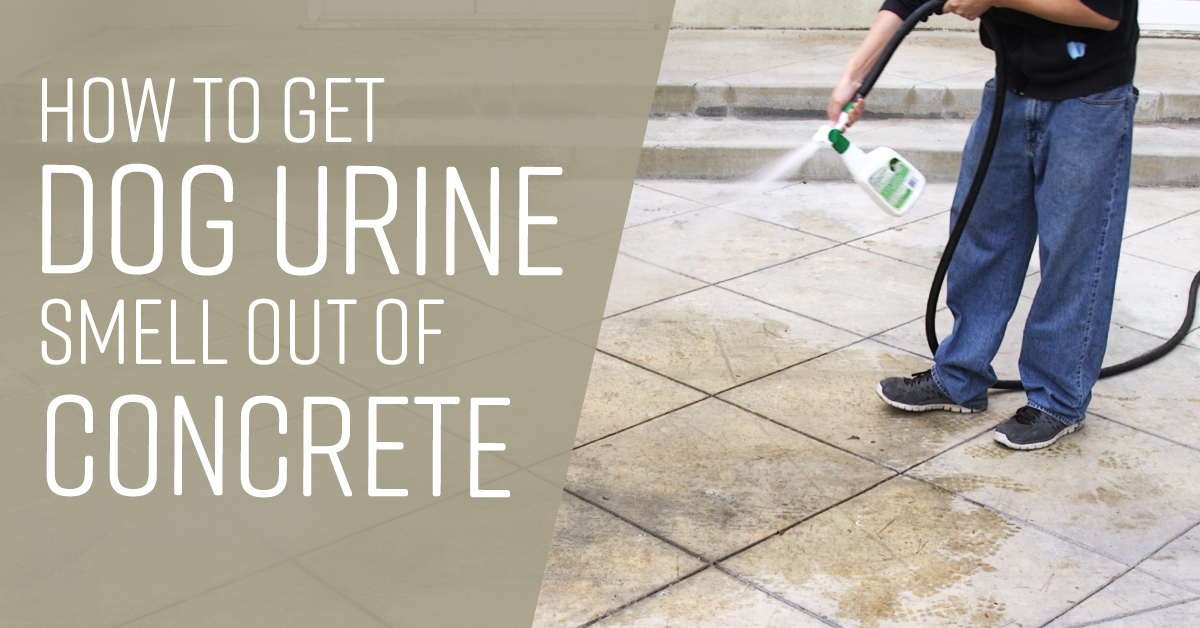
To remove dog or cat urine smell from concrete, clean the area with mild detergent and water, then apply an enzyme-based pet urine cleaner labeled for concrete. Keep the surface wet for the full contact time on the product label. Let it dry fully, and repeat if the odor remains. Old or deep stains may need several treatments or a concrete sealer after cleaning.
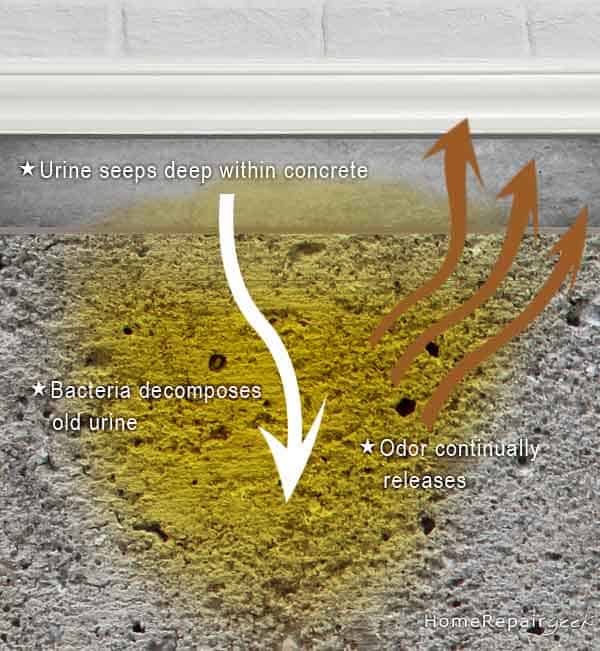
In American homes, pet urine odors often show up in garage floors, basement slabs, patios, driveways, and concrete kennel areas. Concrete may look solid, but its tiny pores can absorb liquid. This means urine can soak below the surface and keep smelling long after the visible stain has dried.
Dog and cat urine can leave different odor challenges. Cat urine may be especially strong because it is concentrated, while repeated dog accidents can saturate the same patch of concrete. Washing the surface may remove dirt, but it may not remove the urine trapped inside the slab.
The most useful approach is to remove the residue, treat the affected area with a suitable cleaner, and allow enough time for the surface to dry. An enzyme-based cleaner designed for pet urine is often a good starting point. Results depend on the age of the stain, the concrete finish, previous cleaners, and how deeply the urine has soaked in.
Source: jjvs.org
Why Dog and Cat Urine Smell Lingers in Concrete
Concrete contains small pores and capillaries that can absorb water and other liquids. When a pet urinates on an untreated slab, some of the liquid may enter these openings instead of staying on the surface. As the water evaporates, urine residues can remain behind.
Warm, humid conditions may make lingering odors easier to notice. A garage that heats up in summer or a basement with poor airflow may smell worse after the floor has seemed clean for days. New moisture can also reactivate odor from old contamination.
The surface finish matters. Bare concrete generally absorbs liquid more readily than a well-maintained, nonporous coating. However, worn coatings, cracks, expansion joints, and damaged sealers can let urine reach the concrete below.
Repeated accidents make the problem harder to solve because each new deposit adds more residue. A small surface stain may need one treatment, while a frequently used pet corner may require several cleaning cycles.
Source: artofit.org
Fresh urine
Usually easier to remove because less liquid has had time to soak into the slab.
Old urine
May have penetrated more deeply and can require repeated applications of a suitable cleaner.
Repeated accidents
Can saturate a larger area than the visible stain suggests.
Cracked or coated concrete
May hide contamination in cracks, joints, damaged coatings, or beneath a finish.
Why Ordinary Soap May Not Be Enough
Soap and detergent help loosen dirt and remove some urine residue from the surface. They are useful for the first cleaning step, but they may not break down every odor-causing compound trapped in porous concrete.
Enzyme cleaners are formulated to break down certain organic materials. A product specifically labeled for pet urine and suitable for concrete may help reduce odors that basic washing leaves behind. Not every cleaner works on every type of residue, so follow the product directions.
Surface cleaning
Removes loose dirt and some residue from the top of the slab.
Enzyme treatment
Targets suitable organic residues when the product is used under its stated conditions.
Sealing
Can help limit future absorption after proper cleaning and drying, but should not be used to trap an unresolved odor.
What You Need Before Cleaning Pet Urine From Concrete
Gather your supplies before you begin. The right equipment makes it easier to clean the full affected area without spreading urine residue to nearby surfaces.
Choose a cleaner that clearly lists pet urine removal and concrete compatibility on its label. If the floor is painted, polished, stained, or sealed, check whether the product is safe for that finish as well.
Source: animalia-life.club
Absorbent paper towels or disposable cloths
Use these to blot fresh urine without rubbing it across the floor.
Mild detergent and clean water
Useful for the initial removal of surface dirt and residue.
Enzyme-based pet urine cleaner
Select a formula whose label permits use on the specific type of concrete you have.
Nylon scrub brush
Helps loosen residue without the unnecessary damage a harsh wire brush may cause.
Gloves and eye protection
Protect your skin and eyes from cleaning products and splashes.
Clean towels and a bucket
Help remove loosened residue and manage rinse water when the product directions call for rinsing.
Check the Concrete Finish First
Bare concrete, painted garage floors, polished slabs, and decorative concrete do not all respond to cleaners in the same way. A product that works on an unfinished slab may discolor a coating or dull a decorative finish.
Test the chosen cleaner in a small, inconspicuous spot. Follow the label and check for discoloration, softening, or other damage before treating the entire floor.
Bare concrete
Usually allows greater liquid absorption, so the cleaner’s required contact time matters.
Painted or sealed concrete
May need a finish-compatible cleaner and gentler application.
Basement floors with cracks
May need closer inspection because liquid can enter joints or gaps.
Step-by-Step Method to Remove Dog and Cat Urine Smell From Concrete
The best starting method is to remove as much urine residue as possible, clean the surface, apply a compatible urine treatment, and allow it to dry. Do not begin by pouring several different cleaners onto the same spot.
Work in a ventilated area, keep pets and children away from wet chemicals, and prevent runoff from entering storm drains or nearby soil when the product label or local rules require special handling.
Source: homerepairgeek.com
Step 1: Find the full affected area
Check for discoloration, odor, and nearby cracks or joints. Treat the surrounding area where urine may have spread, not only the darkest visible mark.
Step 2: Blot fresh urine
Press absorbent towels onto the wet spot. Replace them as needed. Avoid vigorous rubbing that spreads the liquid.
Step 3: Remove surface dirt
Use mild detergent and water to clean the area, then collect the dirty liquid. Rinse if appropriate for the surface and dry or remove excess water.
Step 4: Apply an enzyme cleaner
Use a concrete-compatible pet urine product according to its label. Cover the affected area evenly and use only the stated amount.
Step 5: Allow the required contact time
Keep the area wet for the time specified by the product instructions, if required. Do not let the treatment dry prematurely when the label calls for sustained moisture.
Step 6: Rinse or wipe if directed
Some products require rinsing, while others need to remain on the surface. Follow the label rather than using one rule for all cleaners.
Step 7: Let the concrete dry fully
Provide suitable airflow and keep foot traffic and pets away until the floor is dry and safe for use.
Step 8: Check for remaining odor
Once the surface is fully dry, inspect and smell the treated area. Repeat the treatment if permitted by the label and the odor remains.
How to Treat Fresh Pet Urine
Fresh urine gives you the best chance of removing the odor with a simple process. Blot it promptly, wash away surface residue, and apply a compatible pet urine cleaner if a smell remains.
Avoid flooding the slab with large amounts of water. Excess liquid can carry urine deeper into porous concrete or spread contamination into cracks and neighboring areas.
Act quickly
Remove liquid before it has more time to penetrate the concrete.
Clean a wide enough area
Include any nearby spots reached by splashes or runoff.
How to Treat Old or Deep Urine Odors
Old urine may need more than one treatment because residue can remain below the surface. Apply the cleaner as directed and repeat only as allowed by its label.
If the odor returns after the slab dries, look for additional contamination in joints, cracks, floor edges, wall gaps, or porous materials stored on the floor. A single visible spot may not be the true source of the smell.
Repeat carefully
Use another application only when the label permits it and the first treatment has been completed.
Inspect nearby surfaces
Check baseboards, unfinished walls, cardboard, mats, and other materials that may have absorbed urine.
Consider professional treatment
Seek help if extensive contamination remains despite careful cleaning or if the slab has a delicate finish.
Which Cleaning Method Works Best for Urine Odor?
The right method depends on how old the stain is, whether the concrete is bare or coated, and how deeply the urine has soaked in. An enzyme-based pet urine cleaner labeled for concrete is a practical first choice when ordinary cleaning has not removed the smell.
No single method is guaranteed to work on every slab. The comparison below explains the role and limitations of common options so you can choose a sensible starting point.
Source: phenergandm.com
Mild detergent and water
Best for initial cleaning and fresh surface residue. It may not remove deeper odor sources.
Enzyme-based urine cleaner
Designed to break down certain organic residues. Effectiveness depends on the formula, surface, contact time, and contamination.
Concrete-compatible odor remover
May help with remaining odor when the product is specifically intended for pet urine and the relevant surface.
Professional cleaning
May be useful for large, old, or repeated contamination that remains after correct treatment.
Concrete sealer
Can help reduce future absorption after the slab has been cleaned and dried, but does not replace urine removal.
Why Enzyme Cleaners Are Often a Good First Choice
Enzyme cleaners contain ingredients intended to break down particular organic materials. Pet urine formulas may target urine residues that continue to cause odors after washing.
Products vary in their ingredients, directions, and approved surfaces. Look for a label that specifically mentions pet urine and concrete, and follow any restrictions on temperature, dilution, contact time, and rinsing.
An enzyme product is not an instant fix for every old stain. Deep contamination may require multiple permitted applications, and some products will not work well if other chemicals have been applied first.
Use the right formula
Choose a product intended for pet urine rather than a general fragrance spray.
Give it time
Follow the stated contact time instead of rinsing it away too soon.
Avoid chemical conflicts
Do not combine the treatment with bleach, ammonia, acids, or other cleaners.
Should You Use Vinegar or Baking Soda?
Vinegar and baking soda are common household cleaning suggestions, but neither is a guaranteed solution for urine that has soaked into concrete. Vinegar may help with some surface cleaning tasks, while baking soda may absorb some odors under certain conditions. These effects do not prove that deep urine residues have been removed.
Vinegar is acidic and may damage some concrete finishes or react with other cleaning products. Baking soda can leave residue that must be removed. If you plan to use a specialized enzyme cleaner, follow its label and avoid applying household chemicals that could interfere with the treatment.
Never mix vinegar with bleach. The combination can release dangerous chlorine gas. Avoid mixing baking soda with other cleaners as a way to create a stronger product.
Vinegar
Not a universal concrete urine treatment and may be unsuitable for some finishes.
Baking soda
May help with limited surface odors but cannot be relied on to remove deep contamination.
How to Remove Strong Cat Urine Smell From a Concrete Basement
A basement can be difficult to deodorize because airflow may be limited and the floor may stay damp. Cat urine odor can linger in unfinished concrete, floor joints, and materials resting against the slab.
Start by identifying the affected area. Move storage boxes, rugs, and other items away from the floor, then inspect the exposed concrete and nearby wall edges. Cardboard and fabric can absorb urine, so cleaning the slab alone may not solve the problem.
Use a cleaner labeled for the concrete finish and provide ventilation suitable for the product. If the basement has poor drainage or ongoing dampness, address that issue as well because moisture can make odor problems harder to assess.
Source: homerepairgeek.com
Move stored items
Remove cardboard, fabric, mats, and other porous materials that may hold urine odor.
Check floor joints
Inspect cracks, expansion joints, wall edges, and the areas around floor drains.
Control moisture
Use appropriate ventilation or a dehumidifier when conditions allow, while following any cleaner-specific ventilation instructions.
Treat the actual source
Clean affected materials separately when possible and dispose of items that cannot be cleaned effectively.
What If the Smell Returns on Humid Days?
A smell that returns when the air becomes humid may point to residue that remains in porous concrete or another nearby material. It does not, by itself, prove that urine is still present, because dampness and other odor sources can also affect how a basement smells.
Let the area dry, inspect the surrounding surfaces, and repeat a compatible urine treatment if the evidence still points to pet urine. If the odor persists despite correct cleaning, consider an inspection for hidden contamination or moisture problems.
Recheck after drying
Judge the result only after the treatment and concrete have dried fully.
Inspect beyond the stain
Look for urine in wall gaps, floor coverings, and stored items.
How to Remove Dog Urine Smell From a Garage or Outdoor Concrete Slab
Garage floors and outdoor concrete often collect more than urine. Dust, grease, road grime, and rainwater can make it harder to treat the affected area properly. Remove loose dirt first so the urine cleaner can contact the contaminated surface.
For a garage, open suitable doors and provide ventilation while using cleaning products. Keep vehicles, tools, and pets away from the wet treatment area. Check whether the product is suitable for a floor exposed to vehicle fluids or other chemicals.
For patios and driveways, use only products that are appropriate for outdoor concrete and the surrounding environment. Collect and dispose of contaminated wash water as directed, and do not allow cleaning chemicals to run into storm drains, garden beds, or waterways.
Source: artofit.org
Sweep before washing
Remove dust, leaves, and loose debris before applying liquid cleaners.
Check the drainage path
Prevent dirty water and cleaner from reaching places where they could cause harm.
Avoid uncontrolled pressure washing
High-pressure water can spread contaminated spray and may damage concrete or coatings.
Follow outdoor-use directions
Check weather, temperature, runoff, and surface restrictions on the product label.
Can You Use a Pressure Washer?
A pressure washer can remove surface dirt from suitable concrete, but it is not a complete urine odor treatment. High pressure may spread contaminated droplets, drive liquid into cracks, or damage paint and decorative finishes.
If pressure washing is appropriate for your slab, first remove the urine residue and apply the selected cleaner according to its label. Use controlled pressure, keep people and pets away, and manage wastewater responsibly.
Use caution on coated floors
High pressure may lift paint, weaken coatings, or damage sealers.
Protect nearby areas
Prevent spray from reaching stored goods, walls, plants, or people.
Common Mistakes That Can Make Concrete Urine Odor Worse
The wrong cleaning method can spread the urine, damage the slab, or leave residues that interfere with later treatment. A slow, single-product approach is usually easier to manage than applying several remedies at once.
Avoid masking the smell with perfume or air freshener alone. A stronger fragrance may hide the odor temporarily, but it does not establish that the urine residue has been removed.
Source: storage.googleapis.com
Using bleach as the main urine remover
Bleach is not a reliable solution for urine absorbed into porous concrete. It can also react with other products and create dangerous fumes.
Mixing household cleaners
Never mix bleach with vinegar, ammonia, acids, or other cleaning products. Use one product at a time according to its label.
Rinsing enzyme cleaner too early
Removing a product before its required contact time can reduce the chance of success.
Using too much water
Excess liquid can spread contamination or move it into cracks and joints.
Sealing the floor too soon
A coating can trap a remaining odor or fail to bond properly if the surface is contaminated or damp.
Ignoring nearby materials
A rug, cardboard box, unfinished wall, or floor mat may be the real source of a recurring smell.
What to Do if You Already Used Another Cleaner
If you have already applied a household cleaner, do not add an enzyme product immediately without checking compatibility. Read both labels and determine whether rinsing or a waiting period is required.
If you cannot confirm that the products are compatible, stop and seek guidance from the product manufacturer. Never attempt to neutralize one cleaner by adding another chemical.
Stop adding products
Prevent an accidental reaction between cleaning chemicals.
Ventilate safely
If fumes develop, leave the area and avoid breathing them. Seek emergency help if anyone has trouble breathing.
How to Tell Whether the Urine Odor Is Gone
Check the treated area after it has dried completely. A wet floor can have a different smell from a dry one, and fragrance from a cleaner can hide remaining odor while the product is still damp.
Assess the same area under normal room or outdoor conditions. If the smell returns later, especially when the floor becomes damp or warm, the treatment may not have reached all the contaminated material or another source may be present.
A successful result means the urine odor no longer returns after full drying under ordinary conditions. It does not necessarily mean every microscopic trace of urine has been removed, and smell alone cannot prove that a surface is free of all contaminants.
Source: medshun.com
No lingering odor after drying
A useful sign that the treatment has reduced the odor source.
No visible residue
The floor should not have leftover cleaner or dirty film where the product directions call for removal.
No odor returning later
Recheck the area after ordinary changes in temperature and humidity.
No damage to the finish
Check for discoloration, softening, or other changes caused by cleaning.
When to Repeat the Treatment
If the smell remains after complete drying, repeat the process only if the cleaner’s label allows another application. Make sure the product reached the affected area and received its required contact time.
If repeated, correctly performed treatments do not work, stop adding more products and look for another explanation. Deeply absorbed urine, contamination beneath a coating, and hidden sources may require professional assessment.
Repeat when appropriate
Follow the label’s limits on frequency, application amount, and drying.
Escalate persistent problems
Seek a concrete cleaning or restoration professional if the odor continues despite proper treatment.
Should You Seal Concrete After Removing Pet Urine?
A compatible concrete sealer can help limit future absorption, especially in areas where pets frequently have accidents. However, sealing should come after the urine has been removed as well as practical and the slab has dried to the conditions required by the sealer manufacturer.
A sealer is not a substitute for cleaning. If urine residue remains in the concrete, a coating may trap odors beneath the surface or fail because the slab is not clean enough for proper bonding.
Choose a sealer intended for the floor’s use. A garage floor, indoor basement slab, and outdoor patio may need different products. Review the product’s surface preparation, moisture limits, ventilation needs, cure time, and restrictions on foot or vehicle traffic.
Source: homerepairgeek.com
Clean first
Remove urine residue and all unwanted cleaning residue before preparing the floor.
Let the slab dry
Meet the sealer manufacturer’s moisture and drying requirements.
Test compatibility
Confirm the coating is suitable for the concrete finish and the intended location.
Prevent new accidents
Use suitable pet routines and prompt cleanup to reduce future contamination.
When Professional Concrete Restoration May Be Needed
Professional help may be worthwhile when the odor covers a large area, has persisted for a long time, or returns after repeated label-compliant treatments. A specialist can assess the floor finish, joints, moisture conditions, and likely depth of contamination.
In some severe cases, restoring the surface may require removing a coating or addressing contaminated material beneath it. Grinding, resurfacing, or replacing concrete is a more disruptive option and should not be the first step for an ordinary fresh accident.
Large or repeated contamination
Consider professional assessment when several areas smell despite proper cleaning.
Odor beneath a coating
Ask a qualified contractor to assess the finish before removing or replacing it.
Persistent unexplained odor
Investigate hidden sources or moisture issues before committing to expensive restoration.
How to Prevent Dog and Cat Urine Odors From Returning
Prevention is easier than repeatedly treating deeply contaminated concrete. Clean accidents promptly and use a compatible urine cleaner when needed, particularly in places where pets return to the same spot.
For outdoor pet areas, maintain a clean surface and check that drainage is suitable. For garages and basements, keep absorbent items off the floor and address cracks or damaged finishes that allow liquids to enter.
If a dog or cat repeatedly urinates indoors, consider whether access to an appropriate toilet area, litter box cleanliness, routine changes, or a health concern could be involved. A veterinarian can help assess sudden or persistent changes in urination.
Source: animalia-life.club
Clean accidents promptly
Blot fresh urine and treat the surface before the liquid has more time to soak in.
Use a designated pet area
Where practical, create a consistent area that is easy to clean and suitable for the animal.
Maintain the floor
Repair appropriate surface defects and keep compatible protective coatings in good condition.
Keep storage dry
Use shelves or washable containers instead of leaving cardboard and fabric on potentially contaminated concrete.
Address repeated accidents
Review pet routines and seek veterinary advice when urination patterns change or accidents continue.
How Often Should You Clean a Pet Area?
Clean visible accidents as soon as practical. The right schedule for routine cleaning depends on the number of pets, how often the area is used, ventilation, and whether the concrete is sealed.
A frequently used kennel or pet corner needs closer attention than an outdoor area used occasionally. Inspect for odors and stains, and clean the affected areas rather than applying strong chemicals on an arbitrary schedule.
After an accident
Remove the urine promptly and use an appropriate cleaner when needed.
During routine cleaning
Inspect the usual pet areas, joints, and floor edges for new residue or odor.
Frequently Asked Questions
Q
What is the best way to remove dog and cat urine smell from concrete?
Start by removing fresh urine and cleaning surface residue with mild detergent and water. Then apply an enzyme-based pet urine cleaner labeled for your type of concrete, following its contact time and drying instructions. Repeat only as permitted if the odor remains.
Q
Does cat urine smell come out of concrete completely?
It can be possible to remove the odor, but results depend on how much urine entered the concrete and how long it remained there. Fresh accidents are usually easier to treat than repeated or deeply absorbed contamination. Severe cases may need multiple treatments or professional restoration.
Q
Can I use bleach to remove pet urine odor from concrete?
Bleach is not a reliable solution for urine trapped in porous concrete and can damage some finishes. Never mix bleach with vinegar, ammonia, acids, or other cleaners because dangerous gases or reactions may occur. Use a suitable pet urine product according to its label instead.
Q
How long does it take for urine smell to disappear from concrete?
The time varies with the cleaner, the concrete’s porosity, the age of the stain, and the depth of contamination. Some fresh spots improve after one treatment, while old stains may require several label-compliant applications. Judge the result after the floor has dried completely.
Q
Why does my concrete floor smell like urine after cleaning?
Urine may remain in the concrete pores, cracks, joints, or nearby porous materials. Another possibility is that the cleaner did not receive enough contact time or was removed too soon. Inspect the full area, check the product instructions, and repeat a compatible treatment if allowed.
Q
Will baking soda remove dog urine smell from concrete?
Baking soda may help with some surface odors, but it cannot be relied on to remove urine residues deep inside concrete. A compatible pet urine cleaner is a more practical starting point for persistent odors. Remove any household-cleaning residue before applying another product, following the labels.
Q
Can I seal concrete to stop pet urine smells?
A suitable sealer can help reduce future absorption, but the concrete should first be cleaned and allowed to dry to the manufacturer’s requirements. Sealing over unresolved urine contamination may trap the odor or cause coating problems. Choose a product intended for the specific floor and its use.
Q
Is an enzyme cleaner safe for pets?
Safety depends on the specific formula and how it is used. Keep pets away during application and while the surface is wet, and follow the label’s ventilation, rinsing, and reentry instructions. Do not assume that a product is harmless simply because it is marketed for pet odors.
✦ Wrapping Up
Conclusion
To remove dog or cat urine smell from concrete, begin with prompt cleanup and a careful wash, then use an enzyme-based pet urine cleaner that is labeled for the surface. Give the treatment the required contact time and let the concrete dry fully before checking the result.
If the smell returns, look beyond the visible stain. Urine may remain in cracks, joints, unfinished walls, or stored items, and old contamination can take more than one treatment to resolve. Avoid mixing chemicals, using harsh products on delicate finishes, or sealing a floor before the odor source has been addressed.
With the right cleaner, safe application, and enough drying time, many pet urine odor problems can be reduced without replacing the concrete. If the odor persists after repeated, correctly performed treatments, a qualified cleaning or restoration professional can help identify the next step.
💡 Key Takeaway
Blot fresh urine, clean the surface, apply a concrete-compatible enzyme pet urine cleaner as directed, and reassess only after the slab dries completely. Repeat only when the label allows it, and investigate hidden contamination if the odor returns.
Sarah believes that a messy garage is a wasted room. After years of working in professional home staging and interior design, she shifted her focus to the most neglected part of the house: the garage. She focuses on vertical storage, aesthetic floor coatings, and converting dusty corners into functional workspaces. Sarah’s goal is to help you "unlock" every square inch of your garage.
Sarah believes that a messy garage is a wasted room. After years of working in professional home staging and interior design, she shifted her focus to the most neglected part of the house: the garage. She focuses on vertical storage, aesthetic floor coatings, and converting dusty corners into functional workspaces. Sarah’s goal is to help you "unlock" every square inch of your garage.