An angle grinder is a handheld power tool used to cut metal, grind rough edges, remove rust, clean welds, polish surfaces, and cut certain types of masonry with the correct disc.
In American garages, home workshops, and construction sites, an angle grinder can handle many jobs that would otherwise require several different tools. You might use one to cut a rusty bolt, smooth a metal edge, prepare a steel gate for paint, or trim a concrete paver. The right attachment makes each task possible, but the wrong disc can cause serious injury or damage.
The most useful angle grinder uses depend on the material, the disc, and the amount of control the job requires. A metal cutting disc works differently from a grinding wheel, a wire brush, or a polishing pad. Before starting any project, check the tool manual, the accessory rating, and the safety steps for your specific task.
Source: toolsgearlab.com
What Is an Angle Grinder?
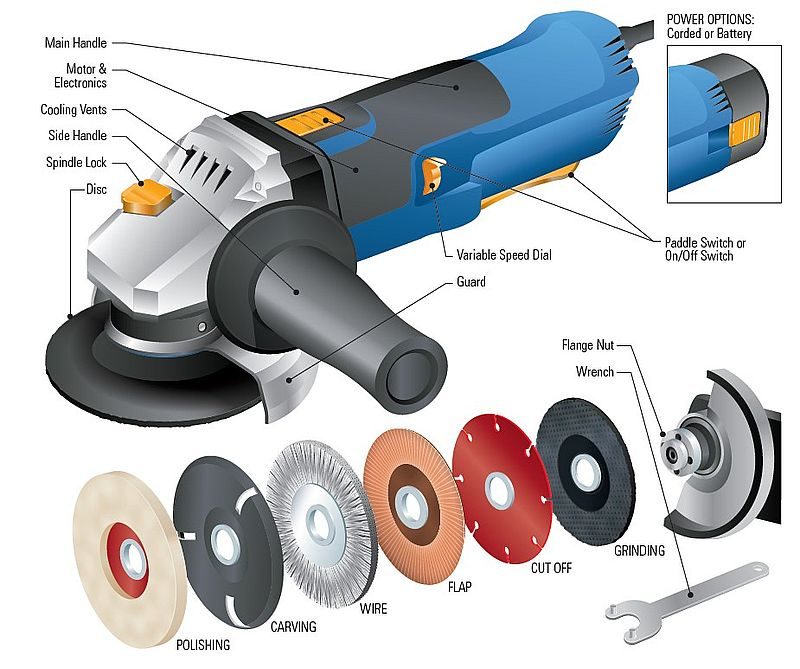
An angle grinder is a handheld power tool with a motor that spins a disc or other approved accessory at high speed. Most models have a side handle, a protective guard, and a spindle that holds the accessory in place. The tool gets its name from the angle between the motor shaft and the rotating spindle.
In the United States, angle grinders are common in automotive repair, metal fabrication, home renovation, and masonry work. Corded models provide continuous power when an outlet is available, while cordless models offer greater freedom of movement. Both types require the correct accessory and safe handling.
The grinder itself does not determine every possible use. Its accessory does much of the work, and each accessory has limits. A disc made for steel may be unsuitable for aluminum, concrete, tile, or wood.
Source: rae-trilsbach-jakobs-kollegen.de
Cutting accessories
Thin abrasive cutting wheels and approved diamond blades cut compatible materials. They are designed for cutting, not for grinding on their sides.
Grinding accessories
Grinding wheels and suitable abrasive discs remove material, reduce high spots, and smooth metal edges.
Cleaning and finishing accessories
Compatible wire brushes, flap discs, and polishing accessories help remove surface contamination or improve a finish.
Common Angle Grinder Sizes
Many American workshops use grinders that accept 4.5-inch discs, although other sizes are available. The correct disc diameter, arbor size, guard, and maximum rated speed must match the tool. A larger disc is not automatically better because it may reduce control or be incompatible with the grinder.
4.5-inch grinder
Often suited to smaller metal cutting, surface preparation, and general home workshop jobs when the accessory is compatible.
Larger grinders
Can suit certain demanding cutting or grinding jobs, but their weight, power, and accessory requirements call for appropriate training and control.
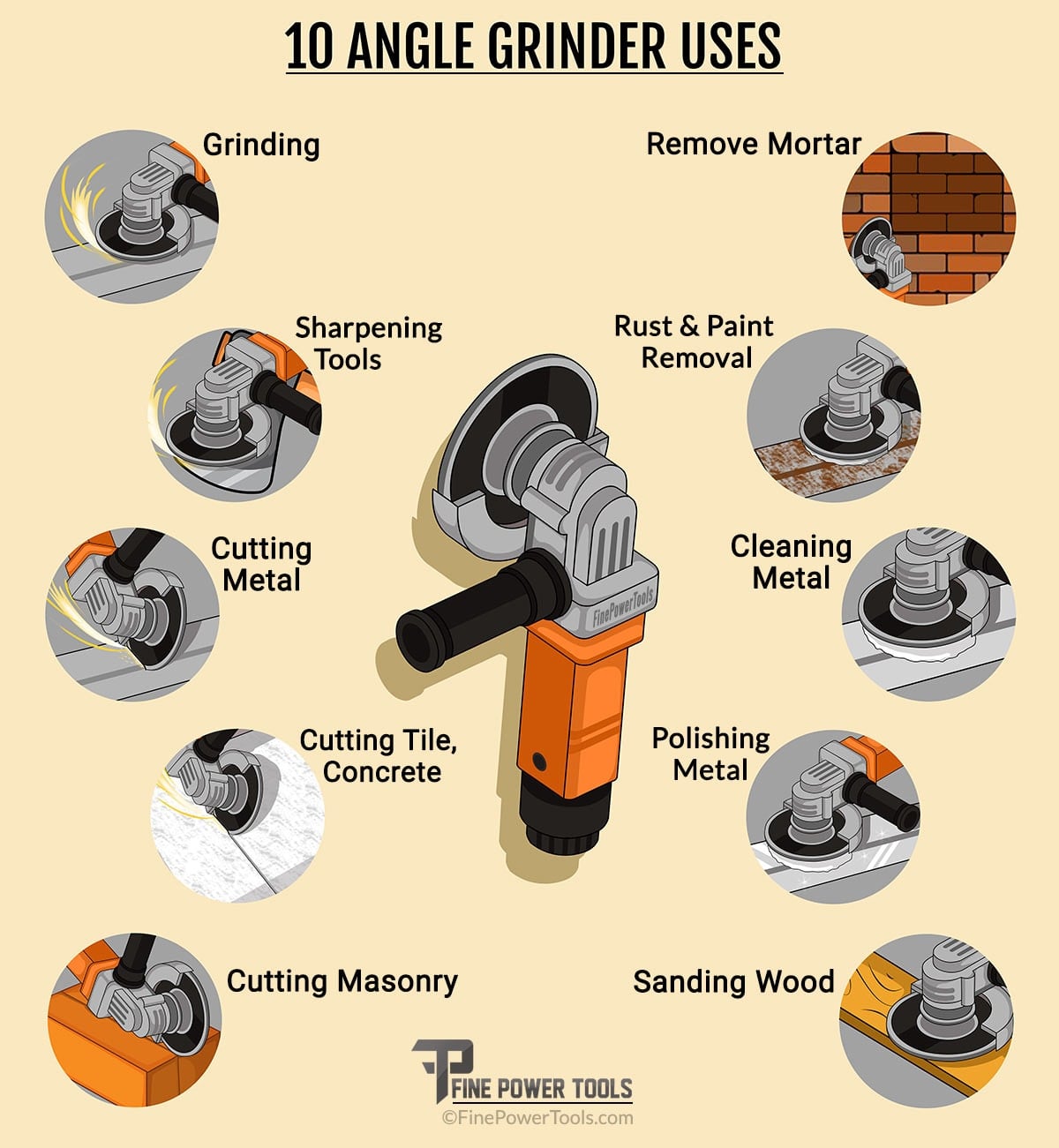
10 Common Angle Grinder Uses
The main angle grinder uses range from metal fabrication to selected masonry tasks. Each job needs a suitable accessory, a stable workpiece, and a clear plan for controlling sparks, dust, and flying debris.
The following applications explain what the tool can do, which attachment may help, and where extra care is needed. Always confirm that the accessory manufacturer approves the intended material and operation.
Source: powertoolstoday.com
1. Cutting metal
Use a compatible abrasive cutting wheel to cut suitable steel bars, threaded rods, metal brackets, and small metal sections. Secure the workpiece and keep the wheel aligned with the cut. Do not twist or force the wheel through the material.
2. Grinding welds
A suitable grinding wheel or flap disc can reduce raised weld material and blend transitions on compatible metal surfaces. Use only the pressure and angle allowed by the accessory instructions. For structural welds, do not remove material without approval from the responsible qualified person.
3. Removing rust
An approved wire cup brush, wire wheel, or abrasive disc can remove rust and loose paint from suitable metal. Brushes can throw wires, so use the correct guard and keep bystanders away. Check for lead paint or other hazardous coatings before disturbing old surfaces.
4. Smoothing sharp metal edges
A suitable grinding or flap disc can remove burrs from cut metal and make an edge less sharp. Work in controlled passes and inspect the edge often. Do not remove more material than the part can safely tolerate.
5. Cutting tile and masonry
A grinder fitted with a compatible diamond blade may cut certain tile, brick, or masonry products. These jobs can produce hazardous respirable silica dust. Use the required dust-control method and respiratory protection, and follow the blade and tool instructions.
6. Cleaning metal before painting
An approved abrasive disc or brush can remove loose corrosion, scale, and failing coatings from suitable metal surfaces. The result can help prepare the surface for a compatible primer or paint. Avoid aggressive grinding on thin sheet metal because heat and excess material removal can distort it.
7. Polishing metal
A grinder designed or approved for the chosen polishing attachment can help finish suitable metal surfaces. Use a compatible pad, polishing compound, and speed. Do not attach a soft pad to a grinder that cannot safely support it or run the accessory beyond its rated speed.
8. Sharpening selected tools
A grinder may sharpen certain metal tools when the manufacturer permits the method and the operator can maintain the required edge geometry. Heat can damage temper and weaken cutting edges. For axes, chisels, mower blades, and other tools, a bench grinder or purpose-built sharpener may provide better control.
9. Cutting concrete pavers and bricks
A compatible diamond blade can make cuts in suitable pavers or bricks. Support the material on a stable surface, follow the blade’s cutting method, and control dust. For repeated cuts or deep cuts, a dedicated masonry saw may be more suitable.
10. Removing old mortar
A suitable diamond or other manufacturer-approved masonry accessory may remove mortar from selected joints during repair work. The operator must control the depth to avoid damaging the brick edges or surrounding masonry. For historic brickwork or extensive repointing, consult a qualified masonry professional.
Which Uses Are Best for a Home Workshop?
For many homeowners, cutting small metal parts, removing surface rust, and smoothing burrs are practical starting points. These jobs are manageable when the workpiece is securely clamped and the accessory is suitable. Masonry cutting and aggressive grinding require more attention to dust, kickback, and nearby surfaces.
Good starting tasks
Deburring a small steel bracket, cleaning light surface rust, or shortening a compatible threaded rod with the correct cutting wheel.
Tasks needing more planning
Cutting concrete, removing mortar, working on thin sheet metal, or grinding a critical weld.
How to Choose the Right Angle Grinder Attachment
Choosing the correct accessory is one of the most important steps in using an angle grinder. Start with the material, then identify whether the job involves cutting, grinding, brushing, sanding, or polishing. Check the tool manual and accessory label before fitting anything.
Never assume that an accessory fits safely just because its center hole matches the spindle. Diameter, thickness, mounting type, guard design, and maximum speed also matter. An accessory rated for a lower speed must not be used on a faster grinder.
Source: dcatools.co.za
Abrasive cutting wheel
Designed for cutting approved metals or other materials specified on its label. Keep the wheel straight and do not use its side to grind.
Grinding wheel
Designed for material removal using the specified grinding face. Confirm the wheel type and guard are suitable for the task.
Flap disc
Combines overlapping abrasive flaps for controlled grinding and blending on compatible surfaces. It can be useful for finishing metal edges and welds.
Wire brush
Helps remove rust, loose scale, and some coatings from suitable materials. Inspect it for damage and protect yourself from flying wire fragments.
Diamond blade
Designed for specified hard materials such as certain masonry or tile products. Wet or dry use depends on the exact blade and tool instructions.
Polishing accessory
Used for compatible finishing tasks. The accessory must be approved for the grinder and its operating speed.
Attachment Comparison by Task
This table provides a starting point for choosing an accessory. It does not replace the instructions supplied with the grinder or the accessory.
Cutting steel
Use a cutting wheel labeled for the specific metal and compatible with the grinder.
Grinding a weld
Use a grinding wheel or flap disc approved for the material and operation.
Removing rust
Use an approved wire brush or abrasive disc, depending on the surface and desired finish.
Cutting a paver
Use a diamond blade approved for the material, tool, and cutting method.
Polishing metal
Use a compatible polishing attachment and stay within its rated speed.
Can You Use an Angle Grinder on Wood?
Woodworking with an angle grinder can be hazardous. Some specialized carving or sanding accessories are designed for certain grinders, but ordinary cutting wheels and improvised toothed attachments are not appropriate for wood. A grinder can catch in the grain, kick back, or pull the operator off balance.
For routine wood cutting, use a circular saw, jigsaw, or another tool designed for that job. For sanding, a random-orbit sander or a purpose-built woodworking tool generally offers more predictable control. If a specialized grinder accessory is considered, verify its approval for the exact tool and follow all required guards and instructions.
Avoid improvised saw blades
Do not fit an ordinary circular saw blade or an unapproved toothed carving disc to an angle grinder.
Control the workpiece
Wood must be securely supported, and the operator must account for knots, changing grain, and sudden tool movement.
How to Use an Angle Grinder Safely
Safe angle grinder use starts before the motor runs. A high-speed disc can break, throw fragments, create sparks, or catch on the workpiece. Set up the work area and inspect the tool before beginning any cut or grinding pass.
Wear safety glasses with appropriate impact protection and a face shield. A face shield is additional protection, not a substitute for safety glasses. Use hearing protection, suitable work gloves where appropriate, and clothing that cannot catch in the rotating accessory. Select respiratory protection and dust controls based on the material and exposure.
Keep sparks away from gasoline, solvents, sawdust, dry leaves, and other flammable materials. Check the area beyond the workpiece for people, wires, fuel lines, and objects that could be damaged. If you cannot control the sparks, dust, or movement of the material, stop and change the setup.
Source: storage.googleapis.com
Inspect the grinder
Check the cord or battery, housing, switch, handle, guard, spindle, and accessory for damage. Do not use a tool with a faulty switch, damaged cord, missing required guard, or loose parts.
Check the disc rating
Make sure the accessory’s maximum rated speed is at least the grinder’s no-load speed and that its size and mounting system are approved.
Secure the material
Use a suitable vise or clamps. Keep hands away from the cutting path and never hold a small piece close to the disc.
Maintain a firm grip
Hold the grinder with both hands using the intended handles. Position your body away from the disc’s likely path if it binds or breaks.
Let the disc reach speed
Start the tool in a clear position and allow it to reach its operating speed before making contact, as the manual directs.
Avoid forcing the tool
Use controlled pressure. Excessive force can overheat the accessory, stall the tool, damage the workpiece, or increase the risk of kickback.
Wait for a complete stop
Switch off the grinder and hold it securely until the accessory stops. Never set a spinning grinder down.
Prevent Kickback and Disc Breakage
Kickback occurs when the rotating accessory catches or becomes pinched and the tool suddenly moves in the opposite direction. It can cause severe injury, especially if the operator loses control or the disc moves toward the body.
Keep the cutting wheel aligned with the cut, avoid twisting it, and support the material so the cut does not close and pinch the wheel. Do not use a damaged, cracked, or incorrectly mounted disc. If the accessory binds, switch off the tool and wait for it to stop before correcting the setup.
Do not side-load cutting wheels
Thin cutting wheels are made to cut with their edge, not to grind using their side.
Keep the guard in place
Use the guard required for the accessory and position it to protect you from debris without obstructing the intended operation.
Do not stand in line with the wheel
Position yourself to reduce exposure to fragments and unexpected tool movement while maintaining firm control.
Control Dust When Cutting Concrete or Masonry
Cutting concrete, brick, and other silica-containing materials can release respirable crystalline silica, which can cause serious lung disease. A dust mask alone is not a complete control plan for every cutting task. Use an appropriate engineering control, such as a compatible dust collection system or a manufacturer-approved water-fed setup where permitted.
Do not apply water to a grinder or blade unless the exact tool and accessory are designed for wet operation. Electricity, moisture, and incompatible equipment create additional hazards. For work covered by an employer’s silica exposure-control requirements, follow the applicable OSHA rules and workplace procedures.
Check the material
Identify whether the job involves concrete, mortar, brick, tile, or another material with different dust and cutting requirements.
Use compatible dust controls
Follow the tool and accessory manufacturers’ instructions for extraction, wet cutting, and respiratory protection.
Common Angle Grinder Mistakes to Avoid
Many grinder problems begin with the wrong accessory, a poorly secured workpiece, or an attempt to finish the job too quickly. Small setup errors can lead to broken discs, damaged surfaces, or sudden tool movement. A few checks before starting can prevent many avoidable problems.
Source: top10trendy.com
Using the wrong disc
A metal cutting wheel is not automatically suitable for masonry, and a grinding wheel is not a substitute for a cutting wheel. Read the accessory label and instructions.
Removing the guard
The guard helps contain debris and reduces exposure to the rotating accessory. Never remove a required guard simply to make a difficult cut.
Applying too much pressure
Forcing the grinder can cause overheating, uneven cuts, accessory damage, or kickback. Let the approved accessory perform the work.
Using a damaged accessory
Cracks, chips, excessive wear, or a damaged mounting area can make an accessory unsafe. Replace questionable accessories rather than trying to repair them.
Ignoring sparks
Sparks can burn skin, damage glass, ignite nearby materials, or reach areas outside the immediate work zone. Clear the area and protect vulnerable surfaces.
Changing discs while connected to power
Disconnect a corded grinder or remove its battery before changing an accessory, cleaning the tool, or adjusting components.
Grinding unknown coatings
Old paint and industrial coatings may contain lead or other hazardous substances. Identify the coating and use an appropriate removal method before grinding.
What to Do When a Cut Goes Wrong
If the wheel binds, the tool vibrates unusually, or the cut begins to wander, stop the grinder. Disconnect the power or remove the battery after the wheel has stopped, then inspect the accessory and workpiece. Never try to free a trapped wheel while the motor is running.
A cracked wheel, a damaged spindle, a loose handle, or repeated abnormal vibration means the tool should remain out of service until the cause is resolved. Follow the manufacturer’s inspection and repair guidance, and use a qualified service center when needed.
The disc binds
Check whether the cut is closing, the material is shifting, or the wheel has become misaligned. Correct the support and cutting approach before restarting.
The grinder vibrates
Stop and inspect the accessory, mounting flanges, spindle, and tool for damage or incorrect assembly.
The material overheats
Reduce excessive pressure, use the appropriate accessory, and allow the material to cool as needed. Do not continue if the process damages the part.
Angle Grinder vs. Other Power Tools
An angle grinder is useful because it can perform several types of work with approved attachments. However, a tool designed for one task may offer better control, cleaner results, or less risk than a grinder. The best choice depends on the material, cut quality, work volume, and operator skill.
Source: powertoolstoday.com
Angle grinder vs. circular saw
An angle grinder suits selected metal and masonry jobs with compatible accessories. A circular saw is generally better for routine straight wood cuts because its design supports that operation.
Angle grinder vs. bench grinder
An angle grinder is portable and useful at the workpiece. A bench grinder offers a fixed grinding station that can provide more repeatable control for selected sharpening and grinding jobs.
Angle grinder vs. belt sander
A belt sander is designed for sanding and leveling suitable surfaces. An angle grinder with an abrasive accessory removes material more aggressively and may leave deeper marks.
Angle grinder vs. dedicated tile saw
A grinder can make certain cuts in tile, depending on the blade and setup. A suitable tile saw may provide better support, more consistent cuts, and better dust or water management for repeated tile work.
When Is an Angle Grinder the Wrong Tool?
Choose another tool when the task needs a precise finish, a controlled cutting depth, or a level of stability that a handheld grinder cannot provide. Do not use a grinder to cut a live electrical cable, a pressurized pipe, or a container that may hold flammable vapors. Such work requires isolation and task-specific procedures before any cutting begins.
Use a saw or woodworking tool intended for the cut rather than an improvised grinder setup.
Repeated precision tile cuts
Consider a dedicated tile saw that supports the material and the required finish.
Critical structural repairs
Have a qualified professional determine how much material can be removed without compromising the component.
How to Maintain an Angle Grinder
Regular maintenance helps keep an angle grinder in working order and makes damage easier to spot. Unplug the tool or remove its battery before cleaning or inspection. Follow the manufacturer’s maintenance schedule rather than opening the motor housing without the required knowledge.
Remove dust from the exterior and ventilation openings using the method approved by the manufacturer. Blocked vents can cause overheating.
Inspect the power supply
Look for cuts, crushed sections, loose connections, or damaged battery contacts. Remove damaged equipment from service.
Check the guard and handle
Make sure the guard is secure, the side handle is firmly attached, and adjustment parts work as intended.
Store accessories correctly
Keep discs dry and protected from impacts, moisture, and extreme conditions specified by their manufacturer. Discard accessories that are damaged or beyond their usable limits.
Arrange qualified repairs
Unusual smells, recurring overheating, switch problems, damaged bearings, or unexplained vibration may require professional inspection.
How to Know When a Disc Needs Replacing
Replace a disc when it is cracked, chipped, excessively worn, contaminated in a way that affects safe use, or otherwise outside the manufacturer’s limits. Check the expiry or shelf-life marking when one is provided for a bonded abrasive wheel. Never use a wheel that has been dropped if the manufacturer requires it to be discarded or inspected and its condition cannot be confirmed.
Visible damage
Cracks, chips, broken segments, or damage near the mounting hole are reasons to stop using the accessory.
Incorrect fit
Do not modify the center hole, force the disc onto the spindle, or use improvised mounting parts.
Unusual operation
Stop if the accessory wobbles, produces unexpected vibration, or behaves differently from normal.
Choosing an Angle Grinder for Your Projects
Choose an angle grinder based on the work you expect to do most often, not the largest number of accessories available. Consider disc size, tool power, weight, grip, guard adjustment, speed control if appropriate, and whether corded or cordless operation suits the workspace. Check that replacement accessories for your main tasks are available and approved for the selected model.
For occasional household repairs, a compatible grinder and a small set of task-specific accessories may be enough. Frequent metal fabrication may call for a tool with suitable power, durability, and support for the required accessories. Masonry work needs a separate assessment of dust collection, blade compatibility, and exposure controls.
Source: honestgrinders.com
For occasional DIY work
Look for comfortable handling, a suitable guard, clear instructions, and compatibility with the accessories needed for your common tasks.
For metal fabrication
Consider how often you cut or grind, the thickness and type of metal, and whether the tool can use the approved wheels needed for those jobs.
For masonry projects
Confirm blade approval, cutting depth, dust-control compatibility, and whether a dedicated masonry saw would be more suitable.
For extended work
Evaluate weight, vibration, handle design, power supply, and the manufacturer’s service and maintenance guidance.
A Simple Pre-Use Checklist
Before each job, take a moment to confirm that the setup matches the material and task. This quick review can reveal problems before the grinder starts.
Tool and accessory
Confirm compatibility, speed ratings, disc condition, mounting, and required guard.
Work area
Secure the material and remove people, flammable items, and vulnerable objects from the hazard zone.
Personal protection
Wear suitable eye, face, hearing, and respiratory protection, with clothing appropriate for the job.
Operating plan
Know where sparks and debris will travel, how the material is supported, and how you will stop if the disc binds.
Frequently Asked Questions
Q
What is an angle grinder mainly used for?
An angle grinder is mainly used for cutting, grinding, and cleaning suitable materials. Common jobs include cutting metal, smoothing welds, removing rust, deburring sharp edges, and cutting selected masonry products with a compatible blade.
Q
Can an angle grinder cut metal?
Yes. A compatible abrasive cutting wheel can cut many types of metal, including suitable steel bars, brackets, and threaded rods. The wheel must be rated for the material and grinder, and the workpiece must be secured before cutting.
Q
Can an angle grinder cut concrete?
An angle grinder can cut certain concrete products when fitted with a compatible diamond blade approved for the task. Concrete cutting creates hazardous dust, including respirable crystalline silica, so appropriate dust controls and protective measures are necessary. A dedicated masonry saw may be preferable for repeated or deep cuts.
Q
Can you use an angle grinder to cut wood?
Routine wood cutting with an angle grinder is generally not recommended because wood can catch the accessory and cause dangerous kickback. Never fit an ordinary circular saw blade or an unapproved toothed attachment. A circular saw or jigsaw is usually a better option for wood cutting.
Q
What safety gear should you wear when using an angle grinder?
Use impact-rated safety glasses and a face shield, along with hearing protection and appropriate clothing. Gloves must be suitable for the operation and must not create an entanglement hazard. Depending on the material, use compatible dust extraction and suitable respiratory protection. Follow the tool manual and applicable workplace safety requirements.
Q
Can an angle grinder remove rust and paint?
A compatible wire brush or abrasive disc can remove rust, loose scale, and some coatings from suitable surfaces. Before removing old paint, check whether it may contain lead or other hazardous substances. Use a method that controls exposure and avoids damaging the base material.
Q
Can an angle grinder polish metal?
Yes, if the grinder and polishing accessory are approved for that operation. Use a compatible pad and compound at an allowed speed, and maintain control of the workpiece. For delicate finishes, a dedicated polisher may provide better control.
Q
Should I buy a corded or cordless angle grinder?
A corded grinder provides continuous power when a suitable outlet is available. A cordless model offers mobility and avoids managing a power cord, but battery runtime and charging matter. Choose based on the length of your jobs, workspace, tool compatibility, and maintenance needs.
✦ Wrapping Up
Conclusion
Angle grinder uses cover many common workshop tasks, from cutting metal and smoothing welds to removing rust and preparing selected masonry surfaces. The right accessory makes the difference between a controlled result and an avoidable hazard. Match the disc to the material, secure the workpiece, and follow the grinder and accessory instructions.
For routine home repairs, start with a simple task that suits your skill level and allows you to control sparks, dust, and tool movement. Use a different tool when it offers better control or is specifically designed for the job. If the work involves structural components, hazardous coatings, live utilities, or complex masonry, seek qualified guidance before cutting or grinding.
💡 Key Takeaway
Before your next project, identify the material and task, select a compatible accessory, inspect the grinder and guard, secure the workpiece, and put the required protective equipment and dust controls in place.
Sarah believes that a messy garage is a wasted room. After years of working in professional home staging and interior design, she shifted her focus to the most neglected part of the house: the garage. She focuses on vertical storage, aesthetic floor coatings, and converting dusty corners into functional workspaces. Sarah’s goal is to help you "unlock" every square inch of your garage.
Sarah believes that a messy garage is a wasted room. After years of working in professional home staging and interior design, she shifted her focus to the most neglected part of the house: the garage. She focuses on vertical storage, aesthetic floor coatings, and converting dusty corners into functional workspaces. Sarah’s goal is to help you "unlock" every square inch of your garage.