To buy used power tools without getting ripped off, inspect the tool, test it under safe conditions, check its battery and charger, compare its price with a new model, and use a payment method that offers suitable protection. Never pay for a tool you cannot verify or ignore signs of electrical damage.
In the United States, used power tools are easy to find at garage sales, pawn shops, estate sales, flea markets, local classifieds, and online marketplaces. A preowned drill, circular saw, impact driver, or sander can help you save money on home repairs and DIY projects. The key is to know what to check before you hand over your cash.
A low price does not always mean a good deal. A tool may have a worn motor, a damaged cord, a weak battery, missing safety parts, or a history of heavy jobsite use. Some faults are easy to spot, while others appear only when the tool runs or when you try to charge its battery.
This guide explains how to inspect used power tools, test them safely, judge a fair price, and avoid common scams. It also covers cordless battery compatibility, seller questions, return policies, and the warning signs that should make you walk away. You do not need to be a professional mechanic to make a careful buying decision.
Source: garagetooled.com
1. Decide Which Used Power Tool Is Worth Buying
Start by matching the tool to the job you need to do. A used drill for occasional furniture assembly has different demands from a circular saw that will cut framing lumber every week. Knowing your needs helps you avoid paying for features you will not use or buying a tool that cannot handle the work.
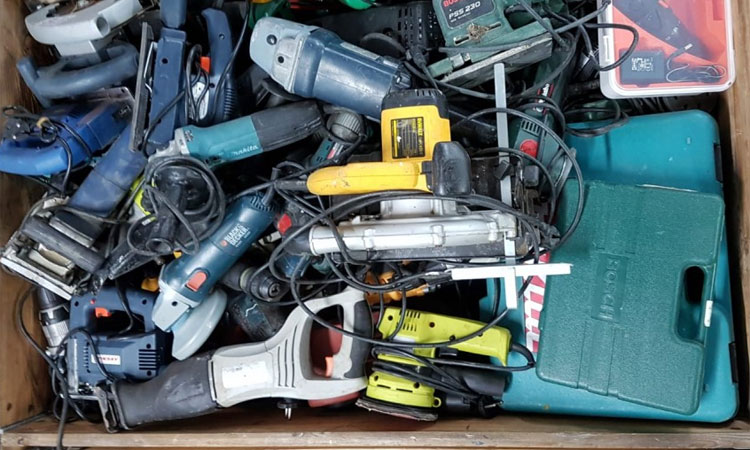
Common used power tools include drills, impact drivers, circular saws, jigsaws, sanders, angle grinders, and oscillating multi-tools. Their condition, repair cost, and safety risks differ. A basic tool with a simple fault may be worth repairing, while a damaged high-speed cutting tool can be a poor risk.
Check whether you need a bare tool or a complete kit. Cordless tools often cost less without a battery or charger, but those parts can make up a large share of the final cost. Wired tools may be cheaper to own if you already have a suitable outlet and do not need cordless mobility.
Source: d3j17a2r8lnfte.cloudfront.net
Best for occasional DIY
Consider a used drill, sander, or other tool that fits your actual workload, provided its safety parts and operating condition check out.
Best for regular work
Look for a model with available replacement parts, service information, and batteries or accessories that remain easy to obtain.
Think twice about damaged tools
Avoid buying a tool with an unknown electrical fault or missing safety parts unless you have the skills, parts access, and a clear repair plan.
Check the Model Number Before You Shop
Find the brand and exact model number on the tool’s label. Search for the manufacturer’s manual, listed specifications, and compatible accessories. This helps you confirm the tool’s intended use and identify parts that should be present.
Model numbers can look similar while referring to different generations or voltage platforms. Check the exact model rather than assuming that every tool from one brand uses the same battery or accessories.
Confirm the tool’s identity
Compare the label, housing, and model information with the manufacturer’s documentation.
Check parts availability
Look for compatible batteries, chargers, blades, guards, switches, and other parts that may need replacement.
2. Inspect the Tool for Hidden Damage
A close inspection can reveal problems before you turn the tool on. Ask the seller to let you examine it in good light. Look at the body, handle, vents, fasteners, power connection, and every safety part you can see without taking the tool apart.
Normal scratches and worn labels do not automatically mean a tool is bad. Deep cracks, melted plastic, burn marks, exposed wires, loose parts, and signs of careless repair deserve much more attention. Damage near a motor housing, battery connection, switch, or cutting guard can affect safe use.
Do not open the housing or touch internal electrical parts during a casual inspection. Some tools contain capacitors or other components that may retain dangerous energy after power is removed. Internal diagnosis is best left to a qualified repair technician.
Source: homediyonline.com
Housing and handle
Look for cracks, broken grip sections, missing screws, loose covers, or signs that the tool has been dropped hard.
Vents and motor area
Check for blocked vents, heavy debris, burn marks, or a strong burnt smell that may point to overheating or electrical trouble.
Cord and plug
For corded tools, inspect the full cord for cuts, crushed sections, exposed conductors, damaged strain relief, and bent or burned plug parts.
Moving and safety parts
Check that guards, handles, switches, locks, and other required parts are present and appear intact. Do not accept missing safety components as a minor cosmetic issue.
Look for Signs of Heavy Jobsite Use
Construction tools often collect dust, paint, concrete residue, and scuffs. These marks alone do not prove poor care, but heavy buildup around vents or controls can suggest neglected maintenance. A worn tool may still work well if it has been serviced and stored correctly.
Ask whether the tool was used for home projects, professional work, or rental service. The answer gives useful context, but the tool’s actual condition matters more than the seller’s description. A clean exterior is not proof that the motor, gearbox, or bearings are healthy.
Check for overheating clues
Burn marks, melted sections, or a persistent burnt-electrical smell are reasons to stop and investigate rather than proceed with a test.
Check for rough movement
With the tool disconnected from power and its battery removed, inspect accessible moving parts according to the manual. Do not force a spindle, chuck, blade, or gear mechanism.
Watch for Signs of a Poor Repair
Mismatched screws, broken clips, gaps in the housing, loose switches, or improvised wire repairs may indicate that someone has opened the tool. Previous repairs are not automatically a problem, but you should know what was done and whether the work was appropriate.
Do not buy a tool with exposed conductors, bypassed safety switches, damaged insulation, or an altered guard simply because the seller says it still works. These defects can create shock, fire, or injury risks.
Ask about repair history
Request details of the fault, repair, replacement parts, and any remaining problem.
Walk away from unsafe modifications
Avoid improvised electrical repairs or removed safety devices unless a qualified professional has restored the tool to a safe condition.
3. Test a Used Power Tool Before Paying
A safe operating test is one of the most useful ways to judge a used power tool. First, read the relevant safety instructions and check the tool for visible defects. Never energize a tool with exposed wires, a cracked housing that affects protection, a damaged guard, or another condition that makes testing unsafe.
Ask the seller to demonstrate the tool in a suitable area with the required safety equipment. Keep hands, loose clothing, and bystanders away from moving parts. Remove the battery or disconnect the plug before changing accessories, adjusting the tool, or inspecting a suspected fault.
A tool that starts and runs smoothly during a brief test has passed only that basic check. It may still have a worn battery, a damaged gearbox, an intermittent switch, or a fault that appears under load. Do not treat a short demonstration as a guarantee of long-term reliability.
Source: i.pinimg.com
Start and stop
If the tool passes the visual inspection, check that its switch responds normally and that it stops as intended. Do not test a tool with a faulty switch.
Listen for unusual noise
Grinding, knocking, scraping, or irregular rattling can point to a mechanical problem. A brief test cannot identify every internal fault.
Check for excessive vibration
Unusual vibration, wobbling, or movement may indicate damage, a loose part, or an unsuitable accessory. Stop the test if anything appears abnormal.
Check speed control
Where applicable, confirm that variable speed or other normal controls respond as described in the manual.
Test Corded Tools Carefully
Use a suitable, properly grounded outlet when required by the tool’s design and instructions. Inspect the cord and plug first, and do not use damaged extension cords or defeat electrical protection. If the tool requires a specific supply or setup, follow the manufacturer’s instructions.
Run the tool briefly without an accessory only if the manual permits that test. Some tools need a fitted accessory or a particular operating setup. Do not hold a cutting tool in an unsafe position or attempt an improvised test cut just to see whether it works.
If the seller refuses to allow any reasonable inspection, ask why. A refusal is not proof of a scam, but you should price the tool as untested or choose another seller rather than assume it works.
Stop for electrical warning signs
Sparks beyond normal brush-related behavior, smoke, a burning smell, shocks, or an inconsistent power supply require the tool to be switched off and disconnected when safe to do so.
Test Cordless Tools and Their Batteries
For a cordless tool, check both the tool and the battery system. A drill may run normally with a fresh battery even though the seller’s included battery is worn out. If possible, test the exact battery and charger included in the sale.
Inspect the battery case for swelling, cracks, leakage, damaged contacts, corrosion, or signs of overheating. Do not charge or use a battery that appears damaged. Follow the manufacturer’s guidance for handling and disposal.
A brief run does not measure the battery’s full capacity. If runtime matters, ask whether the seller can demonstrate normal operation for a reasonable period without creating an unsafe load. Battery age, storage, temperature, and previous use can all affect performance.
Confirm battery compatibility
Match the battery platform and model requirements with the tool’s official specifications. Similar brand names or voltage labels do not guarantee compatibility.
Inspect the charger
Check its model, cord, plug, housing, and indicator behavior. Use only a charger approved for the specific battery system.
Budget for battery replacement
If the battery cannot be verified, include the cost of a suitable replacement when deciding whether the offer is worthwhile.
4. Research the Seller and Avoid Marketplace Scams
Where you buy a used power tool affects the risk. Local classifieds, online marketplaces, pawn shops, garage sales, and specialist used-tool dealers offer different levels of inspection and buyer protection. Read the seller’s terms before deciding which option is best for you.
Ask direct questions about ownership, age, frequency of use, repairs, missing parts, and known defects. A reliable seller should be able to describe the tool and its history without making guarantees that cannot be supported. Compare the answers with the condition you observe.
Be cautious if a seller pressures you to pay immediately, refuses a reasonable inspection, changes the agreed price at the last minute, or asks you to move payment outside a marketplace’s protected checkout. These behaviors do not prove fraud on their own, but they increase the reasons to stop and verify the deal.
Source: thumbs.dreamstime.com
Check the seller’s history
Review available transaction history, ratings, and prior listings. New accounts are not automatically dishonest, and good ratings are not a guarantee.
Compare photos with the actual item
Ask for current pictures of the model label, included accessories, battery, charger, and any damage. Reverse-image checks may help identify reused listing photos, but they cannot establish ownership by themselves.
Keep a record
Save the listing, messages, payment receipt, model number, serial number when available, and any written promises about condition or returns.
Meet safely
For local sales, choose a suitable public meeting place when practical, tell someone your plan, and avoid carrying large amounts of cash if a safer payment option is available.
Check Ownership and Serial Numbers
Look for the manufacturer’s serial number or identification label when the tool normally has one. A missing, scratched-off, altered, or inconsistent label deserves closer scrutiny. Compare the model and serial information with available manufacturer records or support resources when possible.
A serial number alone cannot prove that a tool is stolen or legally owned. If the seller cannot explain an altered label or you have a credible reason to suspect theft, do not complete the purchase. Keep any relevant listing information and use appropriate marketplace or law-enforcement reporting channels when warranted.
Ask for proof of purchase
An original receipt, order record, or other ownership evidence can help establish where the tool came from, although not every legitimate seller will still have it.
Avoid suspiciously cheap offers
Compare the price with similar used models and inspect the item carefully. A low price is a reason to verify the deal, not proof of wrongdoing.
Choose a Payment Method With Clear Terms
Payment protection depends on the provider, transaction type, seller category, and applicable terms. Before paying, check whether the transaction qualifies for dispute assistance and what evidence you may need if the item is not as described.
Cash can suit an in-person transaction after inspection, but it may offer little practical recourse if a hidden fault appears later. Marketplace checkout or a qualifying payment service may provide more options, but protection is not automatic for every transaction.
Avoid gift cards, cryptocurrency transfers, suspicious payment links, and requests to send money through an unfamiliar service. Never share a one-time security code or account password with a seller.
Verify the checkout page
Use the marketplace’s official app or website and check the transaction terms before completing payment.
Do not pay for a demonstration
A seller should not need your account credentials or an advance fee to prove that a normal used tool operates.
5. Find a Fair Price for Used Power Tools
A fair used-tool price reflects the exact model, age, condition, included accessories, repair history, and availability of parts. Do not compare a worn bare tool with a new kit that includes several batteries, a charger, and a carrying case. Those packages provide different value.
Search for the same model in similar condition across more than one seller. Completed-sale data, when available, can be more useful than asking prices because a listing price does not show what a buyer actually paid. Local supply and demand can also affect the price.
The goal is not to find the lowest number. It is to find a tool that can perform your job safely at a total cost that makes sense compared with new, refurbished, or factory-reconditioned alternatives.
Source: cdnimg.co
Compare exact models
Match the model number, voltage platform, generation, and kit contents as closely as possible.
Account for missing items
Add the cost of compatible batteries, chargers, guards, handles, cases, and other parts you actually need.
Estimate repair costs
Use a reliable parts price and, where needed, a repair-shop estimate. Do not assume an unknown internal fault will be cheap to fix.
Consider warranty and returns
A seller’s written return policy or a valid remaining manufacturer warranty may add value, but verify the actual coverage and transfer rules.
Calculate the Total Cost Before You Buy
Use a simple calculation to compare offers. Add the purchase price, required accessories, expected repairs, and any delivery or transaction fees. Then compare that total with the price of a suitable new or reconditioned alternative.
For example, imagine a used cordless drill costs $55, a compatible battery costs $35, and a missing charger costs $20. The effective cost is $110 before any shipping or repair expense. If a comparable new kit costs $120, the used drill may offer too little savings for the extra uncertainty.
These figures are hypothetical examples, not current market prices. Check current local listings and actual replacement-part costs before making your decision.
Comparable new price minus total used cost equals the estimated savings before accounting for differences in warranty, condition, and risk.
Use Condition to Guide Your Offer
Visible wear, missing accessories, and uncertain battery life can support a lower offer when the tool remains safe and its condition is honestly described. However, some faults are not suitable for price negotiation because they make the tool unsafe or impossible to evaluate.
Do not assign a universal discount to every used tool. A sought-after model with verified service history may retain value, while an older tool with limited parts support may be worth much less. The exact comparison matters more than a broad rule about buying secondhand equipment.
Make an evidence-based offer
Explain the missing accessory or documented defect and use realistic replacement costs to support your proposed price.
Walk away when the numbers fail
If the total cost approaches the price of a comparable new tool, choose the option with the clearer condition and stronger coverage.
6. Understand Used, Refurbished, and Factory-Reconditioned Tools
A privately sold used tool and a professionally reconditioned tool are not necessarily the same purchase. A private seller may offer a tool in its existing condition, while a refurbisher may inspect it, replace selected parts, and provide a limited warranty. The actual process varies by seller.
The words refurbished, renewed, and reconditioned do not always describe the same level of work. A label by itself does not prove that the motor, battery, switch, or gearbox has been fully tested. Read the seller’s description and warranty terms instead of relying on the name.
Factory-reconditioned tools may be attractive when the seller clearly identifies the process, included accessories, return policy, and warranty. Compare these details with the price of a new model and a privately sold used unit before deciding.
Source: protoolreviews.com
Ask what was inspected
Look for a clear description of testing, repairs, replacement parts, and the condition of any included battery.
Read warranty exclusions
Check coverage length, proof-of-purchase rules, battery coverage, labor costs, and any limits on transfer to a later owner.
Check the return window
Confirm how many days you have to report a defect, whether return shipping is covered, and whether restocking fees apply.
When Is a Reconditioned Tool the Better Choice?
A reconditioned tool may be the better choice when you need a dependable tool but want to spend less than the price of a new one. A documented inspection and a meaningful return policy can reduce some of the uncertainty associated with a private sale.
A privately sold tool may still offer better value if it is in excellent condition, includes useful accessories, and costs substantially less. The deciding factor is the verified condition and the full terms of the sale, not the label alone.
Choose reconditioned when coverage matters
Look for clear testing information, a valid warranty, and a seller with a defined process for handling defects.
Choose used when the deal is verifiable
A successful inspection, safe operating test, fair price, and known ownership history can make a private purchase worthwhile.
7. Know When to Walk Away From a Deal
Some used tools are not worth the risk at any ordinary bargain price. If a tool has exposed wiring, a cracked protective housing, a damaged guard, an unreliable switch, or a battery with visible physical damage, do not operate it to see whether it works. The potential harm outweighs the possible savings.
An unknown fault can also make a purchase uneconomical. A motor that will not start may need a simple switch, but it could also have a damaged motor or control board. Without a diagnosis, the apparent bargain may become an expensive repair project.
Be equally careful with a seller who cannot provide basic information, refuses to show the exact item, or insists on an unusual payment method. You do not need to prove that a seller is dishonest before deciding that the transaction is not worth the risk.
Source: equipverse.com
Physical safety warning signs
Exposed conductors, damaged insulation, melted plastic, broken guards, loose structural parts, or a damaged battery case.
Mechanical warning signs
Severe wobble, grinding, binding, abnormal vibration, or visible damage that affects the tool’s intended operation.
Transaction warning signs
Pressure to pay immediately, a changing story about ownership, copied photos that cannot be verified, or a demand to bypass normal payment protections.
Poor value
A total used cost close to a comparable new tool, with no meaningful benefit from the used purchase.
What to Do if the Tool Fails After Purchase
Stop using the tool if it develops smoke, a burning smell, an electric shock, unusual noise, or another serious fault. Disconnect power or remove the battery only when it is safe to do so, and follow the manufacturer’s instructions. Do not keep running it in the hope that the problem will disappear.
Save the listing, receipt, seller messages, and any written claims about the tool’s condition. Contact the seller promptly and explain the specific problem. If you paid through a service that offers eligible dispute protection, check its deadlines and evidence requirements.
If the seller refuses to help, your options depend on the transaction terms, payment method, marketplace policy, and applicable law. Consider a qualified repair technician for diagnosis before spending money on parts. Avoid attempting an electrical repair beyond your skills.
Document the fault
Record the symptoms and the conditions under which they appeared without repeatedly operating a potentially unsafe tool.
Check available remedies
Review any return agreement, applicable marketplace policy, payment dispute rules, and relevant consumer protections.
8. Use This Used Power Tool Buying Checklist
A checklist helps you compare different tools without letting a low asking price distract you from important details. Use it before you pay, whether you are shopping at a garage sale, a pawn shop, or an online marketplace.
The most important checks are safety, operating condition, battery or accessory compatibility, and total cost. If you cannot complete a check, record the uncertainty and decide whether the remaining risk is acceptable. Do not treat an untested tool as a verified working tool.
Source: i.ytimg.com
Before meeting the seller
Research the exact model, compare similar listings, check parts availability, estimate missing accessories, and prepare questions about ownership and repairs.
During inspection
Examine the housing, cord or battery connection, switch, guard, handles, vents, and visible moving parts. Check for burn marks, cracks, missing screws, and improvised repairs.
During the operating test
Only test a tool that appears safe, using the manufacturer’s instructions and suitable protective measures. Check startup, stopping, noise, vibration, controls, and the supplied battery system where relevant.
Before payment
Confirm the model and included items, agree on the price, review return or warranty terms, and use a suitable payment method. Save the transaction record.
After purchase
Read the manual, inspect the tool again, use suitable accessories, and follow all safety and maintenance instructions before putting it to work.
How to Make the Final Decision
Buy the tool when its identity is clear, visible condition is acceptable, safety features are intact, its operation has been checked as far as reasonably possible, and its total cost makes sense. A clear return policy or verifiable service history can further support the decision.
Delay or reject the purchase if a major check fails. If you cannot test the tool, treat that limitation as a real risk rather than assuming the seller’s claims are correct. For a tool that performs dangerous cutting or grinding work, uncertainty about critical safety parts is a strong reason to choose another unit.
Buy
The tool passes the relevant safety checks, operates as expected, and offers fair value for its condition.
Negotiate
The tool is safe and functional, but a verified missing accessory or manageable defect affects its value.
Walk away
Safety, ownership, operating condition, or the seller’s payment demands cannot be resolved.
Frequently Asked Questions
Q
Is it safe to buy used power tools?
Yes, used power tools can be a reasonable purchase when their condition is checked carefully. Inspect the housing, cord or battery, switch, guards, and other safety parts. Test the tool only when it appears safe to operate and follow the manufacturer’s instructions. Avoid tools with exposed wiring, damaged guards, or batteries showing signs of physical damage.
Q
Where is the best place to buy used power tools in the United States?
Local classifieds, garage sales, pawn shops, specialist used-tool dealers, and online marketplaces can all offer useful options. The best choice depends on the seller’s reputation, inspection opportunities, return terms, and total price. A specialist dealer may provide clearer testing or return terms, while a private seller may offer a lower price with less protection.
Q
How can I tell if a used cordless tool battery is bad?
Look for swelling, cracks, leakage, damaged contacts, corrosion, and signs of overheating. Do not charge or use a visibly damaged battery. If the battery appears intact, check whether it charges with the correct charger and runs the tool normally. A short test cannot establish full capacity, so consider the battery’s age, history, and replacement cost.
Q
Should I buy a used power tool without a battery or charger?
It can make sense if you already own a compatible battery and charger or can buy them at a reasonable cost. Verify the exact battery platform and model requirements before purchasing. Add the price of every required component to the tool’s asking price, then compare the total with a complete new or reconditioned kit.
Q
Are factory-reconditioned power tools better than privately sold used tools?
Not always. Factory-reconditioned or professionally reconditioned tools may offer documented inspection, repairs, and a limited warranty, but the details vary by seller and model. A well-maintained used tool may be cheaper. Compare the actual condition, testing process, warranty, return policy, and included accessories instead of relying on the label.
Q
Can I negotiate the price of a used power tool?
Yes. Use comparable listings and the actual cost of missing accessories or verified repairs to support your offer. Be polite and specific about the reason for your proposed price. Do not bargain your way into accepting a tool with unsafe electrical parts, a damaged guard, or another serious defect.
Q
What should I do if a used power tool stops working after I buy it?
Stop using the tool if the fault could affect safety. Keep your receipt, listing, and seller messages, then contact the seller promptly. Review the agreed return terms and any applicable marketplace or payment dispute process. If the tool needs diagnosis, consult a qualified repair technician before buying replacement parts or attempting an unfamiliar repair.
✦ Wrapping Up
Conclusion
You can buy used power tools without getting ripped off by checking the tool’s condition, testing it safely, verifying battery and accessory compatibility, and comparing the full cost with other options. A careful inspection often reveals more useful information than a seller’s claims or an attractive discount.
Focus on the exact model and its intended use. Ask about ownership and repair history, review payment and return terms, and walk away when the tool has a serious safety defect or the transaction feels suspicious. A low price is worthwhile only when the tool offers practical value without unacceptable risk.
Before you buy, use the checklist in this guide and calculate the total cost, including any battery, charger, accessory, or repair you may need. If the seller will not let you verify the tool, choose a safer and more transparent deal.
💡 Key Takeaway
Before paying, verify the model, inspect every visible safety component, test the tool only if safe, check the battery and charger when included, compare the complete cost with alternatives, and save your purchase records.
Sarah believes that a messy garage is a wasted room. After years of working in professional home staging and interior design, she shifted her focus to the most neglected part of the house: the garage. She focuses on vertical storage, aesthetic floor coatings, and converting dusty corners into functional workspaces. Sarah’s goal is to help you "unlock" every square inch of your garage.
Sarah believes that a messy garage is a wasted room. After years of working in professional home staging and interior design, she shifted her focus to the most neglected part of the house: the garage. She focuses on vertical storage, aesthetic floor coatings, and converting dusty corners into functional workspaces. Sarah’s goal is to help you "unlock" every square inch of your garage.